Free shipping for order over $50

Free shipping for order over $50
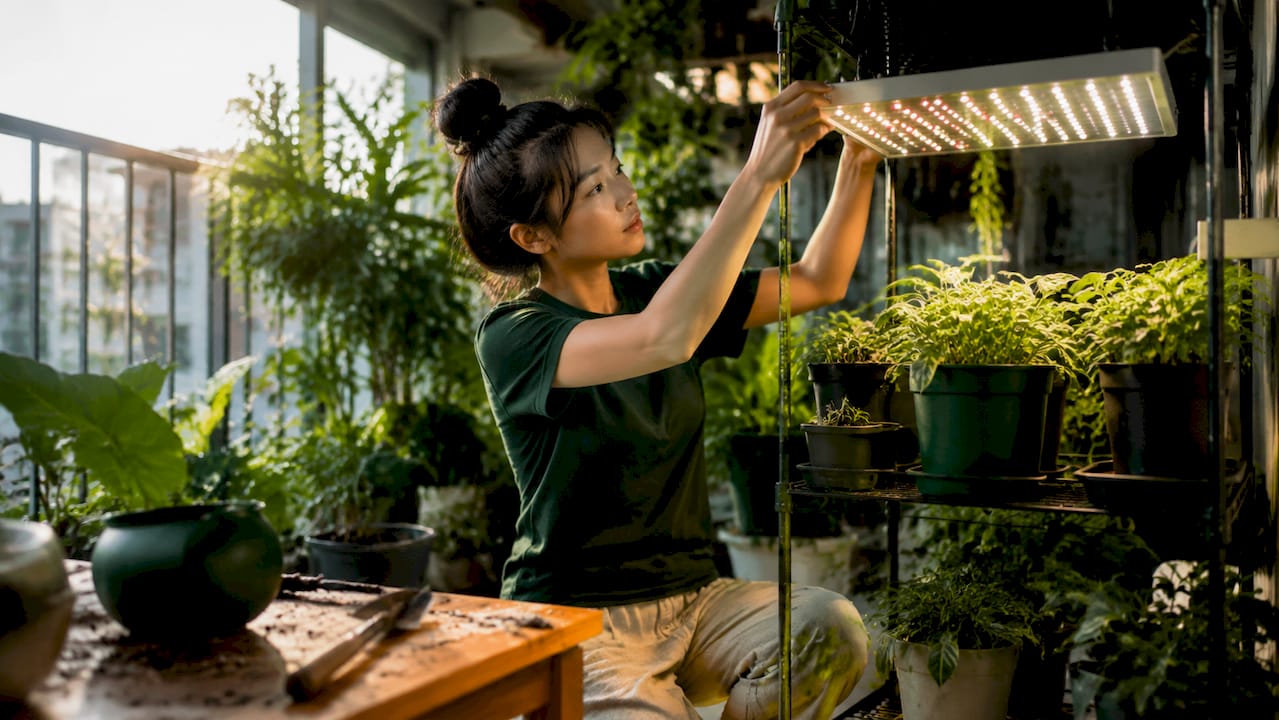
Full-spectrum LED grow lights are the most effective indoor plant lighting type for Singapore homes, providing energy-efficient, low-heat illumination that supports plant growth across all life stages. Singapore’s compact HDB flats and condos often receive limited natural light, especially in north-facing units or lower floors shaded by neighboring buildings. Choosing the right grow light format, whether an E27 LED bulb, a clip-on lamp, or an under-shelf strip, determines whether your plants thrive or stall. This guide covers every major lighting type, explains the science behind light spectrums, and gives you practical advice tailored to Singapore’s unique indoor conditions.
LED grow lights dominate new installations in Singapore as of 2026, and for good reason. They use less electricity, generate minimal heat, and last significantly longer than older technologies. Singapore’s humid, compact apartments make heat output a real concern, which is why LEDs have replaced fluorescent and HID lights in most home setups.
The three main grow light technologies are:
One category worth calling out is “blurple” LEDs. These emit only red and blue wavelengths, producing a purple glow that looks jarring in a home setting. Full-spectrum white LEDs blend red, blue, and intermediate wavelengths and look like normal white light. They support plant health equally well without making your living room look like a nightclub.
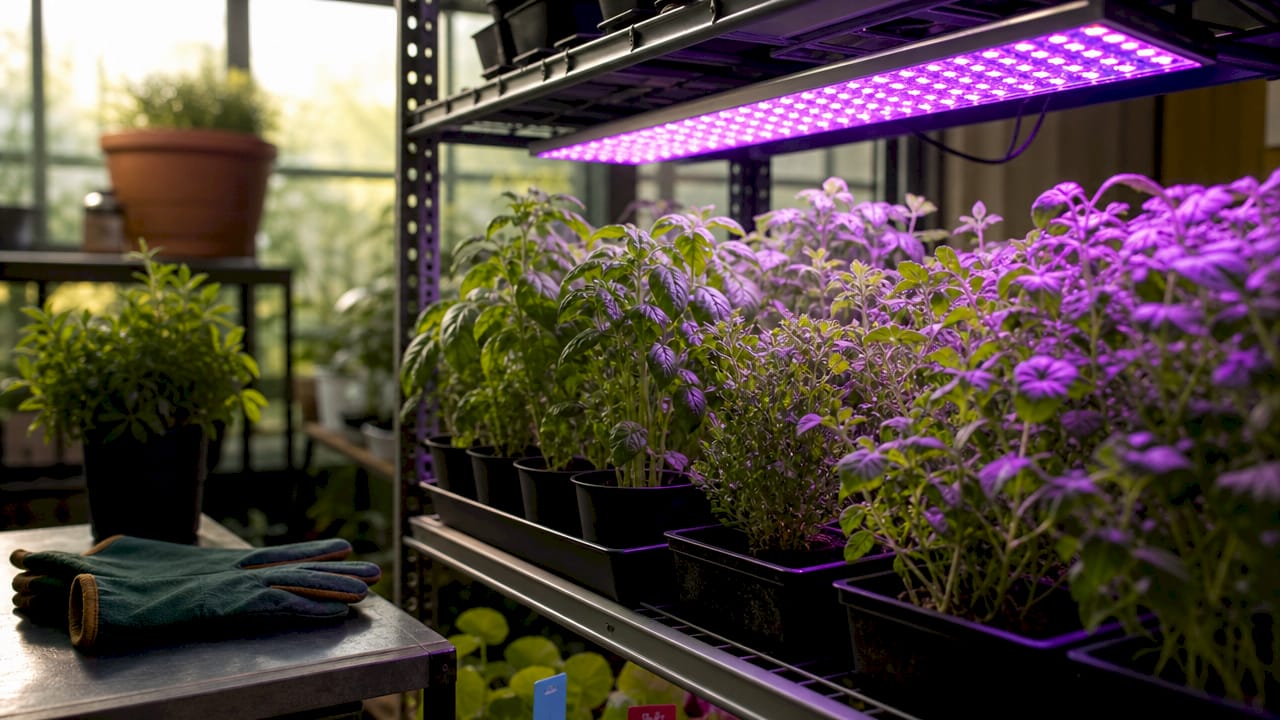
Red and blue light are the two wavelengths plants use most during photosynthesis. Blue light (400–500 nm) drives vegetative growth, encouraging compact, leafy development. Red light (600–700 nm) triggers flowering and fruiting. Full-spectrum LEDs deliver both, plus the intermediate wavelengths that support overall plant health.
The recommended light ratio for healthy plant growth is 85% red to 15% blue light. That ratio supports both leafy greens and flowering plants without requiring you to swap fixtures between growth stages. Full-spectrum LEDs handle seedlings, herbs, and fruiting plants all with the same unit.
Here is how the spectrum maps to growth stages:
Pro Tip: If your herbs are growing tall and leggy under a grow light, increase the blue light intensity or move the light closer to the plant canopy. Leggy growth is a sign the plant is stretching toward insufficient light.
LED grow lights come in four main formats, and the right choice depends on your space, plant arrangement, and how much you care about aesthetics.
| Format | Wattage | Coverage | Cost Range | Ambience Impact |
|---|---|---|---|---|
| E27 LED bulb | 10–15W | Single plant or small pot | Low | Looks like a normal lamp |
| Clip-on lamp | 5–15W | 1–3 plants | Low to medium | Minimal, flexible placement |
| LED strip / under-shelf bar | 10–30W | Full shelf width | Medium | Clean, modern look |
| Panel light | 30–100W | Large growing area | Medium to high | Industrial, best in dedicated grow spaces |
Each format suits a different setup:
Matching the grow light shape to your growing area is the single most important decision you will make. A panel light over one small pot wastes electricity. A single E27 bulb over a full shelf leaves half your plants in shadow.
Singapore’s indoor light environment is more challenging than most plant guides acknowledge. Direct tropical sun exceeds 100,000 lux, but that intensity drops sharply once you move even one meter away from a window. North-facing rooms and units on lower floors shaded by adjacent buildings often receive light levels too low for most houseplants to grow well.
Indoor light levels in Singapore homes fall into four categories based on PPFD (photosynthetic photon flux density), the most accurate metric for measuring usable plant light:
Pro Tip: Use a free PPFD meter app on your phone to measure the light level at your plant’s canopy. It is not perfectly accurate, but it gives you a useful baseline before investing in a grow light.
Practical positioning matters as much as the light type you choose. Position grow lights 30–45 cm above the plant canopy for most LED setups. Too close causes light stress and bleaching. Too far reduces intensity below useful PPFD levels.
Plants need 12–16 hours of light daily, and consistent light-dark cycles matter as much as total duration. Use a plug-in timer to automate your grow light schedule. This prevents the common mistake of forgetting to turn the light on or leaving it running for 24 hours, which stresses plants by denying them their rest period. Timers cost very little and remove the daily mental load of managing your light cycle.
Grow lights complement natural light rather than replace it entirely. Supplemental lighting fills light deficits in medium-light Singapore homes, allowing a broader range of plants to grow indoors. If your apartment gets morning sun from an east-facing window, a grow light running for 8–10 additional hours in the evening can bring your total daily light up to the level your plants need. You can find more strategies for making the most of limited space in this guide to growing plants in small spaces.
Full-spectrum LED grow lights are the best choice for Singapore urban homes because they deliver the right light spectrum, generate minimal heat, and work across all plant growth stages.
| Point | Details |
|---|---|
| LED lights are the standard | LEDs outperform fluorescent and HID lights in efficiency, heat output, and lifespan for Singapore homes. |
| Spectrum ratio matters | An 85% red to 15% blue light ratio supports both leafy greens and flowering plants without fixture changes. |
| Match format to space | Use E27 bulbs for single plants, strips for shelves, and panels only for large dedicated grow areas. |
| Position and timing are critical | Place lights 30–45 cm above the canopy and use a timer for 12–16 hours of daily light. |
| Avoid blurple LEDs at home | Full-spectrum white LEDs support plant health equally well and look far better in a living space. |
By Luna
After setting up grow lights in three different Singapore apartments, the biggest lesson I took away is this: most plant parents overthink the technology and underthink the positioning. I spent months researching blurple versus full-spectrum LEDs before realizing the real problem was that my light was sitting 70 cm above my plants and delivering a fraction of the PPFD they needed.
My honest recommendation is to skip blurple lights entirely. The purple glow is genuinely unpleasant to live with, and full-spectrum white LEDs do the same job without making your home feel like a hydroponic warehouse. If you share your space with a partner or family, this matters more than you might expect.
The format decision is where most people go wrong. I see plant enthusiasts buying large panel lights for a single shelf, then wondering why their electricity bill jumped. An LED strip bar under a shelf, paired with a cheap plug-in timer, handles 90% of home growing needs at a fraction of the cost. Save the panels for when you are growing edibles at real scale.
Timers are the most underrated tool in indoor gardening. Consistent 12–16 hour light cycles do more for plant health than any premium grow light brand. I have seen plants thrive under a basic LED strip on a timer and struggle under an expensive panel that someone kept forgetting to switch on. Automate the light cycle first. Upgrade the fixture later if you need to. You can explore home garden automation options to make the whole process even easier.
— Luna
Choosing the right lighting is only one part of a successful indoor garden. Sprout-lab builds complete garden systems designed for Singapore’s compact urban homes, combining space-efficient hydroponic setups with the accessories you need to grow edibles and houseplants effectively indoors.
Sprout-lab’s modular systems let you grow up to 56 plants in a small footprint, with setups that pair directly with LED grow lights for consistent, year-round results. With a 4.9/5 star rating across more than 25,000 completed orders, the systems are built for plant enthusiasts who want results without complexity. Browse Sprout-lab’s garden systems for urban growers to find a setup that fits your space and plant goals.
Full-spectrum LED grow lights are the best option for Singapore apartments. They are energy-efficient, produce minimal heat, and look like normal white light, making them suitable for living spaces.
Position your grow light 30–45 cm above the plant canopy. Too close causes light stress; too far reduces the PPFD to levels that do not support healthy growth.
Plants need 12–16 hours of light daily. Use a plug-in timer to maintain a consistent light-dark cycle, which is as important as total light duration for plant health.
Blurple LEDs do support plant growth, but full-spectrum white LEDs perform equally well and look far better in a home environment. For Singapore apartments, full-spectrum white is the practical choice.
Grow lights supplement natural light rather than replace it entirely. In Singapore homes with medium light levels, supplemental LED lighting fills the gap and allows a wider range of plants to grow successfully indoors.