Free shipping for order over $50

Free shipping for order over $50
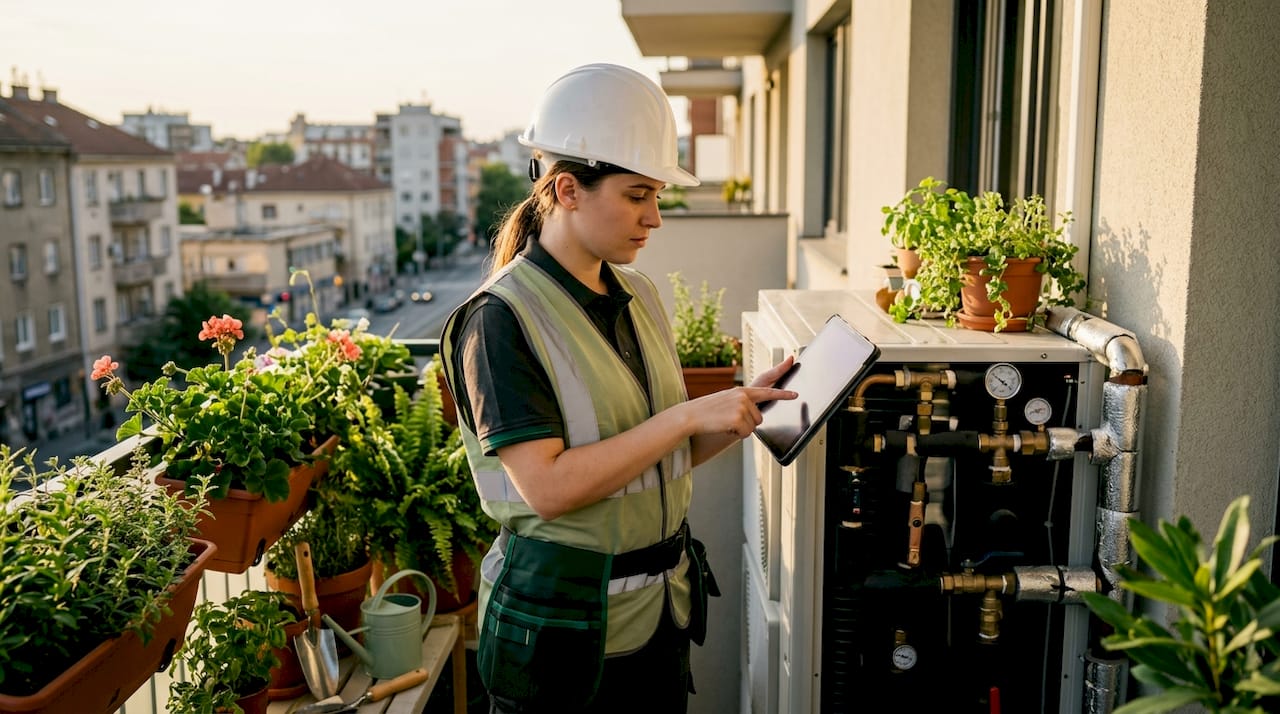
Chilled tech is defined as any cooling method that uses chilled water, liquid loops, or solid-state heat transfer to remove heat from technology systems and living environments. The term covers everything from data center cooling loops to compact heat pump units designed for studio apartments. Whether you manage a server rack or a 400-square-foot condo, the core principle is the same: move heat away from where it is generated and reject it somewhere else. The industry terms you will encounter most often are chilled-water systems, direct-to-chip (D2C) liquid cooling, and thermoelectric cooling. Understanding how each one works tells you which solution fits your space and your goals.
Chilled-water systems are the backbone of large-scale technology cooling. They move heat from IT equipment to a centralized chilled-water plant through closed loops and heat exchangers. The refrigerant stays contained inside the chiller unit, well away from the IT space. That containment matters because it reduces refrigerant leak risk and makes the system easier to service.
The efficiency case for chilled-water systems is strong. They support freecooling modes, where outdoor air or water does the cooling work instead of a compressor. Control optimization technologies coordinate unit operation to reduce compressor activation at part load, cutting electricity consumption significantly. Low global warming potential refrigerants are now standard in modern chillers, adding an environmental benefit on top of the energy savings.
Pro Tip: When specifying a chilled-water system, ask your vendor for part-load efficiency data, not just peak ratings. A system that performs well at 40% load saves far more energy over a year than one optimized only for peak conditions.
| Feature | Chilled-water system | Traditional air cooling |
|---|---|---|
| Heat removal method | Liquid loops and heat exchangers | Forced air over components |
| Refrigerant location | Contained in external chiller | Distributed through the IT space |
| Freecooling capability | Yes, with proper controls | Limited |
| Scalability | High | Moderate |
| Best fit | Data centers, large buildings | Small rooms, edge deployments |
Traditional air cooling is simpler to install but hits a ceiling fast. As component density rises, air simply cannot carry heat away quickly enough. Chilled-water systems scale with demand in a way that air-based approaches cannot match.
Direct-to-chip (D2C) liquid cooling captures heat at the component level before it spreads into the surrounding air. Cold plates attach directly to CPUs and GPUs, transferring heat into a coolant that flows to a coolant distribution unit (CDU) and then out to facility water loops for rejection. The heat never has a chance to warm the room.
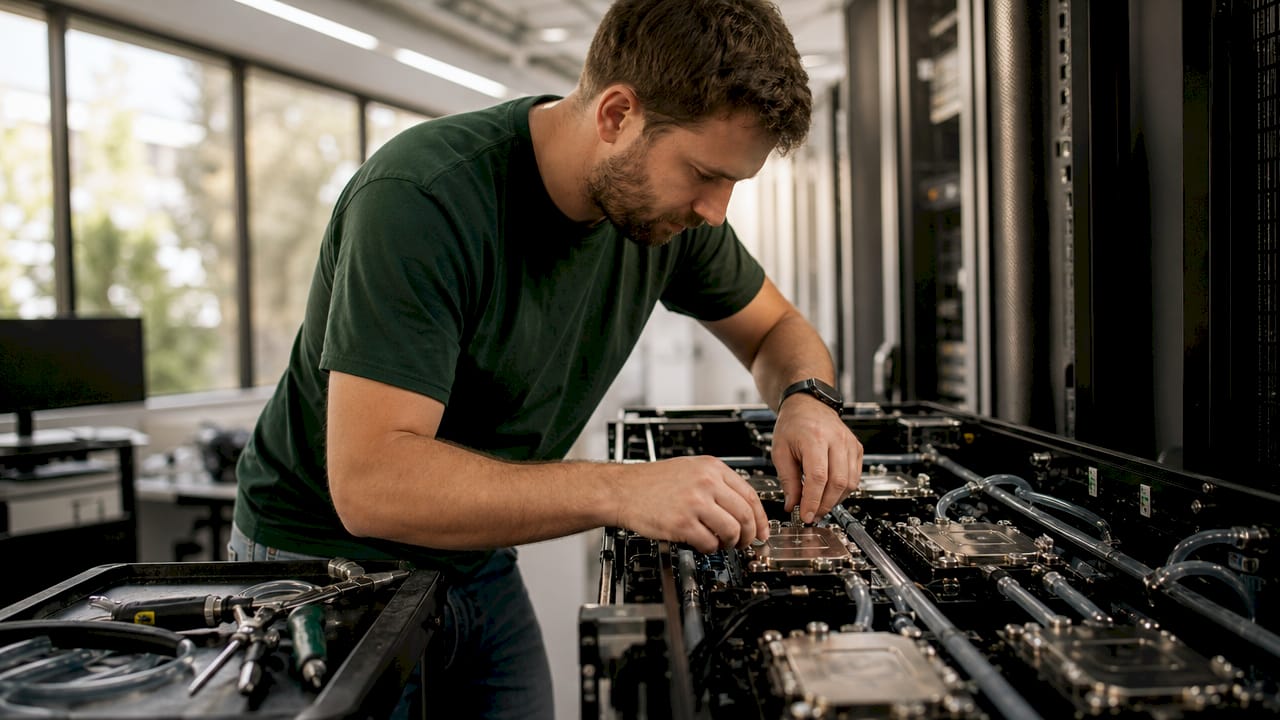
D2C differs from immersion cooling in one critical way. Immersion cooling submerges entire servers in dielectric fluid, which is highly effective but requires specialized racks and significant infrastructure changes. D2C works with standard server form factors and integrates into existing facility water infrastructure. That makes D2C the preferred entry point for organizations moving from air cooling to liquid cooling.
Key characteristics of D2C deployments:
Chilled-water loops remain central even when D2C is added. They unify heat rejection into established site water infrastructure, which means the investment in chilled-water capacity does not go to waste as cooling technology evolves. Matching cooling technology to the actual thermal demands of the equipment reduces bottlenecks and improves long-term system performance.
Chilled tech systems fail most often not because of bad hardware but because of poor system-level thinking. Freecooling is not always energy-optimal, particularly at peak ambient temperatures. At those conditions, the temperature gradient between outdoor air and the chilled-water supply shrinks, forcing the system to run compressors anyway. Operators who design for 100% freecooling often end up with a system that underperforms exactly when cooling demand is highest.
Glycol is another variable that catches people off guard. Adding glycol for freeze protection lowers the freezing point of the coolant, but it also increases viscosity and reduces heat transfer efficiency. That means pumps work harder for less result. The tradeoff is manageable with proper system design, but it must be accounted for from the start.
Common optimization mistakes in chilled tech deployments:
Pro Tip: Chilled plant manager software coordinates chiller, pump, and cooling tower operation dynamically. It consistently outperforms fixed-sequence control by adjusting to real-time load and ambient conditions.
Effective chilled tech design requires managing the full thermal chain: device-side heat transfer, coolant distribution, heat rejection, and dynamic control at part-load conditions. Small parameter changes at any point in that chain can ripple into measurable efficiency losses.
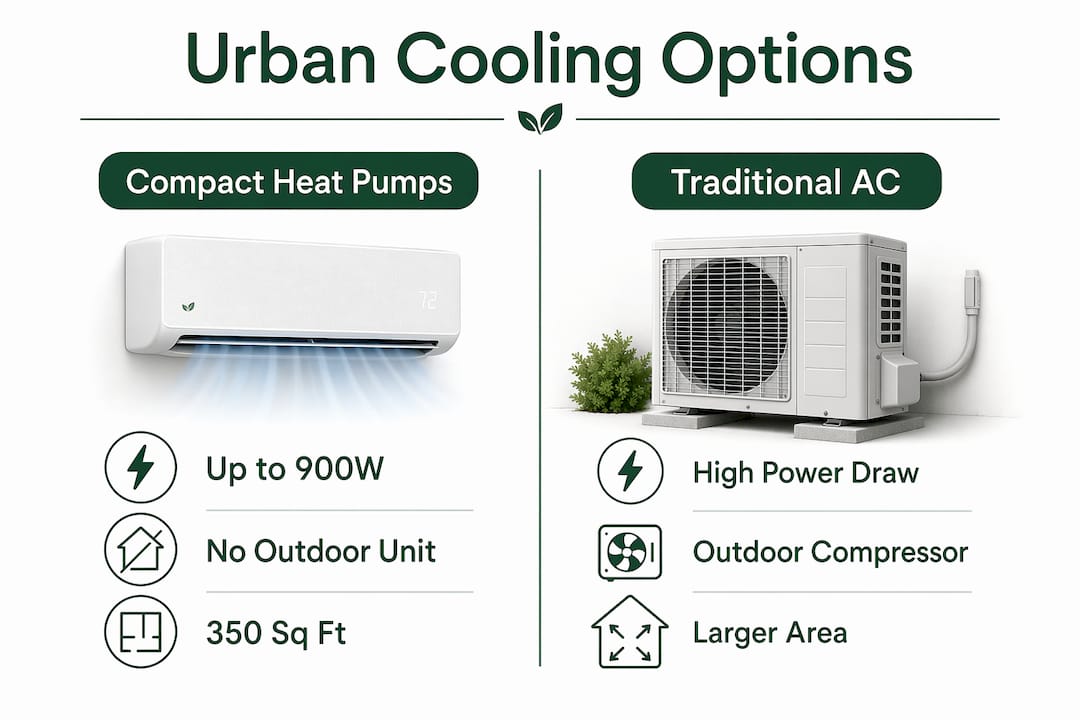
Compact chilled technology solutions for urban residents have matured significantly by 2026. The most practical entry point is a compact heat pump unit designed for small spaces. These units plug into standard outlets, draw up to 900 watts, and can cool approximately 350 square feet without requiring an outdoor compressor unit. For renters, condo owners, and residents of older buildings, that means no landlord approval for exterior modifications and no major electrical work.
Solid-state cooling is the other technology worth watching. Thermoelectric (TEC) pads use the Peltier effect to actively cool surfaces 10–17°C below room temperature. They work well for spot cooling laptops, small enclosures, or localized hot spots. Whole-room replacement is not realistic yet, but for targeted applications they are a genuine chilled tech option at the consumer level.
| Option | Power draw | Best use case | Outdoor unit needed |
|---|---|---|---|
| Compact heat pump | Up to 900 watts | Rooms up to 350 sq ft | No |
| Thermoelectric pad | 20–60 watts | Spot cooling devices | No |
| Mini-split system | 1,000–3,500 watts | Larger apartments | Yes |
| Portable AC | 1,000–1,500 watts | Temporary room cooling | Partial (exhaust hose) |
System design must account for local constraints including noise, water availability, and electrical capacity. There is no single solution that works for every urban space. A studio apartment in a high-rise has different constraints than a ground-floor condo with outdoor access.
Humidity and airflow are the variables most urban residents underestimate. Focusing only on lower temperatures without addressing ventilation and humidity control leads to condensation problems, mold risk, and reduced comfort. Any compact cooling setup needs a plan for where moisture goes.
Practical checklist for small-space chilled tech:
Chilled tech works best when the full thermal chain, from heat capture to rejection and control, is designed as a system rather than a collection of individual components.
| Point | Details |
|---|---|
| Chilled-water systems lead at scale | They contain refrigerant, support freecooling, and integrate with facility infrastructure for large deployments. |
| D2C cooling targets component heat | Cold plates on CPUs and GPUs capture heat before it spreads, integrating with existing chilled-water loops. |
| Freecooling has real limits | It fails at peak ambient temperatures; compressor and fan loads must be balanced through coordinated controls. |
| Compact heat pumps suit urban spaces | Units drawing up to 900 watts cool 350 sq ft without outdoor compressors, ideal for renters and condos. |
| Humidity and airflow matter as much as temperature | Ignoring ventilation in small-space cooling setups leads to moisture problems and reduced comfort. |
Most coverage of chilled tech stops at data centers, and that is a mistake. The same thermal physics that governs a 10-megawatt server hall applies to a 300-square-foot apartment. Heat has to go somewhere. If you do not design for where it goes, it goes somewhere inconvenient.
I have watched tech-savvy urban residents spend real money on portable AC units that dump hot exhaust back into the room because the window kit was installed poorly. The unit works. The physics does not. That is a chilled tech failure at the most basic level, and it happens constantly.
The compact heat pump category is genuinely exciting right now. Eliminating the outdoor compressor requirement removes the single biggest barrier for renters. The 900-watt draw fits on a standard 15-amp circuit. That is not a compromise product. That is a well-engineered solution to a real constraint.
Solid-state cooling via thermoelectric pads is still a niche tool, not a replacement for refrigerant-based systems. The efficiency gap is real. But for cooling a specific device, a small grow cabinet, or a localized hot spot in a home office, TEC pads deliver results that air cooling simply cannot match in a compact form factor.
The broader lesson is this: chilled technology solutions scale down. The principles that make data centers efficient, managing the full thermal chain, balancing loads, and controlling humidity, apply directly to urban living. Tech enthusiasts who understand those principles make better purchasing decisions and get more out of every cooling dollar they spend.
— Luna
Temperature and humidity control are not just data center concerns. Indoor gardeners face the same physics: too much heat stresses plants, and poor airflow creates moisture problems that kill crops before harvest.

Sprout-lab builds hydroponic systems specifically for urban spaces where environmental control matters. Their modular setups let you grow up to 56 plants in a compact footprint, with designs that work alongside the kind of efficient cooling setups covered in this article. If you are already thinking about how to manage heat and airflow in a small space, pairing that with a low-touch indoor growing system is a natural next step. Sprout-lab has earned a 4.9/5 rating across more than 25,000 orders, and their garden systems for busy people are built for exactly the kind of efficient, space-conscious urban environment this article describes.
Chilled tech refers to cooling methods that use chilled water, liquid loops, or solid-state devices to remove heat from technology systems or living spaces. The goal is to move heat away from where it is generated and reject it efficiently elsewhere.
Direct-to-chip cooling uses cold plates attached to individual CPUs and GPUs, while immersion cooling submerges entire servers in dielectric fluid. D2C integrates with standard server racks and existing facility water loops, making it easier to retrofit.
Yes. Compact heat pump units draw up to 900 watts, require no outdoor compressor, and cool approximately 350 square feet. They are designed specifically for renters, condos, and older buildings where traditional HVAC installation is not practical.
No. Freecooling loses efficiency at peak ambient temperatures when the temperature gradient between outdoor air and the chilled-water supply narrows. Efficient systems balance compressor and fan loads dynamically rather than relying on freecooling alone.
Thermoelectric cooling uses the Peltier effect to actively cool surfaces 10–17°C below room temperature without refrigerant. It works best for spot cooling specific devices or small enclosures, not for whole-room temperature control.