Free shipping for order over $50

Free shipping for order over $50
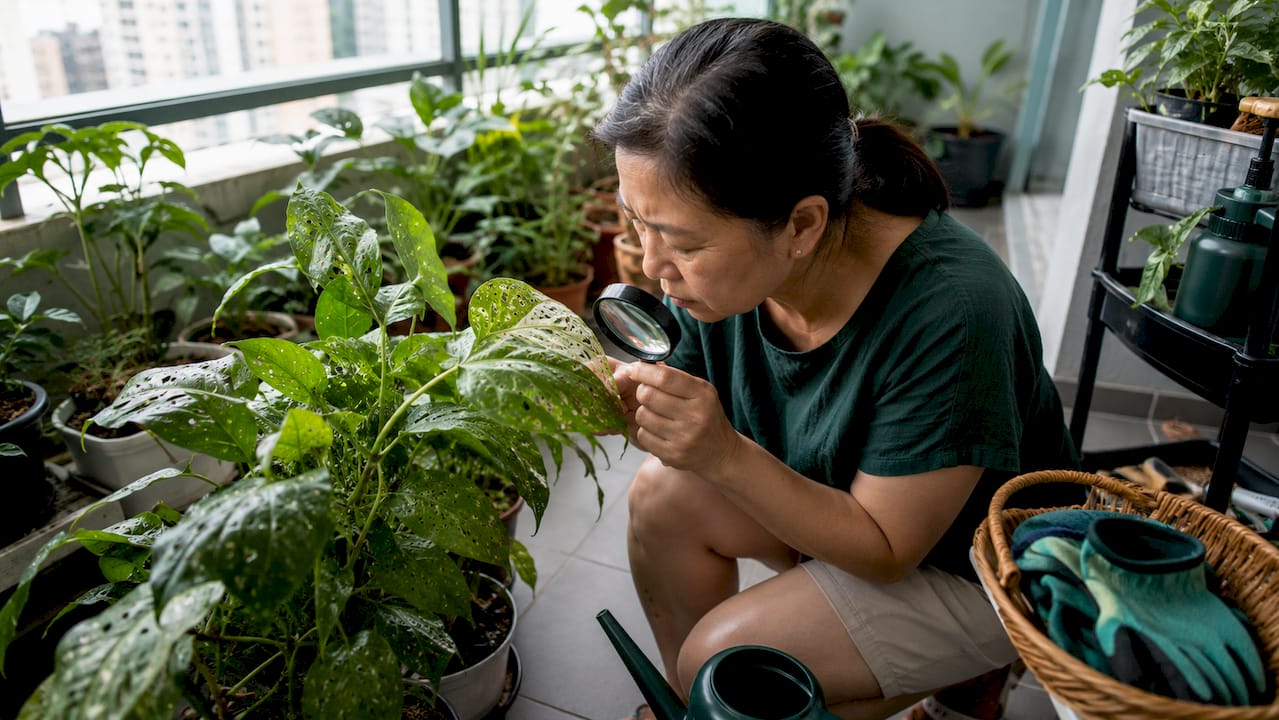
Common plant pests in Singapore homes are primarily insects like mealybugs, spider mites, and fungus gnats that thrive in the country’s year-round tropical heat and humidity. Singapore’s indoor air-conditioned environments create a double threat: dry air indoors encourages spider mites, while overwatered pots invite fungus gnats. Identifying these pests early is the single most effective step you can take to protect your plants. This guide covers the top 10 pests to know, how to treat them, and how to stop them from coming back.
The ten pests below account for the vast majority of houseplant and garden damage reported by Singapore home gardeners. Each one has a distinct look, a preferred hiding spot, and a specific weakness you can exploit.
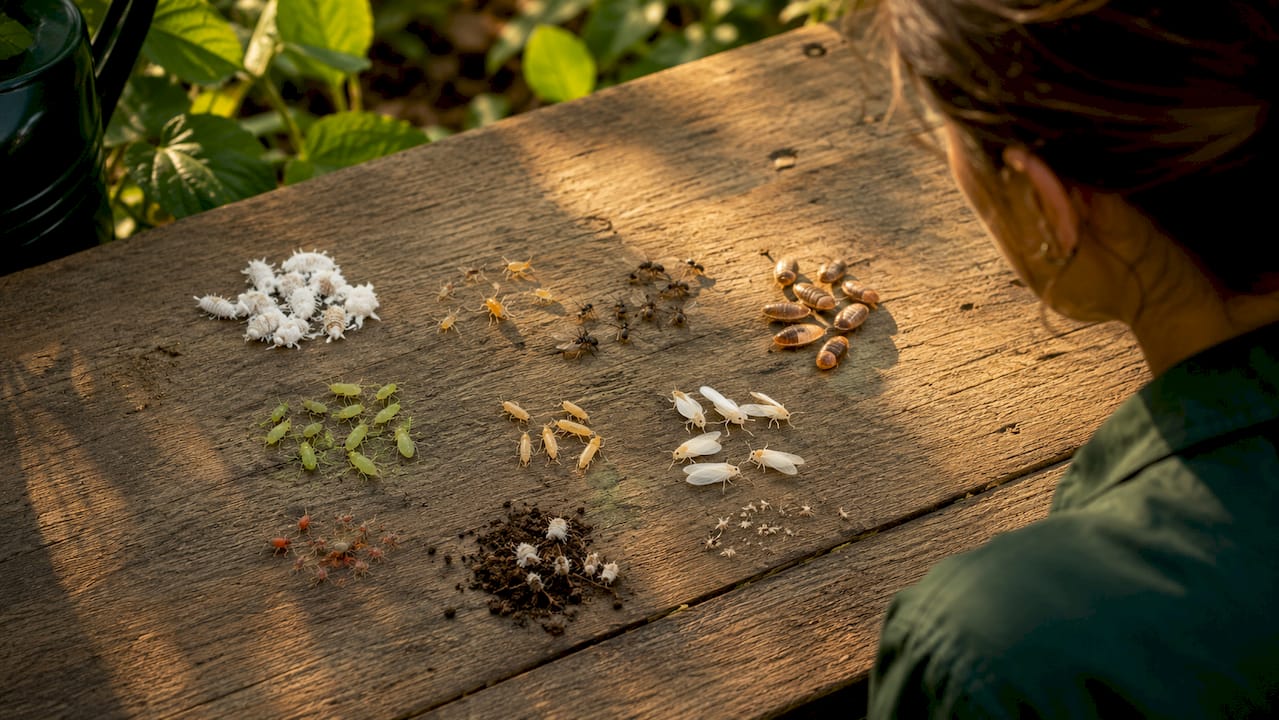
Fungus gnats are tiny black flies, roughly 2–3 mm long, that hover around soil and lay eggs in the top layer of moist potting mix. The adult flies are mostly harmless, but their larvae feed on roots and organic matter underground, stunting young plants. You will usually notice them when you water, as adults scatter upward from the soil surface. Overwatered pots in Singapore’s humid conditions are the number one cause of fungus gnat outbreaks.
Pro Tip: Let the top 2 inches of soil dry out completely between waterings. Fungus gnat larvae cannot survive in dry conditions, so this single habit change cuts most infestations within two weeks.
Mealybugs are soft, oval insects covered in white, waxy powder that look like tiny cotton balls clustered at stem joints and leaf undersides. They feed by sucking sap, which causes yellowing, wilting, and a sticky residue called honeydew on leaves and nearby surfaces. For light infestations, spot treatment with 70% isopropyl alcohol on a cotton swab removes them on contact. Moderate to heavy infestations respond well to neem oil diluted at 5 ml per 1 liter of water with a drop of dish soap, applied every 5–7 days.
Spider mites are nearly invisible to the naked eye, measuring less than 1 mm, but their damage is unmistakable: fine webbing on leaf undersides and a stippled, bronze appearance on leaf surfaces. They spread fast, moving from plant to plant on air currents or clothing. Singapore’s air-conditioned rooms are prime spider mite territory because dry air encourages spider mite populations to explode. Misting leaves regularly and treating with insecticidal soap every few days breaks their cycle within three weeks.
Scale insects look like small brown or tan bumps stuck to stems and leaf midribs, and many gardeners mistake them for part of the plant itself. They come in two types: soft scale, which secretes honeydew, and armored scale, which does not. Both types drain sap steadily and weaken plants over months. Scraping them off with a soft toothbrush and following up with neem oil is the most reliable removal method for home gardeners.
Aphids are pear-shaped, soft-bodied insects about 1–2 mm long that cluster on new growth, flower buds, and stem tips. They reproduce rapidly, with a single female producing dozens of offspring per week without mating. A strong spray of water knocks most colonies off plants immediately. For persistent cases, insecticidal soap or biological controls like predatory insects are effective and safe for indoor use.
Thrips are slender, fast-moving insects roughly 1–2 mm long that rasp leaf surfaces and suck the cell contents, leaving silver streaks or patches on foliage. They are especially damaging to flowering plants and herbs. Thrips hide inside flower buds and leaf folds, making them harder to spot than most pests. Treatment requires consistency: thrips need about four weeks of repeated treatment to fully eliminate because their eggs are laid inside plant tissue and resist most sprays.
Whiteflies are tiny white-winged insects that congregate on leaf undersides and fly up in a cloud when disturbed. Like aphids, they excrete honeydew, which promotes sooty mold growth on leaves. Yellow sticky traps placed near affected plants catch adults and reduce populations quickly. Whitefly infestations on outdoor Singapore garden plants can spread to indoor plants if new cuttings are not quarantined first.
Broad mites are microscopic, measuring under 0.2 mm, and cause some of the most confusing damage in home gardens: twisted, distorted new growth that looks like a nutrient deficiency or virus. They prefer warm, humid conditions, which makes Singapore gardens particularly vulnerable. Because they are invisible without magnification, many gardeners treat for the wrong pest for weeks before identifying broad mites. Neem oil and sulfur-based sprays are the most accessible treatments for home use.
Root mealybugs live entirely underground, feeding on roots and leaving white, waxy deposits in the soil. You will not see them until you unpot the plant, by which point the infestation is often severe. Root mealybug infestations are one of the clearest cases where replacing the plant and discarding the soil is more practical than treatment. If you choose to treat, drench the roots with a diluted neem oil solution and repot into fresh, sterile soil.
Springtails are tiny white or gray jumping insects found in damp soil, and they are not actually harmful to plants. Springtails are harmless decomposers that break down organic matter in the soil and rarely cause plant damage. Their presence signals overly wet soil, so reducing watering frequency is the only correction needed. No chemical treatment is necessary.
Choosing the right treatment depends on the pest, the severity of the infestation, and whether the plant is indoors or outdoors. The table below compares the main options.
| Treatment type | Application method | Safety for indoors | Best for |
|---|---|---|---|
| Neem oil (diluted) | Spray every 5–7 days | High | Mealybugs, spider mites, scale |
| Insecticidal soap | Spray directly on pests | High | Aphids, whiteflies, soft-bodied pests |
| 70% isopropyl alcohol | Cotton swab, spot treatment | High | Light mealybug infestations |
| Predatory mites / BTi | Soil drench or release | High | Fungus gnat larvae, spider mites |
| Diatomaceous earth | Top-dress dry soil | High | Crawling larvae, fungus gnats |
| Chemical pesticides | Spray per label | Low (use outdoors only) | Severe outdoor infestations |
Biological controls like predatory mites and BTi are the gold standard for indoor pest management because they target specific pests without harming people or pets. Integrated pest management, which combines physical removal, biological controls, and low-toxicity sprays, is the most effective long-term approach for Singapore home gardeners.
Treatment duration matters as much as the product you choose. Effective treatment protocols require 3–6 weeks of consistent application depending on the pest species. Aphids, whiteflies, and spider mites clear in about three weeks. Thrips need four weeks. Mealybugs and scale insects require four to six weeks of repeated treatment to break the full life cycle.
Pro Tip: Set a phone reminder to reapply treatments every 5–7 days. Missing a single application gives surviving eggs time to hatch and resets your progress.
Prevention is faster and cheaper than treatment. These habits reduce your risk significantly.
Healthy plants resist pests better than stressed ones. A plant with good soil, proper light, and consistent watering has stronger cell walls and recovers faster from minor pest pressure.
Early identification is the difference between a quick fix and losing a plant entirely. The most reliable visual clues are stippling (tiny pale dots on leaves), fine webbing on undersides, sticky honeydew residue, distorted new growth, and white cottony patches at stem joints.
Check your plants on a fixed schedule, such as every Sunday morning, rather than waiting until damage is obvious. A magnifying glass or phone macro lens reveals spider mites, thrips, and broad mites that are invisible to the naked eye.
Knowing when to give up on a plant is just as important as knowing how to treat it. Root mealybugs and root aphids are hidden until you unpot the plant, and by that stage, treatment is often impractical. If a plant shows heavy webbing across all growth points, complete leaf distortion, or root rot alongside pest damage, replacement protects the rest of your collection. Before discarding, always complete at least two full treatment cycles to confirm the infestation is truly unmanageable. You can find a detailed breakdown of indoor pest control protocols that covers when treatment is worth continuing.
Controlling plant pests in Singapore homes requires accurate identification, consistent treatment over 3–6 weeks, and prevention habits that remove the conditions pests need to thrive.
| Point | Details |
|---|---|
| Identify before treating | Match the pest to its signs: webbing for mites, cottony patches for mealybugs, jumping insects for springtails. |
| Treat consistently for weeks | Most pests need 3–6 weeks of repeated treatment to eliminate all life stages. |
| Prevention beats treatment | Quarantine new plants, inspect weekly, and control soil moisture to stop infestations before they start. |
| Know when to replace | Root mealybugs and advanced infestations are often better resolved by discarding the plant and soil. |
| Choose low-toxicity methods | Neem oil, insecticidal soap, and biological controls are safe for indoor use and effective for most Singapore home pests. |
The pest that surprises most Singapore home gardeners is not the mealybug or the spider mite. It is the broad mite. I spent three months treating a collection of Monstera and Philodendron for what I assumed was a nutrient deficiency, only to realize the twisted new leaves were broad mite damage. No webbing, no visible insects, just relentless distortion. A 10x loupe and a targeted neem oil spray finally solved it.
The bigger lesson was about observation. Most gardeners, myself included, check the tops of leaves and move on. The real action happens on the undersides, at stem joints, and in the top inch of soil. Spending two extra minutes per plant during weekly checks has saved me more plants than any spray product.
I am also skeptical of the instinct to reach for chemical pesticides at the first sign of trouble. Integrated pest management, which combines physical removal, biological controls, and low-toxicity sprays, is not just safer for your home. It produces better long-term results because it does not kill the beneficial insects that naturally keep pest populations in check. Singapore’s urban gardens are small enough that this approach is completely practical. Patience and consistency matter far more than the strength of the product you use.
— Luna
Healthy plants in well-draining soil are your first line of defense against pests. Sprout-lab’s garden systems for busy growers are designed to maintain the consistent moisture levels and airflow that keep pest pressure low, even in Singapore’s challenging climate. Their premium soil mixes are formulated to drain well and resist the waterlogged conditions that attract fungus gnats and root pests. With a 4.9/5 star rating from over 25,000 completed orders, Sprout-lab products give your plants the foundation they need to stay strong and resist infestations from the start.

The most common pests are mealybugs, spider mites, fungus gnats, scale insects, aphids, thrips, and whiteflies. Singapore’s tropical climate and indoor air conditioning create conditions that favor all of these species.
Treatment takes 3–6 weeks depending on the pest. Aphids and spider mites clear in about three weeks, while mealybugs and scale insects require four to six weeks of consistent treatment to eliminate all life stages.
Yes. Neem oil diluted at 5 ml per 1 liter of water with dish soap is safe for indoor use and effective against mealybugs, spider mites, and scale insects when applied every 5–7 days.
Replace a plant when root mealybugs or root aphids are confirmed, or when the infestation covers all growth points and the plant shows no recovery after two full treatment cycles.
No. Springtails are harmless decomposers that live in damp soil and do not damage plant roots or leaves. Reducing watering frequency is the only correction needed if you see them.