Free shipping for order over $50

Free shipping for order over $50
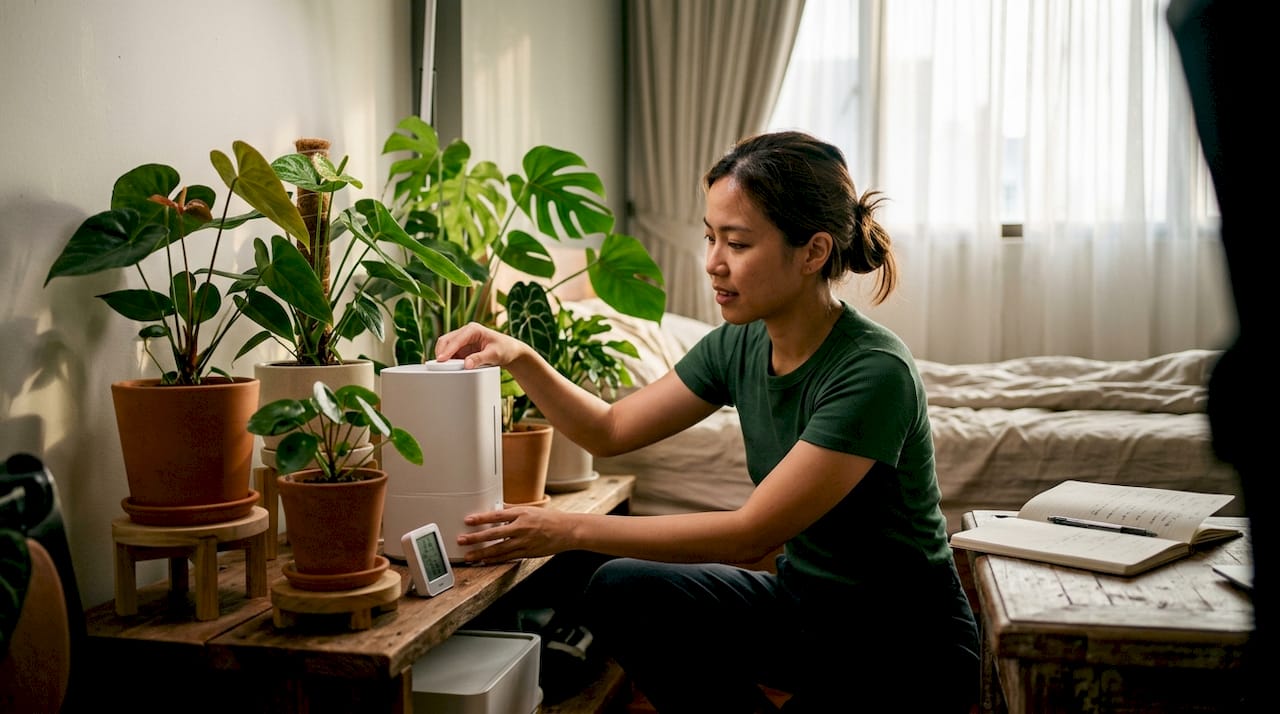
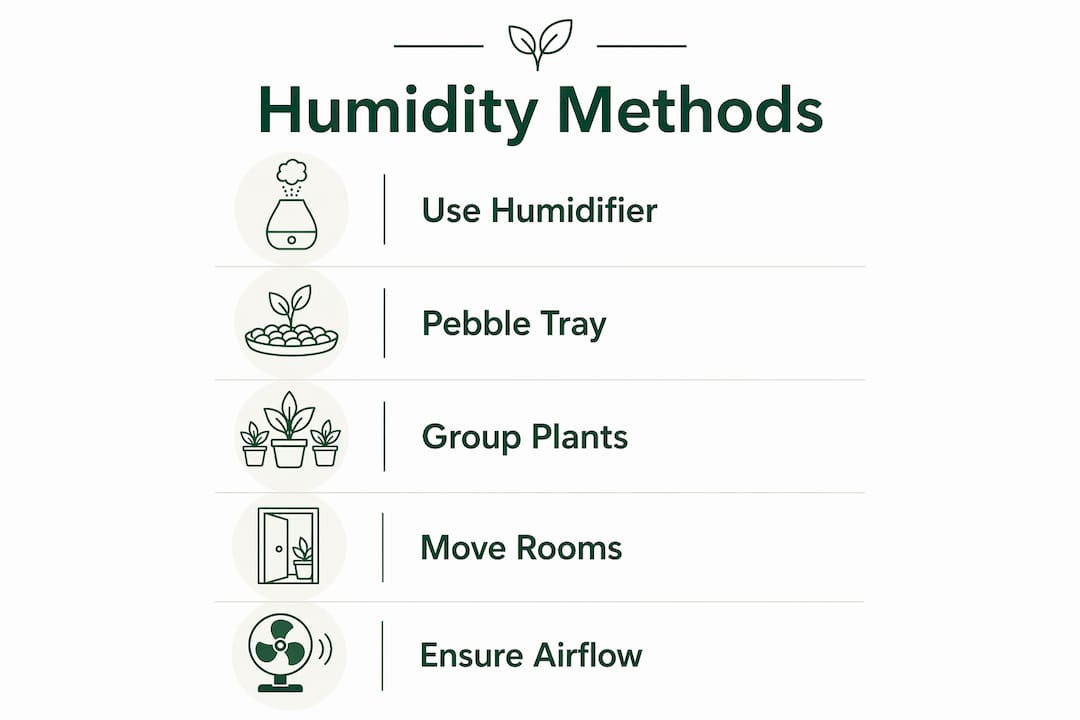
The most effective ways to increase humidity for aroids in a Singapore apartment are running an ultrasonic humidifier set to moderate relative humidity, grouping plants together to create a shared microclimate, and placing pots on pebble trays filled with water. These three methods work in any apartment, require minimal space, and deliver consistent results. Skip misting entirely. It evaporates within minutes and leaves leaves wet long enough to invite fungal disease.
Here is the quick picture before diving deeper:
Getting the humidity right comes down to choosing the right method for your space and pairing it with good airflow. Here is how each technique works in practice.
An ultrasonic humidifier is the most consistent solution for serious aroid growers. Set it to maintain moderate relative humidity and position it so the mist disperses into the surrounding air rather than landing directly on leaves. Wet foliage sitting in still air is a recipe for rot. For a Monstera or Philodendron in an air-conditioned room, a humidifier running a few hours daily makes a noticeable difference within a week.
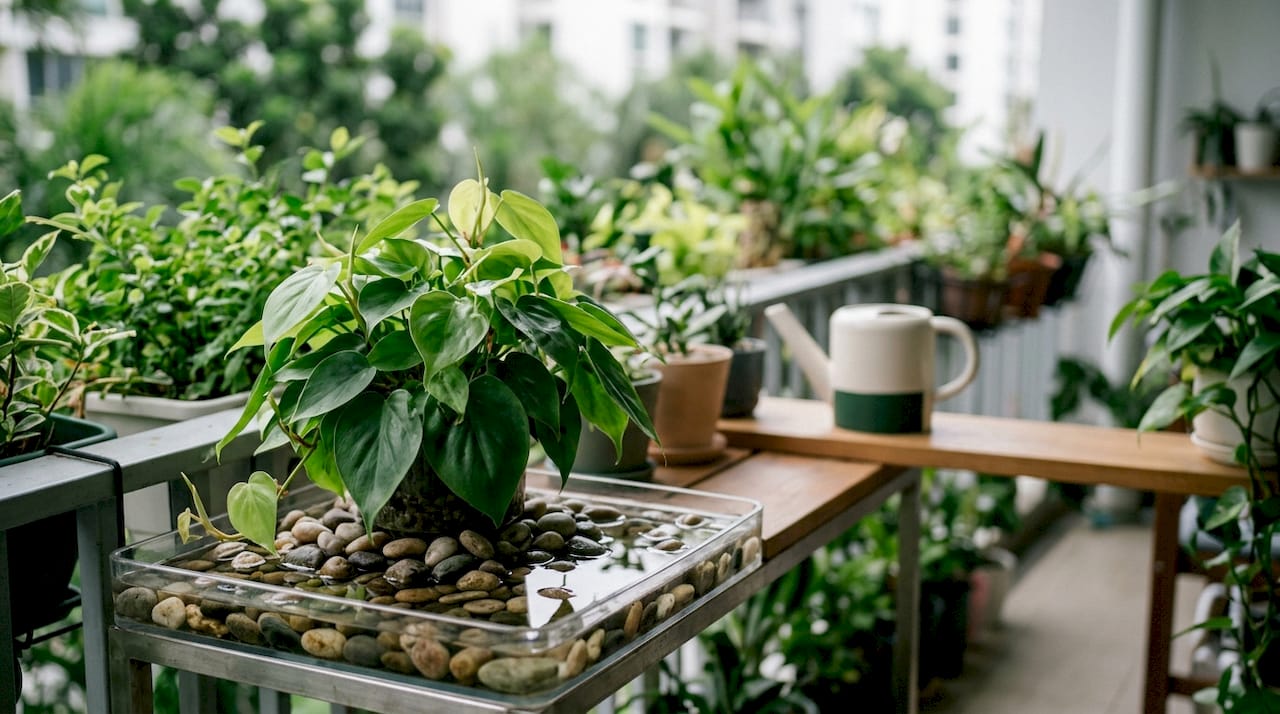
Place your pot on a shallow tray packed with pebbles, then add water until it sits just below the pot’s base. As the water evaporates, it raises humidity in the immediate zone around the plant. Refill the tray every few days. The key detail: the pot must never sit in the water itself, or you will create the root rot you were trying to avoid.
Plants release moisture through transpiration, and a cluster of tropical plants shares that moisture. Grouping 3–5 aroids together measurably raises humidity in their shared microclimate compared to a single isolated plant. A corner with a Monstera, two Philodendrons, and a Peace Lily will hold noticeably more moisture than the same plants scattered across different rooms.
Bathrooms and kitchens with windows are the most humid rooms in most Singapore apartments, sometimes reaching 70–80% without any intervention. A Philodendron struggling with crispy leaf edges in a dry living room often recovers quickly after a move to a well-lit bathroom. The trade-off is usually lower light, so check whether the plant can tolerate the shift before committing.
Misting offers no lasting humidity benefit in an air-conditioned room. The moisture evaporates within minutes, and the brief wetness on the leaf surface creates ideal conditions for fungal infections. Plant enthusiast communities consistently flag misting as one of the most common mistakes Singapore apartment growers make with aroids.
Pro Tip: Run a small oscillating fan on its lowest setting near your aroid collection. Continuous gentle airflow prevents the stagnant humid air that causes powdery mildew and fungal problems, even when humidity is high.
Singapore’s outdoor humidity is generally high. Indoors without air conditioning, apartments typically hold high humidity levels, which is ideal for most tropical aroids. The problem is air conditioning.
AC rooms drop indoor humidity to low levels, a range that stresses Monstera, Philodendron, and especially Anthurium warocqueanum. That last one is unforgiving. It needs stable humidity consistently above 65%, and in a dry AC room it will show stunted growth and leaf dieback within weeks. Serious collectors often keep Anthurium warocqueanum in enclosed growing areas or terrariums specifically because open-room humidity cannot stay high enough.
For most aroids, a moderately high humidity range is the target. But the number alone does not tell the full story. Moist air with active water vapor and good air circulation supports better plant function than stagnant air reading 75% on a hygrometer. Anthuriums in particular tend to show slow growth and underdeveloped aerial roots when the air is static, even at nominally high humidity.
Advanced growers track Vapor Pressure Deficit rather than humidity alone. The optimal VPD range for tropical aroids sits at 0.8–1.2 kPa, a metric that accounts for both temperature and humidity together and gives a more accurate picture of what the plant is actually experiencing.
Measuring humidity accurately: A digital hygrometer placed at plant level gives you a real reading of what your aroids experience, not what the room feels like to you. Smart sensors that log data over time are worth it if you have a collection of sensitive species. You will quickly see how much your AC cycling drops humidity during the night.
One more thing worth knowing: good home ventilation design in Singapore apartments affects how humidity distributes across rooms. A well-ventilated apartment holds more stable humidity in non-AC spaces, which directly benefits aroids kept away from the air conditioning.
Humidity is a dynamic condition, not a static number. Active water vapor, air movement, and plant transpiration all interact. Aroids grown in environments with consistent humidity, continuous airflow, and moist air rather than just a high hygrometer reading consistently show faster growth and healthier aerial roots.
Balancing humidity with airflow is where most apartment growers get tripped up. High humidity without air movement creates the exact conditions that cause root rot and fungal disease, the two most common killers of indoor aroids in Singapore. Sprout-lab’s approach addresses both sides of that equation.
Soil choice matters as much as ambient humidity. In Singapore’s naturally humid conditions, overwatering is a greater risk than dry air for most aroids. Porous terracotta pots allow excess moisture to evaporate through the pot walls, giving roots a buffer against waterlogging. Pair that with a well-draining soil mix that includes perlite, pumice, or orchid bark, and you remove the root rot risk that high humidity can otherwise create.
Sprout-lab’s soil mixes are formulated for Singapore’s tropical conditions, where standard potting soil stays wet far longer than the bag instructions assume. The right mix keeps roots healthy in high humidity without the constant anxiety of overwatering.
Pro Tip: Check soil moisture by pushing your finger or a chopstick into the mix rather than watering on a fixed schedule. In Singapore’s humidity, aroids often need watering only every 10–14 days rather than weekly. Soil moisture is a more reliable guide than the calendar.
Sprout-lab’s compact growing systems are built for exactly this kind of apartment setup, where space is limited but the plants are not. Whether you are managing a corner of Philodendrons or a dedicated aroid shelf, the right system makes humidity and moisture control far less guesswork.
Aroids in Singapore apartments thrive at moderate to high humidity indoor, but AC rooms drop to low humidity levels, making active humidity management and airflow essential for healthy growth.
| Point | Details |
|---|---|
| Best humidity methods | Use a humidifier set to moderate relative humidity, group plants together, or place pots on pebble trays. |
| AC rooms are the problem | Air conditioning drops indoor humidity to low levels, stressing Monstera, Philodendron, and Anthurium warocqueanum. |
| Misting does not work | Moisture evaporates within minutes and leaves foliage wet, promoting fungal disease. |
| Airflow is non-optional | Continuous gentle air movement prevents fungal infections even when humidity is high. |
| Soil and pot choice matter | Terracotta pots and well-draining mixes reduce root rot risk in Singapore’s naturally humid conditions. |
Most aroids thrive at moderately high relative humidity. Specialized species like Anthurium warocqueanum need consistently high humidity and often require enclosed growing areas in air-conditioned apartments.
Run an ultrasonic humidifier set to moderate relative humidity, group tropical plants together, or place pots on pebble trays with water kept below the pot base. Moving plants to a bathroom or kitchen with a window is also effective.
No. Seventy percent is within the ideal range for most tropical aroids. The risk at high humidity is stagnant air, not the humidity itself. Keep a small fan running to maintain airflow and prevent fungal problems.
Non-AC rooms in Singapore naturally hold 70–80%, which suits tropical aroids well. AC bedrooms typically drop to 40–55%, which is too dry for sensitive species without supplemental humidity.
AC strips moisture from the air, dropping humidity to 40–55% in most Singapore apartments. That range causes leaf edge dryness, stunted growth, and stress in humidity-sensitive aroids like Philodendron and Anthurium warocqueanum. A humidifier or pebble tray in the AC room addresses the deficit directly.