Free shipping for order over $50

Free shipping for order over $50

Modular planters are defined as engineered, connectable units that bolt or stack together to form customized planting systems sized for any urban space. Understanding how modular planters work gives you a real advantage if you garden on a balcony, rooftop, or small backyard. These systems use standardized, interchangeable components that function like furniture, meaning you can scale your garden up or down without replacing what you already own. Sprout-lab builds on this principle with hydroponic setups that let urban gardeners grow up to 56 plants in a compact footprint, rated 4.9/5 across more than 25,000 completed orders.
Modular planters are built from a small set of repeating parts. Each system typically includes standardized wall panels, corner posts, and locking connectors that click or bolt together without onsite fabrication. A liner or drainage tray sits inside the assembled frame to hold soil and manage water.
Material choice determines how a planter performs over time:
Weight is the deciding factor for elevated spaces. Marine-grade aluminum and fiberglass keep the load manageable for one or two people to carry through an elevator and assemble by hand. Steel works best at grade, where structural load is not a concern.
Pro Tip: Before buying, check your balcony or rooftop’s load rating with a structural engineer. Wet soil is significantly heavier than dry soil, and that difference can push a setup past safe limits.
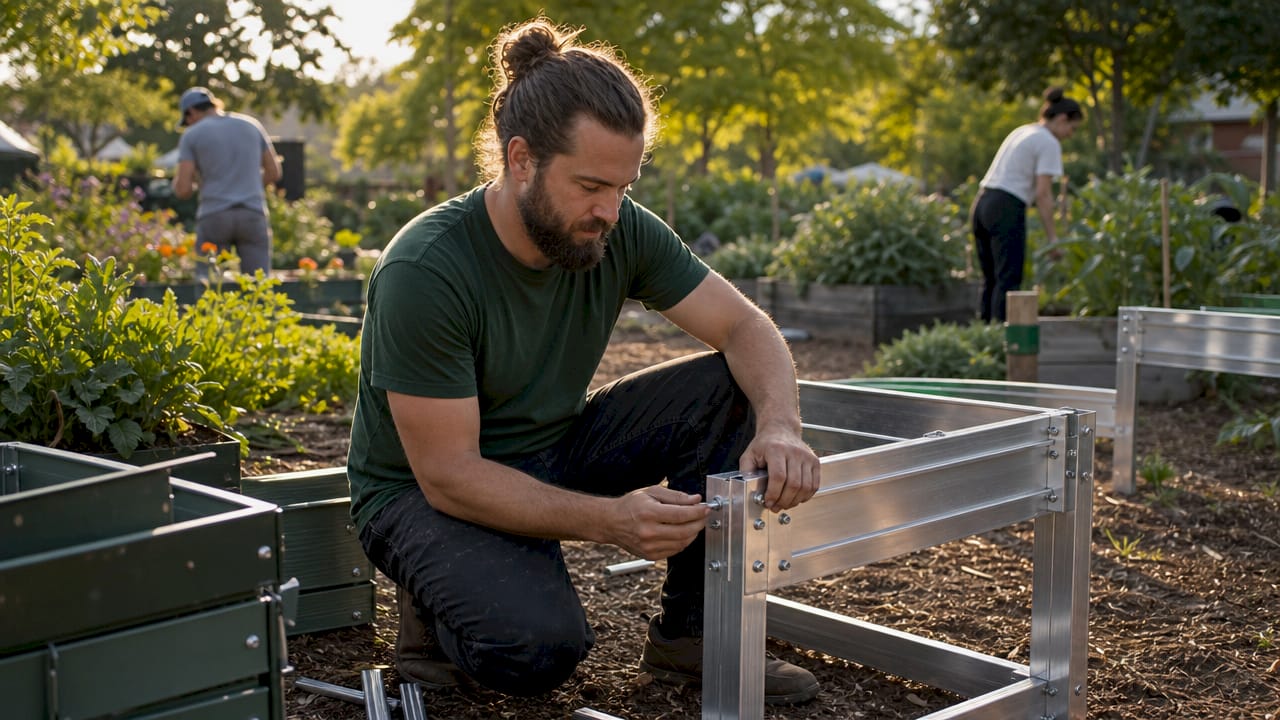
The core advantage of a modular gardening system is configurable geometry. Wall modules range from 6 to 48 inches high and 4 to 10 feet long, and you can bolt them together in straight runs, curves, or angled shapes to fit any footprint without cutting or custom fabrication. That flexibility is what separates modular systems from fixed raised beds.
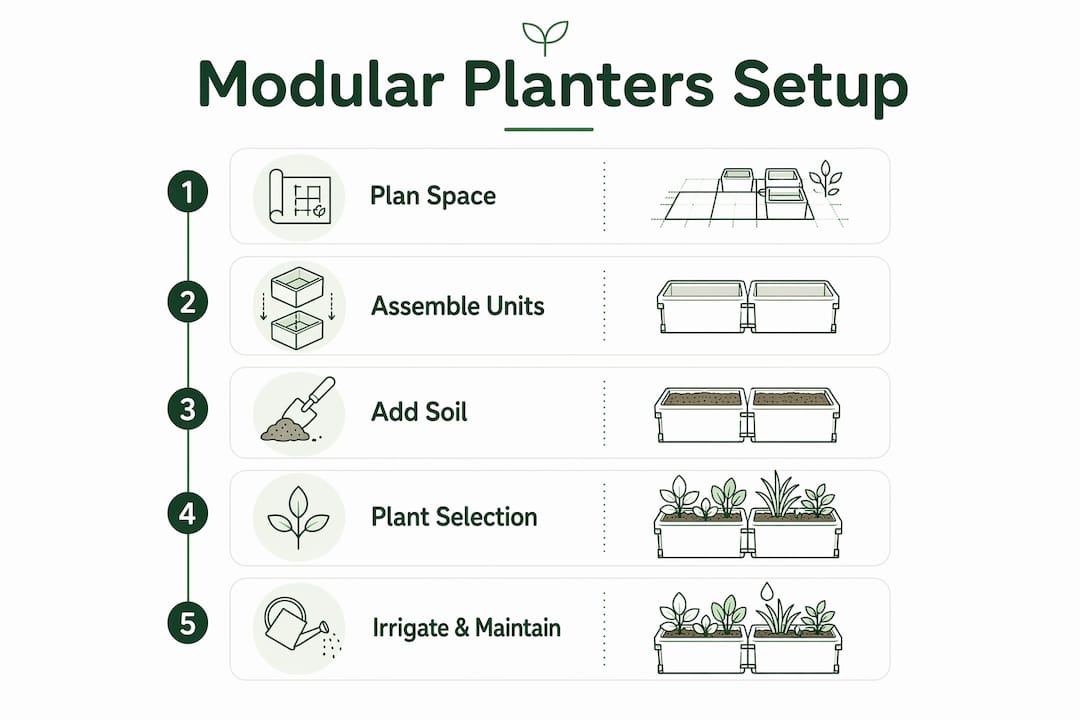
Here is how the space-maximizing logic works in practice:
A standard 8x4x2 modular raised bed requires 20–45 minutes to assemble and holds approximately 64 cubic feet of soil mix. That setup time is short enough for a weekend project, even for first-time gardeners.
Pro Tip: Sketch your space on graph paper before ordering. Mark doors, drainage points, and sun angles. A five-minute sketch prevents a costly module mismatch.
Rooftop and balcony gardening creates logistical problems that traditional planters cannot solve. Concrete beds require cranes, curing time, and permanent commitment. Modular systems solve all three.
Modular planter kits are sized for elevator access, assembled onsite by hand, and can be reconfigured later without damaging the waterproof membrane beneath. That last point matters more than most gardeners realize. A damaged rooftop membrane is an expensive repair that modular systems are specifically designed to prevent.
Key installation and maintenance features include:
| Feature | Why it matters |
|---|---|
| Leveling feet | Prevents frame distortion under wet soil load |
| Integrated drainage | Protects rooftop membranes and improves root health |
| Permeable walls | Eliminates moisture buildup and waterproofing damage |
| Anchoring brackets | Resists wind uplift on exposed balconies and rooftops |
| Bolt-together panels | Enables disassembly for inspection or reconfiguration |
Soil volume drives plant health in any container system. A standard 8x4x2 module holds roughly 64 cubic feet of mix, which supports most vegetables, herbs, and small shrubs. For multi-unit setups, multiply that figure by the number of connected modules to calculate your total soil requirement before you buy.
The best soil mix for modular planters combines three ingredients:
Group plants by water needs and mature height. Tall plants like tomatoes or trellised beans go at the north end of a run so they do not shade shorter neighbors. Herbs like basil and parsley share water requirements and work well together in a single module.
Root continuity is the most overlooked factor in connected modular runs. Large plants and woody shrubs need subsurface soil channels connecting adjacent modules so roots can spread without binding. Without that connection, a tree planted in one module will hit a wall and become root-bound within two seasons.
Irrigation works best when specified alongside drainage. Sub-surface drip lines maintain consistent moisture, reduce evaporation, and lower the time you spend hand-watering. Run the drip line through the modules before filling with soil so you do not have to dig it in later.
Pro Tip: Mix in 20–30% perlite by volume when filling modular planters. Urban rooftop conditions dry out containers faster than ground beds, and perlite buys you an extra day between waterings.
Modular planters deliver practical benefits that fixed or concrete planters simply cannot match. The advantages of modular planters come down to five areas that matter most to urban gardeners.
“Modular planters reconcile rooftop garden demands by distributing load intelligently, adapting to irregular geometries, and allowing gradual garden evolution without membrane damage. For urban gardeners working with limited, irregular, or structurally sensitive spaces, that combination is the most practical solution available.”
For gardeners new to container growing, a guide to growing in small urban spaces covers companion planting and spacing strategies that pair well with modular setups.
Modular planters work because standardized, connectable components let urban gardeners build, expand, and reconfigure their growing space without replacing existing parts or damaging rooftop membranes.
| Point | Details |
|---|---|
| Standardized components | Interchangeable panels, connectors, and feet assemble without fabrication or cranes. |
| Material choice matters | Use marine-grade aluminum or fiberglass for rooftops; steel works best at grade. |
| Drainage is non-negotiable | Integrated drainage openings protect membranes and prevent root disease. |
| Root continuity for large plants | Connect subsurface soil channels across modules so woody plants can spread freely. |
| Scale without replacing | Add modules to expand your garden rather than buying an entirely new system. |
Most gardeners I talk to treat modular planters as a convenience product. They are actually a structural decision. The choice of material, drainage design, and base leveling affects plant health for years, not just the first season.
The biggest mistake I see is skipping the leveling step. Marketing materials often say assembly is tool-free and quick. That is true for the panels. Getting the base perfectly level under a full soil load takes more patience than the instructions suggest. A frame that is even slightly off will rack under weight, and the connectors will loosen over time. A spirit level and ten extra minutes at setup saves a lot of frustration later.
The second mistake is ignoring root continuity. Gardeners plant a fig or a dwarf citrus in one module and wonder why it stalls after two seasons. The roots hit the module wall and stop. Connecting soil channels between modules before planting solves this completely, but almost nobody does it because the instructions do not emphasize it.
My honest recommendation: start with a two-module setup, get the drainage and leveling right, then add modules once you understand how your specific rooftop or balcony drains. Modular systems reward patience. They are genuinely long-term solutions if you treat the installation seriously from day one.
— Luna
Sprout-lab designs garden systems specifically for urban growers who need results in limited space. The modular garden system range covers setups from compact balcony configurations to full rooftop installations, with options for soil-based and hydroponic growing.
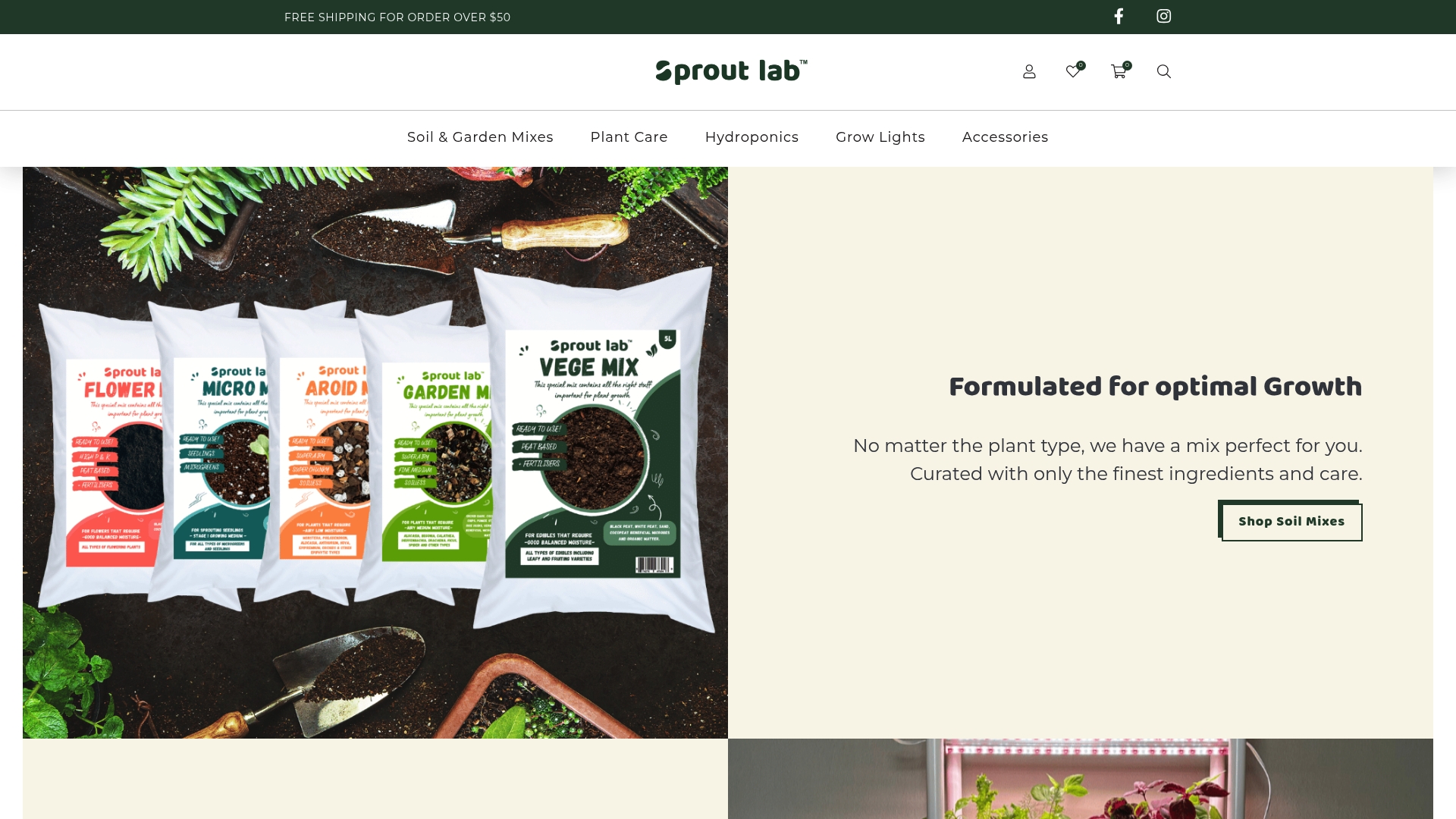
Sprout-lab’s premium soil mixes are formulated with compost, perlite, and organic matter to work directly in modular planter setups, removing the guesswork from soil preparation. For gardeners who want to reduce maintenance further, the automated hydroponic setups integrate with modular configurations to deliver consistent moisture without daily hand-watering. Sprout-lab holds a 4.9/5 rating across more than 25,000 completed orders, making it a trusted starting point for any urban growing project.
Modular means the planter is built from standardized, interchangeable parts that connect together. You can add, remove, or rearrange components without replacing the whole system.
A standard 8x4x2 modular raised bed takes 20–45 minutes to assemble. Larger multi-module configurations take longer, especially when leveling the base carefully.
Herbs, leafy greens, tomatoes, peppers, and compact fruiting plants all perform well. Large woody plants need subsurface soil channels connecting adjacent modules to prevent root binding.
Yes. Integrated drainage assemblies and permeable base designs prevent water pooling on the membrane below, which is the primary cause of rooftop waterproofing damage from planters.
Yes. Modular systems are designed for gradual expansion. You add panels and connectors to an existing frame rather than purchasing an entirely new planter.