Free shipping for order over $50

Free shipping for order over $50
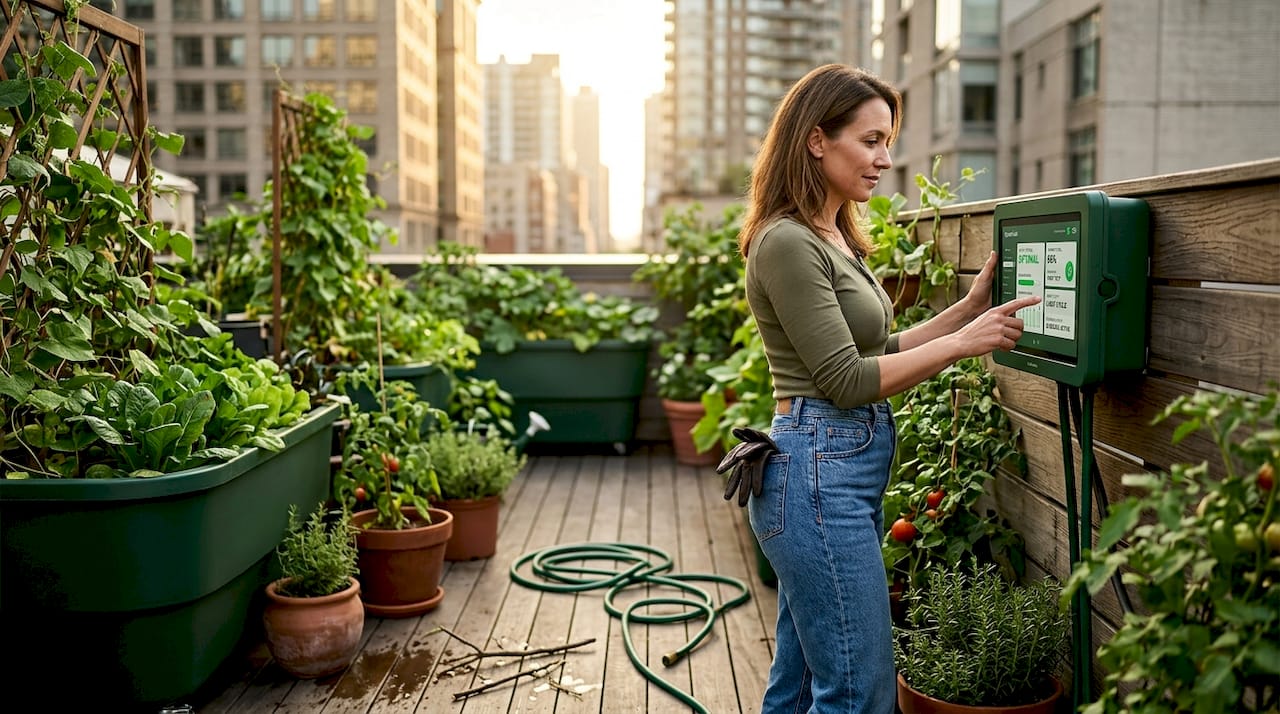
Most urban gardeners assume any irrigation system saves water. That assumption is wrong, and it costs plants their health. Understanding why automated watering systems work requires looking past the timer and into the soil. Modern systems, known in the industry as smart irrigation controllers, replace guesswork with real-time data from sensors and weather inputs. The result is water delivered only when plants actually need it. This article breaks down the science, the practical realities, and what you need to know to make automation genuinely work in your urban space.
| Point | Details |
|---|---|
| Sensors drive real results | Soil moisture sensors trigger watering based on root-zone readings, not fixed schedules. |
| Water savings are significant | Smart controllers can cut outdoor water use by 15% to 50% depending on setup and climate. |
| Plant growth improves measurably | IoT-based systems show documented gains in plant height, leaf count, and fresh weight. |
| Urban conditions need zoning | Container sizes, soil types, and microclimates require individual zones, not a one-size approach. |
| Programming quality matters most | Good calibration and scheduling unlock most of the efficiency gains automation promises. |
Before getting into benefits, it helps to understand what actually happens when a smart irrigation system runs. The industry term is soil moisture sensor-based irrigation, and it works by replacing the clock with a measurement.
A typical automated system has four main components working together.
The key distinction is between bypass systems and on-demand systems. A bypass system runs on a fixed timer but skips a watering cycle if the sensor reads above a set moisture threshold. An on-demand system initiates watering only when moisture drops below the target level, then stops once it reaches the upper threshold. Automated irrigation waters plants only when soil moisture drops below a set threshold and stops when the target is reached, giving plants exactly what they need and nothing more.
Compare that to a basic timer without sensor input. The timer runs whether it rained yesterday or not, whether the soil is saturated or dry. Timers without sensor input overwater because they cannot account for differences in root-zone saturation caused by soil texture, sun exposure, or container size.
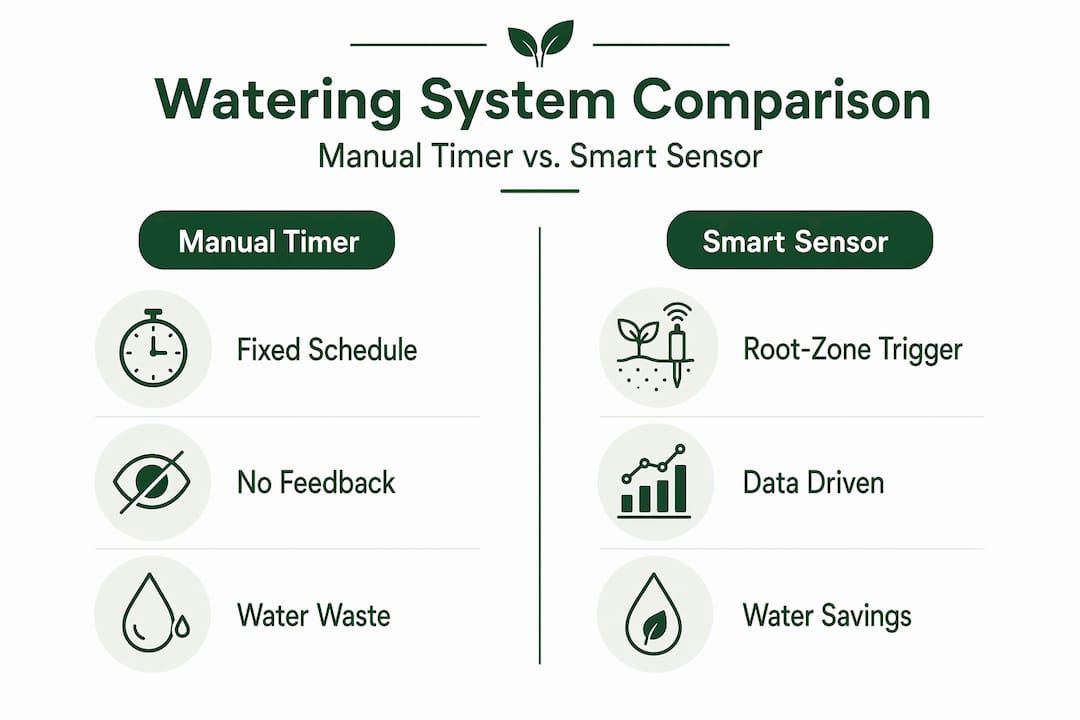
| Feature | Manual timer | Smart sensor system |
|---|---|---|
| Watering trigger | Clock only | Soil moisture reading |
| Responds to rain | No | Yes (bypass or pause) |
| Adjusts for soil type | No | Yes (calibrated thresholds) |
| Prevents overwatering | No | Yes |
| Remote monitoring | Rarely | Yes (app or IoT) |
Pro Tip: Place your soil moisture sensor at the depth where most of your plant roots sit, typically 2 to 4 inches for container gardens. A sensor sitting at the surface will give you inaccurate readings that throw off your entire watering schedule.
The research here is more compelling than most gardeners realize. An IoT-based smart irrigation system studied in a controlled growing environment produced mustard plant growth improvements of 36.6% in height, 42.7% in leaf count, 44% in leaf width, and 48.1% in fresh weight compared to manual watering, while increasing water efficiency by 40%. Those are not minor gains.
The mechanism behind those numbers is straightforward. Plants stressed by inconsistent moisture spend energy on survival rather than growth. Automated systems eliminate that inconsistency. Roots stay in their ideal moisture range, nutrient uptake stays steady, and the plant puts energy into leaves and fruit instead of stress responses.
Advanced irrigation controllers reduce outdoor water use by 15% to 40%, with some setups reaching 50% savings depending on climate and configuration. One WaterSense case study showed a 40% reduction with a 1.5-year payback period, which is a return most urban gardeners would welcome.
There is also a class of controllers called evapotranspiration-based (ET) controllers worth knowing. These systems use real-time or historical weather data to estimate how much water your plants are losing through transpiration and soil evaporation. ET-based controllers adjust irrigation timing to match that water loss, integrating with timers to water only when soil moisture drops below the depletion threshold.
Urban and small-space gardeners benefit from one specific advantage automation brings: consistent root-zone moisture across containers that dry out at different rates. A ceramic pot in full sun loses water four times faster than a plastic one in shade. A timer treats them identically. A sensor system does not.
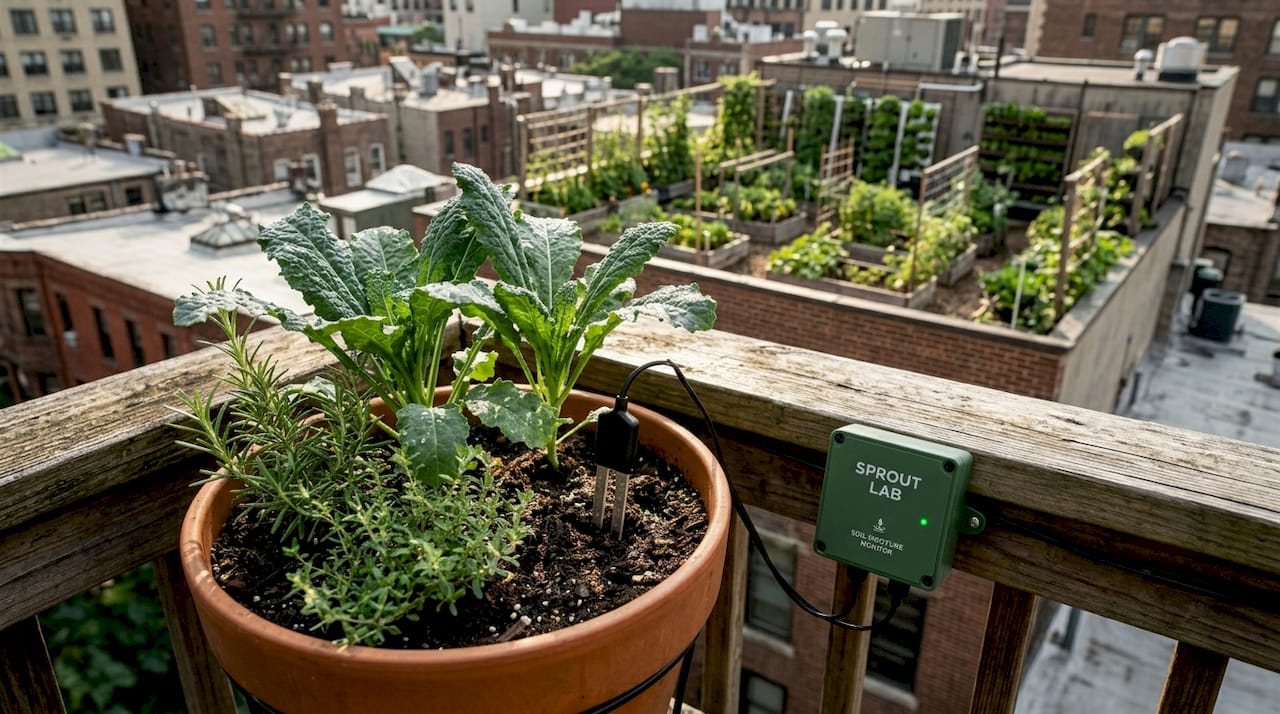
Pro Tip: After installing your system, run it for two weeks before making any adjustments. Collect data on how often each zone activates before changing thresholds. Real usage patterns are more reliable than manufacturer recommendations for your specific space.
For more on how irrigation fits within small urban growing spaces, Sprout-lab has a practical guide covering everything from container selection to moisture management.
Here is where most guides stop short. Automation works, but it does not work automatically on its own. There are real limitations to understand before you set up your system and walk away.
Weather station data is not always local. ET controllers pull weather information from regional stations that can be miles away. If your balcony gets afternoon rain that the station does not record, your system will still water that evening. Weather station data used by ET controllers often does not represent localized rainfall accurately, which makes onsite sensor calibration or a paired soil sensor critical for reliability in dense urban environments.
Soil type and container size change everything. Sandy potting mixes drain fast. Dense clay-based soils hold moisture much longer. A threshold calibrated for one container type will overwater or underwater another. Urban gardens often have varied container conditions, and only sensor automation can address those root-zone variations effectively across different growing setups.
| Control type | Best for | Limitation |
|---|---|---|
| Soil moisture sensor | Container gardens, mixed soil types | Requires accurate placement and calibration |
| ET controller | Larger garden beds, consistent climates | Less accurate in microclimates or urban heat islands |
| Combined sensor + ET | All urban setups | Higher upfront cost, more complex setup |
Zoning prevents pressure problems. Running too many zones simultaneously drops water pressure, giving some plants too little water. Proper zoning and programming are critical to system efficiency in urban setups. Sequencing your valves so zones run one at a time keeps pressure steady and reduces runoff into containers that cannot handle excess flow.
Common mistakes that undercut your system’s effectiveness:
Pro Tip: If you are using a weather-based controller, add even a basic soil sensor as a backup. The combination gives you climate awareness plus ground-truth data. It costs less than most indoor plant care subscriptions and pays for itself in a single season.
Getting started with automated watering in a small urban space does not require professional installation or a complex system. Here is a practical setup sequence that works for balconies, rooftops, and indoor container gardens.
Map your zones. Group plants with similar water needs together. Herbs in terracotta pots form one zone. Leafy greens in plastic planters form another. Do not let a timer treat them the same.
Choose your controller type. For most urban setups with fewer than eight zones, a Wi-Fi-enabled controller with app access gives you remote control and scheduling flexibility. Look for compatibility with your existing outdoor faucets or irrigation headers.
Select sensors that match your soil. Capacitance-type soil moisture sensors work well across potting mixes and hydroponic substrates. Avoid resistive sensors in container gardens because they degrade faster in modified soil media.
Set moisture thresholds by plant type. Most vegetables thrive with soil moisture kept between 50% and 70% of field capacity. Herbs tolerate drier conditions, around 40% to 60%. Your sensor manual will translate these ranges into volumetric water content percentages.
Connect to weather data if available. If your controller supports weather integration, enable it. But treat weather data as supplementary, not authoritative. Your onsite sensor is your primary signal.
Monitor the first month closely. Check your app daily for the first two to four weeks. Look for zones that activate too frequently or not enough. Adjust thresholds in small increments.
Evaluate plant response over six to eight weeks. Healthier root systems, faster growth, and fewer yellowing leaves are signs your moisture targets are right. These outcomes are measurable and comparable to the growth improvements documented in research settings.
For deeper guidance on home garden automation options specifically built for busy city growers, Sprout-lab’s resource covers controller types, app integrations, and scheduling strategies in detail.
I have watched dozens of urban gardeners set up automated systems with real enthusiasm, then complain two months later that their plants look worse than before. The system gets blamed. The real problem is almost always a sensor placed too shallow or a threshold copied from a general guide without adjustment for their specific containers.
The technology is not magic. What it does is remove the single biggest killer in urban container gardening, which is inconsistent watering driven by busy schedules. Homeowners with fixed automatic systems apply 47% more water than necessary because of a set-it-and-forget-it mindset. That stat should change how you think about any irrigation system, automated or not.
In my experience, the gardeners who get the most from automation are the ones who spend the first few weeks paying close attention rather than stepping back entirely. Once the system learns your space through calibrated thresholds, it genuinely frees you up. Plant health improves. Water bills drop. You stop losing plants on travel weeks.
If you have been hesitant because smart irrigation sounds technical, start with a single zone and one sensor. The learning curve is shorter than learning to keep basil alive through a hot summer.
— Luna
If automated watering has you thinking about upgrading your full growing setup, Sprout-lab has the tools to match. Their passive hydroponic system guide walks you through low-maintenance setups that pair naturally with sensor-based watering, since hydroponic media like perlite and clay pellets respond to moisture changes faster and more predictably than soil. For those just getting started, the beginner DIY hydroponic guide covers basic kits that eliminate soil variability entirely. Sprout-lab also offers a range of soil mixes optimized for container gardening and consistent moisture retention, which makes automated sensor calibration more reliable from day one. With a 4.9/5 rating across more than 25,000 orders, their products are built for exactly the kind of efficient, small-space growing that automation supports.
Automated systems with soil moisture sensors water based on actual root-zone conditions, not a fixed clock. This prevents both overwatering and underwatering, which directly improves plant health and reduces water waste.
Smart controllers reduce outdoor water use by 15% to 40% on average, with some setups reaching 50% savings. Results depend on how well the system is calibrated and programmed for your specific plants and space.
Yes, and they work particularly well because containers dry out at different rates depending on material, size, and sun exposure. Sensor-based automation responds to those differences in ways that a fixed timer cannot.
An evapotranspiration controller uses weather data to estimate plant water loss and adjusts watering schedules accordingly. For urban gardens with varied microclimates, pairing an ET controller with a soil sensor gives the most accurate results.
Track plant growth, leaf health, and how often each zone activates over four to six weeks. If zones run less frequently than before and your plants look healthier, the system is doing its job. Declining growth or soggy soil signals a calibration issue worth addressing.