Free shipping for order over $50

Free shipping for order over $50
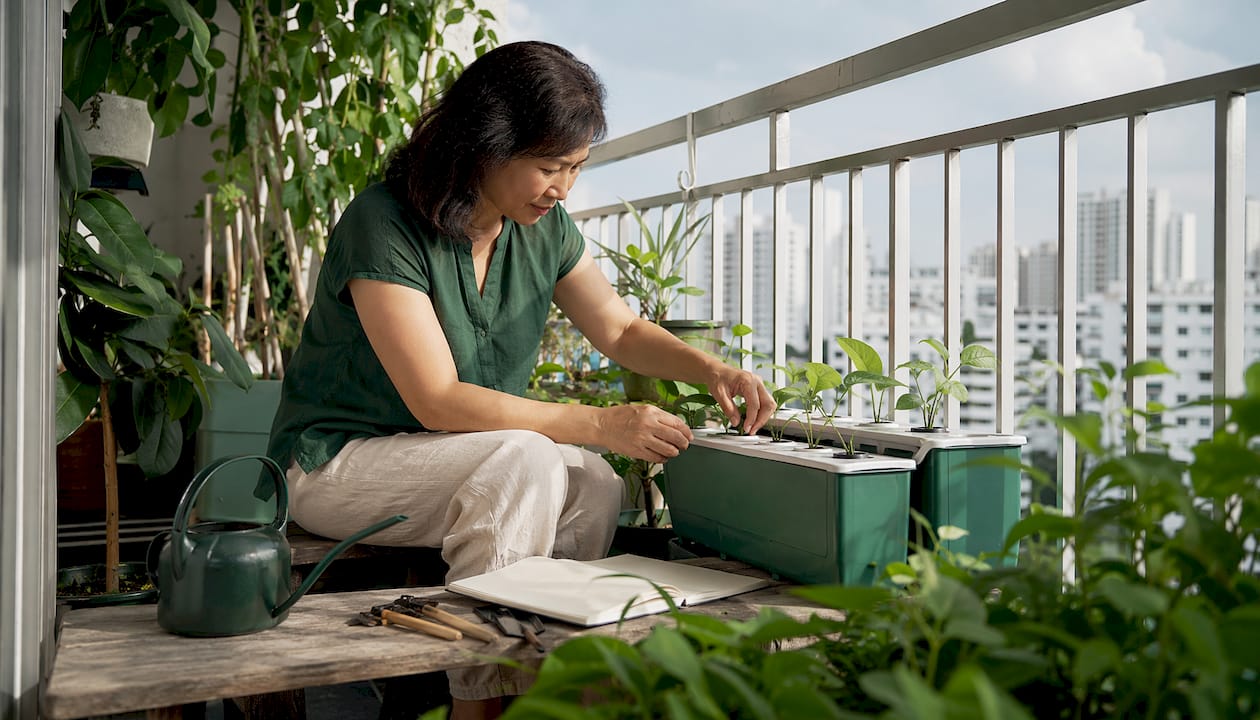
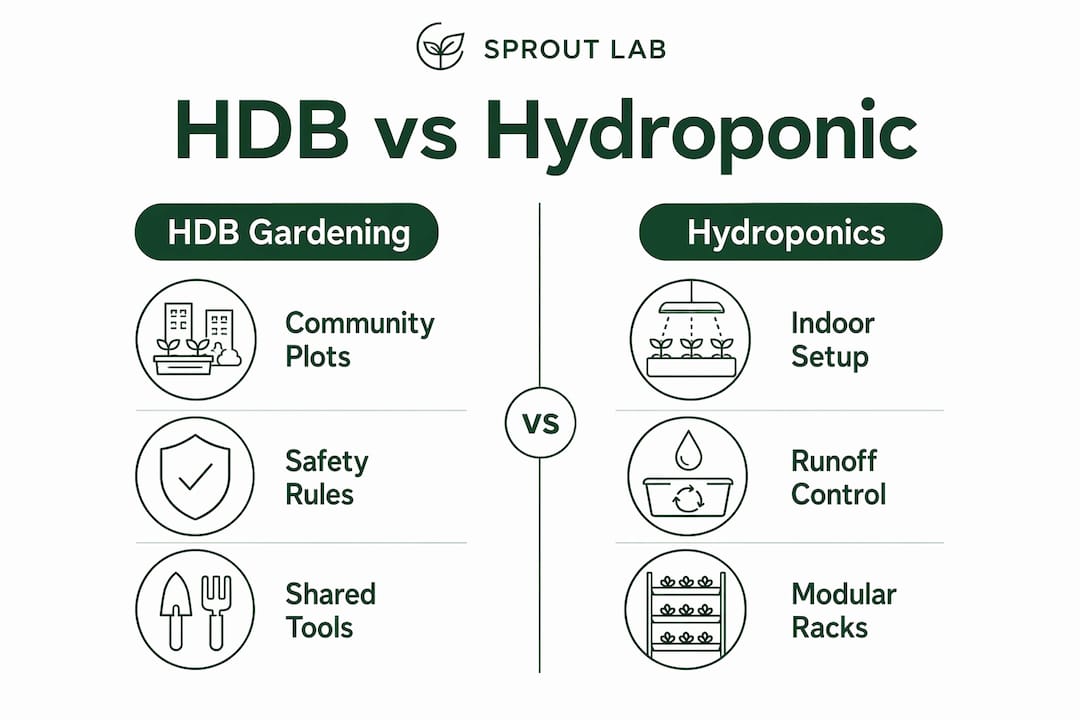
HDB gardening in Singapore refers to two distinct practices tied to the country’s public Housing & Development Board estates: community gardens in designated shared estate plots, and personal gardening within private HDB units on balconies or common corridors. Both forms are recognized by NParks and the GardeningSG initiative, which has set a national target of 3,000 community gardens island-wide by 2030. Safety rules from HDB and NParks govern both, while many community plots run under resident-led networks coordinated by the People’s Association. For U.S. indoor hydroponic growers, the contained, modular approach Singapore gardeners use translates directly to apartment setups.
The two forms look very different on the ground. A community garden plot is a shared, organized space of moderate size, where neighbors divide beds, pool tools, and rotate tasks. Private corridor or balcony setups are smaller and solo, typically a row of containers flush against a wall.
NParks and HDB set clear safety requirements for corridor gardening. The minimum walkway clearance is 1.2 m at all times, planters must be secured to prevent toppling, and nothing goes on parapet walls or hangs outside the building. Fixed trellises bolted to walls count as renovation works and require HDB approval. Freestanding shelving sidesteps that requirement entirely.
| Rule / Target | Detail |
|---|---|
| Walkway clearance | Minimum 1.2 m kept clear at all times |
| Planter security | Lightweight containers, rounded edges, stable stands |
| Parapet/hanging items | Prohibited outside the building envelope |
| Fixed structures | Treated as renovation; HDB approval required |
| GardeningSG goal for many community gardens island-wide | Target: 3,000 community gardens by 2030 |
Community plots are managed by resident-led networks, not individual owners. The People’s Association coordinates many programs, sharing tools, seeds, and maintenance schedules across neighbors. That shared-stewardship model is what NParks and community guides credit for social cohesion and local food production in dense estates.
Common plants include leafy greens like kangkong and bayam, herbs like pandan and laksa leaf, and compact fruiting crops like chili and cherry tomatoes. Vegetables need several hours of direct light; shade-tolerant ornamentals work in filtered light. Singapore’s tropical climate means year-round growing, but U.S. indoor hydroponic growers can replicate those light levels with full-spectrum LEDs regardless of season.
The most common problems are water runoff onto lower floors and overwatering in sheltered, low-evaporation corridors. Drip trays under every container and freestanding racks solve the first. For the second, NParks-recommended container sizing and planter selection helps, but the real fix is a simple watering habit.
Pro Tip: Before watering, press your finger into the top centimeter of growing media. If it’s still moist, skip that day. This touch-test approach cuts overwatering in sheltered setups and works just as well for checking hydroponic reservoir levels.
Singapore’s gardening culture in public housing goes back decades, rooted in the “Kampung Spirit” of communal living that predates the HDB era. As the government moved millions into high-rise estates from the 1960s onward, informal corridor gardening followed residents up the floors.
NParks formalized community gardening through the Community in Bloom initiative, which now counts more than 1,600 community gardens under its program. The COVID-19 period accelerated interest sharply, with many residents turning to home food growing during movement restrictions. GardeningSG emerged as the public-facing platform consolidating NParks guidance, plant resources, and community registration, pushing the program toward its target of 3,000 community gardens by 2030.
NParks runs Community in Bloom as the primary framework, providing guidance, training, and resources to registered community gardens. GardeningSG serves as the digital hub for corridor and community gardening guidance, publishing the safety PDFs and plant selection tools that most HDB gardeners rely on.
The grow-your-own movement in Singapore has also drawn private-sector interest, with urban gardening products and hydroponic systems gaining traction alongside government programs. Singapore’s broader “City in Nature” vision frames all of this as part of national biodiversity and well-being goals, not just a hobby trend.
The core HDB lesson is containment: no runoff, secured planters, minimal footprint, neighbor-friendly design. Sprout-lab’s modular garden systems are built around exactly that logic, letting you grow up to 56 plants in a compact indoor setup with drip trays, stable mounting, and zero soil mess.
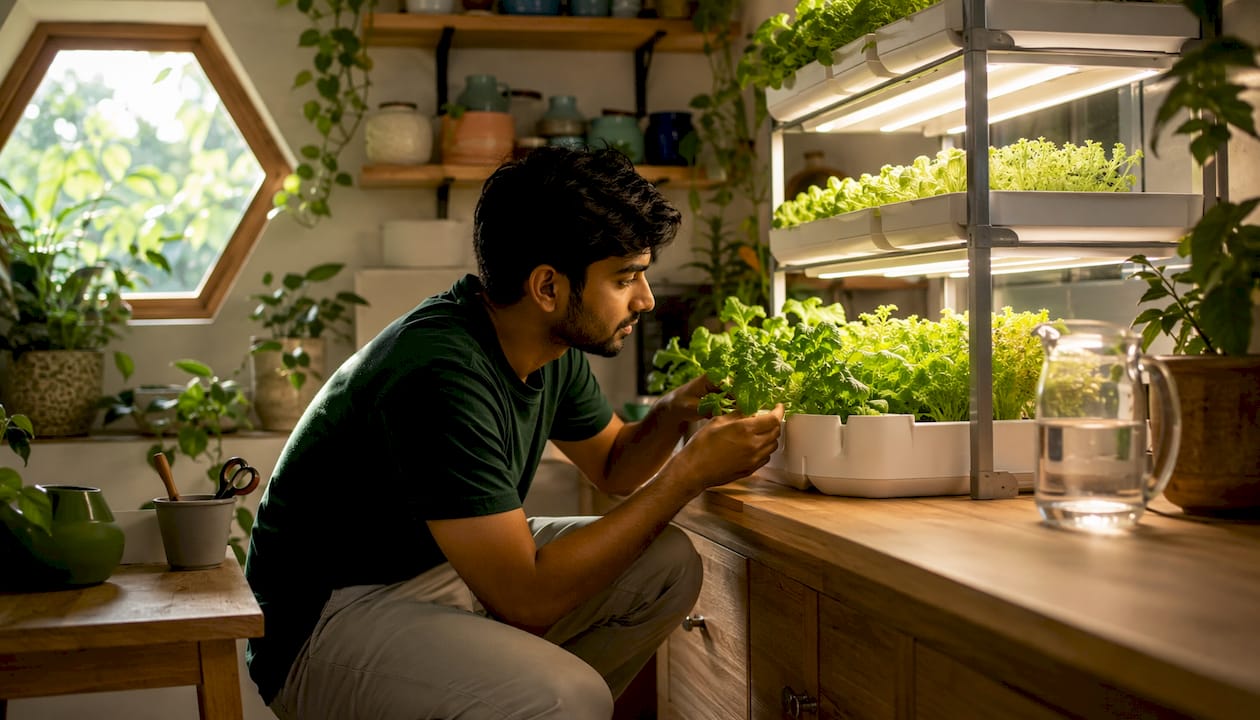
For U.S. apartment growers, that means the same safety principles Singapore’s NParks enforces translate directly into a system that works in a studio or a condo without bothering neighbors or building management. Sprout-lab’s automated hydroponic setups handle watering schedules automatically, which solves the overwatering problem HDB corridor gardeners manage manually. Browse Sprout-lab’s system guides to find the right contained setup for your space.
HDB gardening refers to gardening in Singapore’s public Housing & Development Board estates, either in shared community garden plots or in private balcony and corridor spaces within individual units.
NParks requires a minimum walkway clearance, secured planters, no items on parapet walls, and HDB approval for any fixed structures bolted to walls.
Most community gardens run under resident-led networks coordinated by the People’s Association, with shared tools, maintenance schedules, and plot assignments.
Leafy greens like kangkong, herbs like pandan and laksa leaf, and compact fruiting crops like chili and cherry tomatoes are common. Vegetables need several hours of direct light; shade-tolerant plants work in filtered corridor light.
Focus on containment (drip trays, no runoff), secure and lightweight racks, and modular systems sized to your space. Sprout-lab’s compact hydroponic systems are designed around these same principles for apartment growers.
HDB gardening combines community plot management and private container growing, both governed by NParks safety rules that map directly to best practices for U.S. indoor hydroponic setups.
| Point | Details |
|---|---|
| Two core forms | Community estate plots and private corridor/balcony container gardening, both recognized by NParks. |
| 1.2 m clearance rule | Singapore requires walkways stay clear; U.S. apartment growers should keep aisles and exits unobstructed too. |
| 3,000 gardens by 2030 | GardeningSG’s national target shows how public backing accelerates urban gardening programs. |
| Containment first | No runoff, secured planters, and freestanding racks are the non-negotiable safety principles in both contexts. |
| Sprout-lab for U.S. growers | Sprout-lab’s modular hydroponic systems apply HDB-style containment and space efficiency for apartment growers. |