Free shipping for order over $50

Free shipping for order over $50
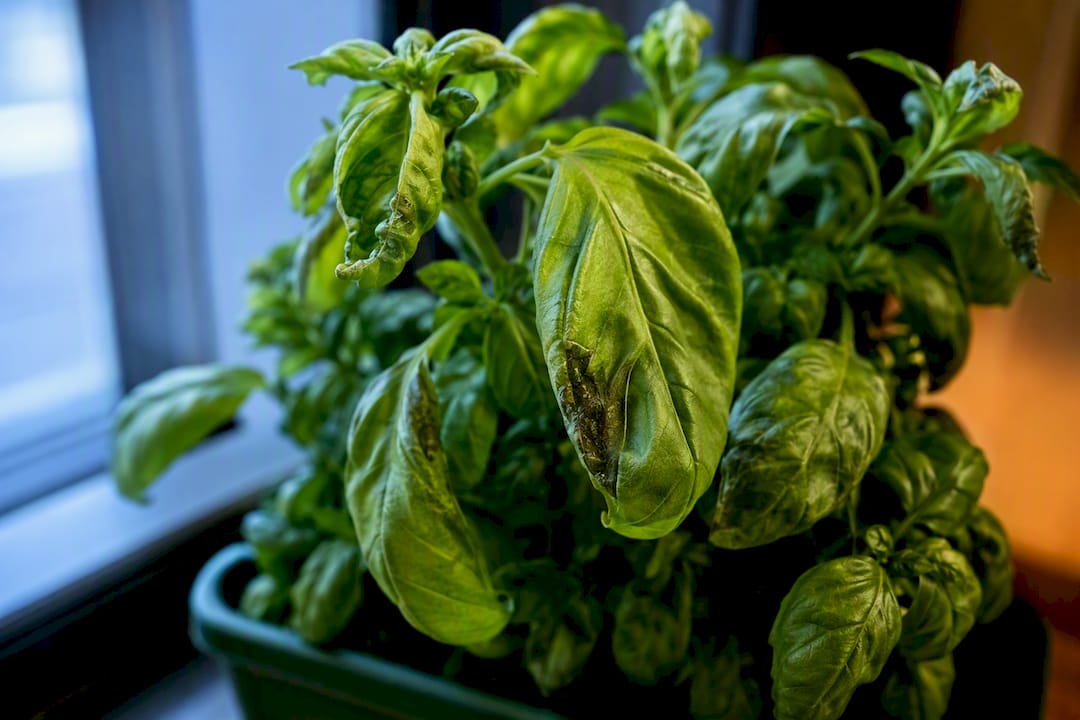
Curling basil leaves usually point to one of four culprits: water stress, sap-sucking pests, a fungal disease, or a temperature swing. Before you treat anything, feel the top 1 to 2 inches of soil and flip over a curled leaf to check for fuzz or bugs. If the stem is wilting fast with no clear water problem, that’s your cue to check for disease rather than just adjusting your watering can.
TL;DR:
- Most curling in basil leaves is caused by inconsistent moisture levels rather than pests or disease, requiring precise soil moisture management.
- Overwatering and underwatering produce similar curling symptoms, but only overwatered plants emit a sour smell and show yellow lower leaves, while underwatered plants have dry soil.
- Puckered new growth and sticky residue indicate pests like aphids or thrips, which thrive on stressed plants and can be controlled with water rinses and insecticidal soap.
- Disease signs such as fuzzy gray undersides or brown streaks in stems necessitate immediate removal and improved airflow, as fungicides are ineffective once infection is advanced.
- Indoor hydroponic systems can prevent most causes of leaf curling by maintaining stable moisture, temperature, and reducing pest pressure.
The way a leaf curls tells you more than the fact that it’s curling at all. An inward, lengthwise curl on older leaves almost always means moisture stress, either too little water or a drowning root system. Puckered, distorted new growth near the top of the plant is the classic signature of aphids or thrips feeding on tender tissue. Dark, water-soaked blotches that show up after a chilly night point to cold injury, not disease or thirst.
Timing matters just as much as shape. A plant that curls under afternoon sun but looks fine by morning is managing heat, not failing. Persistent curl that never relaxes, even after a cool night or a good soak, signals something more serious.
Quick visual checklist:
Work through these steps in order before you touch the watering can, the pruners, or any spray bottle.
This sequence takes less time than it does to read about it, and it stops you from reaching for neem oil when the real problem is a dry pot.
Both extremes produce curl, which is exactly why so many gardeners guess wrong and make things worse by watering a plant that’s already drowning.
Underwatered basil shows dry, crumbly soil, leaves that curl inward to conserve moisture, and crispy brown edges on the oldest leaves. Overwatered basil tells a different story: the soil stays wet, lower leaves turn yellow before curling, and the root zone can smell sour from decay. That smell is your clearest tell, since curl alone won’t distinguish the two.
Water basil again once the top layer of soil feels dry, typically every several days depending on heat and pot size.
Pro Tip: Self-watering planters can mask root rot because the reservoir keeps the base of the pot constantly damp. Understanding how oxygen and moisture interact in self-watering systems helps explain why some “low-maintenance” setups actually drown roots faster than a hand-watered pot.
Sap-sucking insects don’t curl mature leaves so much as deform new growth before it ever gets the chance to unfurl properly. If the newest leaves at the top of your plant look crumpled, twisted, or smaller than they should be, pests are the more likely explanation than water.
Look for sticky residue (honeydew from aphids), tiny black specks (thrips droppings), or a fine webbing under leaves. Tap a stem sharply over a sheet of white paper; anything that falls and starts moving is your answer.
Pro Tip: Aphid populations explode fastest on stressed plants, so a pest problem often shows up right after a dry spell. Fixing the water issue first sometimes solves the pest issue too.
Two diseases cause most of the serious basil losses gardeners report, and both leave distinct fingerprints once you know where to look.
Downy mildew starts as yellowing between the leaf veins on top, paired with a purplish-gray fuzzy growth on the underside that’s easy to miss unless you turn the leaf over in good light. It’s been the most common and damaging basil disease across many U.S. growing regions since it was first confirmed in the country back in 2007.
Fusarium wilt looks different: sudden stunting and curling, often on one side of the plant, with no visible fungus at all. The cut-stem test reveals brown vascular streaks inside a healthy-looking stem, which confirms the diagnosis.
Fungicides do little once either disease has taken hold; cultural prevention, not chemical treatment, is what actually protects the rest of your basil.
Temperature swings curl basil leaves in two opposite but easily confused ways.
Heat curl shows up as a diurnal pattern: leaves droop and curl under intense afternoon sun, then look completely normal again by the next morning. That daily rebound is the tell that you’re watching the plant manage water loss, not fighting off a lasting injury.
Cold injury is a different animal entirely. Once temperatures drop below roughly 50 to 54°F, basil cells suffer chilling damage that shows up as dark, water-soaked patches and curled, limp leaves that don’t bounce back on their own.
A handful of less common causes round out the list, and each has a distinct fix.
Recovery time depends entirely on the cause, and knowing what to expect keeps you from either giving up too soon or holding onto a plant that’s beyond saving.
Bag diseased plants before moving them to the trash, and avoid tossing them in compost that touches other garden beds.
Most of the causes above trace back to one thing: inconsistent conditions. Basil growing in a container that dries out, then gets overwatered as compensation, then bakes in a sudden heat wave, is going to curl no matter how attentive you are.
Consistent growing medium matters more than gardeners usually credit. A soil mix that drains well but still holds even moisture keeps roots from swinging between drought and rot, which is the single biggest driver of curl in home basil pots. Controlled irrigation, whether that’s a disciplined hand-watering schedule or a small hydroponic setup, removes the guesswork entirely.
Sprout-lab customers growing herbs in controlled setups report faster germination and steadier plant health, reflected in a 4.9 out of 5 rating across more than 25,000 completed orders. That consistency is exactly what basil, a plant notoriously sensitive to swings, tends to reward.
The most common misdiagnosis I see is watering a curling plant more, when the roots are already rotting from too much water in the first place. Curl reads as thirst to most people, but it’s really just the plant protecting itself, and the cause can go either direction.
My rule of thumb: check soil moisture first, then flip the leaf. Skip the guessing and let the plant show you what’s actually wrong before you reach for anything.
— Luna
Outdoor and windowsill basil deals with a lot: swinging temperatures, inconsistent watering, unpredictable pest pressure, and soil that dries out faster than anyone expects. If you’d rather remove those variables than keep troubleshooting them, an indoor hydroponic setup is worth considering as a different route to the same bowl of fresh basil.

Sprout-lab’s automated hydroponic systems keep moisture and root conditions stable around the clock, which eliminates the underwatering and overwatering swings that cause most of the curling covered in this article. Fewer outdoor pests reach the plant indoors, and temperature stays controlled instead of hostage to whatever the weather’s doing. This isn’t the only fix for curling basil, but for gardeners tired of adjusting watering schedules and checking forecasts, it’s a legitimate way to grow basil that just doesn’t run into these problems in the first place. Take a look at the reservoir hydroponic system guide to see what a compact setup looks like before you decide.
Overwatered basil has consistently wet soil, yellowing lower leaves that eventually curl, and sometimes a sour smell from decaying roots underground.
Leaves curled from water stress or heat typically flatten out within a day or two once conditions improve, but leaves damaged by cold injury or advanced disease won’t reverse.
No. Basil in containers generally needs water every 4 to 7 days, whenever the top 1 to 2 inches of soil feel dry, rather than on a strict daily schedule.
Most basil plants bounce back from transplant shock within 3 to 7 days if kept consistently moist and out of harsh direct sun during that window.