Free shipping for order over $50

Free shipping for order over $50
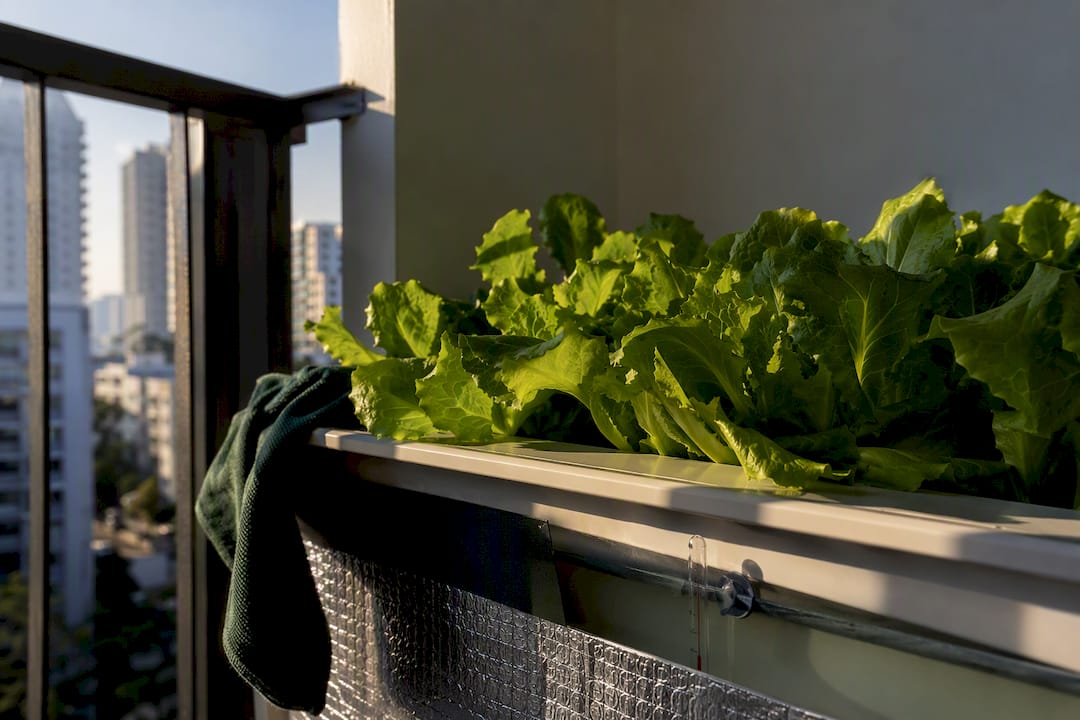
Yes, you can grow heat-tolerant lettuce hydroponically in a small urban setup, and it works even through Singapore’s warmest stretches. The catch is controlling three things in order: cultivar choice, reservoir temperature, and airflow paired with the right lighting schedule. Get those right and everything else, from EC targets to harvest timing, falls into place. The next section covers which cultivars to buy first.
TL;DR:
- Controlling reservoir temperature with insulation, shading, and aeration is critical, as water above 22°C drastically reduces dissolved oxygen and increases rot risk.
- The best heat-tolerant lettuce cultivars include Aerostar, Monte Carlo, Nevada, and Rex, which resist bolting and maintain quality in hot conditions.
- Deep water culture and shallow nutrient film systems offer superior heat management over Kratky in small urban setups due to their thermal buffering capacities.
- Regular daily monitoring of EC and pH is necessary in hot climates, with ideal reservoir temperatures maintained between 18 and 20°C to prevent root rot.
- Layering shading, airflow, and reservoir insulation enables effective heat mitigation without reliance on mechanical cooling in tropical environments.
Not every lettuce seed packet survives a Singapore balcony in direct afternoon sun. Trial data from a peer-reviewed study on heat tolerant lettuce cultivars grown in deep water culture singles out seven cultivars that held up under sustained warmth without bolting early or turning bitter: Aerostar, Monte Carlo, Nevada, Parris Island, Rex, Salvius, and Sparx. These aren’t obscure lab varieties. They’re bred specifically to resist premature flowering when daytime temperatures climb, and trial panels rated them acceptable on taste and texture, not just survival.
Separate research has flagged other strong performers worth knowing about. A trial in Brazil found Magenta ranked highly for bolt resistance across multiple growing sites, while Olinda and Cristina handled sustained high temperatures well in another hydroponic cultivar trial. Performance varies by region, so treat any single trial as a starting point, not gospel.
When shopping, prioritize these traits:
If you’re nervous about a full head bolting before harvest, grow baby-leaf cycles instead. Shorter time in the system means less heat exposure risk.
The system you choose determines how much heat management you’ll do by hand versus how much the setup absorbs for you. Deep water culture (DWC) uses a large volume of standing nutrient solution, which acts as thermal buffering. A bigger reservoir heats up slower than a thin film, giving you more reaction time before dissolved oxygen drops. Compact nutrient film technique (NFT) recirculates a thin nutrient stream and saves floor space, but the smaller water volume swings temperature faster and needs closer monitoring. Kratky, the non-circulating passive method detailed in IFAS’s Kratky guide, needs zero pump or power and suits tiny batches, but it offers the least heat control since the water just sits there.
Small vertical towers save floor space by growing upward instead of outward, though the drip nozzles need regular checking to avoid clogs that starve upper plants.
For most urban heat-prone situations, DWC or shallow NFT wins. The buffering in DWC and the active flow in NFT both give you more control than a static Kratky bucket baking on a hot balcony.
Before buying, check for:
Pro Tip: If you’re testing a new cultivar for the first time, run it in a small Kratky bucket before committing a full DWC bin to it. You’ll find out fast whether it bolts under your specific conditions without risking your main setup.
Some modular systems address this footprint question directly for readers who want a compact, pre-built option rather than assembling parts themselves.
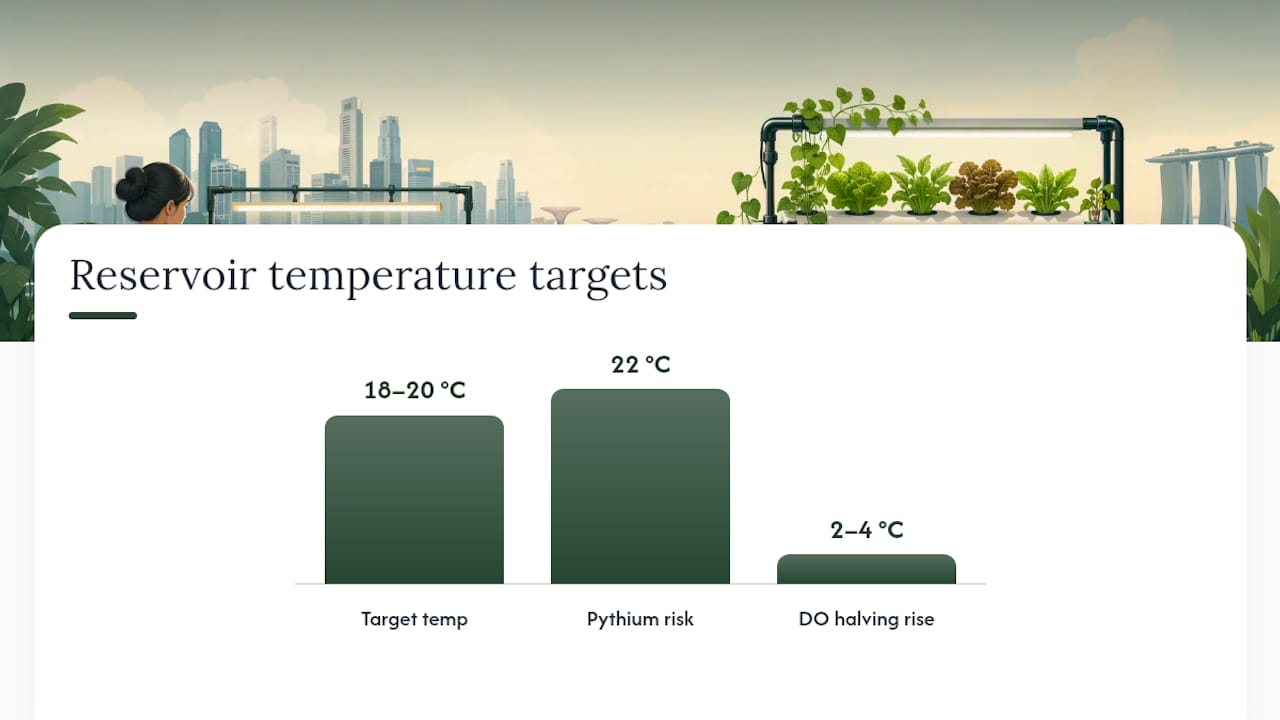
Reservoir temperature is the single biggest lever in hot climates. Aim for 18 to 20°C (65 to 68°F). Once the water climbs past roughly 22°C, dissolved oxygen starts dropping and Pythium root rot risk rises sharply. The relationship isn’t gentle either: a rise of just 2 to 4°C in reservoir temperature can cut dissolved oxygen availability roughly in half, which is why cooling matters more than almost any other single adjustment you can make.
Here’s a practical sequence for keeping water cool without buying industrial gear:
For nutrients, university extension guidance and practical home benchmarks from CurrentGardening both point to an EC range typically recommended is within a moderate band suitable for lettuce, with exact values depending on cultivar and growth stage. Keep pH between 5.5 and 6.0. Check both daily with a basic meter; adjust EC by diluting or adding concentrated nutrient solution, and nudge pH with small doses of pH up or down.
Light matters just as much as water chemistry. Target a daily light integral of 14 to 17 mol/m²/day, which works out to roughly 16 hours of light at about 220 µmol/m²/s from a decent LED array. Position lights so leaves don’t sit close enough to scorch, and consider dimming during the hottest part of the day to cut added heat load. Keep horizontal airflow across the canopy around 0.25 to 0.35 m/s using a small clip fan. Stagnant air is one of the fastest routes to tipburn.
Start seeds in rockwool or coco plugs under a humidity dome, and expect germination in 2 to 7 days depending on cultivar and ambient warmth. Once roots poke through the plug bottom, usually around 10 to 14 days after sowing, they’re ready for the net pot and the main system.
Spacing depends on your harvest goal:
Full heads typically reach harvest in 28 to 35 days under solid environmental targets. Baby-leaf cuts come faster, usually 20 to 30 days. In peak heat, schedule your transplanting and any system maintenance for early morning or evening, avoiding the hottest daily window when plants are already under stress.
Keep a simple log: date sown, cultivar, EC and pH readings, reservoir temperature, and notes on how the plant is growing or whether it’s showing early bolting signs. That log becomes your best troubleshooting tool after a few grow cycles.
Most hydroponic lettuce failures trace back to one of three root causes, and each has a specific fix.
On maintenance cadence: refresh your nutrient solution roughly every 1 to 2 weeks in warm conditions, or sooner if EC drifts oddly or the water smells off. Sanitize reservoirs and net pots with a mild bleach rinse followed by a thorough water flush between crop cycles.
Pro Tip: Pull one plant and check the roots whenever something looks off above the surface. Healthy roots are white and firm. Brown, slimy roots mean rot has already started, and by the time leaves show stress, the root system is usually well ahead of the visible symptoms.
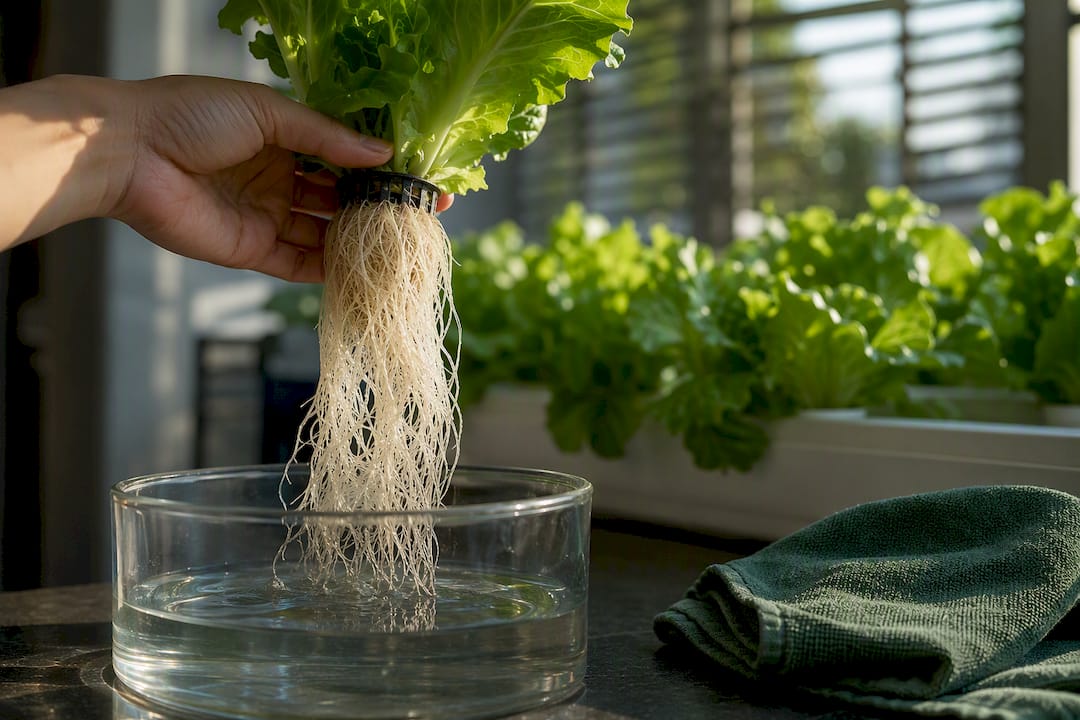
Build in a light weekly check of reservoir temperature and pH, plus a full monthly deep clean of tubing and net pots. In recirculating NFT systems, watch for drip-line clogging, since a blocked emitter starves one plant while flooding another.
Shade is the cheapest heat-management tool available, and it’s often underused. A simple 30 to 50% shade cloth over an outdoor or balcony setup cuts direct radiant heat without blocking enough light to stunt growth. Position your system so it gets morning sun and afternoon shade if your layout allows it, since afternoon heat is almost always the more damaging exposure window.
Ventilation matters as much as shading. A small oscillating fan moving air across both the reservoir and canopy does double duty: it cools evaporating surfaces and keeps leaf-level air from stagnating. Cross-ventilation, even just a window fan pulling hot air out of a balcony enclosure, drops ambient temperature a few degrees, which matters more than it sounds given how sensitive dissolved oxygen is to small temperature shifts.
Reservoir cooling deserves separate attention from air cooling. Insulating the container, painting or wrapping it in reflective material, and keeping it physically shaded all reduce heat gain before you ever need a mechanical chiller. Some growers in tropical apartment settings manage to stay in the safe temperature band using nothing but insulation, shade placement, and a twice-daily cold water top-up, skipping the chiller entirely.
Combine two or three of these tactics rather than relying on one. Shade cloth alone won’t fix a reservoir sitting on a hot metal railing in full sun. Ventilation alone won’t help if the water itself is absorbing heat all day. Layering shade, airflow, and reservoir insulation together gets you through most tropical afternoons without a single piece of powered cooling gear.
Moving air across the plant canopy at roughly 0.25 to 0.35 m/s keeps leaf surface temperature closer to ambient air temperature and prevents the still, humid microclimate that triggers tipburn, as detailed in this partner guide on indoor plant microclimates and practical humidification. A small clip-on or desk fan placed to sweep across the top of the canopy, not blast directly at one spot, does this job in most home setups. Point it so air circulates rather than concentrates on a few plants near the fan.
Humidity plays a supporting role. High humidity paired with warm air slows the plant’s ability to transpire and cool itself, which compounds heat stress rather than relieving it. In a tropical apartment, that combination shows up fast, especially in enclosed grow tents or shelving units with poor cross-ventilation. Cracking a window, running a small exhaust fan, or simply avoiding fully sealed enclosures for lettuce specifically helps vapor escape instead of pooling around the leaves.
Watch for two visible warning signs: leaves that feel slightly wilted despite wet roots, and condensation building up on any enclosure walls. Both point to airflow that isn’t doing its job. A dedicated guide on optimizing indoor airflow covers fan placement in more depth if your setup involves grow tents or shelving where dead air pockets are common.
Balance matters here too. Too much direct airflow dries out young seedlings and stresses their still-developing root systems, so ramp fan speed up gradually as plants mature rather than blasting full power from day one.
Heat stress doesn’t just affect the plant directly, it opens the door to pests and pathogens that thrive in warm, humid conditions. Aphids and whiteflies reproduce faster as temperatures climb, and a stressed, heat-weakened lettuce plant has fewer defenses to fend them off. Check the undersides of leaves regularly, since that’s where most infestations start unnoticed.
Fungal and algae problems tend to track water temperature more than air temperature. Warm, stagnant nutrient solution above roughly 22°C creates ideal conditions for algae blooms in the reservoir and for root pathogens like Pythium to take hold, covered earlier under root rot. Keeping the reservoir dark, since light exposure feeds algae growth, and maintaining good aeration addresses both problems at once.
Preventive habits beat reactive treatment every time with lettuce, since leafy greens are eaten raw and you want to avoid heavy-handed pesticide use. A few effective preventive routines:
If an infestation does take hold, a mild insecticidal soap is generally safer for edible greens than stronger chemical options, and it’s effective against soft-bodied pests like aphids when caught early.
Heat compresses your growing timeline in ways that catch first-time growers off guard. A cultivar that normally takes 35 days to head out might bolt at 25 days during a genuine hot spell, so treat your projected harvest date as a moving target rather than a fixed calendar entry once temperatures spike.
Check plants daily during hot stretches rather than every few days, since bolting can progress from a slightly elongated stem to a fully flowering plant within just a couple of days once it starts. Catching that early flowering signal gives you the option to harvest immediately rather than losing the crop to bitterness.
Shift your staggered sowing schedule shorter during peak heat months. Instead of sowing every 7 to 10 days as covered earlier, consider tightening to every 5 to 7 days so a heat-triggered bolt in one batch doesn’t leave you with an empty harvest window. This costs a bit more in seed and plug material but protects your supply continuity.
Timing your actual harvest within the day matters too. Cut lettuce in the early morning when leaf moisture and sugar content are highest, before the day’s heat causes wilting and bitterness to set in. If you’re harvesting baby-leaf greens on a tight rotation, morning cuts also give the remaining plants a full cool period to recover before afternoon heat hits.
Finally, build a small buffer into your planning. If a batch bolts unexpectedly, having a backup tray of seedlings a week or two behind means you’re never staring at an empty system waiting for the next cycle to mature.
Most guides treat heat tolerance as a single fix, plant the right cultivar and you’re done. That’s backwards. The cultivar just buys you a margin of error. What actually determines success is whether you’re watching the reservoir thermometer as closely as the plant itself, because dissolved oxygen doesn’t fail gradually, it falls off a cliff once water crosses that 22°C threshold.
Sprout Lab’s customer feedback across its modular systems points to one recurring theme: growers who succeed almost always nailed the nursery stage and reservoir monitoring before scaling up, while failures cluster around skipping temperature checks during the first hot week. Sprout Lab’s setups, built for up to 56 plants with a 4.9 out of 5 rating from over 25,000 orders, reflect that same lesson in the guides bundled with each system: control the boring variables first, then worry about which cultivar you’re growing.
If there’s one adjustment that separates a thriving balcony harvest from a mushy, bolted disappointment, it’s staggered sowing. Growers who commit to one big batch lose everything when a heat wave hits mid cycle. Growers who stagger every week always have a backup tray already growing.
— Irwin Lee
If you’ve read this far, you already know the theory. The gap most urban growers hit is hardware that doesn’t match a tropical climate, thin reservoirs that overheat by noon, weak aeration, or a footprint that doesn’t fit a Singapore balcony or kitchen counter.
Sprout Lab’s modular hydroponic systems are built around exactly the problem this article covers: fitting real plant capacity, up to 56 plants, into compact urban spaces while keeping reservoir insulation and aeration capacity in reach for anyone managing tropical heat. When you’re comparing options, look for a reservoir designed to hold volume without cooking in direct sun, aeration strong enough for warm-weather oxygen demand, and a modular footprint that scales with your balcony or shelf rather than forcing you into a fixed size. Sprout Lab’s reservoir hydroponic system guide walks through exactly this kind of setup, and pairing it with the right LED grow light keeps your daily light integral on target without adding unnecessary heat. Browse the full lineup at the Sprout Lab shop and start with a system sized to how much lettuce you actually want to harvest each week.
Keep your reservoir between 18 and 20°C (65 to 68°F). Once it climbs past roughly 22°C, dissolved oxygen drops and root rot risk rises sharply, so insulation and shading matter more than almost any other single fix.
Aerostar, Monte Carlo, Nevada, Parris Island, Rex, Salvius, and Sparx all showed strong heat tolerance and consumer acceptance in cultivar trials. Magenta, Olinda, and Cristina performed well in separate regional trials, so testing a small batch locally is worth doing before committing a full crop.
Yes, LED grow lights can fully replace sunlight if you hit a daily light integral of 14 to 17 mol/m²/day, roughly 16 hours at 220 µmol/m²/s. Indoor setups actually make heat management easier since you control light, airflow, and reservoir placement directly.
Check both daily, since warm water speeds nutrient uptake and evaporation, which shifts EC faster than in cooler conditions. Target EC around 1.2 to 1.6 mS/cm and pH between 5.5 and 6.0 for lettuce.
DWC and shallow NFT systems handle heat better than Kratky because their active water volume or flow buffers against temperature swings. Sprout Lab’s modular systems are built for exactly this kind of compact footprint, fitting up to 56 plants while keeping reservoir insulation and aeration accessible.