Free shipping for order over $50

Free shipping for order over $50
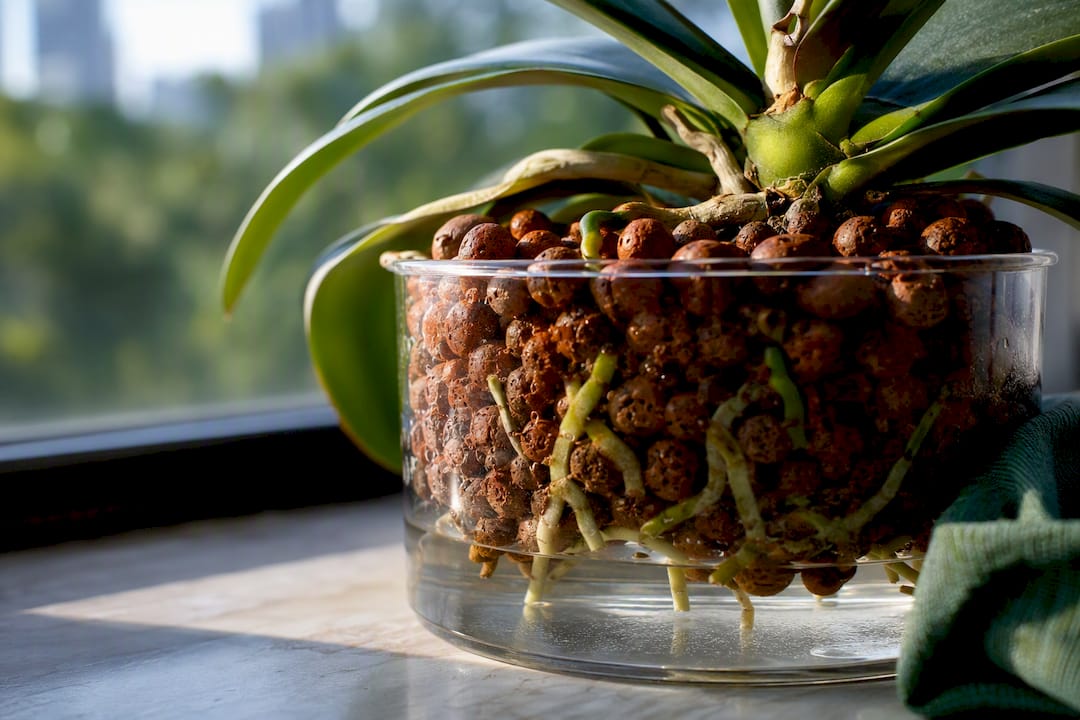
Semi-hydro with LECA works well for orchids that already have healthy roots and belong to genera that tolerate constant moisture, especially Phalaenopsis and many Vanda types. It cuts watering guesswork and root rot from soggy bark, but it demands real attention to water quality, pH, and nutrient dosing. If you’re on the fence, convert one plant, watch how the roots respond over eight weeks, and decide from there.
TL;DR:
- Semi-hydro with LECA is ideal for healthy orchids, especially Phalaenopsis and Vanda species, that tolerate constant moisture and have active root growth.
- Proper water chemistry, including pH between 5.5 and 6.2 and low nitrogen levels around 30 to 50 ppm, is critical for system success and salt buildup prevention.
- Conversion should only occur on plants with active, firm roots and no signs of rot; rushing a struggling plant can induce faster root decay.
- Regular flushing of the reservoir monthly and top-ups every few days are necessary maintenance practices to avoid mineral salt accumulation and algae growth.
- Leaf and root color, along with water level observation, provide quick indicators of orchid health and whether the semi-hydro setup functions properly.
Semi-hydroponics keeps a shallow layer of water sitting permanently at the bottom of the pot while the orchid’s roots stretch up through a porous medium into open air. That’s the core difference from full water culture, where roots sit submerged, and from bark or moss, which dries out unevenly and breaks down over months. The name is a bit of a mismatch because it is actually a passive capillary system rather than anything resembling hydroponic vegetable production, which is worth knowing since “hydroponic” alone can mislead new growers into picturing pumps and timers.
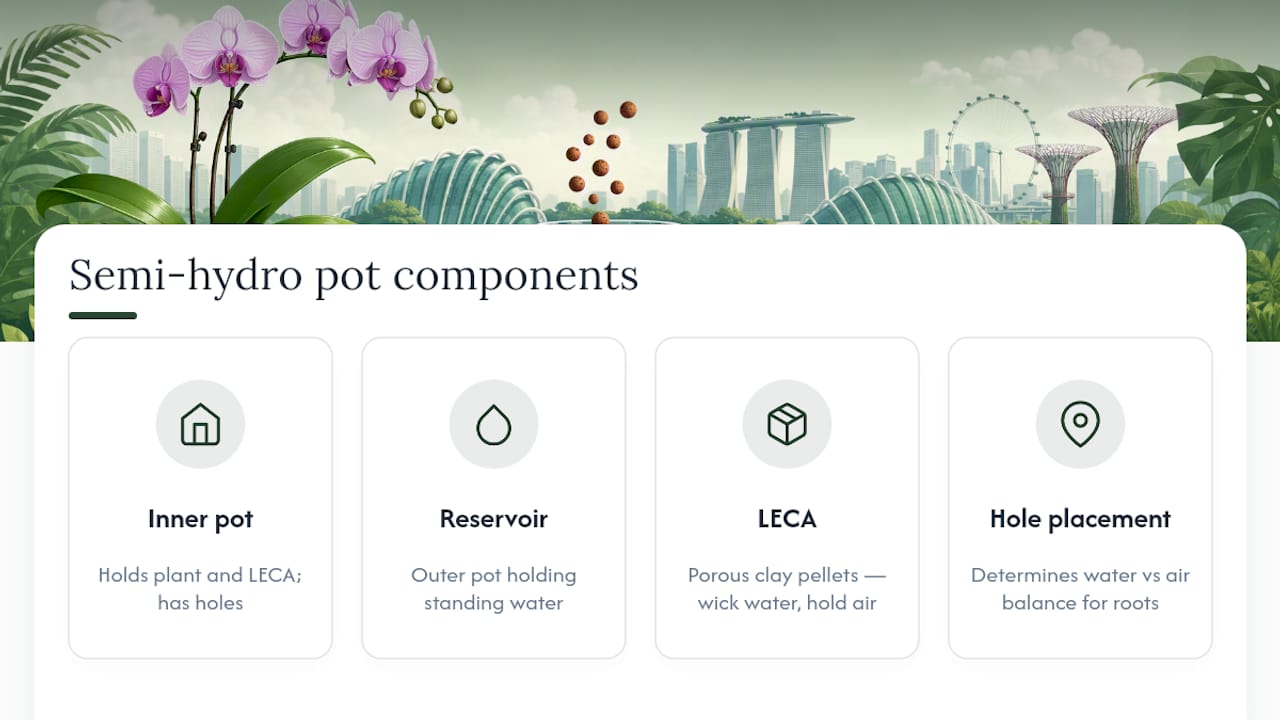
Lightweight Expanded Clay Aggregate, or LECA, is the medium that makes this work. It’s made from clay pellets fired at high heat until they puff up into small, porous balls full of tiny air pockets. Those pockets do two things at once: they wick water upward from the reservoir through capillary action, and they hold enough air space that roots don’t suffocate the way they can in compacted, wet bark. Unlike organic media, LECA doesn’t decompose, so it doesn’t sour, compact, or host the fungus gnats that come with breaking-down bark.
The typical setup uses two pots: an inner pot with drainage holes that holds the plant and the LECA, sitting inside an outer pot or reservoir that holds standing water below the holes, creating a moisture reservoir. Roots that grow down into that water zone absorb moisture and nutrients directly, while roots higher up remain in the humid air pocket created by evaporation off the wet clay. The hole placement determines how much standing water touches the roots versus how much air gap you get above the waterline, and that balance is the single biggest design variable in the whole system.
The technique traces back to grower Ray Barkalow of FirstRays, who documented and popularized LECA-based semi-hydro as a lower-labor alternative to daily bark watering. The American Orchid Society has since featured the method in its own webinar programming, treating it as a legitimate cultural option rather than a fringe hack.
The biggest draw is that watering stops being a daily judgment call. Bark dries from the outside in, so a pot can look dry on top while staying soggy at the core, which is exactly how root rot starts. LECA removes that guesswork because the reservoir tells you the moisture state at a glance.
Growers who switch report a handful of consistent wins:
The origin of the technique reflects this labor-saving logic directly. It was developed in part for growers who traveled frequently and needed a system that tolerated a missed week without turning a healthy plant into a rescue project.
Pro Tip: Keep one bark-grown orchid as a control when you convert others to LECA. Comparing root color and growth rate side by side over a season tells you more about whether the switch is working than any single plant ever could.
Semi-hydro’s biggest failure mode is converting a plant that wasn’t ready. If an orchid already has soft, rotted roots or shows no active new root growth, dropping it into a constantly moist LECA environment usually accelerates the rot instead of solving it. Conversion works best as a proactive move on a healthy plant, not a rescue attempt on a struggling one.
A few other risks show up often enough to plan around:
Climate matters more here than most guides admit. A stagnant, high-heat room with no air movement is the exact condition where semi-hydro reservoirs turn from a moisture reservoir into a breeding ground. Growers in humid climates need a fan running near their setups, not just good intentions about flushing schedules. Forum discussions among hobbyists, including long threads on r/orchids, consistently point back to sanitation and correct transition timing as the difference between a thriving semi-hydro collection and a string of rot losses.
Root habit tells you almost everything about whether an orchid will adapt. Epiphytic orchids that evolved gripping tree bark in humid, rain-soaked forests tend to do well, since their roots are built to handle regular wetting and drying cycles and rapid drainage. Phalaenopsis is the classic beginner success story in semi-hydro. Many Vanda-type orchids adapt readily too, given their thick, exposed roots that are already adapted to hanging in open air with intermittent soaking. Certain Angraecum species also transition well, with growers reporting strong results when reservoir watering and root aeration are managed carefully.
Terrestrial orchids and anything adapted to drier, desert-like native conditions generally struggle. Species with thin, wiry roots evolved for quick-draining, dry substrates often rot in a system built around constant moisture. If you’re unsure which category your plant falls into, look at its native habitat notes on the tag or grower documentation. An orchid described as growing on rocks or tree bark in wet tropical forest is a good candidate. One noted as growing in leaf litter on dry forest floors is a poor one.
Before converting anything, run it through a short readiness check:
A plant that passes all four is ready. One that fails even one should wait, or get emergency root treatment first.
Size matters more than most first-time buyers expect. Coarse LECA in the 8 to 16 millimeter range is the standard recommendation because it holds enough air space to prevent suffocation while still wicking water effectively. Anything finer packs down and behaves more like gravel than a wicking medium, choking root airflow exactly where you need it most.
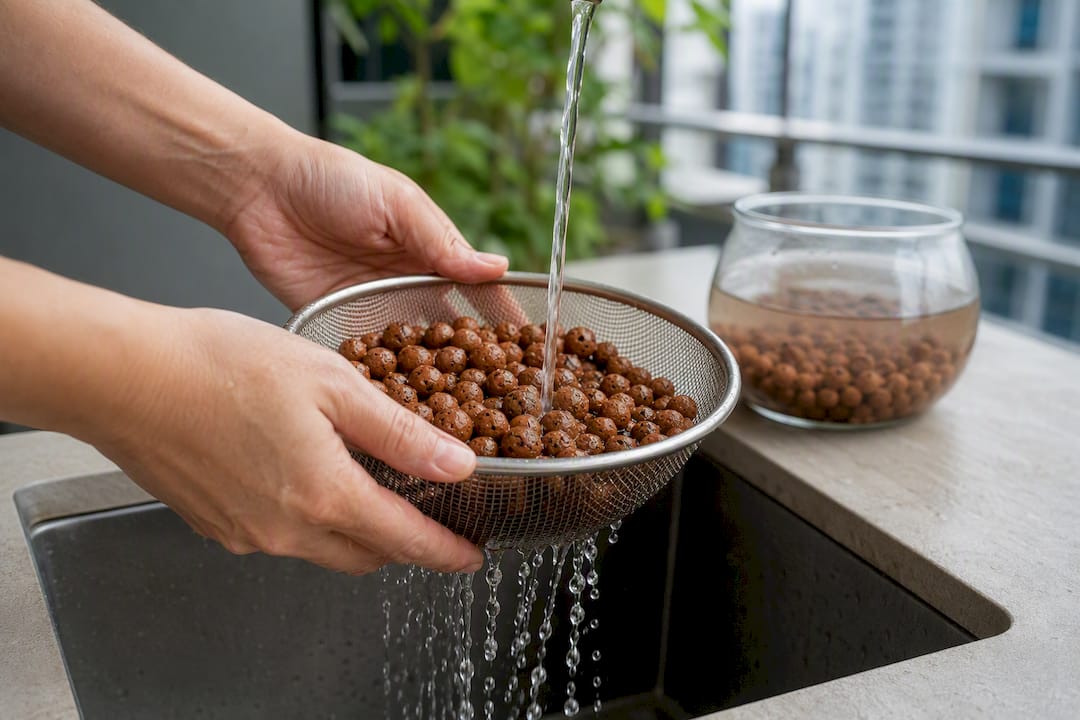
Before any LECA goes near a plant, it needs prep:
Pot choice shapes daily maintenance as much as LECA does. A clear inner pot lets you see root color and reservoir level without lifting the plant out, which matters because root inspection is one of semi-hydro’s biggest advantages over opaque bark pots. Hole placement on the inner pot sets your air gap. Holes positioned an inch or so up from the base keep a shallow reservoir at the bottom while still letting excess water drain during a full flush. The outer pot or reservoir just needs to hold that water level reliably without leaking.
Wicks are optional but useful in specific cases. A cotton or synthetic wick strung from the reservoir up through the LECA helps moisture reach the upper root zone faster in larger pots where the water table sits far below the crown. Smaller setups usually don’t need one, since capillary action through the clay alone keeps the whole column reasonably humid. Passive setups without a wick are simpler to clean and less prone to mold growth on the wick material itself, so many growers skip wicks entirely once they’ve got pot geometry dialed in.
When sourcing LECA and containers, look for horticultural-grade clay pebbles sold specifically for plant use rather than the coarser aggregate marketed for drainage in landscaping, since particle consistency varies more in the latter. Growers building out a full setup can shop raw materials and pots together rather than piecing supplies together from multiple sources.
Timing the conversion right prevents most of the disasters new semi-hydro growers run into. The best window is right as a plant is putting out new roots, typically in spring or early summer for most Phalaenopsis and Vanda types, since new growth adapts to the new environment far more readily than older, media-adapted roots.
Staged acclimation like this matters because plants moving from an intermittently moist medium into a constant-moisture system need time to grow roots adapted to the new conditions, according to conversion guidance from Orchideria. Expect a lag of four to eight weeks before you see clear new root growth in the LECA. During that window, resist the urge to fertilize heavily. A weak, dilute feed every second or third watering is plenty until roots visibly establish.
Pro Tip: Mark the conversion date on a small tag in the pot. Orchids can sit in a holding pattern for a month or more before showing visible progress, and it’s easy to panic and revert a plant that just needs more time.
Success looks like firm, plump roots showing green growth tips within two months, along with normal leaf turgor and no new yellowing. If you see the opposite, roots turning translucent or mushy, or leaves pleating and wrinkling, the plant needs a step back to drier conditions or a full reassessment of the reservoir setup.
Semi-hydro maintenance runs on two separate rhythms: topping up the reservoir and periodically flushing it out completely. Topping up means adding water to bring the reservoir back to its working level as it evaporates or gets absorbed, usually every few days to once a week depending on pot size and room humidity. A full flush is different: it means filling the pot from the top until water runs freely through and out the bottom, physically washing dissolved salts and debris out of the system rather than just replacing what’s been used.
Feeding guidance: FirstRays’ founding documentation on the technique recommends feeding orchids in semi-hydro at roughly 30 to 50 ppm nitrogen with regular, dilute waterings, rather than the stronger, less frequent doses common in bark culture.
That dosing range works because semi-hydro plants get watered so often that a stronger, occasional feed would build up salts faster than the system can naturally clear them. A practical routine looks like this:
Testing pH matters more than most growers assume at first, since tap water in many households runs alkaline enough to push nutrient uptake outside the ideal range even when the fertilizer dose itself is correct. A cheap pH meter or test strips pay for themselves within the first prevented nutrient lockout. If you’re managing feeding schedules across a mixed collection, cross-checking against a structured orchid fertilizer schedule helps keep dosing consistent between your bark-grown and semi-hydro plants.
Most semi-hydro failures show up as one of four symptoms, and each one points to a fairly specific cause.
Rot calls for pulling the plant out of the system entirely, not just adjusting the routine. Once roots go mushy, trim the affected tissue back to firm, healthy root, treat the cuts, and let the plant recover in a drier, more traditional setup before attempting semi-hydro again.
Sanitation between uses is simple but easy to skip. Used LECA can be reused safely if you rinse it thoroughly and soak it in a diluted bleach or hydrogen peroxide solution for about 15 to 20 minutes, then rinse again until no smell remains. Skipping this step is how fungal problems spread from one plant’s setup to the next.
Not every orchid ends up thriving in semi-hydro long term, and that’s fine. If a plant shows repeated stress, slow decline, or you’re simply not managing the water chemistry consistently, moving it back to bark or a chunky orchid mix is a legitimate reset, not a failure.
The reservoir level is your fastest health check, and it takes seconds. Most semi-hydro growers mark a line on the outer pot showing the ideal working level, then glance at it every few days. If the level is dropping faster than usual, the plant is actively using more water, often a sign of new root growth or warmer weather. A level barely dropping at all can mean root activity has slowed, worth a closer look.
Root color tells the rest of the story. Healthy orchid roots in LECA typically show plump, firm growth with green tips when actively growing and a silvery green cast when resting between waterings. Roots that look flat, brown, or hollow when gently squeezed are in trouble regardless of what the reservoir level says.
Checking roots doesn’t require unpotting the whole plant if you’re using a clear inner pot, which is exactly why that container choice matters so much in practice. Hold the pot up to light every couple of weeks and scan for color changes along the visible root mass. Any root turning dark or losing firmness near the base is worth investigating before it spreads.
Pro Tip: Snap a phone photo of your root mass at each repotting or major check-in. Root color shifts are gradual, and comparing photos side by side catches decline far earlier than memory alone.
Dilute, synthetic, urea-free fertilizer is the standard recommendation for semi-hydro, and for good reason. Urea nitrogen needs soil microbes to convert it into a usable form, microbes that simply aren’t present in an inert medium like LECA. A fertilizer built around nitrate and ammonium nitrogen sources gets absorbed directly by the roots without that missing conversion step.
Balanced formulas designed for hydroponic or semi-hydro use, mixed at roughly a quarter of label strength for weekly feeding, tend to outperform stronger, less frequent bark-style dosing in this system. The goal is a steady, low-level nutrient supply that matches how often the plant is being watered, rather than a periodic strong dose that can spike salt concentration around the roots between flushes.
Calcium and magnesium supplementation is worth considering if your tap water runs soft or if you’re using reverse osmosis water, since those minerals get diluted out along with everything else in filtered water. A dedicated liquid feed formulated for houseplants and orchids together, like Plant GROW, simplifies this by covering micronutrients in one dilute mix rather than juggling separate calcium and fertilizer products.
Whatever formula you land on, consistency matters more than finding a “perfect” product. A modest, correctly diluted fertilizer applied on a steady schedule beats a premium formula applied sporadically.
Semi-hydro’s biggest seasonal shift happens with evaporation rate, not necessarily light. In warmer months, reservoirs empty faster and plants pull more water through active root growth, so top-up frequency often needs to shift from weekly to every four or five days. In cooler months, especially with indoor heating running, evaporation actually often stays fairly steady even as ambient humidity drops, so don’t assume winter automatically means less watering.
Fertilizer strength should track growth activity rather than the calendar strictly. Most orchids slow down and may enter a rest period during shorter winter days, and feeding at full spring strength through that rest period risks salt buildup with no active roots to absorb it. Cutting feed frequency, not necessarily dilution strength, by roughly half during a plant’s dormant stretch keeps salts from accumulating unused in the reservoir.
Flushing frequency stays constant year round regardless of growth rate, since salts build up from fertilizer application itself, not from plant activity. A monthly full flush remains the baseline whether the plant is actively growing or resting.
Watch humidity swings closely if your home runs a heater through colder months, since dry indoor air pulls moisture out of the air pocket around upper roots faster than the reservoir alone can replace it. Pairing a semi-hydro setup with attention to ambient humidity for orchids matters more in a heated apartment than most growers expect going into their first winter with the system.
Acclimation is where most failed conversions actually go wrong, not the potting itself. A root system that spent years adapted to intermittent bark moisture has developed a specific tolerance for drying cycles, and dropping it straight into constant moisture without a transition period shocks that root structure.
The safest approach staggers the change over several weeks rather than making it all at once. Run the reservoir at a lower level than the eventual target for the first two to three weeks, giving new LECA-adapted roots time to form before the plant experiences full, constant moisture at the crown. Watch for the plant’s response during this period rather than following a fixed timeline, since vigorous growers acclimate faster than slow-growing species.
Leaf and pseudobulb firmness are your best early indicators during acclimation. A plant maintaining plump, turgid leaves through the transition is adapting well. One that starts wrinkling or losing firmness needs either a slower ramp to full reservoir level or, in some cases, a temporary retreat to a more humid, less saturated holding setup until new roots catch up.
Plants converted while actively growing new roots almost always acclimate faster and more reliably than plants converted during a dormant or stressed period, which is the single biggest lever a grower has over how smoothly this transition goes.
Semi-hydro doesn’t change an orchid’s fundamental light and temperature needs. A Phalaenopsis still wants bright, indirect light and moderate warmth whether it’s in bark or LECA. What changes is how the system interacts with your existing conditions, particularly around heat and airflow.
Warm rooms accelerate evaporation from the reservoir, which sounds convenient until you realize it also accelerates algae growth and can dry out upper roots faster than expected between top-ups. Keep semi-hydro pots away from direct, intense afternoon sun hitting the outer reservoir directly, since heated standing water is where algae and bacterial issues take off fastest.
Airflow matters more in semi-hydro than in bark culture because the constant moisture at the base creates a microclimate that stays damp longer without air movement to help it dry. A small fan running nearby, even on low, cuts down on stagnant air pooling around the reservoir and root zone, which lowers fungal and bacterial risk substantially.
Cooler night temperatures, which many orchids need to trigger blooming, aren’t affected by the semi-hydro system itself. Keep providing whatever day to night temperature drop your specific genus needs. The reservoir just needs to be positioned somewhere that doesn’t trap heat or block the airflow your growing space already relies on.
Semi-hydro gets oversold in some corners of the orchid world as a set-and-forget system, and that framing does more harm than good. It’s not lower maintenance in the sense of requiring less attention. It’s lower maintenance in the sense of requiring different, more predictable attention, and that distinction trips up a lot of first-time converts who expect to water less and think about their orchids less.
What the conventional wisdom gets wrong most often is treating “which orchids can survive semi-hydro” as the real question, when the better question is “which orchids actually prefer it.” Plenty of Phalaenopsis limp along in bark for years, overwatered or underwatered depending on the week, when they’d genuinely thrive with the moisture consistency LECA provides. The system isn’t a workaround for a struggling plant. It’s often the better native fit for species whose wild root habits already involve alternating soak and dry cycles on open bark.
The part that gets underweighted in most guides is water chemistry. Growers obsess over LECA size and pot design, which matter, but the pH and mineral content of the water going into that reservoir determines success or failure more consistently than any hardware choice. A grower with mediocre pots and disciplined pH testing will beat a grower with perfect containers and untested tap water almost every time.
For anyone building out a compact urban growing setup, the same discipline that makes semi-hydro work, consistent monitoring, correct dosing, good airflow, translates directly to broader hydroponic growing at home. That overlap is exactly why a reservoir hydroponic system built for vegetables and herbs uses the same core logic orchid growers have been refining with LECA for decades.
— Irwin Lee
If everything above sounds worth trying but sourcing scattered supplies feels like the real obstacle, compact hydroponic systems can close that gap. Instead of hunting down LECA, inner pots, and reservoirs from three different sellers, DIYers can get materials and container systems built around the same reservoir logic that makes semi-hydro orchid care work, sized for apartment shelves and balcony corners rather than greenhouse benches.
For orchid growers converting their first plant, the shop hydroponics page carries the raw materials and containers this guide walks through, including LECA sized for root aeration and pots designed for easy root inspection. If you’re weighing a broader move toward passive reservoir growing beyond just your orchid collection, the automated hydroponic setup guide breaks down which configuration fits a small space versus a larger indoor garden. Start with one plant, one pot, and a reservoir sized to your space, and build out from there once you’ve seen how the roots respond.
Yes, and it’s a well-documented method endorsed by organizations like the American Orchid Society, though success depends heavily on matching the technique to the right genus and managing water chemistry correctly.
True full hydroponic culture, with roots fully submerged, works for very few orchids. Semi-hydro, which keeps only the lower roots in standing water while upper roots stay in humid air, is the format that actually delivers strong results for most home growers.
Phalaenopsis and many Vanda-type orchids adapt most readily, along with certain Angraecum species, thanks to their epiphytic root habits built for cycles of soaking and drying on open bark.
A dilute, synthetic, urea-free fertilizer fed at roughly 30 to 50 ppm nitrogen with regular watering, at a solution pH between 5.5 and 6.2, matches how semi-hydro systems are watered and avoids the salt buildup organic fertilizers can cause.
A full flush with plain water at least once a month clears accumulated fertilizer salts, on top of regular reservoir top-ups every three to seven days depending on evaporation.