Free shipping for order over $50

Free shipping for order over $50
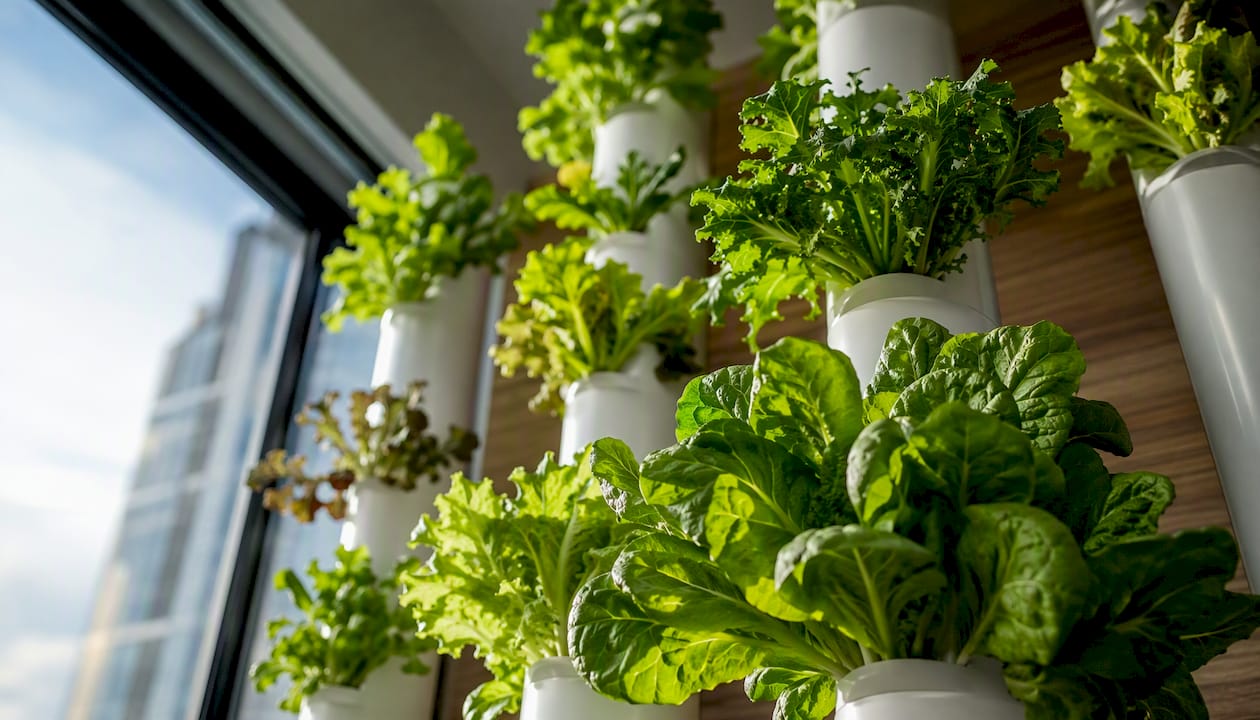
A vertical hydroponic tower is worth it if you have a small footprint and want a steady supply of leafy greens, herbs, or strawberries without soil, weeding, or a backyard. It uses up to 90% less water than dirt gardening and grows crops faster, but you trade that efficiency for a real commitment to monitoring pH, running a pump, and possibly running grow lights. Some companies build modular systems around exactly this trade-off, which is why they can be sensible starting points if you’d rather buy a working setup than engineer one from scratch.
TL;DR:
- Vertical hydroponic towers are best for small spaces and require consistent monitoring of pH, EC, and pump operation to ensure healthy crop growth.
- Leafy greens, herbs, and strawberries thrive in towers, with microgreens ready in two to three weeks and harvests possible every three to four weeks for salad greens.
- Pumps and reservoirs must be appropriately sized, and daily maintenance includes topping off water, checking pH and EC, and cleaning to prevent root rot, algae, and clogging.
- The system’s upfront costs are significant, and ongoing electricity and maintenance are necessary; they are most worthwhile for growers committed to weekly care.
- DIY setups need careful planning for plant capacity, pump flow, and parts, while pre-built systems like those from Sprout Lab simplify installation and calibration.
A tower is really just gravity working with a pump. Nutrient solution sits in a reservoir at the base, gets pumped to the top of the column, and trickles down through a stack of net pots before draining back into the reservoir to start over. That loop repeats continuously or on a timed cycle, depending on the design.
The core components are simple:
Roots hanging in the column get repeated exposure to oxygen between watering pulses, which is what makes hydroponic root systems grow faster than soil-bound ones. Skip that oxygen exposure, and roots suffocate just as fast as they would in waterlogged soil.
Leafy greens are the easiest win. Lettuce, spinach, kale, and Swiss chard have shallow root systems and don’t need much vertical room, so they thrive in almost any tier. Basil, mint, and other herbs follow close behind, and strawberries do well in mid to lower tiers where their trailing stems have room to hang.
Microgreens are the fastest payoff of all, often ready to cut within two to three weeks of sowing.
Pro Tip: Space seedlings by mature plant width, not seedling size. Overcrowded top tiers block light to everything below them.
Salad greens are typically ready to harvest every three to four weeks, which means a single tower can produce something close to year-round if you stagger your planting. Fruiting crops are a different story. Analysis of vertical farming economics shows lettuce can approach greenhouse-level cost efficiency under strong light and layout conditions, while tomatoes and other fruiting crops need much higher light-use efficiency and faster cycles to pencil out. For a home tower, that means leafy crops and herbs are the realistic bread and butter.
Sizing comes first. A tower in the 5 to 6 foot height range with 28 planting sites is a common home benchmark, and two such towers can fit in a small footprint, about 5 by 5 feet. Match your reservoir size to plant count. A tower holding two dozen or more sites generally needs at least a 5 to 10 gallon reservoir so nutrient concentration doesn’t swing wildly between top offs.
Here’s what you’ll need before you start:
Commissioning takes an afternoon. Assemble the column, seat your net pots, then fill the reservoir and prime the pump before adding any plants, so you can confirm water reaches the top tier and drains cleanly back down. Set your timer for 15 to 20 minute cycles, then check your baseline pH (aim for 5.5 to 6.5) and EC before adding seedlings.
Placement matters more than people expect. Indoors, keep the tower near a south or west-facing window or under a grow light rated for your crop count. Outdoors, keep it out of driving wind that can knock over top tiers. Either way, shade the reservoir or use an opaque lid. Sunlight on nutrient solution grows algae fast, and algae competes with your plants for nutrients.
Weekly attention keeps a tower running. Top off the reservoir as water evaporates, check pH and EC every few days, and glance at the pump for any grinding or slowed flow that signals debris buildup.
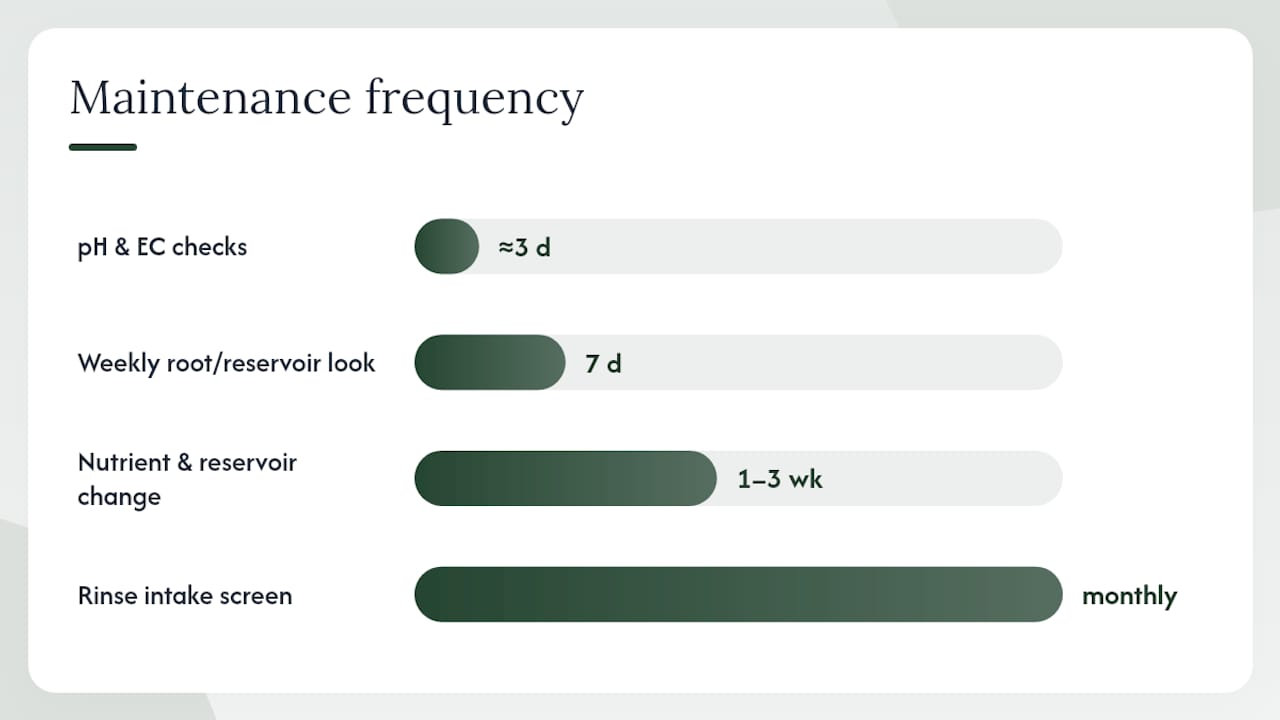
Nutrient solution itself needs a full change every one to three weeks, not just topping off, since plants absorb specific elements unevenly and leave the remaining mix out of balance. Reservoir cleaning on that same cycle, a quick scrub with diluted vinegar or hydrogen peroxide, keeps biofilm from building up on the walls.
The usual failure points are predictable:
Automated monitoring and auto-dosing tools are gaining traction, but lab-tested accuracy claims don’t always hold up in a home tower without careful calibration, so manual weekly checks still matter even if you add automation later. A timer and pump automation setup reduces daily labor, but it doesn’t replace a weekly look at the roots. For pests, sticky traps and insecticidal soap are the safest low-toxicity options on food crops, since you’ll be eating what you grow within weeks.
For the right grower, yes. For the wrong one, a tower becomes an expensive shelf.
If you want fresh greens and herbs on a small balcony or countertop and don’t mind a weekly check-in, a tower earns its space. If you want tomatoes, peppers, or you’d rather ignore a system for two weeks at a time, a simpler passive hydroponic setup or a basic soil container is the better starting point.
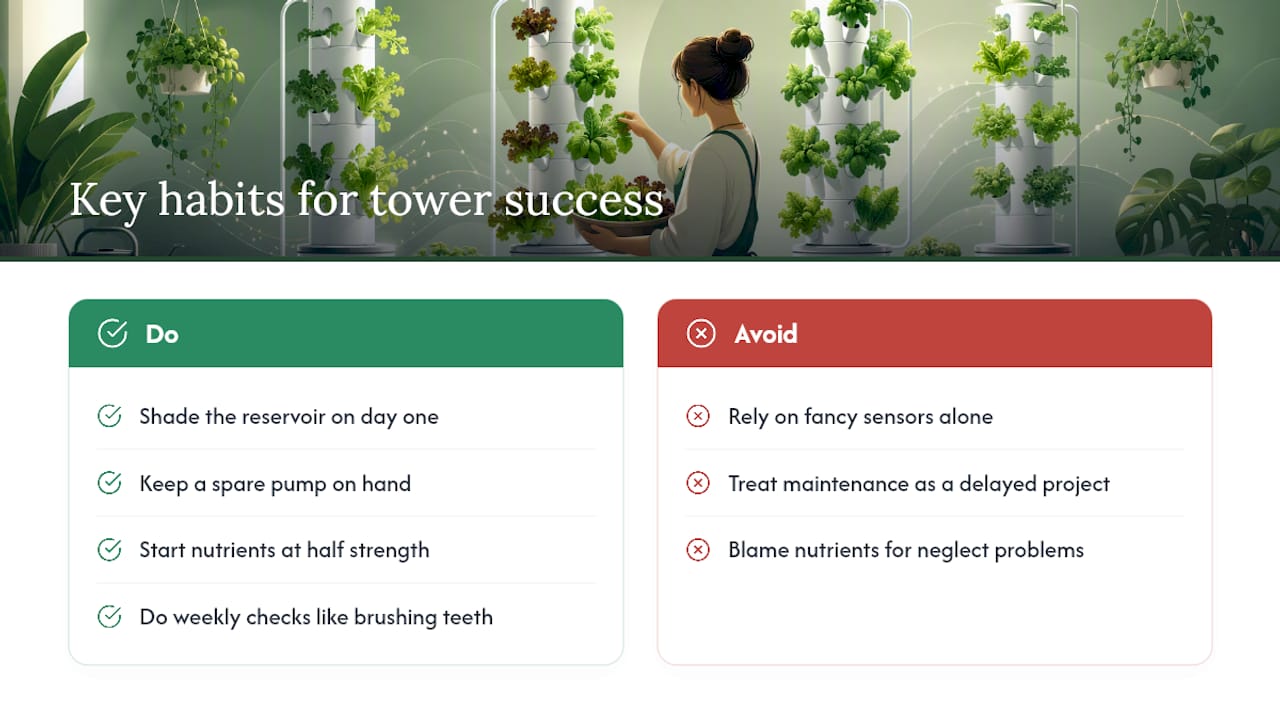
The towers that last aren’t the ones with the fanciest sensors. They’re the ones where the owner shades the reservoir on day one, keeps a spare pump on hand, and starts nutrients at half strength before ramping up once seedlings show real growth. Most failures I see aren’t nutrient problems. They’re neglect problems dressed up as nutrient problems.
A tower is a long-term system if you treat the weekly check like brushing your teeth. Treat it like a project you’ll get to eventually, and it becomes compost.
— Irwin Lee
If you’ve read this far, you already know the two hard parts: getting the reservoir and pump sizing right, and staying consistent with weekly checks. Sprout Lab’s hydroponic tower system skips the first problem entirely, since it’s built and calibrated to hold up to 56 plants in a footprint that fits a balcony or a bright corner of an apartment.
Before you buy anything, compare three things: plant capacity against your actual space, pump flow rate against your tower height, and what’s included versus what you’d need to source separately (net pots, media, a starter nutrient set). Sprout Lab’s automated hydroponic setups bundle the pump, timer, and reservoir together, so you’re not guessing on compatibility. If you’d rather build gradually, start with a beginner reservoir system guide and add capacity later. Either way, the next step is the same: check your space, pick your capacity, and order the parts that match it.
For build specifics and sizing benchmarks, the Oklahoma State University fact sheet covers materials and construction in detail. For water savings and growth-rate data, see the Shaw Local report on hydroponics. For the economics of scaling beyond leafy greens, Vertical Farm Daily’s crop performance analysis lays out the cost gap between lettuce and fruiting crops. For small-space planning ideas beyond hydroponics, Paynless’s small-space gardening guide is a useful companion read.
The main downsides are ongoing electricity costs for pumps and lights, a weekly maintenance routine you can’t skip for long, and upfront costs for the tower, pump, and starter nutrients.
Yes, particularly for leafy greens, herbs, and strawberries in small spaces, since towers use dramatically less water than soil and produce faster harvest cycles.
They’re worth it if you’ll grow leafy crops consistently and check the system weekly; they’re a poor fit if you want fruiting crops or a low-attention setup, since tomatoes and similar crops need far higher light efficiency to be cost-competitive.
Nutrient film technique (NFT) suits leafy greens with a thin, constantly flowing nutrient film and works well in tower form, while deep water culture (DWC) suspends roots directly in an oxygenated reservoir and suits fewer, larger plants like lettuce heads grown in single containers rather than tiers.
Salad greens are typically ready every three to four weeks, herbs can be trimmed continuously, and microgreens are often ready within two to three weeks of sowing.