Free shipping for order over $50

Free shipping for order over $50
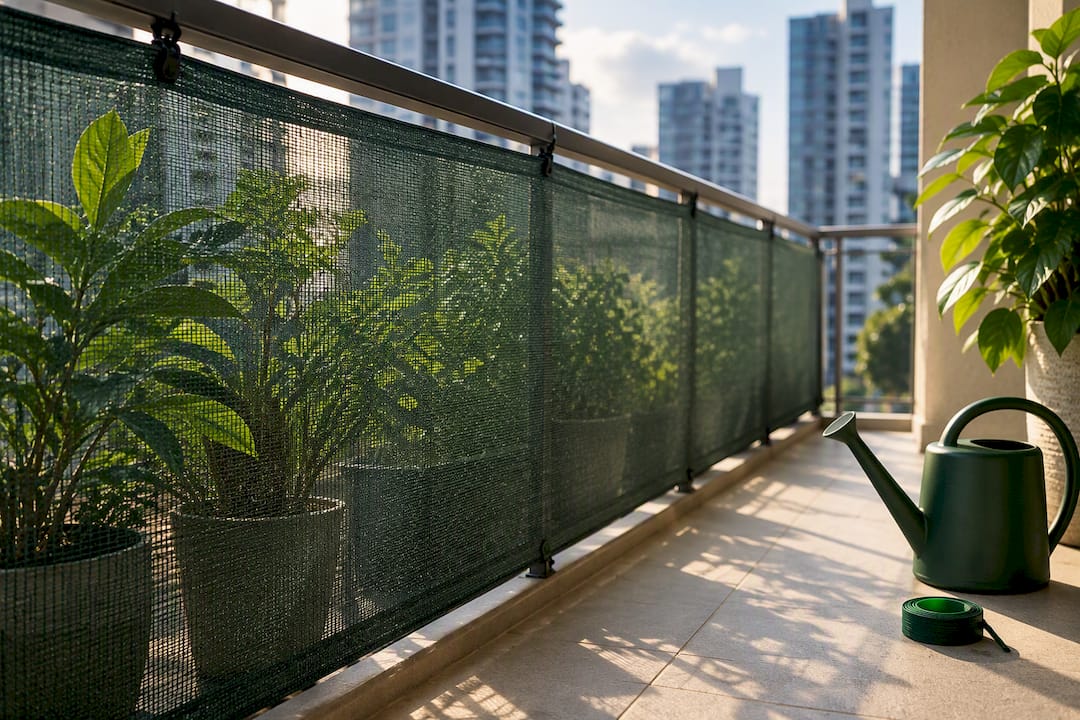
The most effective balcony wind protection combines a permeable windbreak, like mesh or bamboo screening, with heavier grouped pots and self-watering containers. This baseline works for most exposed balconies. If your wind problem is severe or constant, tempered glass glazing or retractable panels are worth the investment. Renters can start tonight with zip-tied mesh or shade cloth.
TL;DR:
- Permeable windbreaks made of mesh or bamboo are most effective for protecting plants without causing turbulence that can topple pots.
- Starting with inexpensive mesh panels allows you to gauge wind resistance needs before investing in heavier or fixed solutions.
- Heavier, wide-based containers and wind-tolerant plants improve stability and reduce the risk of damage during storms.
- Regularly inspecting and securing fixings like zip ties and grommets is crucial to maintaining effectiveness and preventing dangerous debris.
- Indoor hydroponic systems are a reliable alternative for highly exposed balconies facing persistent wind or strict building restrictions.
Before buying anything, spend a few days watching how wind actually moves across your balcony. Wind rarely hits a balcony head on. It curls around corners, funnels between buildings, and picks up speed on upper floors. Note which direction it comes from most often and whether it’s a steady breeze or gusty and unpredictable, since gusts are what snap stems and topple pots.
A few practical checks before you commit to any fix:
Skipping that last step is the most common mistake. A safety and permissions reminder from balcony glazing installers is worth following even for small fixes: confirm what your building allows before you install anything that isn’t easily removable.
Not every fix suits every balcony, and the biggest mistake gardeners make is reaching for something solid when a filter would work better.
Permeable screens made of mesh, bamboo, or reed are the standout choice for plant-heavy balconies. They slow wind down without creating the turbulence a solid wall throws off on its downwind side, which is exactly the kind of buffeting that snaps stems and shreds leaves. Field guides on windy balcony gardening consistently point to permeable barriers over solid walls for this reason.
Privacy screens and shade sails trade off privacy against airflow. Manufacturers rate these by blockage percentage, and buying guides for balcony privacy screens note that products range from around 60% to 98% blockage. Higher numbers mean more privacy and more wind resistance, but also more strain on the fixings during a storm.
Tempered glass glazing, fixed or retractable, gives near-total protection and doubles as a rain barrier. It’s the closest thing to sealing the space entirely. Some vendors claim wind resistance ratings up to 350 km/h on their engineered systems, but this route needs professional installation, building approval, and a real budget.
Awnings and side blinds give you directional control. You extend them when the wind is bad and retract them the rest of the time.
Temporary renter fixes rely on shade cloth or mesh secured with zip ties, cable ties, or hooks that clip onto railings. No drilling required.
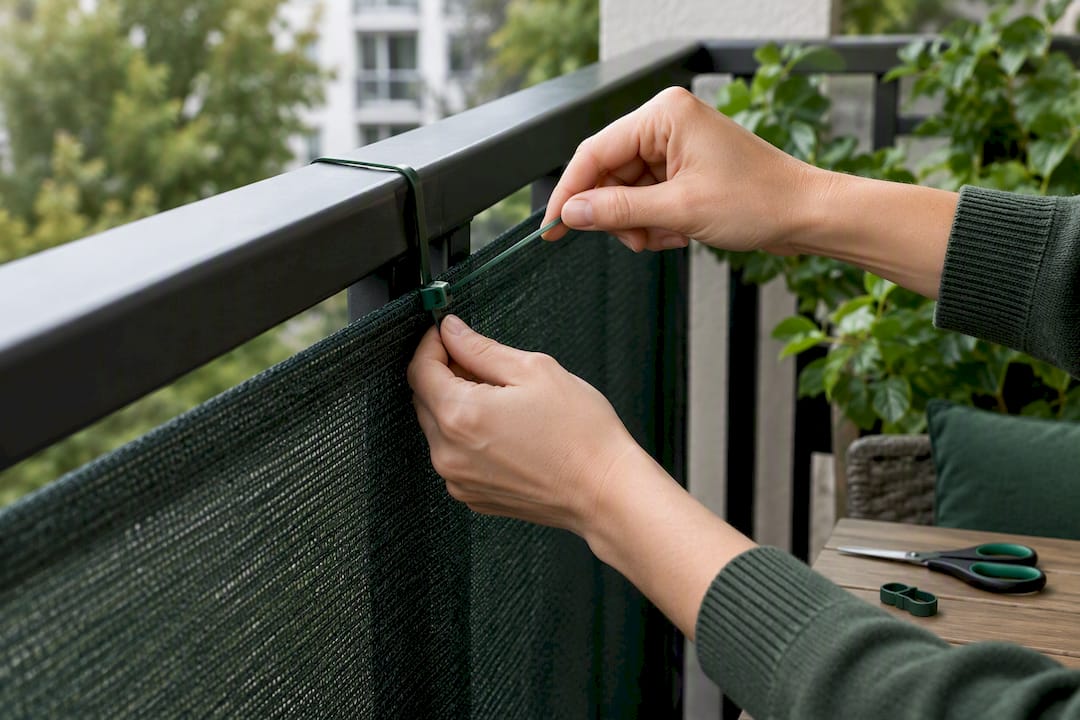
Pro Tip: Start with the cheapest permeable option that matches your wind direction. You can always add glazing or awnings later, but a $30 mesh panel tells you a lot about how much wind protection your balcony actually needs before you spend more.
Airflow characteristics matter more than most people expect. A solid vinyl panel might feel like the strongest option, but it takes the full force of every gust, which stresses both the material and whatever it’s attached to. Mesh and woven fabrics let a portion of the wind pass through, cutting the load on your fixings dramatically.
A useful target is around a low to moderate permeability level. That range filters enough wind to protect plants and comfort without turning your screen into a sail. Balcony plant wind-protection guidance backs this up directly: filtering wind, not blocking it outright, is the single most effective strategy for an exposed balcony.
For attachment, follow this order:
Pro Tip: Check every zip tie and grommet monthly. UV exposure makes plastic ties brittle within a season, and a screen that tears loose in a storm becomes a projectile, not just a lost windbreak. For broader outdoor structure upkeep, deck maintenance guidance for seasonal wear applies the same logic to any exposed fixture.
Plant choice does half the work a screen would otherwise have to do. Compact, woody herbs like thyme and rosemary shrug off wind that would flatten leafy annuals. Ornamental grasses bend instead of snapping. Low groundcovers stay below the worst of the gusts entirely. Skip tall, top-heavy plants like large tomato vines or anything in a narrow pot on an exposed corner.
Layout matters just as much as species selection:
A modular container system can simplify this kind of stability planning if you’re setting up a balcony garden from scratch.
Wind dries out pots faster than most gardeners expect, so watering has to change once you’re dealing with exposed conditions. Water deeper and less often, and add a mulch layer to slow evaporation between waterings.
Before a forecasted windy spell:
After the wind passes, walk the balcony and check every fixing point, look for torn mesh, and re-seat any pot that shifted.
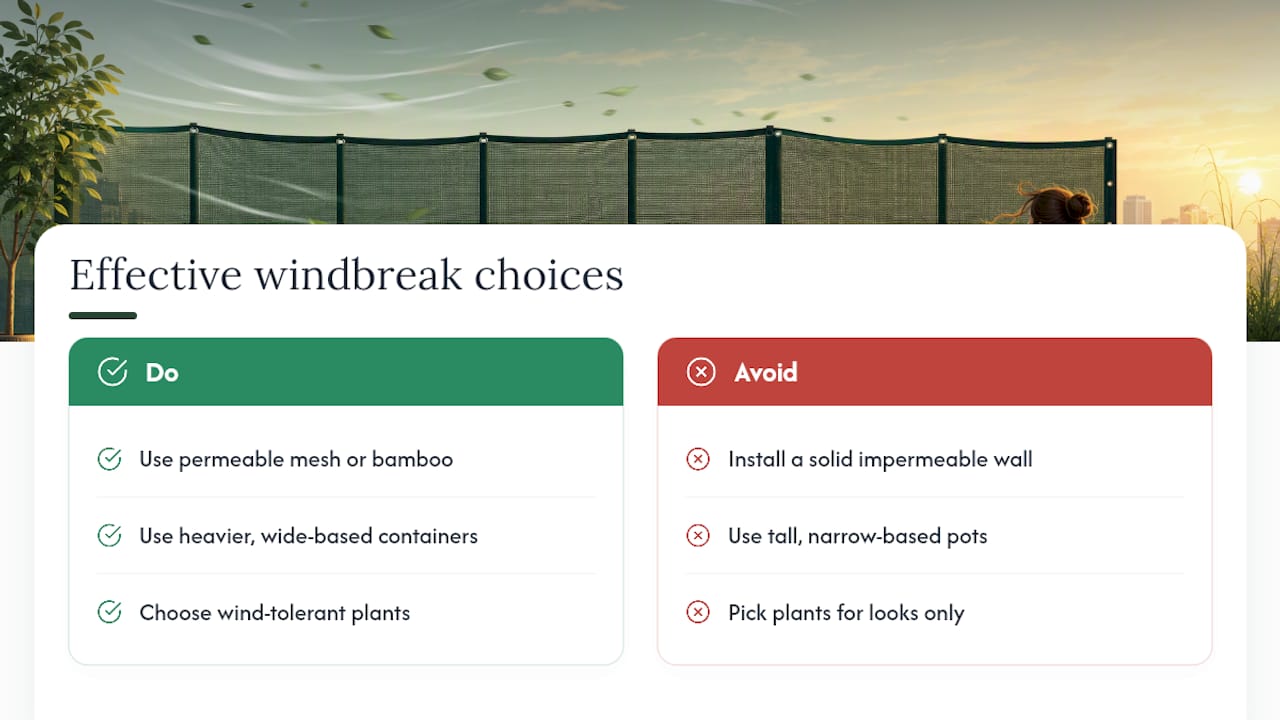
Most balcony gardeners overcorrect. They picture a solid wall keeping wind out entirely, then wonder why plants three feet behind it still get shredded by the turbulence bouncing off the back side. Filtering wind, not stopping it, is the whole game.
What surprises people is how much the plant selection and container weight matter compared to the screen itself. A great windbreak paired with tall pots in narrow bases still ends up toppled after one bad gust. The combination that consistently works is boring but reliable: permeable mesh or bamboo, heavier wide-based containers, and plants chosen for wind tolerance rather than looks alone. Experience with urban growers dealing with tight, exposed spaces backs up the same conclusion again and again.
— Irwin Lee
Some wind problems aren’t worth fighting. If your balcony faces a wind tunnel between two towers, or your building bans exterior fixtures outright, forcing an outdoor setup can mean replacing torn screens and toppled pots every few months.

That’s where Sprout Lab’s modular hydroponic systems change the equation. A hydroponic setup moves your growing indoors entirely, so wind, gusts, and storm damage stop being variables you manage at all. The modular design fits up to 56 plants in a compact footprint, which works well for apartment dwellers who don’t have room for sprawling outdoor containers in the first place. If you’re tired of re-securing screens after every storm, or your building simply won’t allow permanent balcony fixtures, indoor growing removes the problem instead of managing it. Sprout Lab customers report a 4.9 out of 5 rating across more than 25,000 orders, built largely on how much less fuss indoor systems require compared to fighting an exposed balcony season after season. Browse the hydroponic systems built for small spaces and see which setup fits your kitchen counter, spare corner, or windowsill.
A shade sail or fabric screen with moderate blockage handles both jobs at once, cutting sun exposure while letting some wind pass through instead of trapping it. For balconies with heavy plant collections, a permeable mesh or bamboo screen protects against wind first, and you can layer a retractable awning for shade control on top.
Tempered glass glazing is the only option that handles both fully, since it seals the space against rain while resisting extreme wind loads. For a lighter approach, a retractable awning combined with a mesh windbreak covers most weather short of a direct storm.
Start with zip-tied mesh or shade cloth on the windward side and mulch your pots to slow evaporation. This costs very little, requires no drilling, and can be adjusted or removed entirely as the season changes.
Permeable options like bamboo screening, reed fencing, or windbreak mesh work better than solid panels because they filter wind speed down without creating the turbulence a solid wall pushes onto whatever sits behind it. If your deck needs a more permanent solution, tempered glass panels or a fixed privacy screen with grommet spacing every 30 to 50 centimeters hold up best under repeated gusts.