Free shipping for order over $50

Free shipping for order over $50
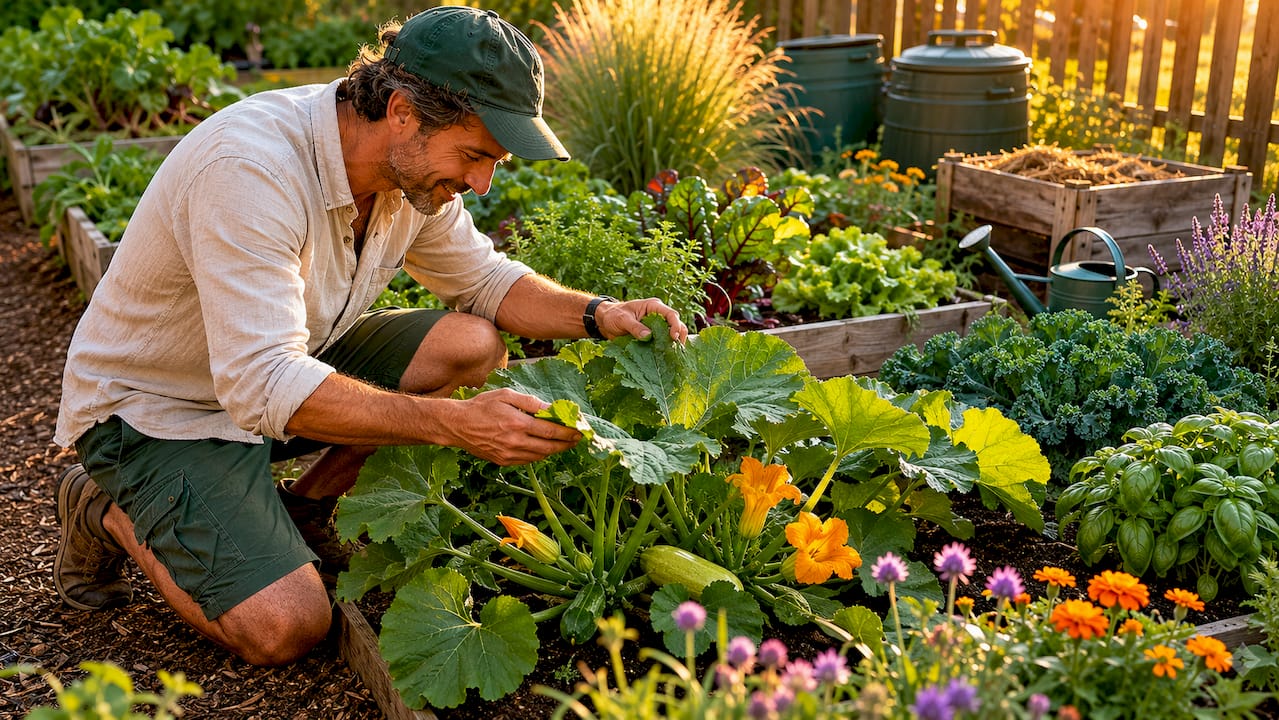
A closed-loop garden system is a regenerative ecosystem that cycles organic matter, water, and nutrients entirely within its own boundaries, requiring no external inputs beyond sunlight, rain, and human stewardship. The industry term for this practice is “regenerative gardening,” though “closed-loop gardening” describes the same core principle: converting a linear consumption model into a self-sustaining cycle. If you buy bags of fertilizer every spring, haul away yard waste in plastic bags, and still wonder why your soil feels depleted, this approach is the direct answer. Closed-loop systems eliminate that cycle of dependency by turning every output, kitchen scraps, fallen leaves, harvested rainwater, into the next season’s input.
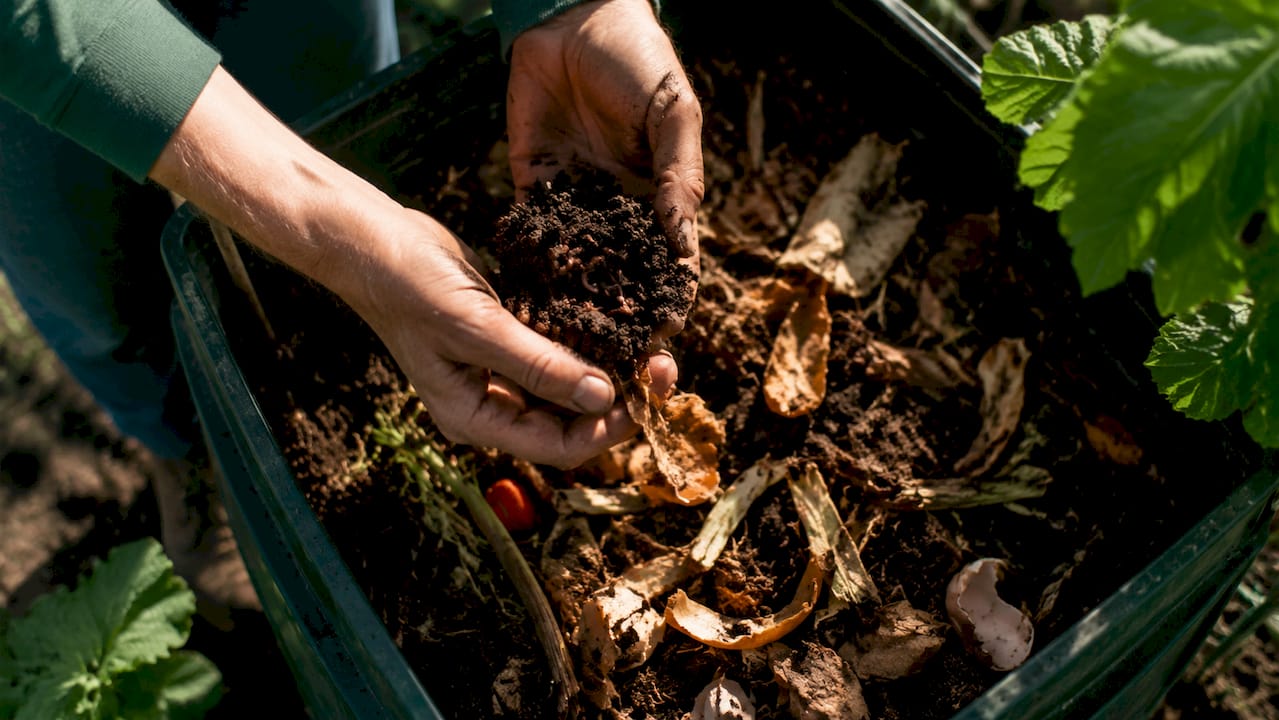
A closed-loop garden cycles organic matter internally instead of generating waste, replacing the traditional buy-use-discard pattern with a regenerative loop. Think of it as a living factory where nothing leaves the site without first serving another function. Compost feeds the soil. The soil feeds the plants. The plants feed you, and their trimmings feed the compost. Water collected from your roof irrigates beds through gravity, then drains back into the ground to recharge the water table beneath your feet.
Three core processes drive every closed-loop system. First, organic matter cycling converts kitchen scraps, garden trimmings, and fallen leaves into compost or mulch through methods like vermicomposting, bokashi fermentation, and chop-and-drop mulching. Second, water management captures and redirects rainfall through barrels, swales, and gravity-fed irrigation lines before it runs off your property. Third, soil health maintenance builds a living root zone through no-dig layering and microbial cultivation, so the ground itself becomes a nutrient engine rather than an inert growing medium.
Plant guilds add a fourth dimension that most gardeners overlook. A guild is a cluster of mutually beneficial species that self-fertilize, self-water, and self-police through natural pest control. A classic example pairs nitrogen-fixing beans with deep-rooted comfrey and pest-repelling marigolds around a fruit tree. Each plant serves the others, and the gardener spends less time intervening.
Pro Tip: Start your closed-loop system with a single compost bin and one rainwater barrel before adding complexity. Mastering two loops first builds the observation skills you need for everything else.
Biodiversity is not decoration in this system. It is the mechanism. The more species present, the more stable the food web, and the less any single pest or disease can collapse the whole garden.
The financial case for closed-loop gardening is concrete. Home gardeners who adopt these methods reduce annual garden costs by 25 to 40% by eliminating recurring purchases of synthetic fertilizers and soil amendments. That figure compounds over time because a well-built closed-loop system improves year over year without additional spending.
Productivity follows the same upward curve. Closed-loop systems achieve up to 25% higher food output compared to conventional gardens that rely on external chemical inputs. Healthier soil biology drives that gain. When microbial networks are intact, plants access nutrients more efficiently and develop stronger root systems that resist drought and disease.
| Benefit | What it means in practice |
|---|---|
| Cost reduction | 25 to 40% annual savings by replacing purchased fertilizers with on-site compost |
| Higher productivity | Up to 25% more food from the same growing area |
| Lower carbon footprint | Even organic soil products carry carbon costs; on-site cycling eliminates them |
| Labor efficiency | Natural pest control and water cycling reduce weekly maintenance hours |
| Soil fertility | Living soil builds itself each season without tilling or amendments |
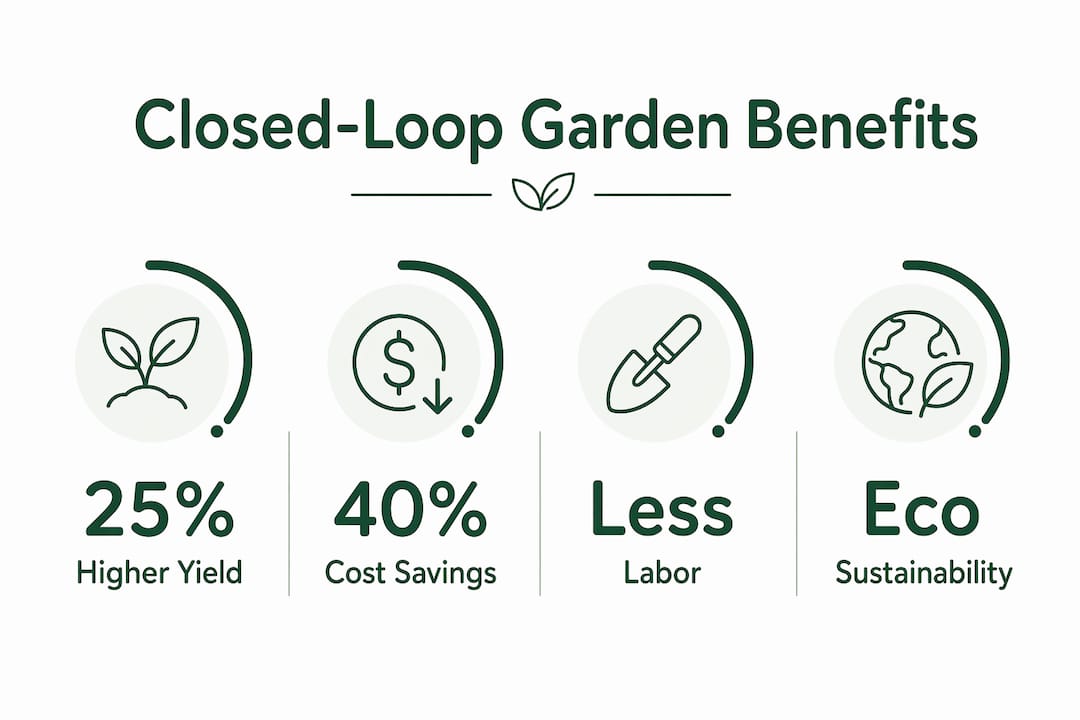
The environmental benefit goes deeper than most gardeners realize. Even certified organic and peat-free soil bags carry a carbon footprint from manufacturing, packaging, and shipping. A closed-loop system sidesteps that entirely by maximizing resource reuse on-site. You are not just avoiding synthetic chemicals. You are removing yourself from the supply chain altogether.
Labor also decreases as the system matures. Closed-loop gardeners require less intervention over time as natural cycles establish themselves. The first year demands the most setup. By year three, the garden largely runs its own maintenance schedule, and your job shifts from doing to observing.
The biggest misconception is that a truly closed loop means zero external inputs forever. No garden achieves that. You will still buy seeds, replace broken tools, and occasionally add a specific mineral amendment when soil tests reveal a genuine deficiency. The goal is to minimize external inputs, not eliminate human judgment.
Pest management generates the second most confusion. Many new closed-loop gardeners panic at the first aphid colony and reach for a spray bottle. That instinct works against the system. Accepting some pest presence supports ecosystem balance and natural pest management without chemical sprays. Minor pest damage signals a functioning food web where predator insects, birds, and beneficial fungi have food to sustain them. For a deeper look at managing this balance, Sprout-lab’s natural pest management guide explains how to support beneficial insects rather than eliminate them.
Three other misconceptions trip up beginners regularly:
Pro Tip: Keep a simple garden journal for the first two seasons. Recording what you observe, where pests appear, which plants thrive, and how fast compost breaks down, gives you the data to make smarter decisions without guessing.
Gradual implementation beats ambitious overhaul every time. Adding one new loop per season, composting first, then water harvesting, then plant guilds, lets you learn each system before layering the next.
Starting a closed-loop system is a sequenced process, not a weekend project. Follow these steps in order to build each loop on a stable foundation.
| Method | Best for | Setup cost |
|---|---|---|
| Hot composting | Large gardens with abundant organic waste | Low |
| Vermicomposting | Small spaces, indoor kitchens | Low to medium |
| Bokashi fermentation | All food waste including meat and dairy | Low |
| Gravity rainwater barrel | Most home gardens | Low |
| Swales and berms | Sloped properties with runoff issues | Medium |
For gardeners interested in integrating hydroponics with these principles, Sprout-lab’s guide to home garden automation covers water and nutrient management systems that complement closed-loop thinking.
A closed-loop garden system works because it converts every output into the next input, building soil fertility, reducing costs, and increasing food productivity without external chemical dependency.
| Point | Details |
|---|---|
| Core definition | A closed-loop system cycles organic matter, water, and nutrients internally with minimal external inputs. |
| Cost and productivity gains | Adopting closed-loop methods cuts annual garden costs by 25 to 40% and raises food output by up to 25%. |
| Start with composting | Set up a two-bin compost system before adding water harvesting or plant guilds. |
| Pests are part of the system | Minor pest presence supports predator insects and ecological balance; eradication disrupts the food web. |
| Seed saving closes the loop | Saving seeds each season produces plants genetically adapted to your local soil and climate over time. |
The hardest part of closed-loop gardening is not the composting or the rainwater barrels. It is the identity shift. You stop being a customer of the garden supply industry and start being a steward of a living system. That transition takes longer than any physical setup.
I spent my first season fighting the urge to fix everything immediately. A yellowing leaf triggered a search for deficiency charts. A cluster of aphids triggered a trip to the garden center. What I eventually learned is that the garden was communicating, not failing. The yellow leaf was feeding the compost. The aphids were feeding the ladybugs that arrived three days later without my help.
The conventional gardening mindset treats the garden as a production unit that needs constant inputs to perform. The closed-loop mindset treats it as a relationship that rewards patience and observation over intervention. That shift is not philosophical. It is practical. The less I intervened, the more the system self-corrected, and the less time I spent on maintenance each week.
What surprised me most was how quickly soil quality became visible. Within one full growing season of no-dig layering and chop-and-drop mulching, the soil texture changed from compacted clay to something loose and dark that smelled like a forest floor. That smell is fungal activity. It is the system working. No bag of fertilizer produces it.
If you are starting out, resist the urge to build the perfect system in year one. Build one loop, watch it work, and let that success pull you toward the next one. The garden will show you what it needs if you slow down enough to look.
— Luna
The most common reason closed-loop gardens underperform in the first season is poor starting soil. Compost takes time to build, and your plants need a fertile base while that process gets underway. Sprout-lab’s premium soil mixes are formulated to support living soil biology from day one, giving your closed-loop system a head start without synthetic inputs. For growers working in smaller spaces or wanting to complement their soil garden with a water-efficient setup, Sprout-lab’s passive hydroponic system applies the same resource-cycling principles in a compact, beginner-friendly format. With a 4.9/5 rating across more than 25,000 orders, Sprout-lab products are built for gardeners who take their harvests seriously.
A closed-loop garden system is a self-sustaining garden that recycles its own organic matter, water, and nutrients internally, eliminating the need for purchased fertilizers or soil amendments over time.
Organic gardening avoids synthetic chemicals but still relies on purchased inputs like bagged compost or certified fertilizers. A closed-loop garden generates all its own inputs on-site, making it more self-sufficient and lower cost over the long term.
Most gardeners see meaningful soil improvement within one to two growing seasons. The full system, including stable compost production, functioning plant guilds, and established water cycles, typically matures over two to three years.
No. A single raised bed can cycle its own compost and mulch. Vermicomposting and bokashi fermentation work in apartments, and a single 55-gallon rain barrel serves most small urban gardens effectively.
Closed-loop gardening is a core principle within permaculture design, but permaculture is a broader design philosophy covering land use, water systems, and community. You can practice closed-loop gardening without adopting the full permaculture framework.