Free shipping for order over $50

Free shipping for order over $50
Navigating the modular hydroponic system market often means juggling incomplete starter kits, vague compatibility between brands, and limited support for first-time indoor growers. Many options limit international shipping or link essential guidance and consumables to confusing add-ons, making it hard to build a reliable setup without overspending or hunting for replacement parts across vendors. This comparison details pricing, included support, system expandability, and shipping so you can pinpoint the right modular hydroponic solution for your available space and budget.
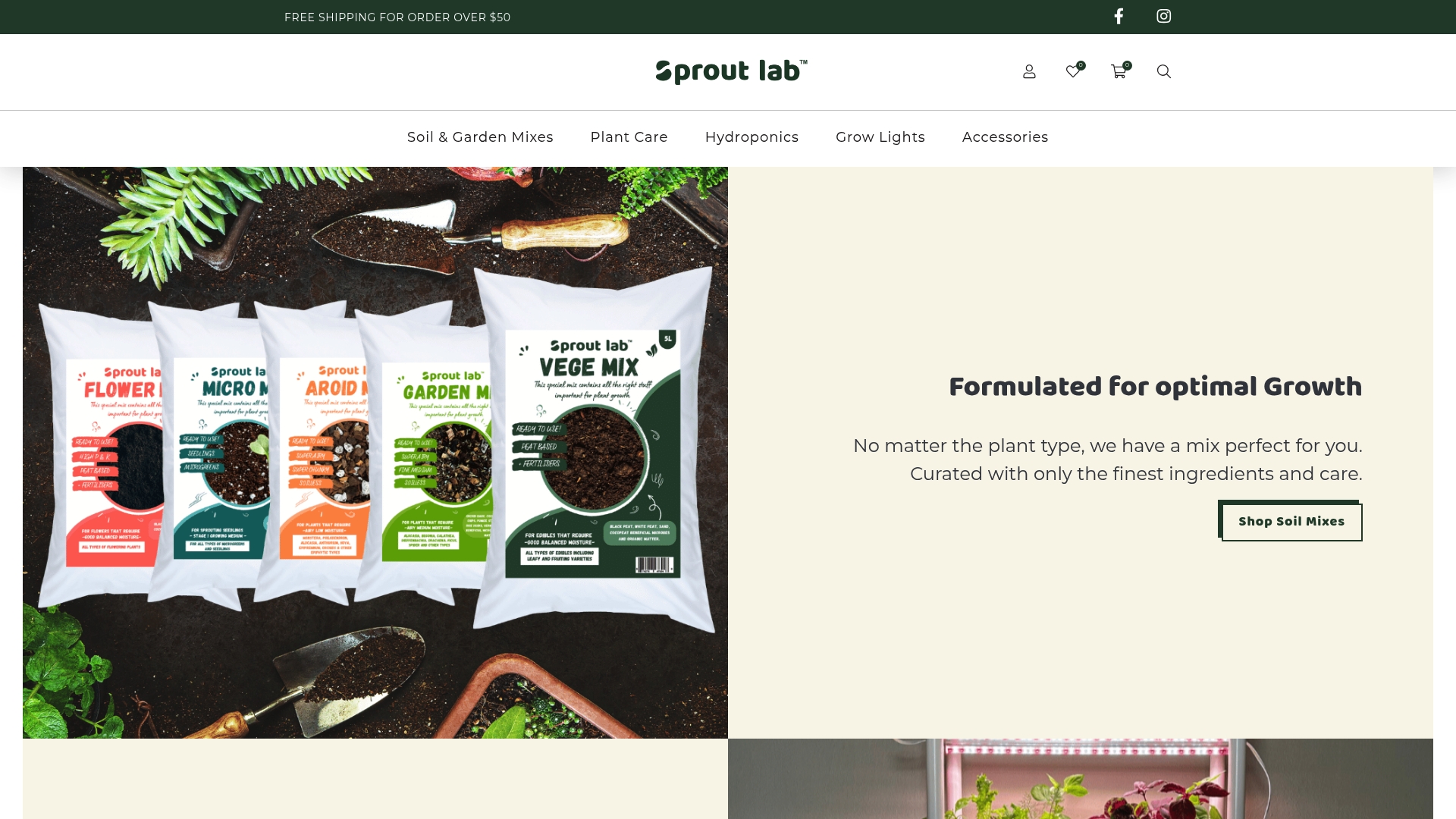
The vendor advertises modular hydroponic setups that can cultivate up to 56 plants in a compact area, a claim that frames the product line around space efficiency and yield potential. The vendor’s marketing materials also state a 4.9/5 star rating from over 25,000 completed orders. Sprout Lab focuses on farm-grade home gardening tools and clear guidance for first-time growers.
Sprout Lab pairs farm-grade cultivation materials with modular, space-efficient hardware intended for urban homes. The product set spans consumables like soil and boosters through hardware such as LED lights and hydroponic racks, so you can buy chemistry and structure from the same brand and skip compatibility headaches.
Urban residents who want reliable, professional-grade inputs without the complexity of sourcing multiple brands. First-time growers who want guided starter kits and clear instructions will find this especially useful. Experienced city farmers will value consistent consumables and modular hardware that scale inside small spaces.
That 56-plant claim above changes how you think about countertop gardening. If it matches your space needs, Sprout Lab lets you replace weekly store runs with a compact system that aims to supply continuous salad greens or herbs, using the same soil mixes and nutrient boosters throughout the season.
A city dweller orders a modular hydroponic rack, soil mixes, and organic boosters. They follow the setup guide, register for support, and use the community forum for troubleshooting. Within weeks they harvest regular lettuce and basil with predictable growth cycles and fewer pest surprises.
Most consumables start around $4.99 and typical medium items sit under $45.00. Larger hydroponic systems and full racks top out near $368.00. The vendor advertises free shipping for orders over $50 for regional deliveries.
Website: https://sprout-lab.com
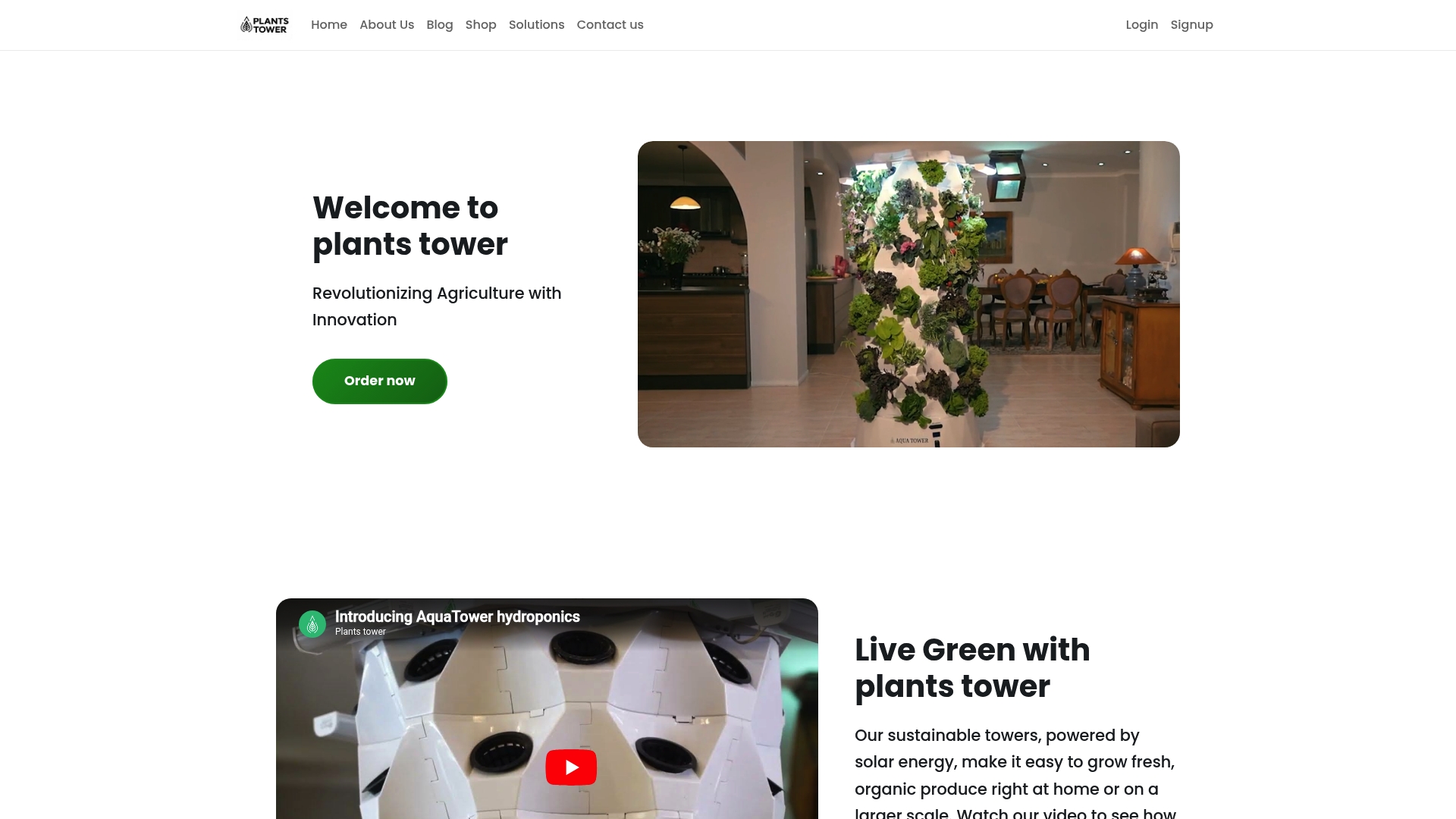
AI control paired with solar powered towers is the headline feature for Plants Tower, and the vendor lists a full Aqua Tower system at about €399.99. The company targets off grid urban growers who want a largely hands off hydroponic rig plus learning resources.
Plants Tower’s focus is autonomy: AI automation plus solar powered operation aims to keep systems running without constant manual input. This makes it different from setups that assume steady indoor power and greenhouse space. Sprout-lab advertises a modular system that can grow up to 56 plants; Plants Tower narrows the offer toward off grid and educational use rather than maximum plant density.
If you need wholesale commercial pricing or deep bulk discounts for large urban farms, Plants Tower lists limitations for those customers. If you want cheap, entry level soil kits under a strict budget, the premium hardware and solar option may overshoot your needs.
Tech minded urban gardeners, schools, and small off grid growers who want a largely self regulating hydroponic system. Ideal for people who prefer a guided setup with built in automation and educational support rather than assembling parts from multiple vendors.
A homeowner buys the Aqua Tower kit, follows the included guides, and installs the tower on a sunlit balcony. They use the app to monitor nutrient levels and get alerts. Over two months they harvest herbs and salad greens with less daily attention than a conventional pot garden.
Seed packets and guides start around €0.99 and €5.00 respectively, while full systems like the Aqua Tower are listed near €399.99. The catalog includes individual components, accessories, and occasional bundle discounts; shipping terms vary by region.
Website: https://plantstower.com
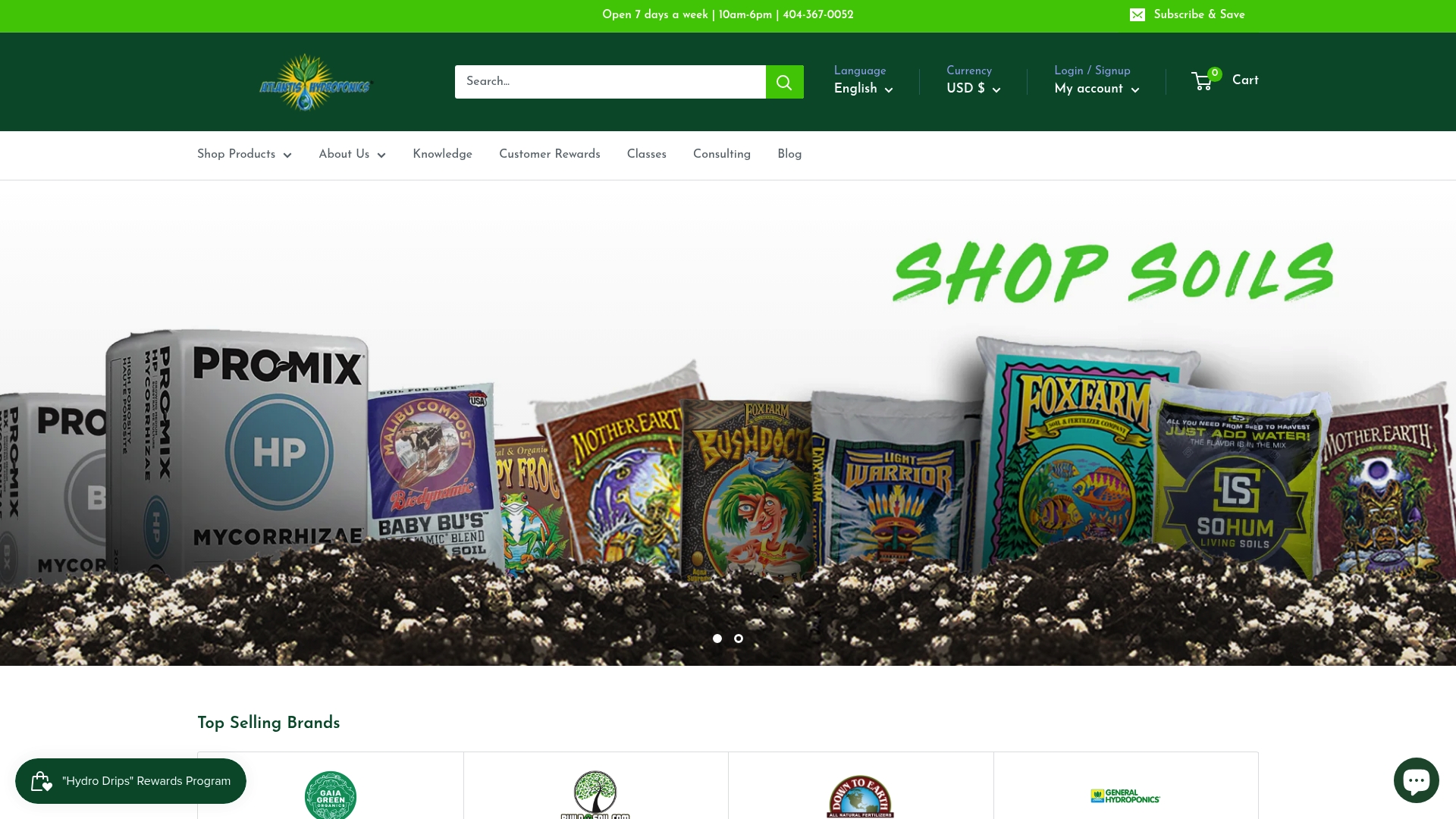
Open seven days a week and offering discreet shipping to all 50 states, Atlantis Hydroponics positions convenience at the front of its service model. The retailer pairs a wide parts catalog with in-store expertise for both home growers and commercial customers.
Wide product selection covering hydroponic systems, grow media, nutrients, environmental controls, irrigation accessories, and grow tents.
Personalized customer support and expert guidance for system setup, troubleshooting, and maintenance from staff with long industry experience.
Discreet shipping across all 50 states plus a loyalty rewards program and educational content in the form of blogs, classes, and consulting.
The vendor leans on hands on support for every purchase, not just product listings. That service model means beginners get step by step setup help while commercial clients can buy parts and schedule consulting to tune controllers and irrigation. Decades of supplier relationships show up in product sourcing.
Strong support reduces setup mistakes. Staff guidance shortens the learning curve for newcomers and helps commercial operators avoid costly environmental misconfiguration.
A one stop catalog means you can buy a complete kit and the spare parts that match it without mixing vendors, which saves compatibility headaches during installs.
Educational resources and paid consulting extend value beyond a single purchase, helping you dial nutrient schedules and controller settings for specific crops.
Discreet nationwide delivery suits sellers and growers who need privacy or who run multiple sites across states.
Loyalty rewards and occasional bulk discounts lower lifetime cost for repeat buyers who restock nutrients and media regularly.
International buyers face limited shipping options since distribution focuses on the United States only.
Prices sit above some bulk or discount suppliers, so buyers buying very large volumes may find better per unit rates elsewhere.
Public third party review coverage is thin, so reputation relies more on community word of mouth and in house testimonials.
Some users report occasional site blocking by browser extensions, which can complicate online browsing and checkout.
If you import supplies or operate outside the United States, the limited international shipping will slow procurement and raise freight costs.
If your operation buys ultra large volumes strictly on price, wholesale distributors with aggressive bulk pricing will likely undercut Atlantis on per unit cost.
If you want a vendor with extensive independent review coverage for due diligence, this supplier relies more on direct reputation than aggregated public ratings.
Indoor gardeners, hobbyists, and small to medium commercial producers who value trustworthy parts, personalized setup help, and ongoing education are the primary fit. Buyers who prioritize sustainability and want vendor backed guidance will get the most from these offerings.
A small commercial grower orders environmental controllers, an auto watering system, and organic nutrients, then books a consulting session to calibrate schedules. Equipment ships discreetly across state lines and the grower receives follow up support to tune conditions for higher yield.
Most items range from $2.50 to $479.99 with larger systems or kits commonly in the $150 to $400 band. Subscriptions, bulk discounts, and financing through Affirm are available and shipping is discreet and free above a set threshold.
Website: https://atlantishydroponics.com
The diversity among modular hydroponic system providers creates distinct choices for urban growers. Here we compare Sprout Lab, Plants Tower, and Atlantis Hydroponics to identify the advantages and tradeoffs that define each product’s appeal.
Sprout Lab specializes in hydroponic systems designed for efficient use of limited urban space, offering modular setups that support up to 56 plants. Their product line, including soil mixes, grow lights, and boosters, provides a single-source solution for urban indoor gardening. In contrast, Plants Tower emphasizes sustainability through solar-powered systems, focusing on off-grid operation and educational experiences through automation features. Meanwhile, Atlantis Hydroponics differentiates itself with a vast selection of parts and personalized consultation services, making it an excellent choice for growers seeking tailored system configurations.
When assisting newcomers, Sprout Lab’s inclusion of starter guides and clearly structured product kits ensures a smooth entry into hydroponic gardening. Plants Tower, however, appeals to tech-savvy beginners with its AI-driven automated systems, simplifying nutrient management through a mobile app interface. For experienced growers looking to expand or customize, Atlantis Hydroponics excels with its extensive product catalog and expert-guided services that help refine operational nuances for optimized results.
Sprout Lab emerges as the favored choice for urban residents seeking a harmonized blend of efficiency, simplicity, and professional-grade components. Their focus on practicality and scalability sets them apart, though those prioritizing energy independence or extensive customization may find other systems better aligned with their specific needs.
Choose the right modular hydroponic system based on features, user needs, and limitations:
| Product | Key Differentiator | Best For | Pricing | Notable Limitation |
|---|---|---|---|---|
| Sprout-lab | Farm-grade quality hydroponic systems and soil | Urban residents needing high yield setups | Consumables: $4.99, Systems: $368.00 | Limited international shipping regions |
| Plants Tower | AI automation and solar-powered operation | Off-grid growers needing autonomy | Starting at €399.99 | Premium pricing may not suit low-budget users |
| Atlantis Hydroponics | Comprehensive catalog with expert support services | U.S.-based gardeners wanting guidance | $2.50–$479.99 | Limited to U.S. shipping, moderate public reviews |
Many urban gardeners and beginners face challenges with limited space and finding reliable, easy-to-use growing systems. The article highlights key concerns like maximizing plant capacity in small areas and achieving consistent healthy growth without complicated setups.
Sprout-lab answers those needs directly with modular hydroponic setups designed to grow up to 56 plants neatly packed in your home. Their farm-grade soil mixes and clear starter kits make gardening accessible for all skill levels, eliminating guesswork and helping you nurture thriving plants quickly. Customers rave about rapid seed germination and sustained harvests, backed by a 4.9 out of 5 star rating from over 25,000 orders.
Unlock hassle-free urban gardening today by exploring the comprehensive options at Sprout Lab. Take control of your harvest with proven, space-saving hydroponic systems that fit right into your lifestyle. Visit Sprout Lab’s website and get the starter kits along with expert guidance to start growing efficiently in compact spaces.
Sprout-lab offers modular hydroponic systems that can cultivate up to 56 plants in compact spaces, making it ideal for urban gardeners. Their marketing emphasizes space efficiency and yield potential, which is particularly beneficial for city dwellers with limited room. Consider starting with Sprout-lab if you want to maximize your growing potential in a smaller area.
Plants Tower excels with solar-powered hydroponic systems that don’t require grid energy, making it suitable for off-grid or educational setups. In contrast, Sprout-lab focuses on farm-grade gardening tools that cater to first-time growers in urban environments, providing modular options that still thrive indoors. If you need a hands-off solution without reliance on power, Plants Tower could be a better fit, while Sprout-lab would be great for manageable indoor gardening.
Sprout-lab’s starter kits come with step-by-step setup instructions and clear feeding schedules, making them user-friendly for beginners. This kind of support ensures that new growers can achieve reproducible results without the steep learning curve commonly associated with hydroponics. If you’re just starting, Sprout-lab’s guided experience can help you grow successfully from day one.
Experienced city farmers can benefit from Sprout-lab’s consistent consumables and modular hardware that scale as needed for larger setups. Their product breadth allows for outfitting anything from a countertop herb garden to a bigger hydroponic system, catering to various growing needs. If you’re looking to streamline your buying process and ensure compatibility, Sprout-lab is an excellent choice.
Sprout-lab offers consumables starting around $4.99, with larger hydroponic systems going up to $368.00. This range allows for flexibility depending on your budget and growing ambitions, making it accessible for both beginners and more experienced growers. Expect to find a setup that fits your financial plan while providing quality inputs.