Free shipping for order over $50

Free shipping for order over $50
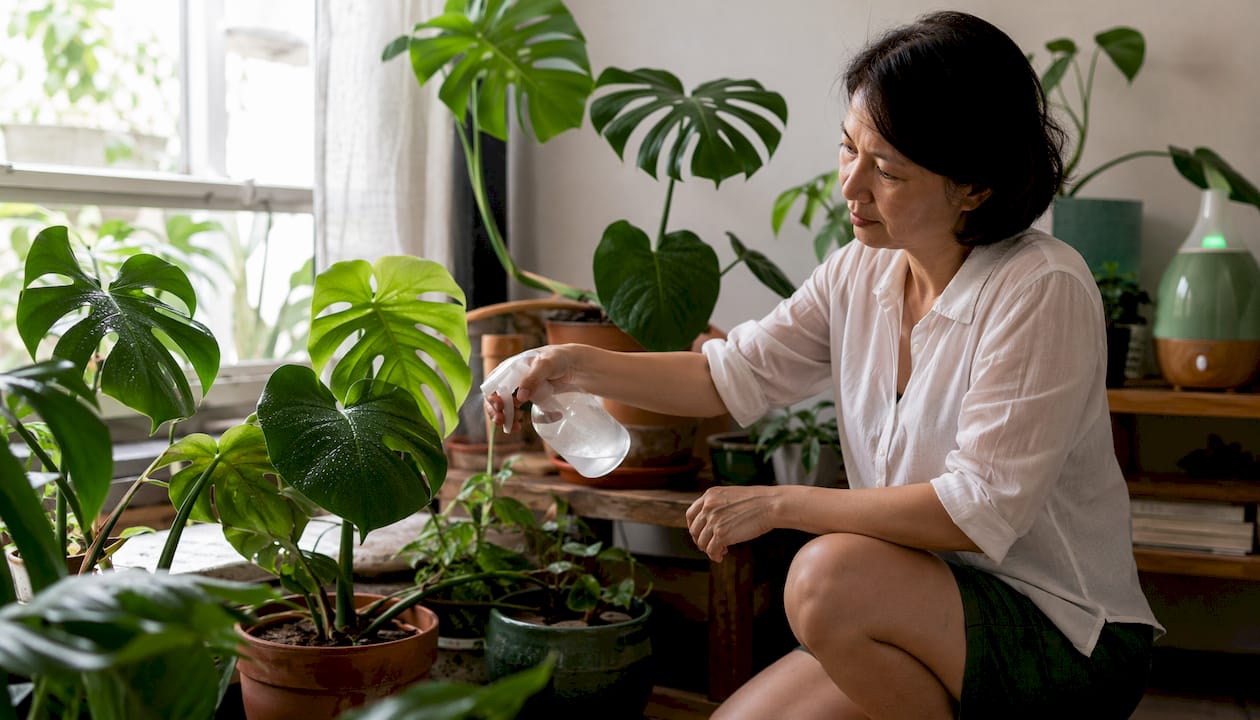
For a compact hydroponic Monstera in Singapore-style humidity, keep relative humidity at 55–65% at canopy height, provide bright indirect light for a full day, and maintain reservoir dissolved oxygen above 6–7 mg/L with active circulation. That single prescription covers the three variables that determine whether your plant thrives or slowly declines.
Why those three? Humidity governs transpiration and leaf health. Light drives the photosynthesis that funds fenestration. And in a hydroponic system, oxygen in the root zone replaces the “dry-out” cycle that soil naturally provides. Get all three right and your Monstera will reward you with large, deeply split leaves.
Quick wins you can do today:
Monstera deliciosa evolved in primary rainforest, where adventitious roots pull moisture from the air as much as from the ground. That biology doesn’t change when you move the plant indoors. Humidity directly affects three systems: transpiration rate, nutrient uptake efficiency, and the pace of leaf fenestration.
When humidity drops, leaves lose water faster than roots can replace it. The first visible sign is brown, crispy edges, not the whole leaf going yellow. Leaf curling follows. Fenestration slows or stops entirely because the plant is in conservation mode, not growth mode.
Here’s the counterintuitive part about Singapore: outdoor ambient humidity runs 70–80%, which is nearly perfect for Monstera. The problem is indoors. Air-conditioned rooms commonly drop below 40%, and that swing, not the outdoor climate, is what causes brown leaf tips and stunted growth. The AC cycle is the real enemy.
Signs your Monstera is humidity-stressed:
Pro Tip: Position your Monstera in a corner or shelf alcove away from direct airflow. A bookshelf nook or a spot behind a room divider creates a natural microclimate that buffers against AC-driven humidity swings without any extra equipment.
Precise targets matter more than general advice. Here are the setpoints that work for compact hydroponic Monstera in Singapore-style conditions:
| Parameter | Target Range | Notes |
|---|---|---|
| Relative humidity (day) | 55–65% relative humidity | Measured at canopy height |
| Relative humidity (night) | Slightly higher; avoid sustained >80% | Slightly higher is fine; avoid sustained >80% |
| Air temperature | 68–75°F (20–24°C) | Avoid below 55°F |
| Daily light hours | sufficient daily bright indirect light | Bright indirect; full-spectrum grow light if needed |
| Light intensity | Bright indirect | East- or north-facing windows preferred in Singapore |
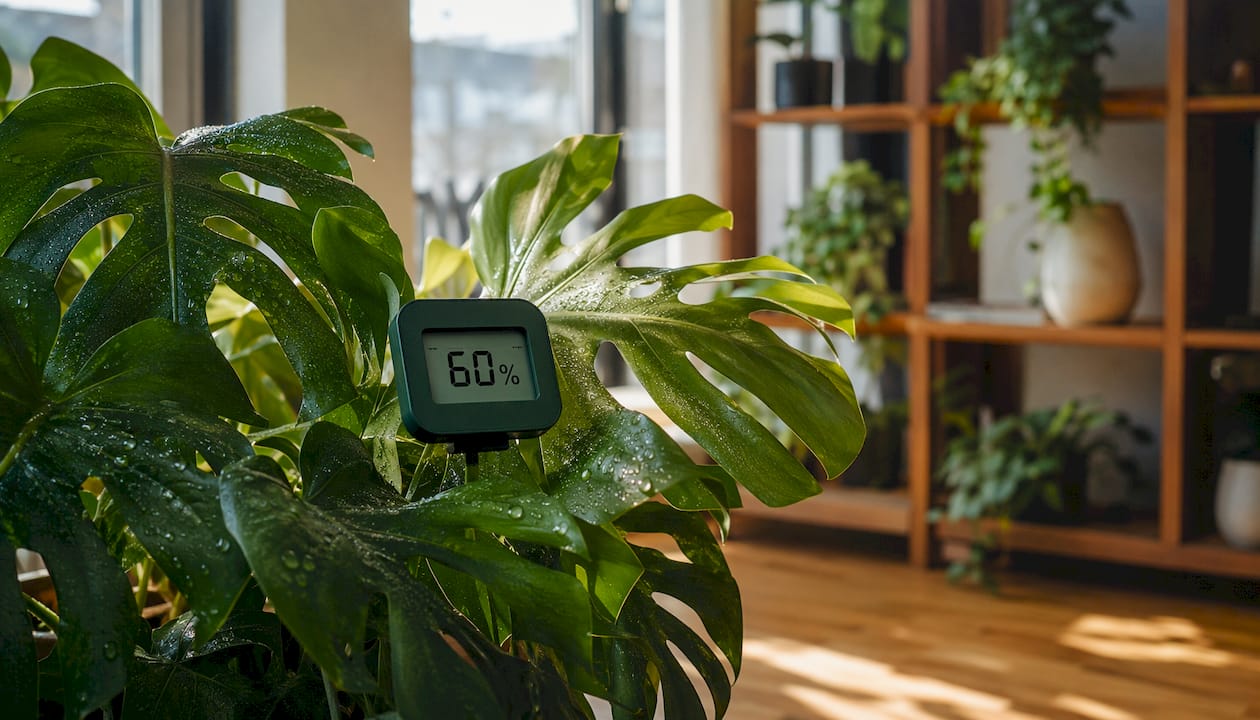
A whole-house thermostat reading is nearly useless for this purpose. Microclimates near windows, vents, or shelves can differ significantly from the room average from the room average. A small hygrometer placed at canopy height gives you the number that actually matters.
For grow lights, a full-spectrum LED panel set to 10–12 hours on a timer handles the light requirement cleanly when window placement isn’t ideal. Morning light from an east-facing window is gentler than afternoon west-facing sun, which can scorch leaves even through glass.
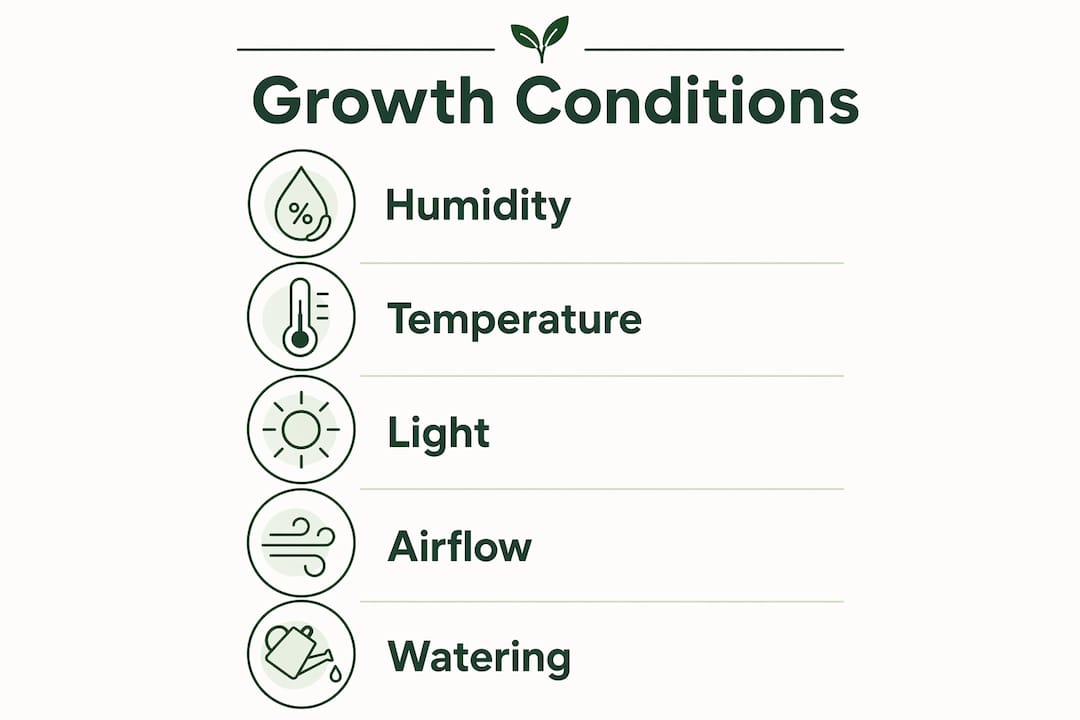
Misting is the most common advice and the least effective long-term fix. It provides only a temporary humidity spike and, if leaves stay wet for more than an hour, raises the risk of fungal spots and bacterial rot. Skip it as a primary strategy.
What actually works:
Pro Tip: Run your humidifier during the warmest part of the day (late morning to early afternoon) when AC systems work hardest and indoor humidity dips lowest. Avoid running it overnight in a closed room, which can push humidity above 80% and invite fungal growth on leaf surfaces.
High ambient humidity changes the risk profile of hydroponic growing in one specific way: roots don’t dry out between cycles. In soil, that dry-down period is what kills off anaerobic bacteria. In a hydroponic reservoir, you have to replace that function with dissolved oxygen and circulation.
The primary hydroponic risk in humid climates is root rot from stagnant, low-oxygen water. Aim for dissolved oxygen above 6–7 mg/L during the day and keep reservoir water between 68–75°F (20–24°C). Cooler water holds more oxygen, but going below that range shocks tropical roots.
| Parameter | Target | Why It Matters |
|---|---|---|
| Dissolved oxygen (DO) | >6–7 mg/L | Prevents anaerobic root rot |
| Reservoir water temp | 68–75°F (20–24°C) | Balances O2 solubility and root metabolism |
| EC (nutrient strength) | 0.8 mS/cm | Monstera is a light feeder; avoid over-concentration |
| pH | 5.5–6.5 | Optimal nutrient availability range |
For circulation, short frequent pump cycles (15 minutes on, 45 minutes off) outperform continuous runs in compact insulated reservoirs. Continuous pumping in a small unit generates heat, which lowers dissolved oxygen. An air stone running continuously alongside intermittent pump cycles gives you the best of both.
Check EC and pH every 3–4 days in humid conditions. Slower evaporation means nutrient concentration drifts more slowly, but it still drifts. Perform partial reservoir changes at regular intervals every few weeks.
Pro Tip: Avoid chilled reservoir water even if you’re tempted to cool it down for higher oxygen levels. Fill from the tap and let water sit at room temperature for an hour before adding it to the reservoir. Cold water shocks tropical roots and makes them more susceptible to disease.
Siting first:
System setup:
Grow-light schedule:
Startup checklist:
Pro Tip: When transplanting a new cutting into the hydroponic system, keep humidity at 70–75% for the first week using a humidity dome or a clear plastic bag loosely draped over the plant. Then step it down to 60–65% over the following week. This gradual ramp reduces transplant shock significantly.
| Symptom | Likely Cause | First Action | Follow-Up |
|---|---|---|---|
| Brown crispy leaf edges | Low canopy humidity or AC exposure | Check hygrometer; move plant from vent | Add humidifier or cluster plants |
| Fungal spots on leaves | Leaf wetness + poor air movement | Stop misting; improve air circulation | Remove affected leaves; reduce humidity slightly |
| Yellowing older leaves | Root rot or nutrient imbalance | Smell reservoir; check root color | Partial water change; adjust EC/pH |
| Slimy brown roots | Root rot (low DO, stagnant water) | Trim affected roots; full reservoir flush | Increase aeration; add hydrogen peroxide rinse |
| No new fenestrations | Insufficient light or chronic low humidity | Move closer to window or add grow light | Raise humidity to 60–65% |
| Pale, bleached new leaves | Grow light too close or direct sun | Raise light panel 4–6 inches | Check for 10–12 hours indirect exposure |
For root rot specifically: pull a few roots and check color. Healthy Monstera roots in hydroponics are white to tan. Brown, slimy roots with a sulfur smell confirm rot. Trim to healthy tissue, flush the reservoir completely, and restart with fresh nutrient solution at a lower EC.
Check common indoor garden mistakes if you’re seeing multiple symptoms at once, which usually points to a siting or setup error rather than a single variable.
Weekly:
Monthly:
Seasonal adjustment (heavier AC use): When you’re running AC for more than 8 hours a day, bump the humidifier hygrostat target up by 5% to compensate. Check the canopy hygrometer reading at the hottest part of the day, typically 1–3 PM, to catch the lowest daily humidity point.
For a deeper look at how hydroponics adapts to Singapore’s tropical climate, the principles behind reservoir management and humidity control translate directly to the maintenance habits above.
Growing Monstera hydroponically in a humid climate isn’t complicated once the system is dialed in. The harder part is sourcing a compact setup that actually handles aeration, reservoir management, and tight spaces without improvising every component.
Sprout-lab’s compact hydroponic systems are built for exactly this use case: urban apartments, limited floor space, and the kind of hands-on reservoir control this guide describes. Their reservoir hydroponic system guide walks through DO targets, pH management, and startup checklists in detail. For growers who want more automation, the automated hydroponic setup overview covers timer-controlled circulation and nutrient dosing that pairs well with the maintenance cadence above. With a 4.9/5 rating across more than 25,000 completed orders, Sprout-lab is a proven starting point for urban growers setting up their first Monstera system.
Monstera thrives hydroponically in Singapore-style humidity when you maintain an appropriate and steady canopy humidity, keep reservoir dissolved oxygen above 6–7 mg/L, and monitor both at the plant level rather than relying on room averages.
| Point | Details |
|---|---|
| Canopy humidity target | Hold 55–65% relative humidity measured at canopy height, not room average. |
| Skip misting | Misting raises fungal risk; use a cool-mist humidifier with a hygrostat instead. |
| Reservoir oxygen | Keep dissolved oxygen above 6–7 mg/L with an air stone and intermittent pump cycles. |
| Water temperature | Maintain reservoir water between 68–75°F (20–24°C); never use chilled water on tropical roots. |
| Sprout-lab first step | Use Sprout-lab’s reservoir guide and compact systems to implement these settings from day one. |
Most care guides treat Singapore’s humidity as an advantage and move on. That framing misses the real issue. The outdoor air is fine. The indoor air, after 8–10 hours of AC, is often drier than a temperate European apartment in winter. The plant isn’t struggling because of Singapore’s climate. It’s struggling because of the gap between outside and inside.
The same logic applies to hydroponic reservoirs. Growers worry about roots drying out, which is a soil-growing concern. In a humid climate with a hydroponic system, the opposite failure mode is more likely: roots sitting in warm, low-oxygen water with no dry-down cycle to reset the microbial balance. Prioritizing dissolved oxygen and circulation isn’t optional in this context. It’s the whole game.
What actually works is treating the plant’s immediate microclimate, the 12 inches around the canopy and the reservoir, as the only environment that matters. Get those two zones right and the rest of the apartment’s conditions become largely irrelevant.
Aim for 55–65% relative humidity measured at canopy height. Sustained levels below 40% cause brown leaf edges; above 80% raises fungal risk.
Air-conditioned rooms commonly drop below 40% humidity indoors, even when outdoor air is 70–80%. The AC cycle, not the outdoor climate, is almost always the cause of brown, crispy edges.
Do a 25–30% partial change every 2–3 weeks, and check EC and pH every 3–4 days. In humid conditions, evaporation is slower, so nutrient concentration drifts more gradually but still needs monitoring.
Misting provides only a temporary boost and can promote fungal disease if leaves stay wet. A cool-mist humidifier paired with a hygrostat is a far more reliable and safer long-term solution.
Monstera deliciosa is the most adaptable and widely available variety for hydroponic grows in humid climates. Monstera adansonii also performs well and suits smaller compact systems due to its less vigorous growth habit.