Free shipping for order over $50

Free shipping for order over $50
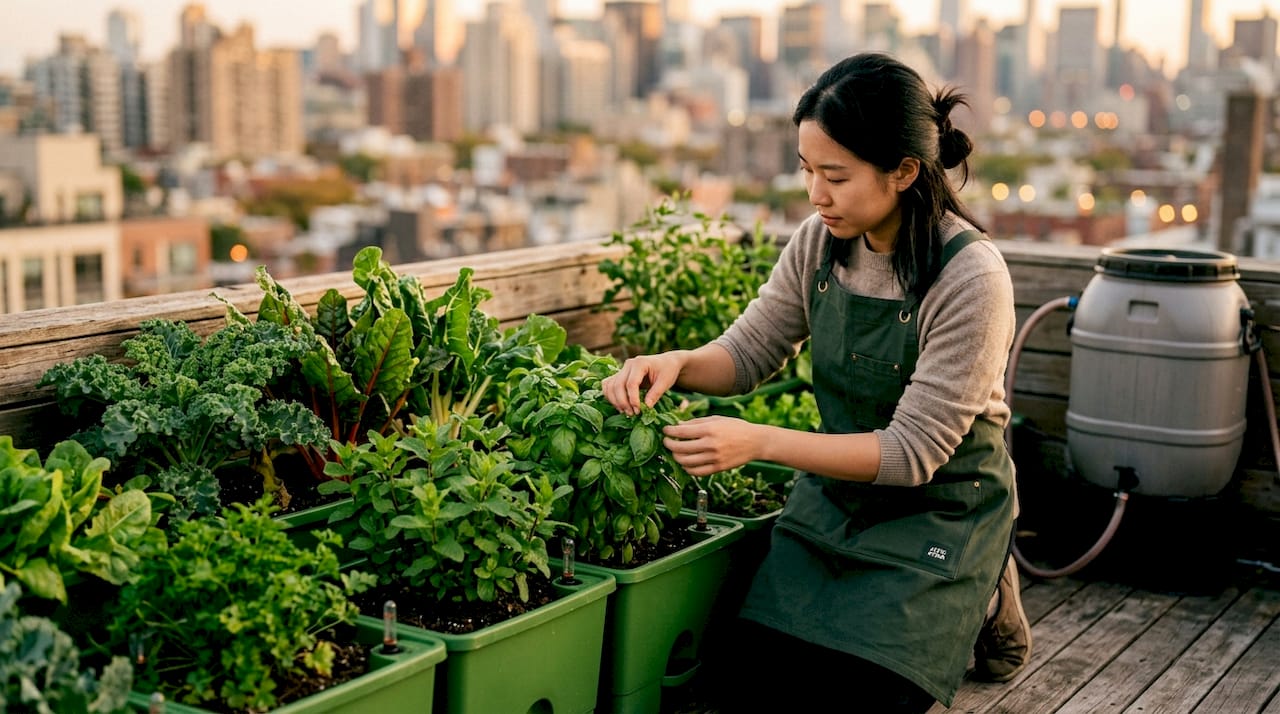
Compact growing systems are specialized food production methods designed to deliver strong harvests from small footprints, making them the go-to solution for urban residents with limited outdoor space. These systems cover a wide range of techniques, from container gardening and Kratky hydroponics to vertical towers and tabletop setups. Each method responds directly to the constraints of apartment and balcony living: tight square footage, limited water access, and minimal maintenance time. Whether you have a sunny windowsill or a spare corner in your kitchen, a compact growing system can turn that space into a productive food source.
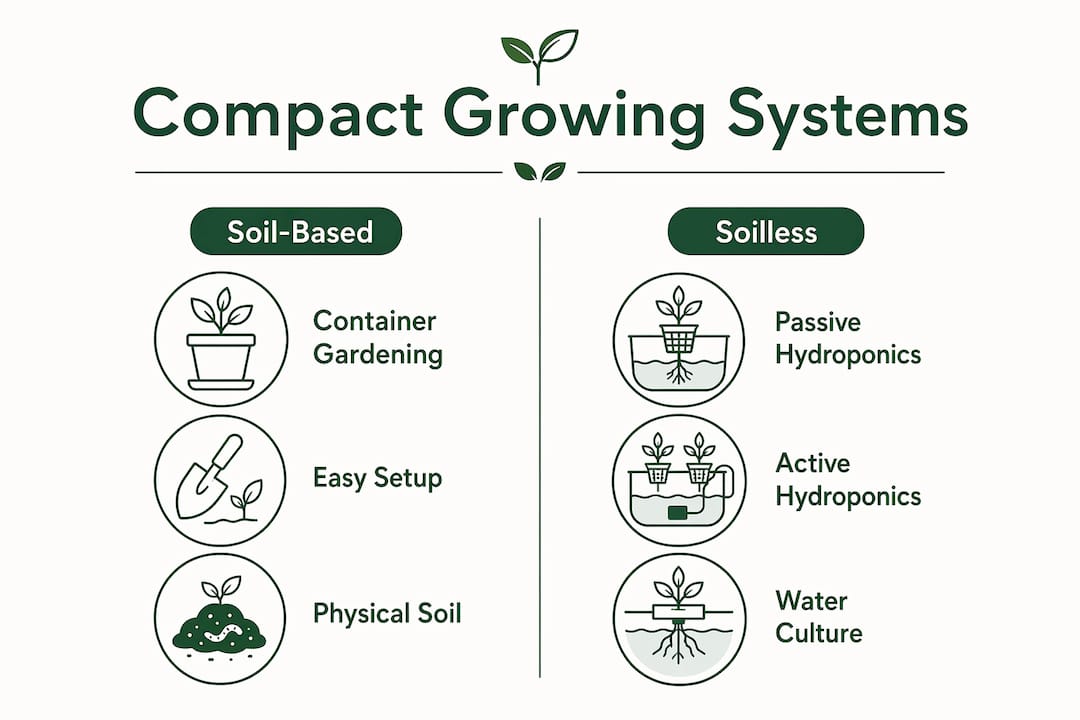
Compact growing systems fall into three broad categories: container gardening, passive hydroponics, and active hydroponic setups. Each suits a different level of commitment, budget, and available space.
Container gardening is the most accessible entry point. Tomatoes, peppers, and eggplants need at least 5-gallon containers to thrive. Containers on concrete balconies dry out fast, so watering every day or two is standard. One critical rule: never use topsoil or garden soil in pots. Topsoil drains poorly and compacts quickly, which suffocates roots. Use a lightweight, sterile potting mix instead, and feed plants with a half-strength water-soluble fertilizer every 3–4 days.
Pro Tip: Pair self-watering containers with a simple drip line. This combination can cut water use by up to 80% compared to hand watering on a hot balcony.
Passive systems like the Kratky method require no pumps, no electricity, and almost no daily attention. You fill a reservoir with nutrient solution, suspend plant roots above it, and let the plants drink at their own pace. Effective growth happens with simple repurposed containers when you keep pH between 5.5–6.5 and electrical conductivity (EC) between 1.5–2.5 mS/cm. This makes Kratky ideal for renters who want results without complexity. Herbs, lettuce, and spinach are the best crops for this method.
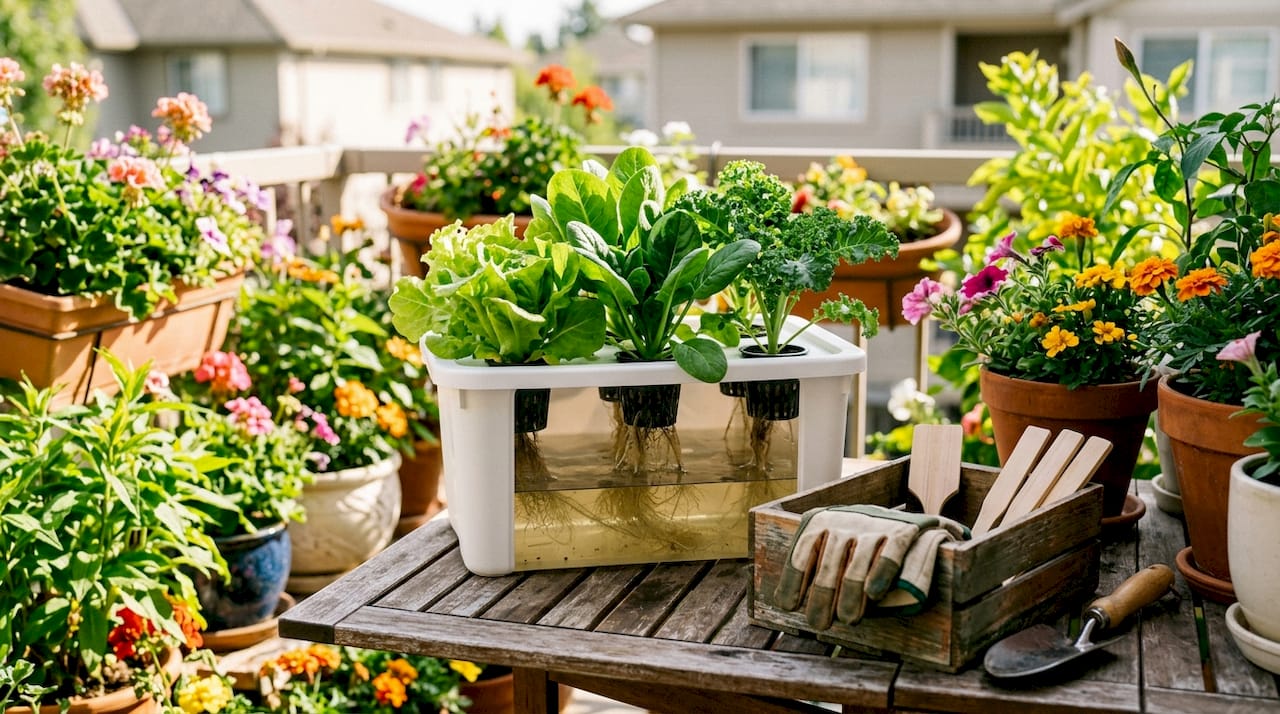
Active systems like Deep Water Culture (DWC) and Nutrient Film Technique (NFT) use pumps to circulate nutrient solution continuously. They produce faster growth than passive methods but require more monitoring. Vertical tower systems stack planting sites upward, which is the most space-efficient format available. Vertical growing delivers 129–200% more yield per unit of floor area than conventional ground cultivation. That number matters in a studio apartment where every square foot counts.
| System type | Space needed | Maintenance level | Best crops |
|---|---|---|---|
| Container gardening | 1–5 sq ft per pot | Medium | Tomatoes, peppers, herbs |
| Kratky passive hydro | Under 2 sq ft | Low | Lettuce, herbs, spinach |
| DWC active hydro | 2–4 sq ft | Medium-high | Leafy greens, cucumbers |
| Vertical tower | 1–2 sq ft footprint | Medium | Strawberries, herbs, greens |
| Tabletop systems | Under 1 sq ft | Low | Microgreens, herbs |
For a deeper look at how these formats compare, Sprout-lab’s guide to tabletop garden systems covers beginner-friendly options in detail.
Choosing the right system starts with your physical space, not your yield goals. Most urban gardeners make the mistake of picking a system based on what it can produce, then discovering it does not fit their apartment or lifestyle.
Follow these steps to make a grounded decision:
Map your footprint. Mark a 60 x 60 cm (roughly 2 x 2 ft) square on the floor with painter’s tape. This simple test reveals access issues and clearance problems that standard measurements miss. Stand inside the square and simulate reaching into a plant canopy. If it feels cramped, it will feel worse with a full system in place.
Check your power access. Active systems need a nearby outlet. Running extension cords across a living room is a tripping hazard and a fire risk. Count your available outlets before committing to a pump-driven setup.
Assess ambient temperature and humidity. Most crops grow best between 65°F and 80°F. If your apartment runs hot in summer or cold in winter, factor that into your crop selection. High humidity above 70% increases mold risk in dense canopies.
Be honest about maintenance time. Passive systems like Kratky need a reservoir check once a week. Active systems need daily monitoring of pumps, pH, and EC levels. Pick the system that fits your actual schedule, not your ideal schedule.
Match crops to your system. Leafy greens and herbs work in almost every compact format. Fruiting crops like tomatoes need larger containers and more light. Start with greens and expand once you understand your system’s behavior.
Pro Tip: Pump noise is a real issue in shared apartments. Placing your pump on a rubber mat or a folded towel absorbs vibration and sound significantly. It costs nothing and makes a noticeable difference.
For gardeners with packed schedules, Sprout-lab’s resource on garden systems for busy people outlines which setups require the least daily input.
Good maintenance is what separates a thriving compact system from a frustrating one. The good news: most of it is routine once you build the habit.
Nutrient and water management
Water-soluble fertilizers work best in compact systems because they dissolve completely and do not clog drip lines or reservoir ports. Apply at half strength every 3–4 days for container gardens. For hydroponic systems, maintain EC between 1.5–2.5 mS/cm and pH between 5.5–6.5. These ranges prevent nutrient deficiencies and toxicities that stunt growth. Check both values with an inexpensive digital meter, not test strips, which are less accurate.
Lighting for indoor systems
LED grow lights are the standard for indoor compact systems. They run cool, draw less power than HID lights, and fit into tight spaces. A 4 x 4 ft grow tent with reflective lining boosts usable light by 30–50% compared to an open room. That efficiency gain translates directly into faster plant growth without adding more fixtures. Position lights 6–18 inches above the canopy depending on the crop and light intensity.
Airflow and environment
Indoor growing depends on controlling light, temperature, humidity, and airflow together, not just one factor in isolation. A small clip-on fan pointed at the canopy strengthens plant stems and reduces mold. In a grow tent, a small inline fan with a carbon filter manages both air exchange and odor. Check your system every 2–3 days for pump function, reservoir levels, and early signs of pests or disease.
Compact growing systems are not just space-savers. They are resource-efficient by design, and that aligns directly with sustainable urban living.
Permaculture design calls this “function density,” the idea that every component should serve multiple purposes to maximize production and usability. A vertical tower on a balcony does not just grow food. It can also act as a privacy screen, reduce wind exposure for other plants, and create a microclimate that retains moisture. A trellis supporting climbing beans shades the plants below and cuts their water needs at the same time.
Self-watering containers and drip irrigation close the water loop. Instead of water running off a balcony or evaporating from an open pot, it stays in the root zone where plants actually use it. This is especially valuable in urban environments where water costs are high and drainage is limited.
Composting fits into compact systems too. Bokashi fermentation works indoors with no odor and processes food scraps into a pre-compost that feeds container soil directly. Vermicomposting with a small worm bin produces rich castings that replace synthetic fertilizers. Both methods close the nutrient loop without requiring outdoor space.
Sprout-lab’s passive hydroponic setup guide covers how low-energy systems fit into this resource-efficient approach.
Compact growing systems work best when you match the method to your actual space, maintenance capacity, and crop goals before buying anything.
| Point | Details |
|---|---|
| Start with a footprint test | Use painter’s tape to mark your space before choosing any system. |
| Match system to lifestyle | Passive systems suit busy schedules; active systems suit growers who enjoy daily monitoring. |
| Control pH and EC | Keep pH at 5.5–6.5 and EC at 1.5–2.5 mS/cm for healthy hydroponic crops. |
| Stack functions for efficiency | Design each element to serve multiple roles: food, privacy, shade, or water retention. |
| Airflow is non-negotiable | A small fan and proper ventilation prevent mold, strengthen stems, and improve yields. |
Most people start their first compact system by chasing maximum yield. I did the same thing. I bought a tower, crammed it into a corner with poor light, and wondered why my basil looked miserable after two weeks. The yield potential of a system means nothing if the environment does not support it.
The single best thing you can do before spending money is spend 20 minutes sitting in the space where you plan to grow. Watch where the light falls. Notice how warm it gets in the afternoon. Listen for how much noise a small pump would add to the room. That 20-minute observation session will tell you more than any spec sheet.
Passive systems like Kratky are genuinely underrated for urban beginners. They have no pumps to fail, no electricity to run, and no daily checks required. The learning curve is almost flat. Once you understand how pH and EC affect your plants, you can apply that knowledge to any system you upgrade to later.
My honest advice: resist the urge to expand too fast. Master one system, grow one or two crops well, and build confidence before adding complexity. Urban growing in a compact space rewards patience and observation far more than expensive equipment.
— Luna
Urban gardeners who want to skip the trial-and-error phase have a clear starting point with Sprout-lab. The brand’s modular hydroponic setups are built specifically for small spaces, with configurations that support up to 56 plants in a compact footprint. Sprout-lab holds a 4.9/5 star rating across more than 25,000 completed orders, which reflects consistent results for beginners and experienced growers alike.
Sprout-lab’s range covers automated hydroponic setups for hands-off growing, passive systems for low-maintenance results, and high-quality potting mixes formulated for container and hydroponic use. Each product comes with setup guidance designed for urban conditions. If you are ready to grow fresh food at home without a yard, Sprout-lab’s catalog is a practical place to start.
A compact growing system is a small-footprint method for producing food at home, using techniques like container gardening, hydroponics, or vertical towers. These systems are designed for urban spaces where traditional garden beds are not an option.
Passive hydroponic systems like the Kratky method require the least maintenance. They need no pumps or electricity and only require a weekly reservoir check to stay productive.
Leafy greens, herbs, and microgreens perform best in compact indoor systems because they have short growth cycles and low light requirements. Lettuce, basil, spinach, and cilantro are reliable starting crops for any beginner.
Maintain pH between 5.5–6.5 and EC between 1.5–2.5 mS/cm, and replace your nutrient solution fully every two weeks. Consistent airflow and regular root inspections prevent the most common problems.
Yes. Tabletop systems, windowsill Kratky setups, and small vertical towers all fit within studio apartment constraints. Sprout-lab’s guide to indoor gardening for small spaces covers the most practical formats for this setting.