Free shipping for order over $50

Free shipping for order over $50
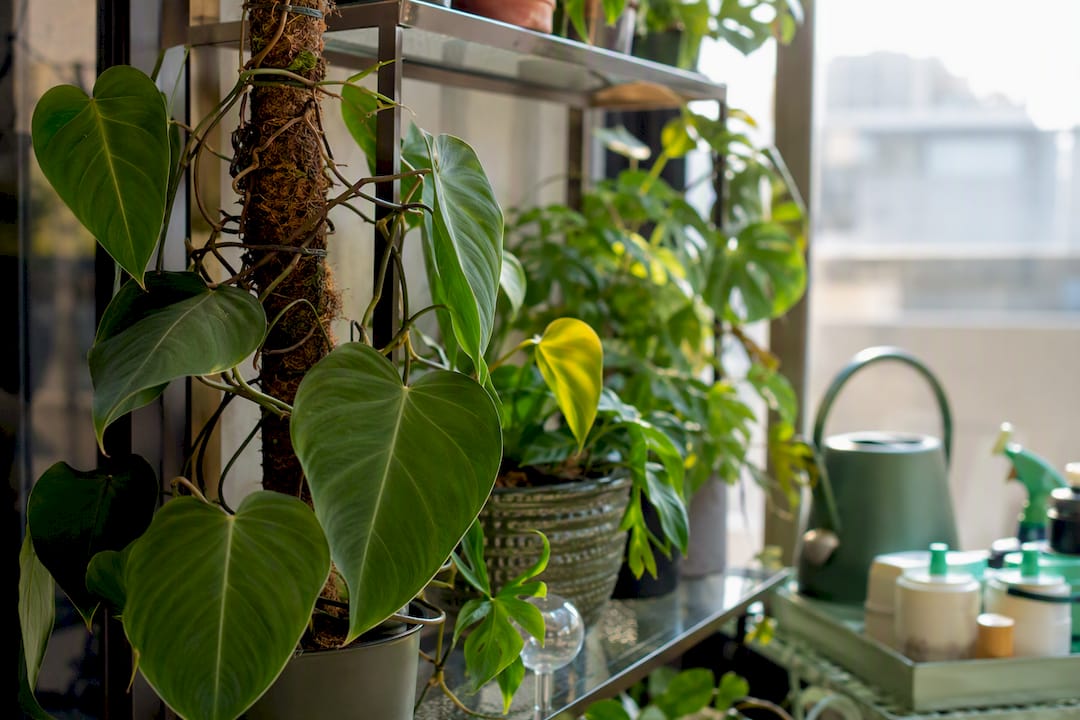
Indoor plants do not meaningfully clean the air in a typical home or office. A 2019 meta-analysis found you would need somewhere between 10 and 1,000 plants per square meter to match what ordinary building ventilation already does. That is not a typo, and it is not a knock on plants.
The practical takeaway is simple:
10 to 1,000 plants per square meter. That’s the estimated density needed to replicate what a building’s normal air exchange already handles, according to research published via The Conversation.
Indoor plants offer real, evidence-backed wellbeing benefits, but reaching lab-level air purification at home would require far more plants than any household could hold.
| Point | Details |
|---|---|
| Plants aren’t a standalone fix | Matching real ventilation would take 10 to 1,000 plants per square meter, according to a 2019 meta-analysis. |
| Ventilation and HEPA come first | The American Lung Association recommends filtration and airflow over relying on potted plants for pollutant removal. |
| Wellbeing benefits are real | Studies cited by the RHS link indoor plants to reduced stress and fewer fatigue and headache complaints. |
| Care mistakes create new risks | Overwatering can trigger mold and microbial growth, undoing any air benefit a plant might offer. |
| Healthy roots matter most | Sprout-lab’s hydroponic systems and tailored soil mixes support the root and microbial health behind any plant benefit. |
Plants do interact with indoor air, just not in the way marketing copy implies. Photosynthesis converts carbon dioxide into oxygen, but that process has nothing to do with removing volatile organic compounds (VOCs) like formaldehyde or benzene, the pollutants most indoor air quality claims are actually about. Those two mechanisms get conflated constantly, and it is the root of most of the confusion around this topic.
VOC removal happens through a separate pathway called phytoremediation. Leaves take up some airborne compounds through their stomata, tiny pores that also handle gas exchange for photosynthesis. Compounds also stick to leaf surfaces through adsorption. The more interesting action happens underground: roots and the microbial community in the surrounding soil, known as the rhizosphere, break down pollutants that reach the growing medium. A mechanistic review published through NIH’s PMC describes this root and microbe partnership as one of the more promising angles for future research, though the review stops short of claiming it works at home scale yet.
Several factors change how much uptake actually happens:
Pro Tip: If you want to see phytoremediation working at meaningful scale, look up engineered biofilters, systems that force air mechanically through root substrate. They behave completely differently than a peace lily sitting in a corner catching ambient airflow.
The NASA Clean Air Study from 1989 is where most of the popular claims about houseplants originate. Researchers sealed plants inside small chambers and measured VOC reduction, and the results looked impressive. The problem is that a sealed chamber has no air exchange, while a real room constantly swaps air with the outside and the rest of the building. That single variable, called the air exchange rate, is why lab numbers rarely survive contact with an actual living room.
The 2019 meta-analysis mentioned earlier quantified the gap directly: matching typical ventilation would take 10 to 1,000 plants per square meter, depending on the pollutant and species involved. A systematic review on plant-based pollutant mitigation reached a similar conclusion. Potted plants, green walls, and biofilters all show potential, but results swing wildly based on species, growing medium, and how the experiment was built.
More recent work adds nuance rather than reversing the verdict. A 2026 paper in Nature tested specific ornamental species and engineered configurations against high concentrations of targeted VOCs and found genuinely strong removal rates. That is a meaningful finding, but it describes a lab-configured setup treating concentrated pollution, not a fern on a windowsill handling normal household air.
Three limitations show up across nearly every study in this space:
Here is where the evidence genuinely holds up: plants change how people feel in a room, even when they barely change what’s actually in the air. The Royal Horticultural Society points to research showing reduced stress, improved mood, and better task performance around indoor greenery. Some studies cited in that guidance report fatigue and headache complaints dropping by 20 to 25 percent in plant-present environments.
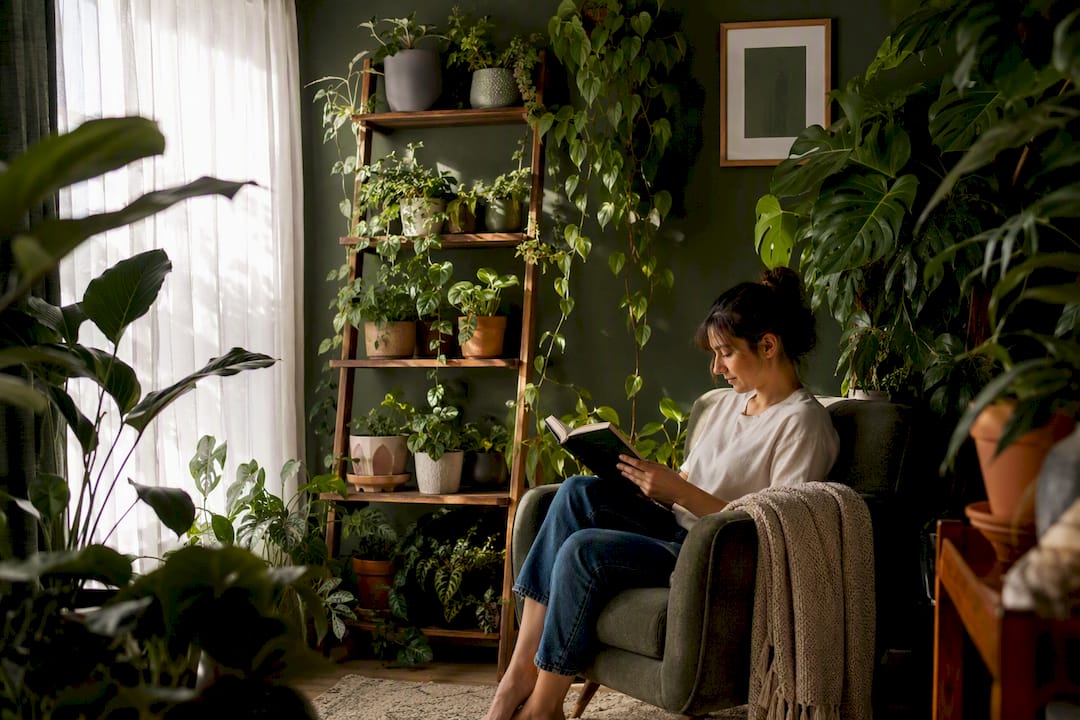
Hospital and workplace research backs this up from a different angle. Findings summarized by the University of Connecticut’s houseplant fact sheet describe faster patient recovery and sharper worker attention when plants or natural views are present. Some of that effect is likely about perceived air quality rather than measured pollutant levels. A room that looks and smells fresher gets rated as healthier, even when a sensor would disagree.
That gap between perception and measurement doesn’t make the benefit fake. It just means plants are doing psychological work, not chemical work. Offices, hospitals, and classrooms are exactly where that distinction matters most, since attention and mood carry real consequences in those settings.
Getting real value from indoor plants comes down to picking the right species and avoiding a handful of care mistakes that can backfire.
Pro Tip: A moisture meter costs less than one dead plant. If you tend to overwater, it removes the guesswork entirely and protects both the plant and your air.
Luna has spent years writing about indoor horticulture and translating peer-reviewed plant science into guidance people can actually use at home. That grounding matters here, because so much of the popular advice on this topic skips straight past the research into wishful thinking.
Sprout-lab approaches plant care from the growing side rather than the marketing side. Its hydroponic systems and soil mixes are built around what actually keeps a plant’s roots and microbial environment healthy, the same rhizosphere activity researchers point to when they talk about phytoremediation’s real potential.
A healthier root zone means a healthier plant, and a healthier plant is the baseline for any of the wellbeing or air-interaction benefits discussed above. Struggling plants deliver neither.
The research here doesn’t leave much room for ambiguity, but it also doesn’t support the dismissive take that plants “do nothing.” Both extremes miss what’s actually going on.
Plants are doing real biological work at the leaf and root level. That work just isn’t happening at a scale that changes measurable air quality in a normal room, and pretending otherwise sets people up to skip the interventions that actually matter, like fixing ventilation or running a decent filter. Where conventional plant advice really falls short is treating decorative houseplants and engineered biofilters as the same category of technology. They are not. One is a mechanical system built to move air through root substrate. The other is a plant sitting quietly on a shelf.
My honest priority order: fix your air exchange and filtration first, then bring in plants for what they’re genuinely good at, which is making a space feel calmer and more alive. Watch your watering habits closely, because a moldy pot can undo whatever good the plant was doing for your mood in the first place.
If the goal is a home full of thriving plants without the guesswork of soil, watering schedules, and root rot, Sprout-lab’s hydroponic systems solve the actual bottleneck: keeping roots healthy enough to deliver any benefit at all.
Traditional potting setups make root health hard to monitor, which is exactly where overwatering and mold problems creep in. Sprout-lab’s compact growing systems are built for small apartments and offices, supporting up to 56 plants in a footprint that would fit a handful of pots elsewhere. The nutrient delivery is controlled and consistent, which removes the watering guesswork that causes most of the mold and mildew issues tied to decorative houseplants. For readers who want denser, healthier indoor greenery for both mood benefits and modest VOC uptake, start with Sprout-lab’s reservoir hydroponic system guide to see which setup fits your space.
Plants remove some VOCs at the leaf and root level, but the effect is too small to matter in a typical room. Studies estimate you’d need 10 to 1,000 plants per square meter to match normal ventilation.
No plant, tested under normal household conditions, is documented to remove a specific fixed percentage of airborne mold like that. Treat any single-number mold-removal claim for a houseplant with skepticism, since it isn’t supported in the research reviewed here.
The healthiest choice depends less on species and more on whether you can keep it thriving without overwatering. Resilient, leafy plants with strong root systems tend to deliver the most consistent wellbeing benefit, according to guidance summarized by the RHS.
Yes, for most people. Plants don’t meaningfully change bedroom air chemistry overnight, but a well-cared-for plant, kept dry enough to avoid mold, poses no health risk and may support the same stress-reduction benefits seen in other rooms.
No. The American Lung Association recommends ventilation, source control, and HEPA filtration as the primary tools for cleaning indoor air, with plants serving a wellbeing role alongside them rather than replacing them.