Free shipping for order over $50

Free shipping for order over $50
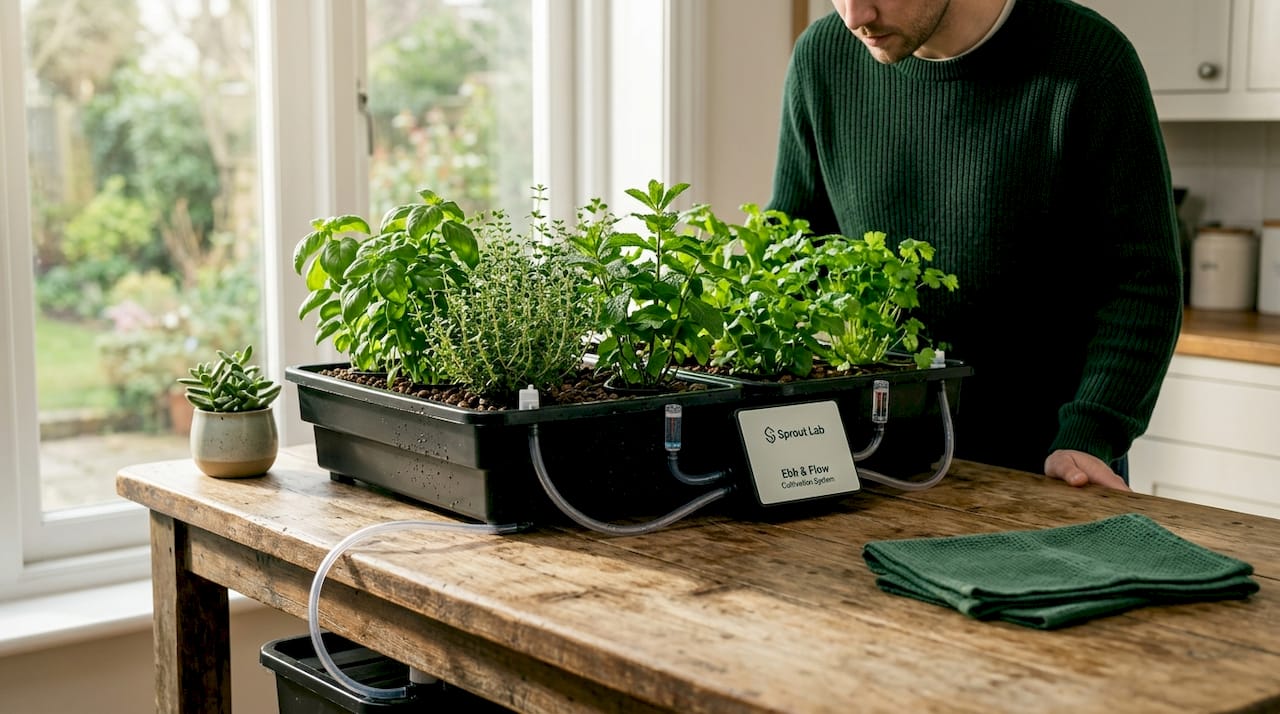
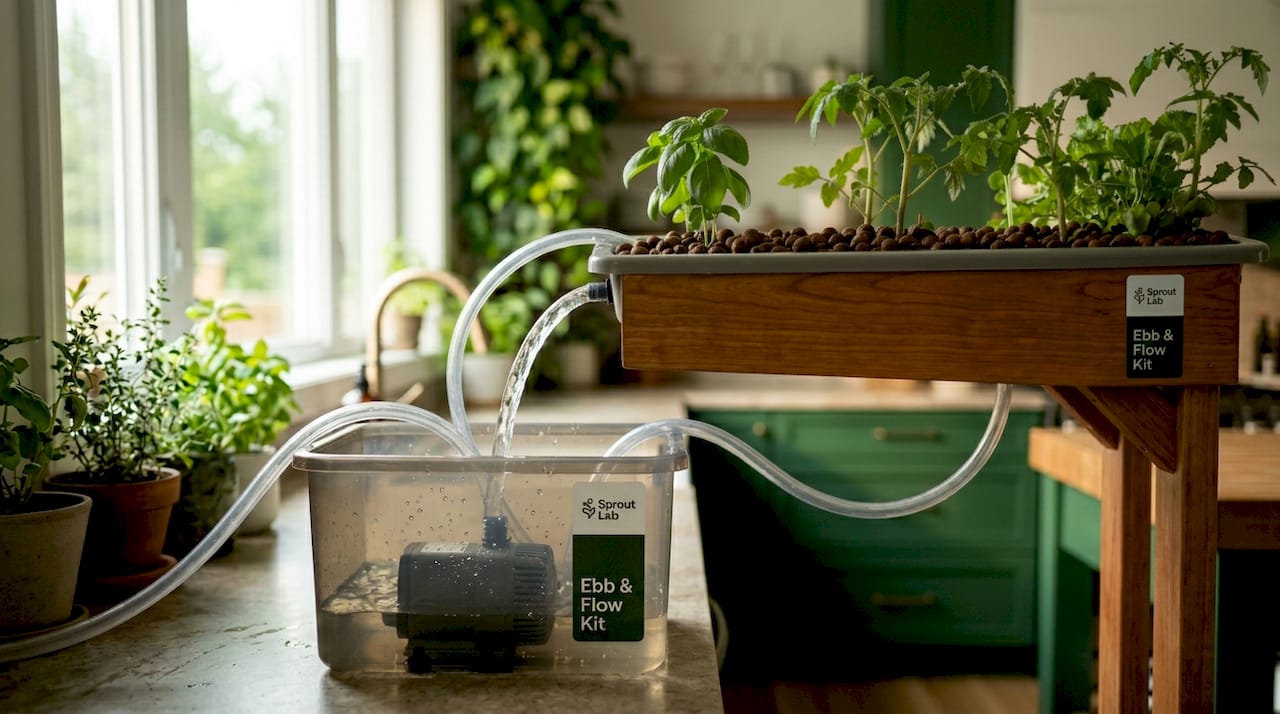
An ebb and flow system is a hydroponic method that periodically floods plant roots with nutrient solution and then drains it back to a reservoir, alternating between nutrient delivery and root oxygenation. The system relies on four core components: a flood tray, a nutrient reservoir, a submersible pump, and a timer. Together, these parts create a repeating wet-dry cycle that feeds plants efficiently without the constant saturation that drowns roots in simpler setups. For home gardeners working with limited space, this method delivers commercial-grade results from a compact, manageable system.
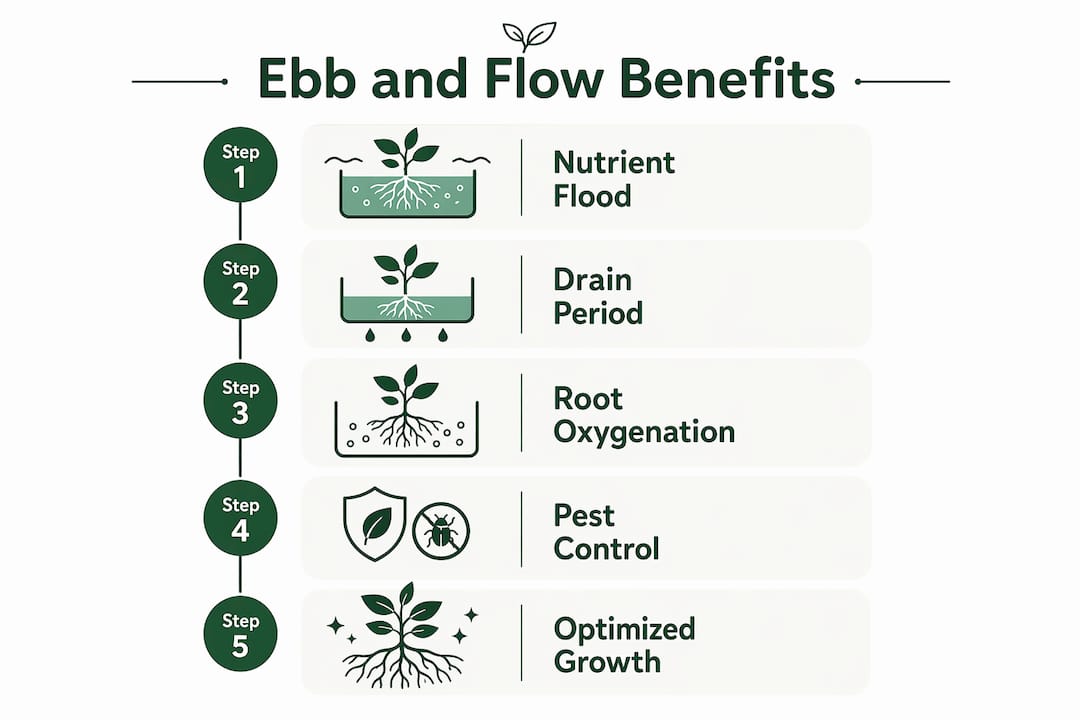
The flood phase begins when a timer triggers the pump to push nutrient solution from the reservoir up into the flood tray. Water rises until it reaches roughly one inch below the top of the growing media, saturating roots and delivering dissolved nutrients directly to the root zone. Once the pump shuts off, gravity pulls the solution back down through a drain fitting into the reservoir below, ready for the next cycle. This drain phase is where the real magic happens: as the water recedes, it pulls fresh air into the root media, giving roots the oxygen they need to respire and grow.
Here is the basic cycle broken into steps:
Flood frequency and duration depend on plant type, ambient temperature, humidity, and the growing media you use. A hot, dry environment speeds up moisture loss and demands more frequent flooding. A cool, humid space may need fewer cycles to keep roots from drying out.
Pro Tip: Watch your plants and media between cycles rather than trusting a fixed schedule. If the media surface looks dry and plants show slight wilting, flood more often. If the media stays wet and glistening for hours after draining, reduce cycle frequency. Plant turgor and media appearance are your most reliable diagnostic tools.
The ebb and flow method outperforms many other hydroponic setups in three specific areas: root health, resource efficiency, and flexibility.
“The ebb and flow system gives home growers a level of control over root environment that most passive systems simply cannot match. The wet-dry cycle is not just about feeding plants. It is about creating the conditions where roots actively thrive.”
For growers interested in culinary herbs, the benefits for herb cultivation are particularly strong. Basil, mint, and cilantro respond well to the oxygenated root zone this system provides.
Choosing the right growing media is one of the most consequential decisions you will make when setting up a flood and drain system. Media affects how fast the tray saturates, how long moisture is retained after draining, and how well roots are anchored during the flood phase.
| Growing media | Water retention | Drainage speed | Best for |
|---|---|---|---|
| Expanded clay pellets | Low | Fast | Most vegetables and herbs |
| Rockwool | Medium | Moderate | Seedlings and leafy greens |
| Coco coir | Medium-high | Moderate | Fruiting plants needing steady moisture |
| Fabric pots with perlite | Low-medium | Fast | Beginners wanting easy root inspection |
Expanded clay pellets are the most popular choice for ebb and flow setups because they drain quickly and leave plenty of air space around roots. Their low water retention means you will need more frequent flood cycles, but the oxygenation benefit is significant. Rockwool holds more moisture and suits seedlings that need consistent hydration during early development.
The key rule: calibrate flood cycles every time you change media type, container size, or container shape. A schedule that works perfectly with clay pellets in a four-inch net pot will over-saturate rockwool in a larger container. The media appearance after draining tells you everything. Glistening, dark media means moisture is adequate. Pale, dry media means the next flood is overdue.
Sprout-lab’s hydroponic growing media options include expanded clay and coco-based substrates suited specifically for flood and drain setups, so you do not have to guess which substrate pairs with your system.
Setting up a functional ebb and flow system at home takes less than an afternoon if you have the right components and a clear plan.
Installation basics:
Ongoing maintenance:
Pro Tip: Use flood scheduling adjustments to manage pest pressure without chemicals. If you notice fungus gnats or early signs of root rot, reduce flood frequency temporarily to let the media surface dry out between cycles. Most pests cannot complete their life cycle in a substrate that dries adequately between floods.
For a detailed walkthrough of pipe and pump setup considerations relevant to ebb and flow irrigation, the fundamentals of flow rate and fitting size apply directly to home-scale systems.
Environmental conditions matter more than most beginners expect. Timer settings need regular adjustment as seasons change, because higher summer temperatures accelerate moisture loss and demand more frequent flooding. Treat your timer as a starting point, not a permanent setting.
An ebb and flow system delivers superior root health by alternating nutrient flooding with oxygen exposure, making it the most practical hydroponic method for home growers with limited space.
| Point | Details |
|---|---|
| Core mechanism | A timer and pump flood the tray with nutrients, then drain it to oxygenate roots. |
| Media choice matters | Expanded clay pellets drain fastest; calibrate flood cycles whenever you change media. |
| Observe, don’t just schedule | Plant turgor and media appearance are more reliable guides than fixed timer settings. |
| Pest control built in | Allowing media to dry between floods reduces fungus gnats and root rot without chemicals. |
| Scalable for small spaces | Start with one tray and one reservoir; add trays as your garden expands. |
I have worked with dozens of home growers who set up their ebb and flow system, program a timer, and then walk away expecting the schedule to handle everything. It almost never does, and here is why: no two growing environments are identical. The same flood frequency that keeps basil thriving in a cool basement will stress tomatoes in a warm, south-facing window.
The growers who get the best results are the ones who treat the first two weeks as a calibration period. They check the media an hour after each drain cycle. They look at leaf color and stem firmness. They adjust the timer by one cycle at a time rather than making dramatic changes. This iterative observation approach, checking media appearance and plant health between floods, is the most reliable way to optimize your schedule without needing expensive sensors or instruments.
One thing I tell every beginner: do not fear the dry phase. Most new growers flood too often because they worry about plants drying out. The reality is that flooding too long or too frequently restricts oxygen just as much as continuous flooding does. Roots need that air exposure. A slightly longer dry phase between floods is almost always safer than a shorter one.
The payoff for getting this right is real. Home growers using well-tuned ebb and flow setups consistently report faster growth rates and healthier root systems than they achieved with soil. Patience in the calibration phase translates directly into better harvests.
— Luna
Sprout-lab makes it straightforward to build your first ebb and flow system at home, even if you have never grown hydroponically before. Their modular setups support up to 56 plants in a compact footprint, which makes them ideal for apartments, balconies, and small indoor spaces. Every product in the Sprout-lab range is backed by a 4.9/5 star rating from over 25,000 completed orders, so you are starting with equipment that home growers already trust. Browse the beginner hydroponic setup guide to find the right system for your space, or explore the full range of DIY hydroponic kits designed specifically for first-time growers ready to get started.
Ebb and flow and flood and drain refer to the same hydroponic system. Both terms describe a setup where a timer and pump periodically flood a grow tray with nutrient solution, then drain it back to a reservoir.
Most systems run two to four flood cycles per day as a starting point, but the correct frequency depends on your growing media, plant type, temperature, and humidity. Adjust based on media moisture and plant appearance rather than a fixed schedule.
Lettuce, herbs like basil and mint, tomatoes, and peppers all perform well in ebb and flow systems. Check Sprout-lab’s plant selection guide for a full list matched to flood and drain setups.
Yes. Allowing the growing media to dry adequately between flood cycles limits the moist conditions that fungus gnats and root rot pathogens need. Adjusting flood frequency is a practical, chemical-free pest management strategy.
The core components are a flood tray, a reservoir, a submersible pump, food-safe tubing, and a timer. Most beginner kits include all of these, and Sprout-lab’s home hydroponic systems are designed to work out of the box for new growers.