Free shipping for order over $50

Free shipping for order over $50
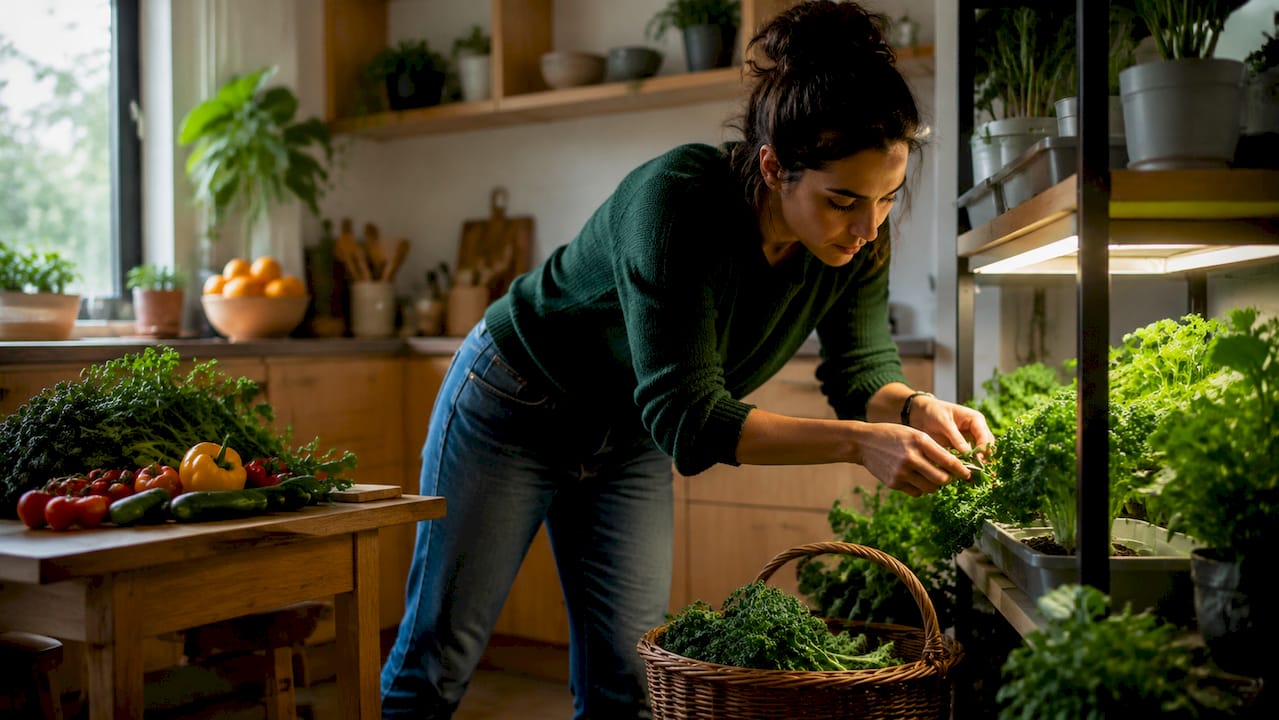
You can successfully harvest vegetables in a studio apartment using the right crop selection, container setup, and light management. Container vegetable gardening, the recognized practice of growing food in pots and planters rather than in-ground beds, is the core method for apartment growers. A productive apartment garden can be established on as little as 4 square feet of balcony or a 24-inch windowsill. That means even the smallest studio has enough room to grow real food. This guide covers which crops to choose, how to set up your space, and how to keep plants producing all season long.
The best vegetables for apartments share one trait: a high harvest-to-space ratio. You want crops that produce a lot of food relative to the room they take up. Cherry tomatoes, cut-and-come-again greens, and compact peppers are the top performers for urban growers with limited square footage.
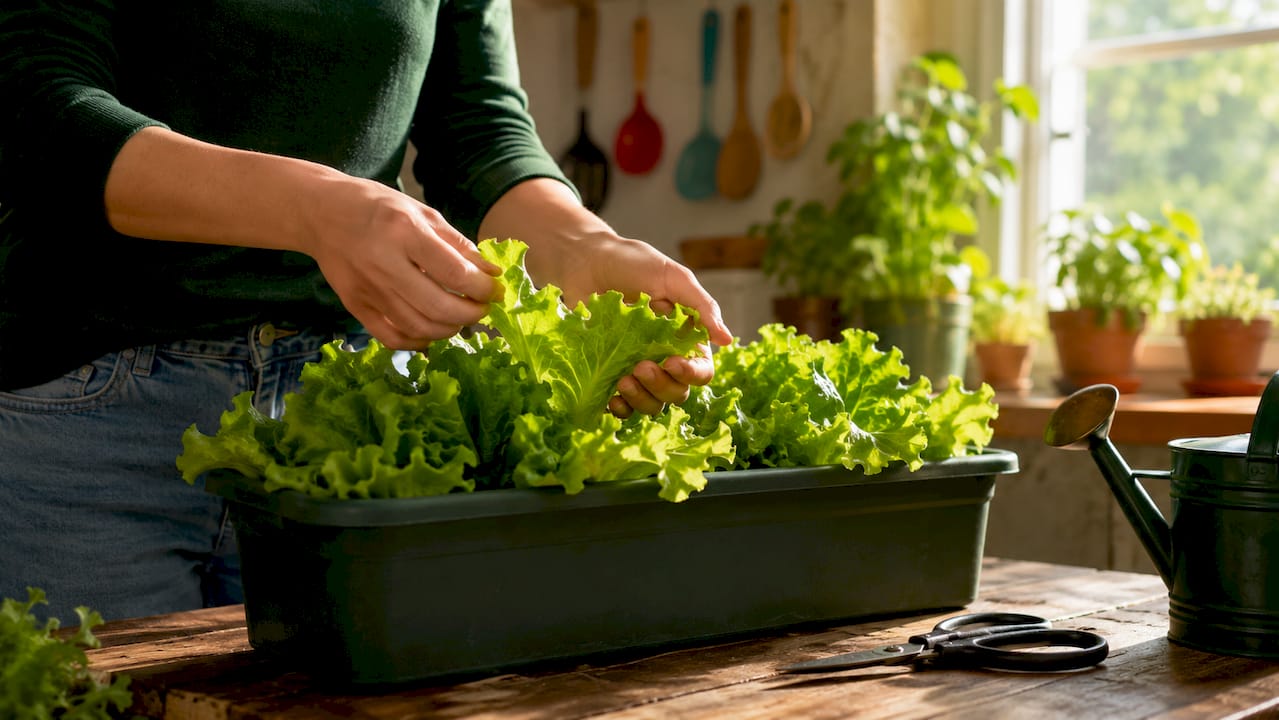
Leafy greens are the easiest starting point. Lettuce and spinach require only 3–4 hours of sunlight and can be harvested in 30–45 days. That makes them ideal for north-facing windows or shaded balconies where fruiting plants would struggle.
Fruiting vegetables need more light but reward you with bigger yields. Cherry tomatoes produce fruit in 55–65 days, and peppers can yield 30–60 fruits per plant. Both require at least 6 hours of direct sun, so they belong on your sunniest windowsill or balcony rail.
Microgreens are the fastest option in apartment vegetable gardening. A 10×20-inch tray on a kitchen counter harvests in 10–14 days with almost no space required. Herbs like basil, cilantro, and chives fall into the same category: quick, compact, and useful in the kitchen every week.
Pro Tip: Start with one tray of microgreens and one pot of lettuce. You will have your first harvest within two weeks, which builds confidence before you invest in larger containers.
Getting your setup right before planting saves you from the most common apartment gardening failures. Container size, soil type, and light source each directly affect how much food you actually harvest.
Container depth determines root health. Shallow containers kill deep-rooted plants before they ever fruit.
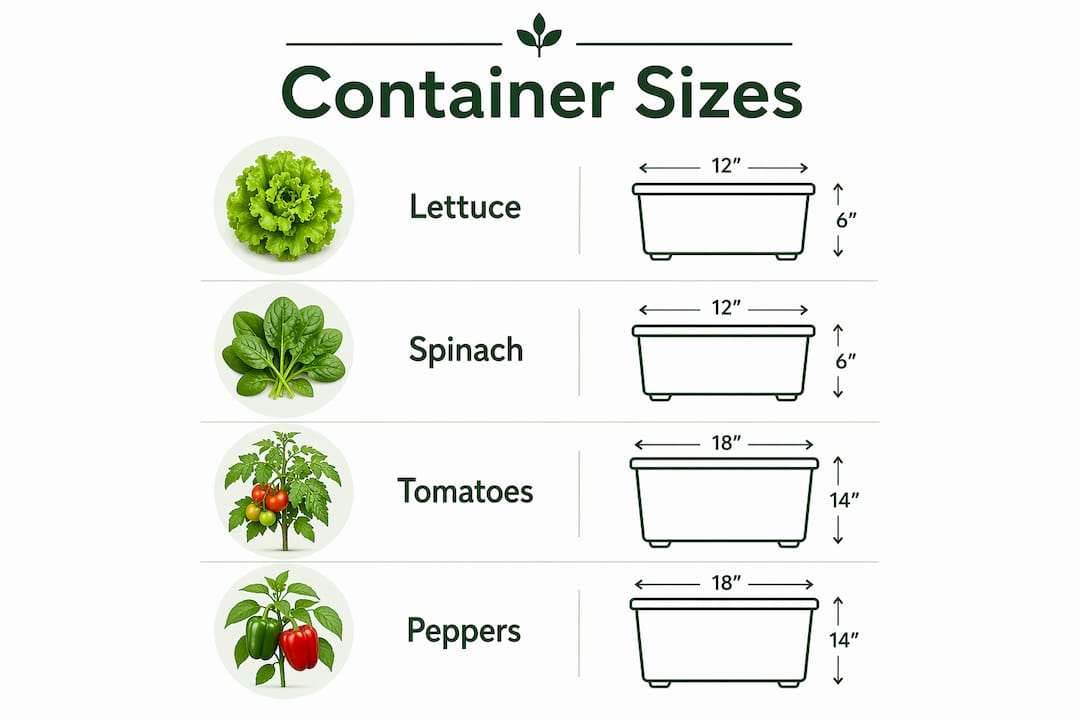
| Vegetable | Minimum container size | Minimum depth |
|---|---|---|
| Lettuce, spinach | 6-inch pot or window box | 6 inches |
| Herbs | 4–6 inch pot | 4 inches |
| Radishes | 8-inch pot | 8 inches |
| Cherry tomatoes | 5-gallon pot | 12 inches |
| Peppers | 5-gallon pot | 12 inches |
| Microgreens | 10×20-inch tray | 2 inches |
Tomatoes need at least 5-gallon pots, while lettuce thrives in 6-inch-deep containers. Never use regular garden soil indoors. It compacts in containers, blocks drainage, and suffocates roots. Use a quality potting mix formulated for containers instead.
Light management is the biggest challenge in indoor apartment gardening. Full-spectrum LED grow lights placed close to plants maximize yield when natural light falls short. Position LED grow lights 12–16 inches above plants to replicate the intensity of direct sunlight. A $20–$80 LED grow light setup supports year-round production of herbs, lettuce, and compact peppers. That is a low cost for a continuous food supply.
If your apartment gets strong natural light, assess your window direction first. South-facing windows get the most sun in the Northern Hemisphere. East and west-facing windows work well for leafy greens and herbs. North-facing windows need supplemental grow lights for almost any edible crop.
A 15-gallon container with wet soil can weigh 80–100 lbs. Residential balconies typically support only 40–60 lbs. per square foot. Check your building’s load capacity before placing heavy pots near outer edges. Use lightweight plastic or fabric grow bags instead of heavy ceramic or terracotta pots when weight is a concern.
Pro Tip: Fabric grow bags weigh a fraction of ceramic pots, improve drainage, and air-prune roots naturally. They are the best container choice for balcony growers watching structural weight limits.
Layout strategy separates growers who harvest a handful of leaves from those who feed themselves regularly. The goal is to use every available surface, including vertical space that most apartment growers ignore.
Vertical layering with railing planters, ceiling hooks, and wall trellises can increase growing surface area up to 10 times on small balconies without sacrificing walking space. That is the single most effective small space gardening tip for apartment growers. A trellis on a balcony wall supports climbing beans or cucumbers. Ceiling hooks hold hanging baskets of strawberries or trailing herbs. Rail planters along the balcony edge hold lettuce and herbs without using any floor space.
Do not treat your balcony and interior as separate gardens. Treat them as one system with different light zones. Place fruiting crops that need full sun on the balcony. Move shade-tolerant greens and herbs to interior windowsills. This division lets you grow food indoors and outdoors at the same time, doubling your productive area without doubling your effort.
Succession planting is the practice of sowing new seeds every few weeks so you always have plants at different growth stages. Planting cut-and-come-again greens every 3 weeks ensures a steady harvest throughout the season. Without succession planting, all your lettuce matures at once and then you have nothing for weeks.
A simple starter layout for a studio apartment looks like this:
This layout uses small urban spaces efficiently and keeps maintenance manageable for beginners.
A consistent routine keeps container plants productive. Without regular attention, containers dry out fast, nutrients deplete, and plants stop producing.
Water every 1–2 days. Container gardens dry out faster than in-ground beds. Stick your finger 1 inch into the soil. If it feels dry, water thoroughly until it drains from the bottom. Indoor container gardens need consistent moisture but careful drainage to avoid root rot.
Fertilize every 2 weeks. Container soil loses nutrients quickly because you water frequently. Use a liquid fertilizer formulated for container vegetables. Granular slow-release fertilizers also work well mixed into the potting medium at planting time.
Harvest leafy greens by cutting outer leaves first. Never pull the whole plant. Cut the outermost leaves and leave the center growing. This cut-and-come-again method keeps lettuce and spinach producing for weeks longer than a single harvest.
Prune tomatoes and peppers weekly. Remove suckers from tomato plants (the small shoots that grow between the main stem and a branch). This directs energy into fruit production rather than leafy growth.
Check for pests every time you water. Aphids, fungus gnats, and spider mites are the most common indoor plant pests. Catching them early prevents infestations. A spray of diluted neem oil handles most soft-bodied insects without chemicals that are unsafe indoors.
Rotate containers monthly. Plants grow toward light. Rotating pots a quarter turn each week keeps growth even and prevents leaning.
Starting with 4–6 large containers and scaling up as you gain confidence is the approach that works best for beginners. Trying to manage too many plants at once leads to neglect and poor harvests.
Harvesting vegetables in a studio apartment works best when you match crop choice to your light conditions and use vertical space to multiply your growing area.
| Point | Details |
|---|---|
| Choose high-ratio crops | Cherry tomatoes, leafy greens, and compact peppers produce the most food per square foot. |
| Match crops to light | Leafy greens need 3–4 hours of sun; fruiting crops need 6+ hours or LED supplementation. |
| Use vertical space | Rail planters, trellises, and ceiling hooks can multiply growing area up to 10 times. |
| Check balcony weight limits | A 15-gallon wet container can weigh 80–100 lbs.; confirm your building’s load capacity first. |
| Succession plant every 3 weeks | Staggered sowing of cut-and-come-again greens keeps your harvest continuous all season. |
The biggest mistake I see new apartment growers make is planting too much too fast. They buy six large pots, fill them with tomatoes and peppers, and then get frustrated when the plants struggle in low light or dry out between waterings. The plants were not the problem. The setup was.
My honest advice: start with microgreens and one pot of lettuce. That first harvest, even if it is just enough for one salad, changes how you think about your space. You stop seeing your windowsill as decoration and start seeing it as a food source.
The second thing I have learned is that light is non-negotiable. You can fix bad soil. You can adjust watering. You cannot fix a north-facing window with no supplemental light. Invest in a decent LED grow light before you invest in more containers. A $40 grow light will do more for your harvest than $100 worth of extra pots.
Finally, do not underestimate small harvests. A handful of fresh basil, a bowl of microgreens, or a dozen cherry tomatoes from your own balcony tastes different from anything you buy at a store. That satisfaction is real, and it keeps you going through the learning curve.
— Luna
Sprout-lab builds garden systems specifically for people growing in small urban spaces. Their modular hydroponic setups let you grow up to 56 plants in a compact footprint, which is a genuine advantage when floor space is measured in square feet rather than acres.
For apartment growers, Sprout-lab’s garden systems for small spaces remove the guesswork from container selection and spacing. Their premium soil mixes are formulated for indoor containers, so you get proper drainage and nutrition without mixing your own. Sprout-lab has completed over 25,000 orders with a 4.9/5 star rating, and customers consistently report faster germination and healthier plants. If you want a setup that works from day one, their passive hydroponic systems are worth a close look.
Lettuce, spinach, microgreens, and herbs are the easiest vegetables for studio apartments. They need only 3–4 hours of light, harvest in 10–45 days, and thrive in small containers.
Leafy greens and herbs need 3–4 hours of sunlight daily. Fruiting vegetables like tomatoes and peppers need at least 6 hours of direct sun or LED grow lights positioned 12–16 inches above the plants.
Yes. Microgreens, herbs, and leafy greens grow well on a kitchen counter or windowsill with a small LED grow light. A $20–$80 grow light setup supports year-round indoor production.
Cut outer leaves first and leave the center of the plant intact. This cut-and-come-again method keeps lettuce and spinach producing for multiple harvests over 4–8 weeks instead of a single cutting.
Residential balconies typically support 40–60 lbs. per square foot. A 15-gallon container with wet soil can weigh 80–100 lbs., so use lightweight fabric grow bags and confirm your building’s load capacity before placing heavy pots near balcony edges.