Free shipping for order over $50

Free shipping for order over $50
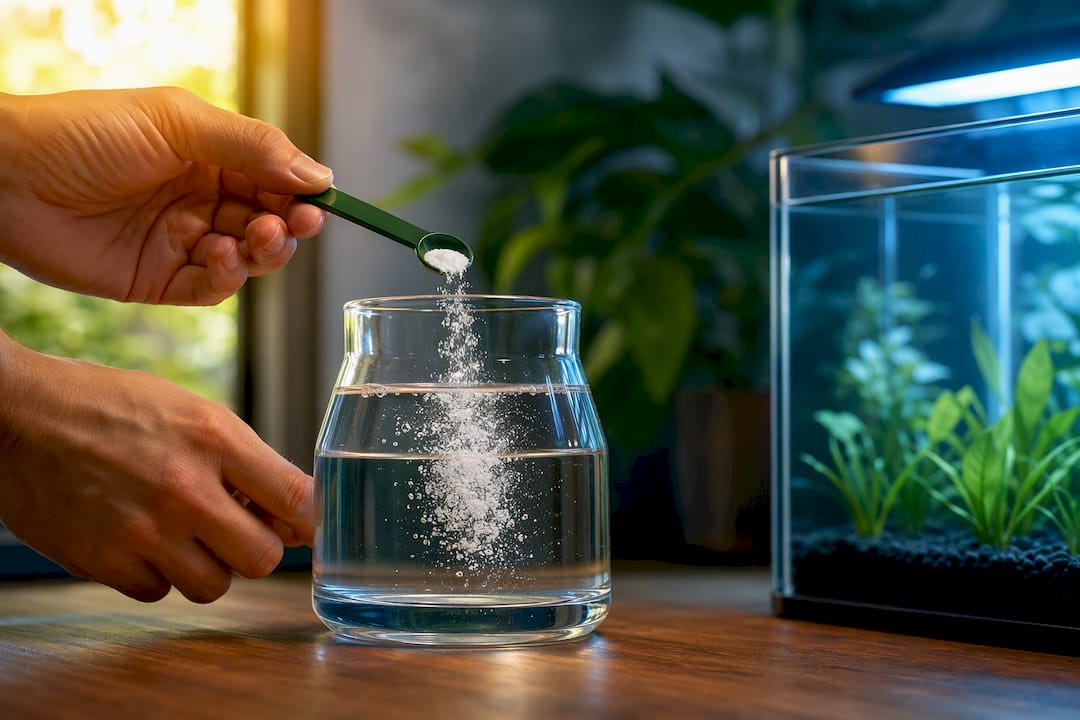
The fastest way to dechlorinate tap water is a vitamin C neutralizer (sodium ascorbate or ascorbic acid) or a commercial aquarium dechlorinator, both of which strip out chlorine and chloramine within minutes. For a steady supply, catalytic activated carbon with enough contact time gets you there too. Boiling or letting water sit only handles free chlorine, not chloramine, so aquarium and pond owners need an active method. Whatever you use, test the water afterward before adding fish, dosing plants, or drinking it.
TL;DR:
- Vitamin C neutralizers and commercial dechlorinators instantly remove both chlorine and chloramine, making them ideal for aquariums and livestock systems.
- Activated carbon effectively eliminates free chlorine but is less reliable against chloramine unless using catalytic carbon, which actively breaks down chloramine over hours.
- Boiling and letting water sit only remove free chlorine and are ineffective against chloramine, especially if the water utility uses it for long-lasting disinfection.
- Sodium thiosulfate neutralizes chlorine and chloramine quickly but can deplete dissolved oxygen if overdosed, so careful dosing and retesting are essential.
- Testing total chlorine after treatment confirms complete dechlorination, as it captures both free chlorine and chloramine residues, ensuring safe use.
Not every method works on both chlorine and chloramine, and that distinction decides which one you actually need. Free chlorine breaks down on its own given time and air exposure. Chloramine, a combination of chlorine and ammonia used to keep disinfection stable in the pipes, does not. Utilities like Singapore’s PUB rely on monochloramine specifically because it holds up longer in the distribution system, with residual levels typically running 1.29 to 2.70 mg/L against a regulatory ceiling of 3 mg/L.
Here’s how the main options stack up:
Vitamin C, in either its ascorbic acid or sodium ascorbate form, neutralizes chlorine and chloramine through a straightforward reduction reaction. It donates electrons to the halogen compounds, converting them into chloride ions and other inert byproducts that no longer disinfect, and no longer harm fish, plant roots, or beneficial microbes. The USDA Forest Service documented this reaction decades ago for firefighting crews who needed to dechlorinate water fast in the field, and the same chemistry now shows up in aquarium and hydroponic products.
Ascorbic acid and sodium ascorbate both work, but they behave differently in water. Ascorbic acid is acidic and can lower pH, which matters in soft or poorly buffered water. Sodium ascorbate is pH-neutral, which is why USDA guidance and most waterworks literature favor it for larger volumes or sensitive systems like fish tanks.
Dosing follows a rough rule rather than an exact medical measurement. Lab tests referenced in the same USDA note found sodium ascorbate needs roughly 2.8 parts per 1 part of chlorine present, though most home users won’t titrate that precisely. A practical approach:
Pro Tip: Vitamin C reacts almost instantly, but don’t trust your eyes. Confirm with a test kit within a minute or two of dosing, especially before adding fish.
One caveat worth knowing: pre-mixed vitamin C solutions degrade with oxygen exposure over days to weeks. Mix fresh batches rather than storing a jug of dissolved ascorbate for months and assuming it still works at full strength.
Activated carbon works by adsorption, meaning chlorine molecules physically stick to the carbon’s porous surface as water flows through it. That mechanism handles free chlorine well, given enough contact time. Chloramine is a tougher target because it’s more chemically stable, and standard granular activated carbon (GAC) often lets a meaningful fraction pass through unless the water moves slowly enough for the reaction to complete.
Catalytic carbon closes that gap. It’s processed differently from standard GAC so that its surface actively breaks down chloramine rather than just trapping it, and field experience from water-treatment specialists confirms it consistently outperforms standard carbon on chloramine reduction. If your municipal supply uses chloramine and you’re relying on a filter rather than a chemical neutralizer, catalytic carbon is the media to look for on the packaging, not generic “activated carbon.”
Sizing matters as much as media type. A pitcher filter or basic faucet attachment usually has too little carbon and too short a contact time to reduce chloramine meaningfully, even if it handles chlorine taste fine. For anything beyond casual drinking water, like filling an aquarium or a hydroponic reservoir regularly, a dedicated point-of-use (POU) carbon block or canister filter with a slower flow rate does a better job.
Watch for two common failure points:
Replace cartridges on the schedule printed on the packaging, not when the water “looks” fine. Chloramine removal fails silently. There’s no smell or color change to warn you the carbon is spent.
Sodium thiosulfate neutralizes chlorine and chloramine through a sulfur-based reduction reaction, similar in effect to vitamin C but chemically distinct. It’s cheap, widely available, and works almost instantly in small doses, which is why it shows up in some bulk dechlorination products and in photography or lab settings where large volumes need treating fast.
For small volumes, dosing is simple: a pinch (roughly 1/16 teaspoon) per gallon typically neutralizes normal municipal chlorine and chloramine levels. For larger discharges, like draining a pool or treating hundreds of liters at once, err on the side of testing residual chlorine first rather than guessing at a scaled-up dose.
The catch is overdosing. Excess sodium thiosulfate consumes dissolved oxygen in the water as it breaks down, which can stress or kill fish in a heavily stocked aquarium even after the chlorine itself is gone. That’s one reason many aquarium keepers lean on vitamin C instead for live-stocked systems: it’s more forgiving if you add slightly too much, and it doesn’t carry the same dissolved-oxygen penalty.
A few practical notes:
Boiling and letting water stand both remove free chlorine, but neither reliably touches chloramine, and that’s the detail most generic advice skips.
If your local supply uses chloramine, which is increasingly common because it holds residual disinfection longer than free chlorine alone, treat boiling and standing as a chlorine-only solution. Pair it with vitamin C or catalytic carbon if chloramine removal actually matters for your use case.
Reverse osmosis removes far more than chlorine and chloramine. It strips dissolved minerals, most chemical residues, and a wide range of contaminants by forcing water through a semipermeable membrane, which is why it’s popular for taste-sensitive drinking water and for growers who need precise, mineral-free water as a baseline before adding nutrients. The tradeoff is waste. RO systems typically reject several times more water than they produce, and the membrane needs periodic replacement.
UV systems disinfect by neutralizing bacteria and pathogens with ultraviolet light, but that’s a different job from dechlorination. UV does not remove chlorine or chloramine from water; it just kills or deactivates microorganisms. If a product markets itself as a UV dechlorinator, that claim needs scrutiny.
The right method depends less on chemistry preferences and more on what you’re treating water for and how much of it you need.
Volume changes the math too. Treating a 5-gallon bucket with vitamin C takes seconds. Treating a 200-gallon pond calls for either a much larger neutralizer dose calculated proportionally, or a continuous-flow carbon setup if you’re refilling regularly. If your water shows unusual discoloration or odor that doesn’t resolve after flushing the tap, that’s a signal to contact your utility rather than treat it yourself, since PUB recommends flushing and reporting persistent discoloration directly.
Testing is the only way to know a treatment actually worked, since chlorine and chloramine leave no visible trace once neutralized.
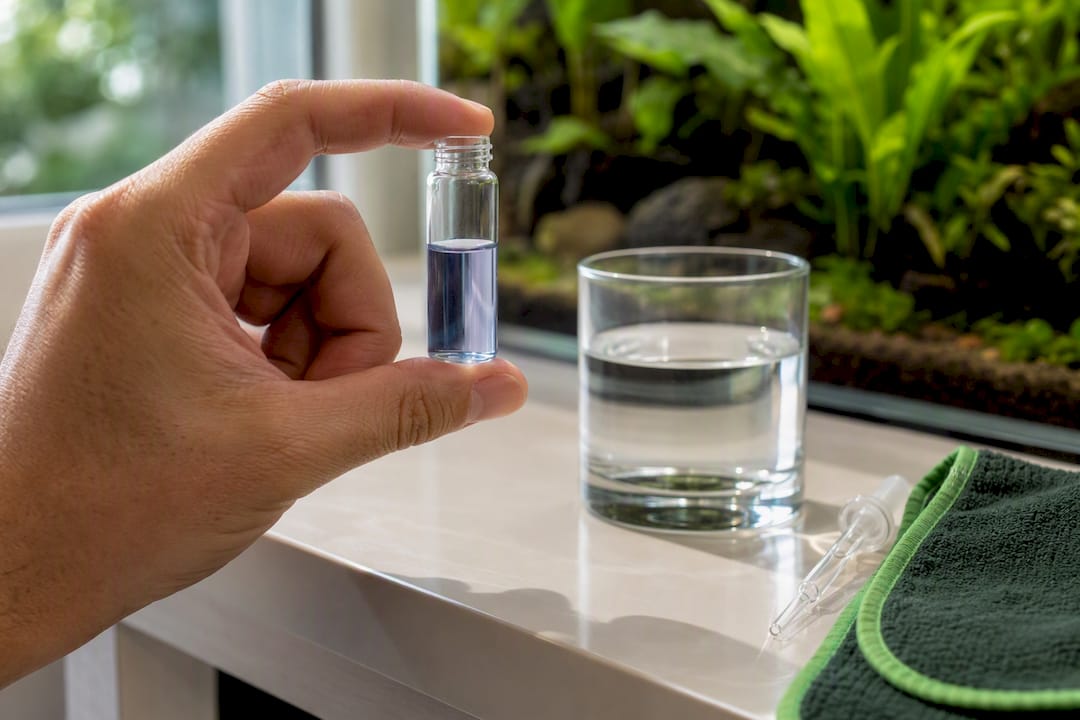
Two test types matter here. A free chlorine test measures unbound chlorine only and tells you nothing about chloramine still present. A total chlorine test measures both free and combined chlorine (the chloramine fraction), which is the number you need if your supply uses chloramine. Most DPD-based drop kits and test strips report both values separately, letting you subtract free chlorine from total chlorine to isolate the chloramine reading.
Format options vary in precision:
A reading of zero on the total chlorine test, not just the free chlorine test, is what confirms chloramine removal. Zero on free chlorine alone can be misleading if chloramine is still present. Run this checklist after any treatment: dose the neutralizer, wait the recommended reaction time (usually a minute for vitamin C, longer for carbon filtration), test total chlorine, and only proceed once that reading hits zero.
Most dechlorination mistakes come from either overcorrecting or under treating, and both are easy to fix once you know what to watch for.
Pro Tip: Keep a small notebook or phone note logging your dose amounts and test results each time. Patterns emerge fast, and you’ll stop guessing after two or three treatments.
For most potted houseplants watered occasionally, unmodified tap water is fine; chlorine and chloramine levels in municipal supplies sit well below what damages soil-grown roots. Hydroponic reservoirs are different, since roots sit in standing water continuously and any residual disinfectant has more time to affect the root zone and beneficial microbial activity.
A simple dosing cheat-sheet for home setups:
These are general guidelines based on typical municipal chlorine and chloramine ranges, not precise lab doses. Always confirm with a total chlorine test if you’re treating a live system.
A weekly maintenance routine keeps reservoirs healthier long after the initial treatment:
Most people overthink this. For the overwhelming majority of home aquarium, pond, and hydroponic setups, a vitamin C neutralizer or a quality catalytic carbon point-of-use filter covers the job completely, and reaching for anything more elaborate is usually solving a problem you don’t have.
Reverse osmosis earns its cost when taste sensitivity, mineral control, or a specific medical requirement is genuinely in play, not as a default upgrade because it sounds more thorough. The same goes for lab testing: save it for situations with real uncertainty, unexplained discoloration, unusual odor, or a persistent problem that dosing and retesting haven’t resolved.
One thing gets lost in a lot of dechlorination advice: treating water you don’t actually need to treat. If you’re in a market like Singapore, PUB’s own guidance confirms tap water is safe to drink without any treatment at all. Filtration there is a preference, not a safety requirement. Apply that same judgment to your plants and fish. Treat when the use case calls for it (live fish, continuous hydroponic flow, sensitive propagation) and skip the extra step when it doesn’t.
— Irwin Lee
Dechlorinating on the fly works, but it’s one more thing to remember every time you fill a reservoir or top off a tray. Sprout Lab’s modular hydroponic systems and curated soil mixes are built to reduce how often that matters in the first place. A properly sized reservoir setup means fewer manual water swaps, and the right soil mix buffers minor chemical fluctuations that would otherwise stress sensitive roots.
If you’re setting up a new system rather than patching an old one, start with a reservoir hydroponic system built for beginners, which cuts down on the frequency of manual dosing compared to open trays or daily top-offs. Pair it with a soil mix suited to your plant type if you’re growing anything outside pure hydroponics. Customers report a high average rating and positive feedback related to seedling establishment when using properly prepared water and growing mediums. Browse the full range of systems and supplies to find the setup that fits your space.
Add a vitamin C neutralizer (sodium ascorbate or ascorbic acid) or a commercial aquarium dechlorinator directly to the water and stir. Both work within a minute or two on chlorine and chloramine, which makes them the fastest options for aquariums or an urgent water change.
Letting water sit removes free chlorine in roughly 24 hours in an open container with good air exposure, faster with more surface area. It does not reliably remove chloramine, which typically requires an active method like carbon or vitamin C rather than time alone.
Run a total chlorine test, not just a free chlorine test, since total chlorine captures the chloramine fraction too. A reading of zero on total chlorine confirms both chlorine and chloramine are neutralized.
Boiling removes free chlorine in about 15 to 20 minutes through faster off-gassing, but it does little to break down chloramine. If your supply uses chloramine, pair boiling with vitamin C or a catalytic carbon filter rather than relying on heat alone.