Free shipping for order over $50

Free shipping for order over $50
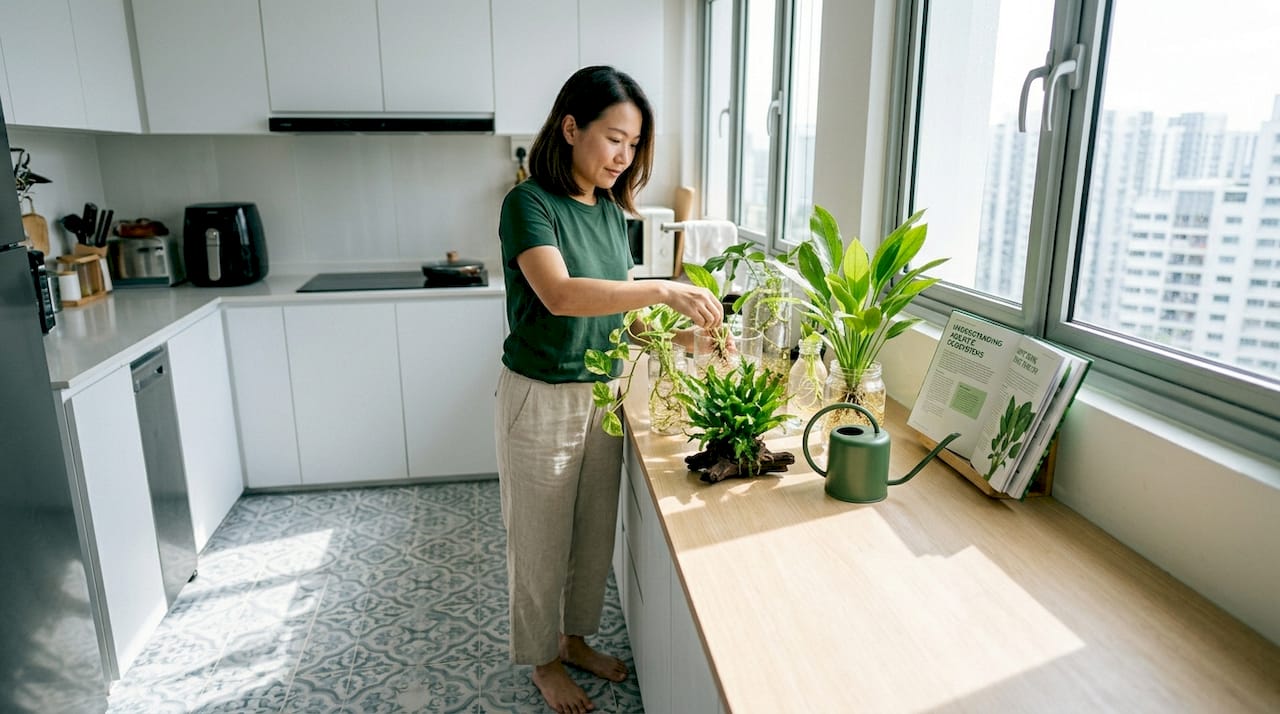
Managing water quality in a small indoor setup is one of those problems that sneaks up on you. You notice the water getting cloudy, your fish or plants looking stressed, and you wonder what changed. This water quality plants Singapore guide cuts through the guesswork and gives you a practical, science-backed plan. You will learn which plants actually work in compact indoor environments, how to set them up correctly, and what realistic results look like in a Singapore home.
| Point | Details |
|---|---|
| Plants supplement, not replace | Indoor water plants manage nutrients in small systems but cannot replace Singapore’s municipal water treatment. |
| Species selection matters | Echinodorus and pothos outperform most indoor options for nutrient removal in contained aquatic setups. |
| Maintenance is non-negotiable | Fast-growing aquatic plants need regular pruning to stay effective and avoid blocking light or flow. |
| Test your water regularly | Simple test kits for nitrates, phosphates, and ammonia confirm whether your plants are actually working. |
| Start small and scale up | One or two species in a manageable container builds confidence before expanding to a larger system. |
Before you pick a single plant, you need to understand what “water quality” actually means in an indoor context. Singapore’s tap water is genuinely clean. PUB conducts over 500,000 tests annually, monitoring everything from source to your tap. So this guide is not about fixing dangerous drinking water.
The challenge is entirely different for small indoor water bodies like aquariums, desktop water gardens, or hydroponic reservoirs. These closed systems have no natural buffering capacity. Waste accumulates fast.
The three main culprits in any indoor water setup are:
Here is where plants become genuinely useful. Through a process called phytoremediation, aquatic plants absorb these excess nutrients directly through their roots. They do not just mask the problem. They pull the compounds out of the water column and convert them into plant tissue. That said, plants supplement indoor systems, they do not replicate the multi-stage engineering that keeps Singapore’s public water safe.
Water parameters also directly affect plant health and aquatic life. Temperature, pH, and light levels all influence how well your plants absorb nutrients. In Singapore’s climate, indoor temperatures typically hover between 25°C and 30°C, which suits most tropical aquatic species perfectly.
Choosing the right plants for your indoor setup comes down to four factors: proven nutrient removal, manageable size, low light tolerance, and minimal maintenance overhead. Here is a comparison of the most effective options for Singapore urban homes.
| Plant | Nutrient focus | Light needs | Growth rate | Indoor suitability |
|---|---|---|---|---|
| Echinodorus palaefolius | Ammonia, nitrite, nitrate, phosphate | Medium | Moderate | Excellent |
| Pothos (Epipremnum aureum) | Nitrate | Low to medium | Fast | Excellent |
| Java fern (Microsorum pteropus) | Nitrate, phosphate | Low | Slow | Excellent |
| Water lettuce (Pistia stratiotes) | Nitrate, phosphate | High | Fast | Good (contained only) |
| Hornwort (Ceratophyllum demersum) | Nitrate, ammonia | Medium | Fast | Good |
Echinodorus palaefolius deserves special attention. A controlled study showed this species achieves removals of 23.33% ammonia nitrogen, 33.25% nitrite, 47.40% nitrate, and 43.92% phosphate over a 60-day period. Those are meaningful numbers for a plant you grow in a tank.
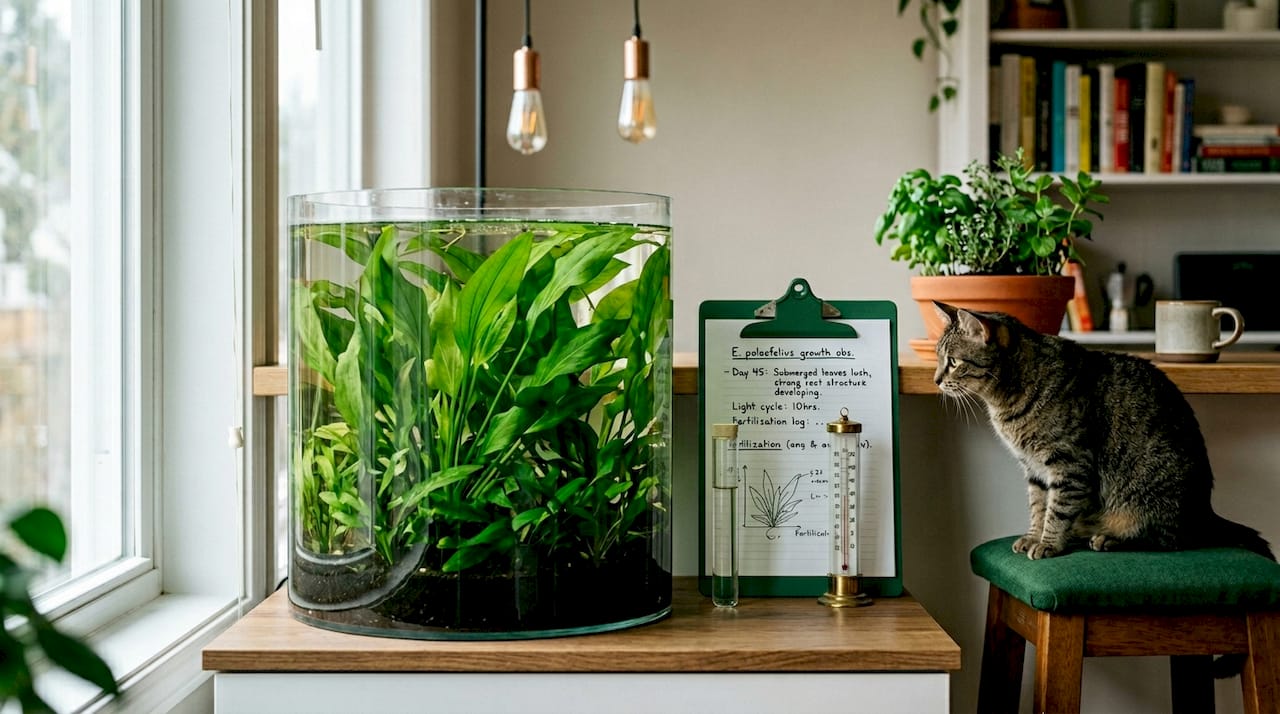
Pothos is the crowd favorite for good reason. It grows fast, tolerates low light, and can reduce nitrates by 20 to 40 ppm within just four to five days when its roots are submerged. You simply drape the vines over the back of an aquarium with roots hanging into the water. No special setup needed.
A few species to avoid in Singapore indoor setups:
Pro Tip: Place pothos roots at the waterline rather than fully submerged. The plant absorbs nutrients best when roots access both water and air, mimicking the semi-aquatic conditions it prefers.
For urban gardeners working with small containers or desktop setups, java fern is the most forgiving option. It grows slowly, which means less pruning, and thrives in the low-light conditions common in Singapore apartments.
Getting your setup right from day one saves significant frustration. Here is a step-by-step approach that works for beginners in small Singapore spaces.
What you need before starting:
A clean glass or acrylic container (at least 10 liters for any meaningful plant effect), your chosen plant species, a basic LED grow light or access to indirect natural light, a small submersible pump or air stone for circulation, and a water quality test kit covering nitrates, phosphates, and ammonia.
Setup steps:
Ongoing maintenance schedule:
| Task | Frequency | Why it matters |
|---|---|---|
| Prune fast growers | Weekly | Prevents light blockage and clogged flow |
| Test water parameters | Every 2 weeks | Confirms nutrient removal is happening |
| Partial water change | Monthly | Resets baseline and removes accumulated solids |
| Check root health | Monthly | Rotting roots reduce absorption and foul water |
Pro Tip: Do not let more than 60% of your water surface become covered by floating plants. Anything beyond that blocks light for submerged species and starves the entire system.
Expect to see measurable changes within two to four weeks. Full stabilization, where nutrient levels plateau at consistently lower readings, typically takes 60 days. This matches phytoremediation trial benchmarks from controlled studies.
Even well-planned setups run into problems. Here is how to diagnose and fix the most common ones.
If you are integrating a soil or hydroponic component alongside your water plants, check for fertilizer runoff into the water reservoir. Excess nutrients from hydroponic fertilizers can overwhelm plants and cause algae spikes. Balance nutrient inputs carefully using a balanced nutrient solution designed for indoor systems.
Observation alone is not reliable. You need data, and the tools are cheap and widely available in Singapore.
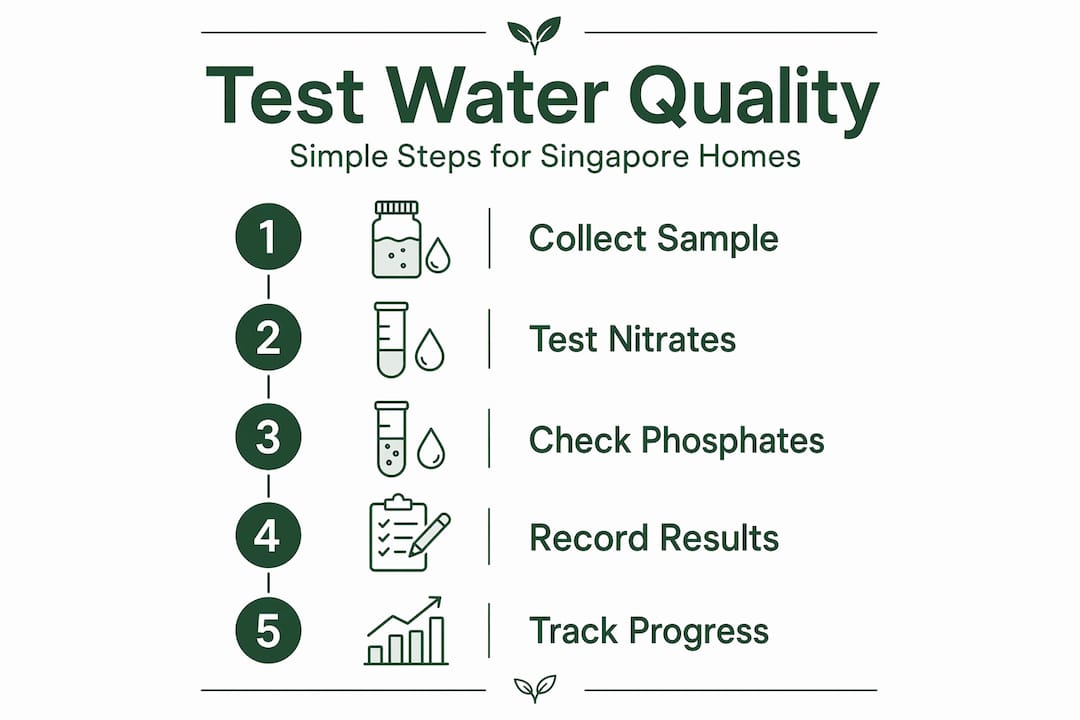
A basic liquid test kit or digital test strips for nitrates, phosphates, and ammonia costs under S$20 at most aquarium shops or online. Test your water before introducing plants to establish a baseline. Then test again at two-week intervals.
What you should expect to see: nitrate levels declining steadily after the first two weeks, phosphate levels dropping more slowly (four to six weeks), and ammonia staying consistently low if circulation is adequate. Water clarity often improves visually within the first week, though this reflects settling rather than nutrient removal.
Plant health itself is a secondary indicator. Lush, actively growing leaves signal that plants are absorbing nutrients. Pale or stunted growth suggests nutrient deficiency or poor light. If your plants look healthy and your water tests are trending downward, your system is working.
One critical point: Singapore’s water reuse system uses microfiltration, reverse osmosis, and UV disinfection. Your indoor plants cannot replicate that level of treatment. Use this system for managing your indoor aquatic environment, not for producing drinking water.
I have worked with indoor aquatic plant setups long enough to watch people make the same two mistakes. The first is over-engineering before they understand the basics. The second is expecting plants to do everything.
What I have found is that the gardeners who get the most out of this practice are the ones who start with a single container, a couple of pothos stems, and a test kit. They build intuition before they build complexity. The science backs up what plants can do, but phytoremediation effectiveness depends heavily on species choice and how long the system has been running.
The misconception that frustrates me most is the idea that adding plants means you can stop doing maintenance. Fast-growing species like water lettuce and hornwort will take over a small container in weeks if you are not pruning consistently. The nutrient removal benefit is real. The maintenance tradeoff is equally real.
My advice to anyone starting out: treat your first setup as a learning system, not a finished product. Test the water, observe the plants, adjust based on what you see. Singapore’s indoor conditions are genuinely well-suited for tropical aquatic plants. The humidity, the ambient temperature, the availability of tropical species locally. You have real advantages here. Use them.
— Luna
If this guide has you ready to set up your first indoor water quality garden, Sprout-lab has the tools to get you there without the trial-and-error phase most beginners go through.
Sprout-lab’s hydroponic systems and plant supplies are designed specifically for small-space urban growers in Singapore. Whether you are starting with a single container setup or scaling up to grow edible plants alongside your aquatic garden, their modular systems support both approaches. Customers across Singapore have reported faster germination and noticeably healthier plants using Sprout-lab products, backed by a 4.9/5 rating from over 25,000 completed orders. Explore their recommended plants for indoor water systems and find the right starting point for your space. For those just getting started, their beginner DIY hydroponic kits make the setup process genuinely manageable.
Pothos and Echinodorus palaefolius are among the most effective options for Singapore indoor setups. Pothos can reduce nitrates by 20 to 40 ppm within days, while Echinodorus shows strong removal of ammonia, nitrite, nitrate, and phosphate over 60-day periods.
Most gardeners see measurable nitrate reductions within two to four weeks. Full stabilization of nutrient levels typically takes around 60 days, based on phytoremediation study benchmarks.
No. Singapore’s municipal water undergoes multi-stage treatment including reverse osmosis and UV disinfection. Indoor water plants manage nutrients in closed aquatic systems but cannot replicate that level of treatment.
Fast-growing species like water lettuce and hornwort need pruning at least once a week. Allowing more than 60% surface coverage blocks light for submerged plants and reduces the system’s overall effectiveness.
Water hyacinth can be grown in a fully contained indoor setup but must never be released into outdoor waterways. It is invasive in Singapore and can spread rapidly, covering water surfaces and disrupting local ecosystems.