Free shipping for order over $50

Free shipping for order over $50
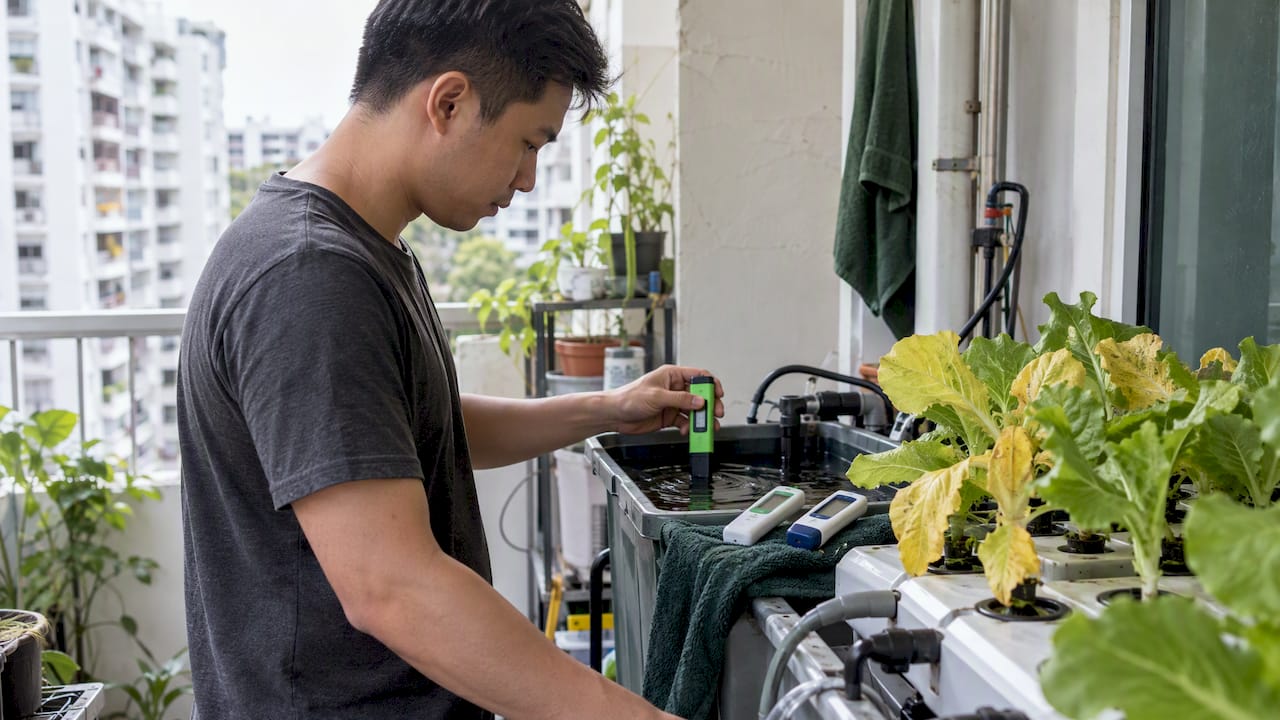
Most yellow leaves in hydroponics trace back to nutrient uptake trouble or stress in the root zone: nitrogen shortfall, a pH or EC swing that locks out nutrients, low dissolved oxygen, or a reservoir running too warm. Check your reservoir’s pH, EC, and temperature right now. If any reading sits outside your crop’s target range, top up or replace the nutrient solution and add aeration before you do anything else.
TL;DR:
- Ensuring reservoir pH, EC, and temperature are within target ranges is essential before making nutrient adjustments or additional aeration.
- Yellowing on older leaves typically indicates nitrogen deficiency, while new leaf yellowing suggests micronutrient issues like iron or magnesium shortfalls.
- Temperature, dissolved oxygen, and root health are common environmental and biological factors influencing yellowing, often mimicking nutrient deficiencies.
- Correcting pH, EC, and nutrient levels usually takes several weeks to reverse yellowing, with root-fed resupply being more effective than foliar feeding.
- Regular monitoring of pH, EC, SPAD readings, and root condition helps prevent problems and guides timely, targeted interventions.
Yellowing rarely announces its cause on its own, so read the pattern before you touch the reservoir.
Run through these in order before adjusting anything. Changing nutrient strength before you know the cause often creates a second problem on top of the first.
Nitrogen deficiency is the most common trigger, and it has a distinct signature: older leaves yellow first, often starting at the tip and moving inward, while new growth stays green longer because the plant moves nitrogen to where it is needed most.
SPAD (chlorophyll) readings correlate strongly with leaf nitrogen content, giving growers an objective way to catch declining nitrogen status before yellowing becomes visible, according to the same hydroponic nitrogen study.
Roots need oxygen to pull up nutrients, and warm reservoir water holds less dissolved oxygen while also encouraging pathogens. A reservoir that runs too hot or too stagnant will produce yellowing that looks nutritional even when your nutrient mix is fine.
Pro Tip: Keep an air stone running continuously rather than on a timer. Roots can suffocate faster than most growers expect once oxygen drops.
Work through fixes in order of speed and impact rather than guessing at all of them at once.
In the cited nitrogen study, resupplying complete nutrient solution to the roots restored leaf color after several weeks, while foliar urea application took longer to produce the same recovery. Foliar feeding can help as a short-term boost, but root-fed resupply is the more reliable fix for a systemic shortfall. Early yellowing can start reversing within a few weeks of correcting the root cause, though severe cases take longer and dead, yellowed tissue will not turn green again. If yellowing persists after you have corrected pH, EC, temperature, and nutrient strength, consider a pathogen or systemic root issue and weigh replacing the plant.
Most yellowing is preventable with a short, consistent monitoring routine rather than a reaction to visible symptoms.
The most common mistakes we see are overconcentrating nutrient solution hoping for faster growth, ignoring dissolved oxygen until roots suffer, and making large EC swings in one adjustment instead of small, gradual corrections. Each tends to create new yellowing rather than fixing the original cause. A modular hydroponic setup with a consistent aeration source and a balanced nutrient concentrate removes most of the guesswork that leads to these mistakes, especially for growers managing several plants in a small footprint.


When leaves start yellowing, the order of operations matters more than any single fix. Measure before you adjust, check the roots before you assume a nutrient problem, resupply nutrients at the root rather than reaching for a foliar spray first, and then watch the trend over the following weeks rather than judging by a single day’s reading.
The four-step plan I would follow: measure pH, EC, and temperature; inspect the roots; correct and resupply the nutrient solution at the root zone; monitor SPAD or visual color over the next two to three weeks. Skipping the measurement step is the single biggest reason recoveries take longer than they should.
— Irwin Lee
Diagnosing yellow leaves is only half the job. Getting your root zone back to a stable, oxygenated, correctly fed state is the part that actually fixes it, and that’s where a modular setup helps. Modular hydroponic systems built with aeration and even nutrient delivery help make reservoir stresses that cause yellowing easier to avoid. Pair a system with a balanced nutrient concentrate formulated for all crop types and you cover most of the deficiency risk without mixing separate products.
Overwatering is a common cause in soil but less direct in hydroponics, where roots sit in solution rather than soil. In hydroponic systems, yellowing is more often linked to low dissolved oxygen, reservoir temperature, or nutrient lockout than to water volume itself.
Start by measuring pH, EC, and reservoir temperature, then correct whichever is out of range and refresh the nutrient solution if needed. Checking root health and improving aeration alongside these corrections addresses most of the common causes.
A leaf that has already yellowed and lost chlorophyll generally will not turn green again, since that tissue is often past recovery. New growth typically shows the improved color first once the underlying cause is corrected, based on the recovery pattern seen in the MDPI nitrogen study.
A complete, balanced nutrient solution formulated for hydroponic use addresses most deficiency-related yellowing better than single-nutrient additives, since it resupplies nitrogen alongside the micronutrients that often decline together. Sprout Lab’s nutrient concentrate solution is formulated for this kind of root-fed resupply across crop types.