Free shipping for order over $50

Free shipping for order over $50
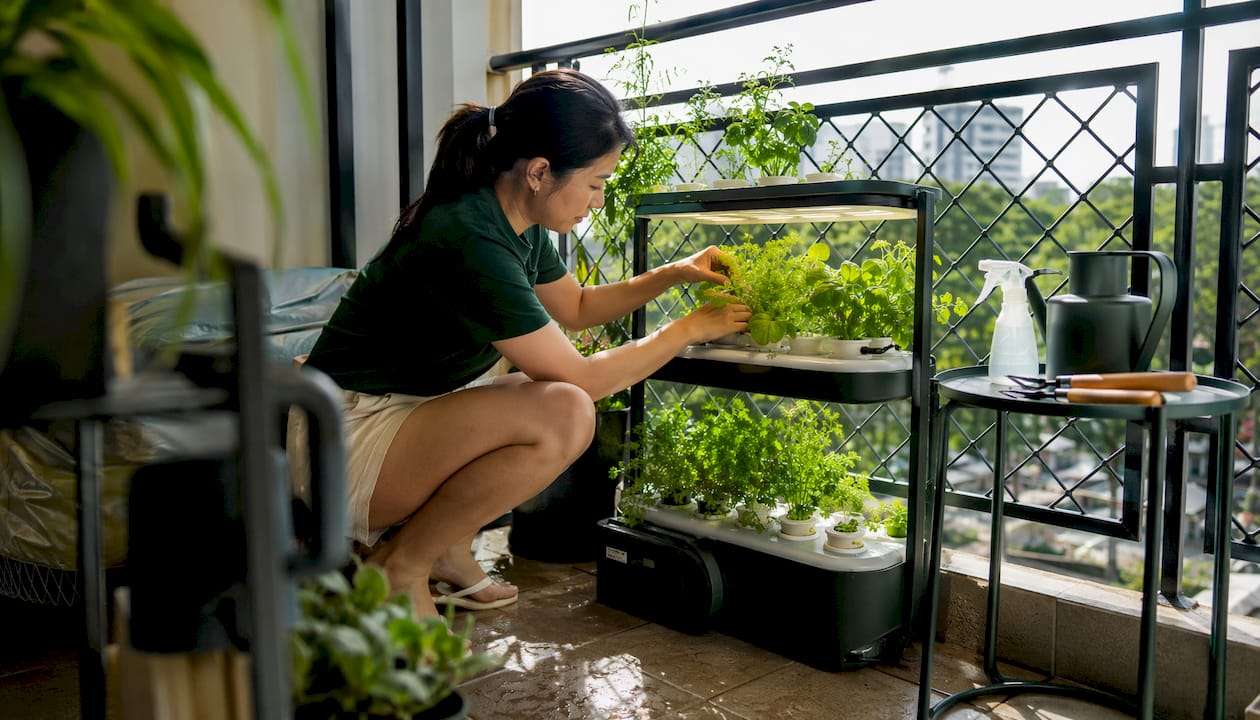
For Singapore’s humid, small-space apartments, Sprout-lab’s modular compact hydroponic system is the clearest recommendation: it stacks up to 56 plants in a footprint that fits an HDB kitchen counter, handles tropical humidity without the mold risk that plagues DIY setups, and automates the temperature-nutrient monitoring that dedicated indoor systems handle far better than improvised alternatives. Three reasons it stands out:
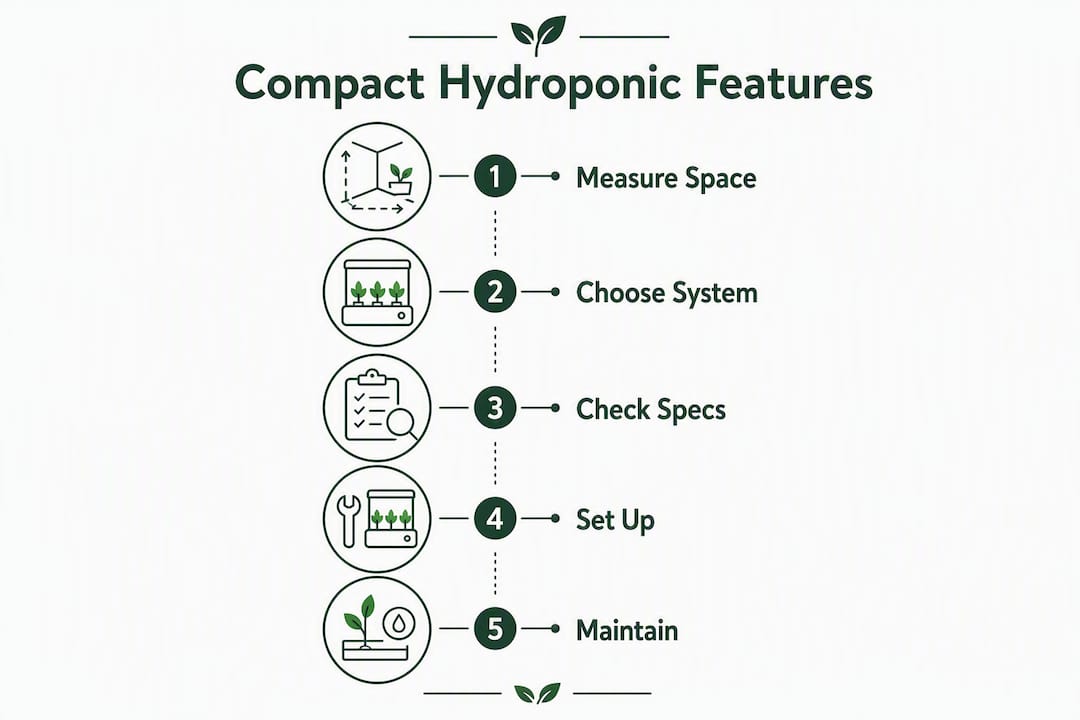
The right system for a humid, small-space home comes down to four decisions made before you buy, not after.
Match footprint to your actual space. Measure the spot you have in mind, then check the system’s stated dimensions. A unit that looks compact in a product photo can still block a walkway or block a window that provides your only natural airflow. For most HDB apartments, a footprint under 2 sq ft per module is the practical ceiling.
Match automation level to your schedule. If you travel for work or simply forget to check plants, a system with programmable timers, automatic pump cycles, and app-based alerts is worth the extra cost. If you are home daily and enjoy the ritual, a passive or semi-passive setup is cheaper and quieter. Sprout-lab’s home garden automation guide walks through the trade-offs clearly.
Questions to ask before you buy:
Red flags to avoid:
A system with a 4.9/5 rating backed by over 25,000 completed orders, documented specs, and accessible guides clears these bars. One that ships with a single-page leaflet and no support channel does not.
Choosing a system type matters as much as choosing a brand. Each method behaves differently when ambient humidity is high, temperatures stay warm year-round, and floor space is tight.
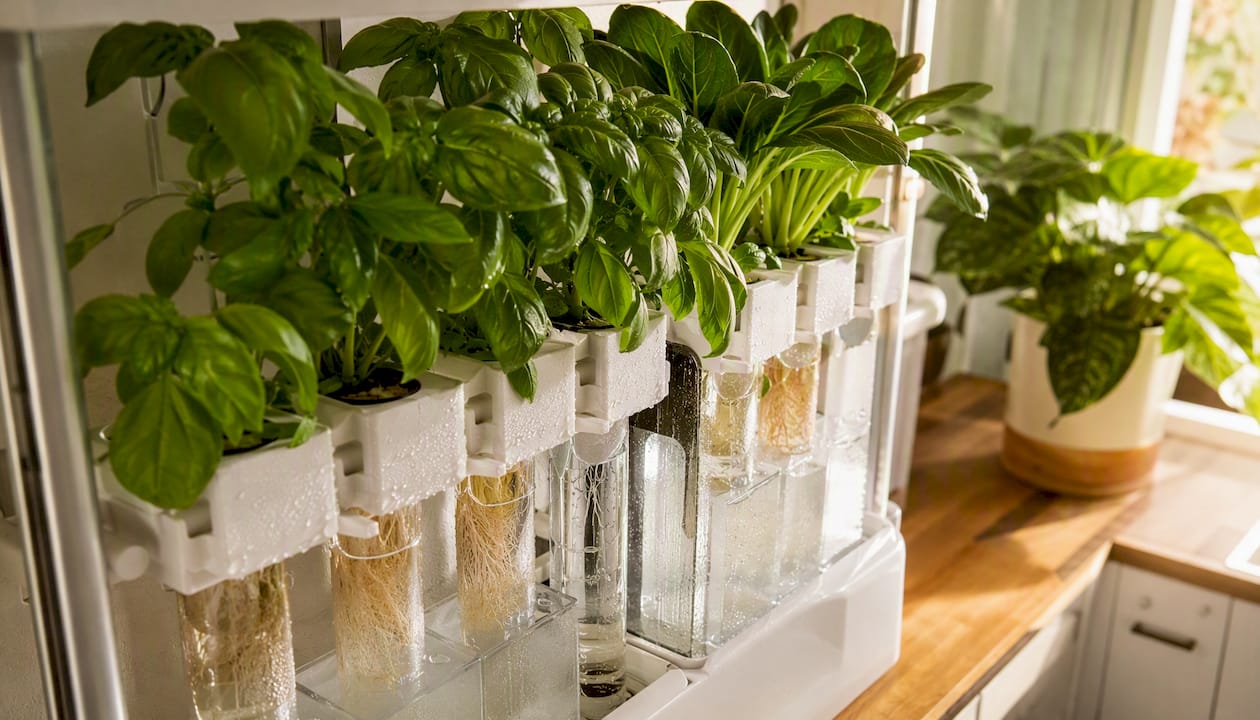
Deep Water Culture (DWC). Roots sit suspended in an oxygenated nutrient solution. Simple and high-yielding for leafy greens. The catch in Singapore: warm water holds less dissolved oxygen, so the air pump works harder and reservoir temperatures need watching. Mold on exposed root crowns is a real risk if the lid seal is poor.
Nutrient Film Technique (NFT). A thin film of nutrient solution flows continuously over bare roots in sloped channels. Very space-efficient and well-suited to lettuce and herbs. In humid conditions, the exposed channel surfaces can harbor algae and fungal growth if not cleaned weekly. Good airflow around the channels is non-negotiable.
Drip systems. Nutrient solution drips onto growing media at timed intervals. Flexible and scalable, and the growing media (coco coir, rockwool) buffers against humidity swings. Slightly more maintenance because emitters clog. Works well for fruiting plants if the LED spectrum is adequate.
Ebb-and-flow (flood-and-drain). The tray floods on a timer, then drains. Reliable for a wide range of plants and easy to clean. The flood cycle can raise humidity in a small room, so ventilation placement matters more here than with other types.
Aeroponics. Roots hang in air and are misted with nutrient solution. Fastest growth rates, but the misting nozzles clog in hard water and the system is sensitive to power interruptions. In Singapore’s humidity, the mist chamber needs regular sanitizing to prevent biofilm. Best for experienced growers who want maximum yield from minimum space.
Vertical soil-based towers. Soil or coco coir in stacked pockets, watered from the top down. Lower upfront cost and familiar to beginners. The trade-off: soil retains moisture longer in humid conditions, which raises fungal risk at the root zone. Works best with a small oscillating fan directed at the tower base.
For most Singapore apartments, NFT or a well-ventilated drip system hits the best balance of yield, ease, and humidity tolerance. Aeroponics rewards the grower who wants to push plant counts and is willing to maintain the nozzles. For a deeper look at how hydroponics suits Singapore’s tropical climate, the climate-specific effects on each system type are worth reviewing before you commit.
Specs on a product page can look impressive and tell you almost nothing useful. Here is what to actually check.
Footprint and stackability. The base dimension in square feet is the starting point. Stackable or modular designs let you add plant capacity vertically without claiming more counter or floor space. Confirm the stacking mechanism is stable and that the combined weight is safe for your shelf or countertop.
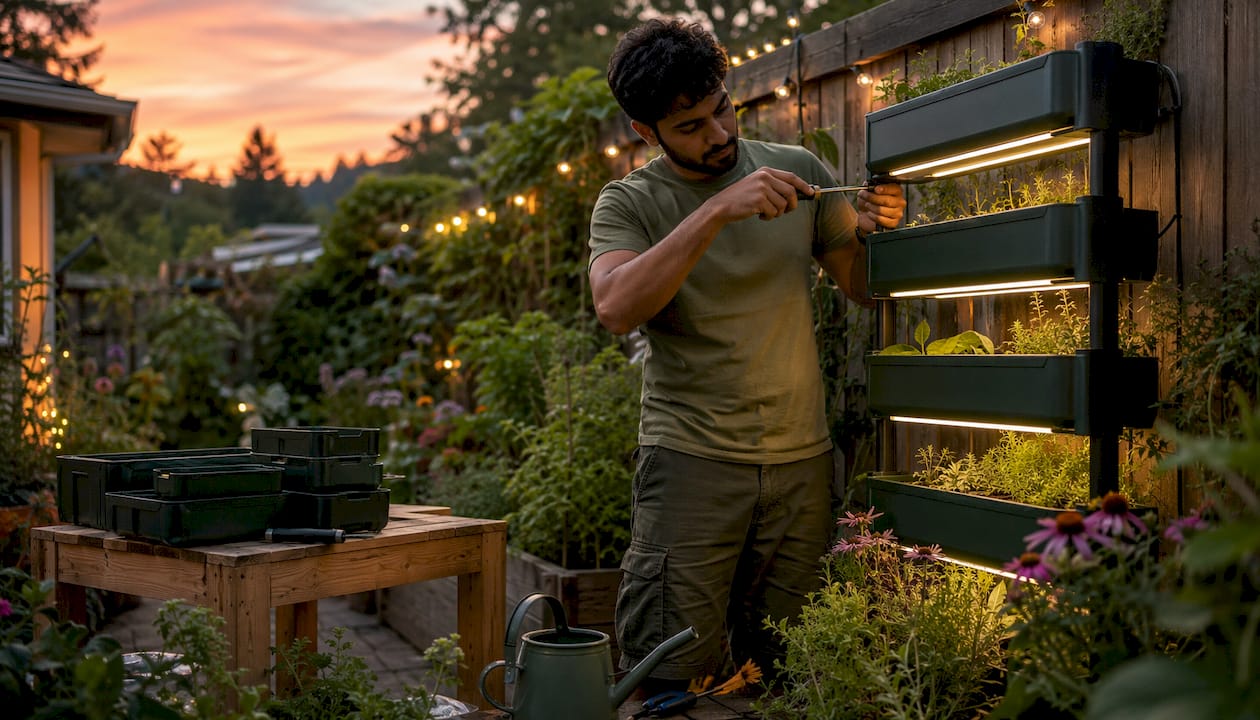
Plant capacity. More pods is not always better. A 56-plant modular system makes sense for a family or a small café supply setup. A 12-pod countertop unit is enough for weekly herbs and salad greens for two people. Match capacity to what you will actually harvest and consume.
LED spectrum and wattage. Full-spectrum LEDs covering 400–700 nm support both leafy greens and fruiting plants. For tomatoes, peppers, or strawberries, verify the PPF or PPE rating, not just the wattage. A 36W light that covers 12 pods is adequate for herbs; it will not push a fruiting plant to full yield. Many compact systems lack the LED power for fruiting crops, so check this spec before buying.
Reservoir size and access. In Singapore’s warm rooms, evaporation is faster than in temperate climates. A larger reservoir means less frequent top-ups, but it also means more water sitting warm, which lowers dissolved oxygen. Easy-access reservoirs that you can clean without disassembling the whole unit save significant time over months of use.
Pump specs and noise. A pump rated under 40 dB is livable in a bedroom or living room. Check whether the pump is submersible or external, and whether replacement parts are available locally.
Sensors and automation. TDS/EC monitoring, temperature sensors, and programmable timers are the features that prevent the most common failures in humid climates. App connectivity is a convenience; TDS/EC monitoring is a necessity.
Specs to check when comparing models:
Getting the setup right prevents most of the problems that frustrate new growers. Maintenance keeps the system running once it is up.
Setup steps:
For ongoing care, the passive hydroponic setup guide covers step-by-step instructions and low-touch watering schedules worth bookmarking.
| Frequency | Tasks |
|---|---|
| Daily | Check water level; inspect plants for wilting, yellowing, or fungal spots; confirm pump is running |
| Weekly | Test TDS/EC and pH; top up reservoir with fresh water; wipe down any algae on exposed surfaces; check LED height |
| Monthly | Full reservoir drain and clean; inspect pump and filter; check roots for browning or slime; review light schedule |
Pro Tip: When indoor temperatures climb above 28°C (82°F), nutrient uptake accelerates and your EC reading will rise faster than usual. Dilute the reservoir with fresh water rather than adding more nutrients, and check TDS/EC twice that week. The SFA recommends weekly TDS/EC checks as standard practice for Singapore home kits; in a heat spike, treat it as a twice-weekly task. For detailed dosing guidance, Sprout-lab’s hydroponic fertilizer practices page covers calibration and compatibility with sensors.
Best plants for compact hydroponic systems in Singapore-style conditions: Butterhead lettuce, kai lan, kangkong, basil, mint, cherry tomatoes (with adequate LED PPF), and chili peppers. Leafy greens are the most forgiving; fruiting plants reward the grower who has the LED spectrum and space to support them. For plant-specific troubleshooting, the hydroponic vegetables guide covers common issues by crop type.
Sprout-lab’s modular compact hydroponic system was built around the constraints that matter most in Singapore: limited floor space, year-round humidity, and the reality that most urban growers are busy and not botanists.
What the system delivers:
Who it fits best:
The system has received a high customer rating reflecting consistent outcomes: fast germination, healthy plants, and a setup process that does not require prior gardening experience. Documentation, guides, and support channels are all accessible, which matters when something goes wrong at 10 PM and you need an answer before the morning harvest.
For anyone optimizing a micro-kitchen to fit a compact grow system alongside existing storage, pairing it with a space-saving cabinet organizer can free up the counter space the system needs.
Compact hydroponic systems built for Singapore’s humid, small-space homes require modular stackability, full-spectrum LEDs, and weekly TDS/EC monitoring to perform reliably year-round.
| Point | Details |
|---|---|
| Match footprint to space | Measure your spot first; prioritize systems under 2 sq ft per module for HDB apartments. |
| Check LED specs for fruiting | Verify PPF/PPE ratings, not just wattage, if you want tomatoes or peppers, not only leafy greens. |
| Monitor TDS/EC weekly | Singapore’s warm rooms raise nutrient concentration faster; weekly checks prevent root burn. |
| Ventilation is non-negotiable | Place a small oscillating fan near the system base to prevent fungal outbreaks in humid air. |
| Sprout-lab modular system | Stacks up to 56 plants in compact footprints with a 4.9/5 rating from over 25,000 orders. |
The conventional wisdom in Singapore gardening circles is that you should “start small and see if you like it” before investing in a real system. That advice sounds sensible. In practice, it sends most people toward underpowered countertop kits that fail within two months, and they conclude that hydroponics does not work for them rather than that the kit was inadequate.
The actual lesson from growers who stick with it: the gap between a purpose-built modular system and a budget starter kit is not a matter of features. It is a matter of whether the system was designed for Singapore’s climate at all. A kit built for a temperate European apartment will fight your ambient conditions every day. A system designed with tropical humidity in mind works with them.
Sprout-lab’s approach, backing it with documented specs, accessible guides, and a support channel, is what makes the difference between a system that produces food and one that produces frustration. The strong customer satisfaction rating is a result of the product being well matched to the environment it is actually used in.
If you have measured your space and know what you want to grow, the fastest next step is Sprout-lab’s compact growing systems page, which walks through modular options by footprint and plant capacity so you can match a system to your exact apartment layout.
For busy professionals who want the lowest-maintenance path to fresh produce, the garden systems for busy people page covers starter kits and automation add-ons that reduce daily attention to a quick visual check. For growers ready to go fully automated, the automated hydroponic setups page details sensor integration and dosing options available with Sprout-lab systems. Orders ship with setup documentation and access to support, so you are not starting from zero on day one.
Sprout-lab’s modular compact hydroponic system is the strongest fit for Singapore’s humid, small-space homes, offering stackable capacity up to 56 plants, full-spectrum LEDs, and automated monitoring designed for tropical indoor conditions.
The Singapore Food Agency recommends weekly TDS/EC checks as standard practice; during heat spikes above 28°C (82°F), check twice a week since warm rooms raise nutrient concentration faster than in temperate climates.
NFT and drip systems with coco coir or rockwool growing media are the most manageable in humid conditions, offering good airflow around roots and straightforward weekly cleaning compared to DWC or aeroponic setups.
Not all compact systems include a TDS/EC meter. The SFA guidance treats a reliable standalone meter as more valuable than the most expensive automated unit, so confirm whether your chosen system includes one or budget for it separately.
Yes, but only if the LED light covers the full 400–700 nm spectrum and carries a sufficient PPF/PPE rating. Many entry-level compact systems are sized for leafy greens only; verify the LED spec before buying if fruiting crops are your goal.