Free shipping for order over $50

Free shipping for order over $50
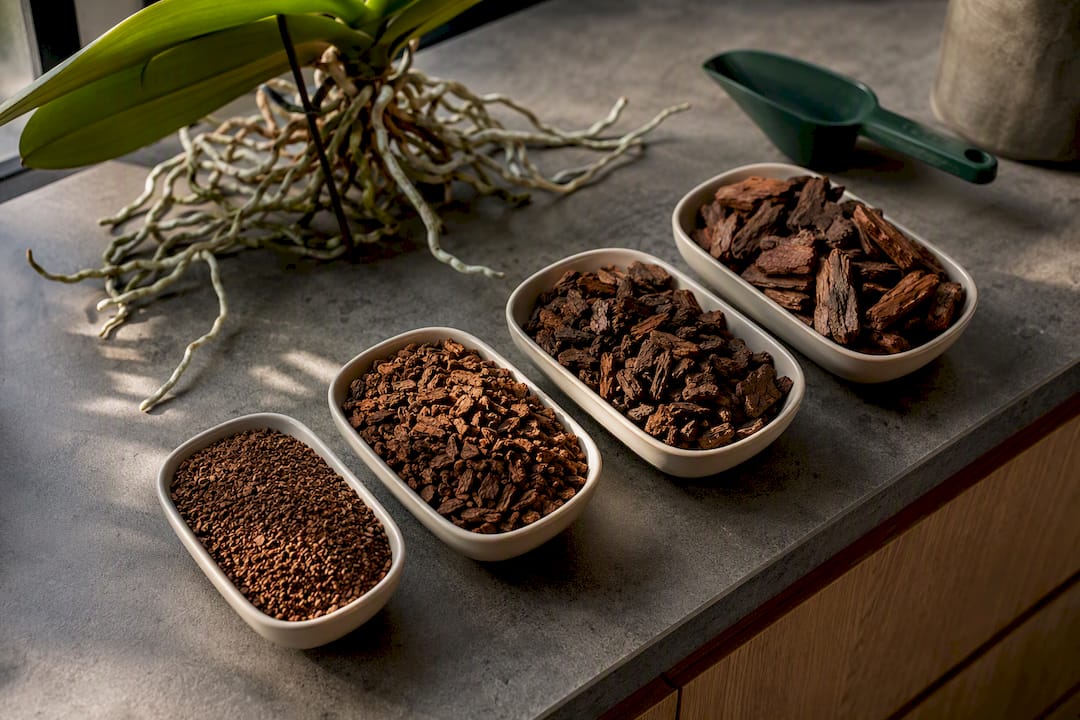
Orchid bark comes in four practical grades: fine, medium, coarse, and extra-coarse, ranging roughly from 3 mm to over 25 mm. Medium bark (about 6 to 12 mm) is the safest default for most home Phalaenopsis and mixed collections. Fine suits seedlings, coarse and extra-coarse suit thick-rooted Vanda and mounted plants, and a composted premium bark like Orchiata lasts noticeably longer than generic pine bark.
TL;DR:
- Medium bark (6 to 12 mm) is the safest default for most home orchids, balancing water retention and airflow for standard Phalaenopsis.
- Fine bark (3 to 9 mm) is ideal for seedlings and miniature orchids, but may cause rot in humid conditions due to its moisture-holding capacity.
- Coarse and extra-coarse grades suit thick-rooted orchids like Vanda or mounted plants, as they dry faster and mimic natural airflow.
- Replacing bark every 1 to 3 years is necessary as it degrades, with composted premium bark lasting longer than generic pine bark.
- Always match bark particle size to root thickness, pot type, and climate to optimize root health and minimize repotting frequency.
Bark grading isn’t standardized across every seller, but the categories below reflect how most nurseries and grower guides label their products.
Fir bark remains the most common base material across all four grades because it drains well, mimics the bark surface orchids cling to in nature, and holds close to 80% of its weight in water when fully soaked. That water-holding capacity is exactly why particle size matters so much. A pot full of fine bark and a pot full of extra-coarse bark can hold wildly different amounts of moisture even with identical watering habits.
Matching bark to root thickness works better than matching it to species names, since two orchids in the same genus can have very different root diameters depending on age and growing conditions.
American Orchid Society guidance recommends roughly quarter-inch bark for seedlings, half-inch for medium plants, and three-quarter-inch for large orchids, a rule of thumb that lines up closely with the fine, medium, and coarse categories above.
Pro Tip: If you’re stuck between two grades, size down for anything you’ll pot in the next six months and size up for a plant you plan to leave alone for a year or more.

Dry bark straight from the bag acts like a sponge and can pull moisture right out of fresh roots during the first watering. Soaking new bark overnight before potting, as recommended by the American Orchid Society, softens it, rinses off dust, and gets it ready to hold water properly from day one. Sieving out the smallest fragments afterward keeps particle size consistent, which matters more than most growers realize since a bag full of dust-sized fines behaves nothing like the graded bark on the label.
A few mix combinations cover most situations:
Composted bark like Orchiata goes through a curing process before packaging, which reduces the nitrogen drawdown that raw, uncomposted bark causes as it decomposes. A 5:1:1 mix recipe walks through ratios for growers who want a repeatable formula instead of eyeballing it each time.
Bark doesn’t fail all at once. It degrades quietly until drainage slows and roots start struggling.
Wood-decaying fungi consume bark over time and pull nitrogen from the mix while doing it, which is exactly why growers using bark often switch to a 30-10-10 fertilizer ratio during active decomposition rather than a balanced feed.
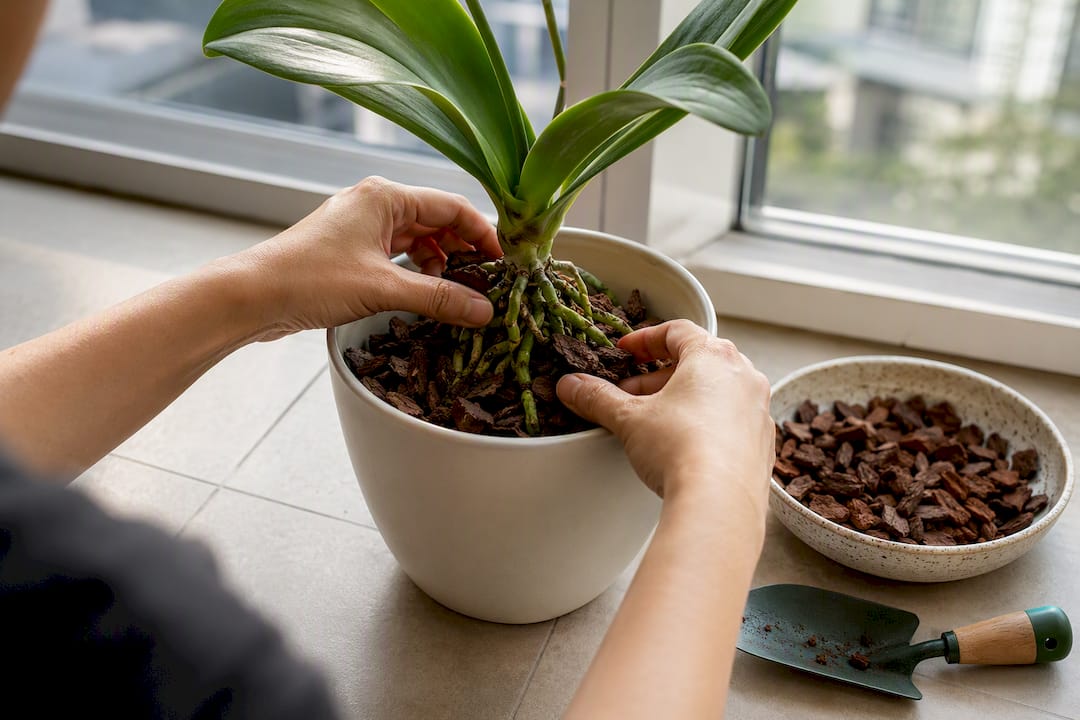
Get everything ready before you start: a clean pot one size up, your chosen bark grade, perlite or charcoal if you’re mixing your own blend, sanitized shears, a chopstick or thin stake, and a bucket for soaking.
Pro Tip: If you spot a large air gap after the second watering, work a chopstick gently into the gap and add a pinch more bark rather than repotting again from scratch.
Once the plant is settled, ease back on direct light for a week or two and hold off on fertilizer until new root growth appears. Sprout Lab’s orchid fertilizer schedule lays out a simple feeding cadence for plants freshly potted in bark.
Most orchid problems people blame on “bad luck” trace back to bark that broke down faster than they expected. That’s the case for composted Pinus radiata bark over generic pine bark: the curing process that stabilizes Orchiata also means fewer surprise repottings for someone juggling a full-time job and a windowsill full of Phalaenopsis. Consistent grading matters just as much as longevity. A bag where every piece is close to the labeled size means predictable watering, which is half the battle with bark culture. Orchiata Pinus radiata bark is available alongside a documented mix recipe for exactly this reason: fewer variables, less guesswork, healthier roots.
— Irwin Lee
The exact grade you actually need can be purchased instead of a one-size-fits-all bag, so you stop guessing which mm range fits your Vanda versus your seedling Phalaenopsis. Skip the trial-and-error most growers go through with generic bark that breaks down within a year.
Browse Orchiata Pinus radiata bark alongside ready-made blends on the planting mediums page, or explore the full Sprout Lab shop for potting tools, fertilizer, and accessories to round out your setup. If you’re also weighing pot materials, The Cork Store’s guide to cork planters covers a sustainable option worth considering alongside your bark choice. Grower guides are available with orders, so if your repot doesn’t go as planned, help is one message away. Pick your grade, grab a mix, and get that root system breathing again.
Fir bark is the most widely used type because it drains well and mimics the surface orchids grip in the wild, holding close to 80% of its weight in water when soaked. Composted Pinus radiata bark, like Orchiata, offers a longer-lasting alternative with more consistent particle size.
Composted, cured radiata bark brands tend to outperform raw, uncomposted bark because the curing process stabilizes the wood structure and reduces early nitrogen drawdown, according to Harwood’s Garden Supplies. Sprout Lab carries Orchiata Pinus radiata bark for growers who want that consistency without hunting through multiple suppliers.
Yes, bark decomposes over time as fungi break it down, which eventually compacts the mix and slows drainage. Signs it has gone bad include a sour smell, blackened fines, and roots that stay wet too long after watering.
Composted premium bark typically lasts 2 to 3 years, while generic pine bark often needs replacing within 6 to 18 months. UConn’s extension program recommends refreshing bark roughly once a year as a general rule, even before it looks visibly broken down.