Free shipping for order over $50

Free shipping for order over $50
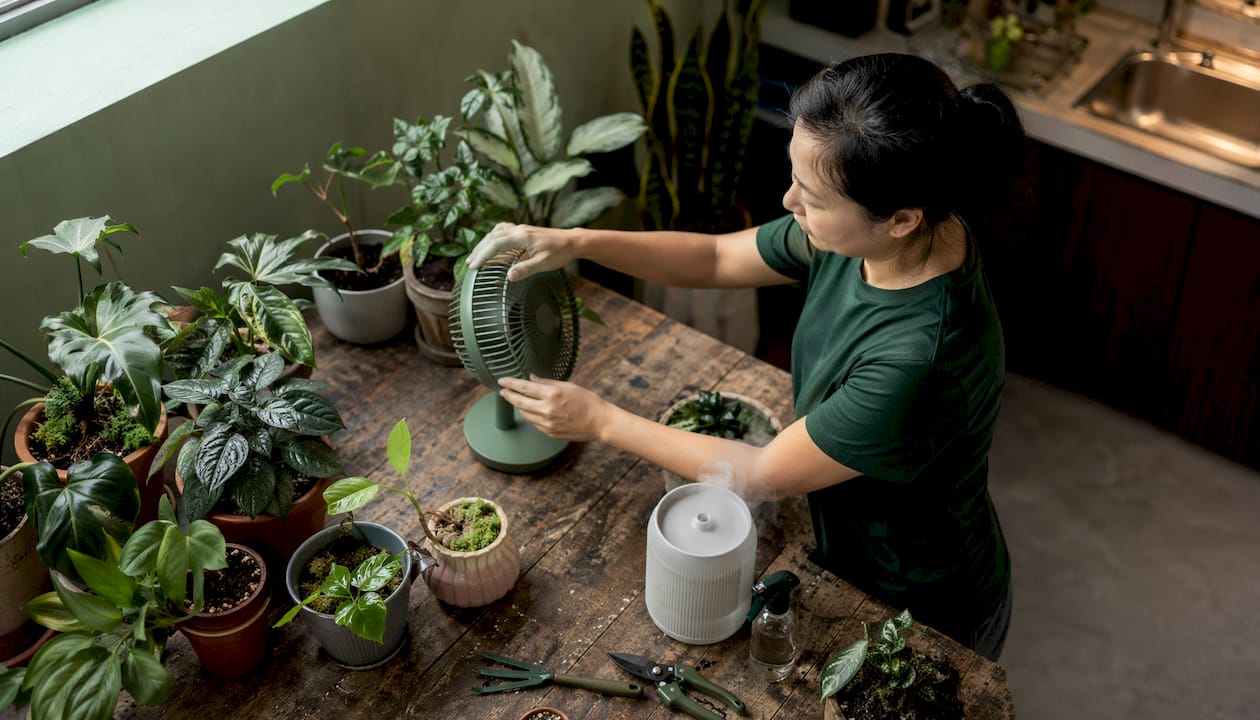
Good indoor plant airflow is defined as gentle, consistent air movement that supports gas exchange, prevents fungal disease, and keeps humidity from stagnating around leaves. For urban gardeners in Singapore, learning to optimise airflow for indoor plants is not optional. Singapore’s average relative humidity sits above 80%, and most HDB flats and condos run air conditioning around the clock. That combination creates a microclimate where stale, moist air collects between leaves, fungal spores thrive, and plants decline faster than most gardeners expect. The fix is specific and achievable, and it starts with understanding what your space is actually doing to your plants.
Singapore’s tropical climate creates airflow challenges that gardeners in temperate climates never face. High ambient humidity slows soil evaporation, which means roots stay wet longer and fungal pathogens find ideal conditions. The problem compounds indoors, where concrete walls and sealed windows in modern urban flats block natural cross-ventilation almost entirely.
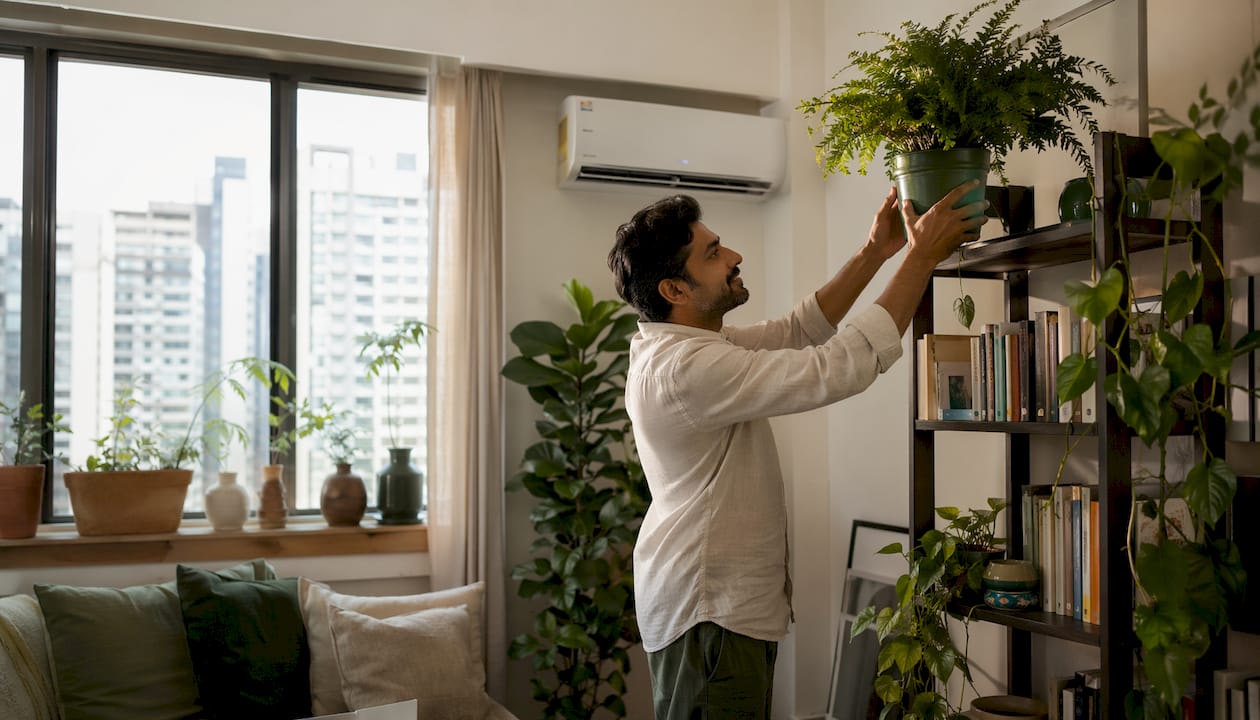
Air conditioning is the other major factor. AC units do lower humidity slightly, but they also push cold, fast-moving air in a concentrated stream. AC drafts cause rapid evaporation that damages leaf tissue in ways that look exactly like underwatering. Many gardeners respond by watering more, which worsens root rot rather than solving the actual problem.
Container choice also affects airflow at the root level. Plastic pots trap moisture and restrict oxygen movement through the growing medium. Terracotta pots facilitate evaporative cooling and root aeration in humid indoor environments, reducing waterlogging and fungal risk compared to plastic. Switching containers is one of the lowest-effort changes with the highest payoff for plant health in Singapore homes.
Pro Tip: Place a small thermometer-hygrometer near your plant cluster. If humidity reads above 85% consistently, you have a stagnant air problem, not a watering problem.
Key warning signs of poor indoor ventilation include:
Plant layout is the most underused airflow tool available to urban gardeners. Crowding plants together feels natural because it looks lush, but dense groupings trap humid air between leaves and create the exact stagnant microclimate that fungal disease needs to spread.
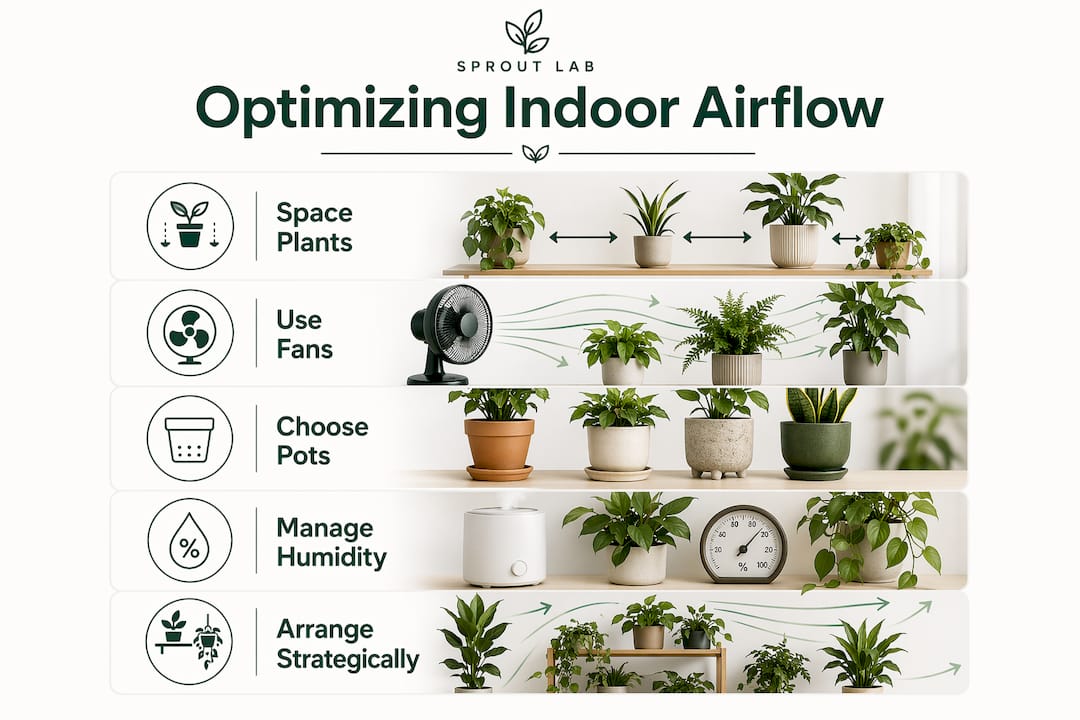
Spacing larger plants 18–24 inches apart reduces disease pressure by giving air room to move between canopies. That gap is not wasted space. It is the channel through which fresh air reaches every leaf surface. For smaller herbs and compact plants, 6–10 inches of clearance is sufficient.
Vertical gardening changes the equation for small spaces. Instead of spreading plants across a table or floor, a vertical trellis or wall-mounted planter stacks them in a column. Air moves more freely along a vertical surface than through a dense horizontal cluster. Sprout-lab’s modular systems are built specifically for this kind of compact urban growing, letting you grow more plants without sacrificing the airflow gaps that keep them healthy.
Follow these steps to rearrange your plants for better air circulation:
Pro Tip: If you grow herbs on a kitchen windowsill, stagger them in a zigzag pattern rather than a straight line. Air moves through a zigzag arrangement far more efficiently than through a row.
The right tools make airflow management consistent without requiring daily attention. The wrong setup, specifically a fan aimed directly at plants from close range, causes the same desiccation damage as a direct AC draft.
Oscillating fans on low settings create gentle, beneficial air movement without drying plants out. They also discourage fungal spores and pests from settling on leaf surfaces. Position the fan so it moves air across the room rather than directly at the plant cluster. A fan oscillating at 45 degrees in a corner reaches most of a small room without concentrating airflow on any single plant.
AC placement requires more attention. Air velocity drops roughly 50% for every doubling of distance from an outlet. Moving plants 2–4 feet away from a direct AC vent cuts the damaging draft force dramatically. For plants that cannot be moved, vent deflectors under $15 redirect cold air upward or sideways, and installation takes about three minutes.
Humidity management is the third piece of the airflow puzzle. The table below compares the two most common passive methods:
| Method | How it works | Effectiveness | Best for |
|---|---|---|---|
| Pebble tray | Water evaporates from pebbles beneath the pot | Consistent passive humidity | Plants near AC vents |
| Misting | Water sprayed directly on leaves | Lasts about 20 minutes before AC removes it | Short-term relief only |
Pebble trays win for Singapore homes because they work passively while the AC runs. Misting is not useless, but it requires repetition every hour to have any lasting effect in an air-conditioned room.
Grouping plants together also creates a shared humid microclimate. Each plant transpires water vapor, and a cluster of three or four plants raises local humidity noticeably. The key is grouping without crowding. Aim for clusters with visible gaps rather than pots touching each other.
Diagnosing airflow problems correctly saves weeks of futile treatment. Misdiagnosis of AC draft damage is common, and gardeners who mistake it for underwatering or nutrient deficiency end up overwatering or adding fertilizer to a plant that simply needs to be moved.
“Proper air circulation involves gentle air movement and fresh air exchange, not just wind tunnels. The goal is a steady, mild breeze that mimics outdoor conditions, not a concentrated cold blast from an AC unit or a fan set too high.”
The symptoms below help distinguish airflow problems from other causes:
Once you identify the cause, adjust in this order. First, move or shield the plant from the draft source. Second, improve spacing or add a low-speed fan. Third, adjust your watering schedule. New growth recovery after removing draft stress takes 2–4 weeks, so do not expect instant results. Consistent monitoring with a thermometer-hygrometer tells you whether your changes are actually shifting the microclimate.
For plants recovering from fungal infections, pruning affected leaves immediately reduces the spore load in the air around healthy foliage. Regular pruning and thinning are the most direct way to restore airflow through a dense canopy. Pair pruning with a soil check. If the growing medium is compacted or waterlogged, switching to an aerated mix with perlite or pumice will speed recovery significantly. Sprout-lab’s aerated soil mixes are formulated for exactly this kind of humid indoor environment.
You can also learn more about managing related environmental stress in Sprout-lab’s guide on plant heat stress in Singapore, which covers overlapping symptoms and fixes.
Good indoor plant airflow in Singapore requires spacing, container choice, fan placement, and humidity management working together, not any single fix applied in isolation.
| Point | Details |
|---|---|
| Distance from AC vents | Keep plants 2–4 feet from direct AC airflow to cut draft damage significantly. |
| Spacing between plants | Leave 18–24 inches between larger plants to prevent stagnant air and fungal spread. |
| Container material | Use terracotta or fabric pots to improve root aeration and reduce waterlogging. |
| Fan use | Run an oscillating fan on low, aimed across the room, not directly at plants. |
| Humidity management | Use pebble trays for consistent passive humidity; misting alone is not effective in AC rooms. |
The most common mistake I see is treating airflow as an afterthought. Gardeners spend hours researching fertilizers and grow lights, then place every plant in a tight row directly under an AC vent and wonder why leaves keep browning.
The second mistake is overcorrecting. Someone reads that fans help, buys a desk fan, points it straight at their Monstera on high, and creates a wind tunnel. Dense foliage in confined spaces does trap stagnant air, but the solution is gentle movement, not force. The goal is a breeze you can barely feel on your hand.
What actually works is incremental adjustment. Move one plant away from the vent. Swap one plastic pot for terracotta. Add one small fan on the lowest setting. Then wait two weeks and observe. Singapore’s humidity means problems develop fast, but plants also respond to improvements quickly when the changes are right. You do not need a complicated setup. You need to pay attention to what your plants are telling you, and then make one small change at a time.
— Luna
Urban gardeners in Singapore deal with real constraints: limited floor space, constant AC, and humidity that never lets up. Sprout-lab builds products specifically for that environment.
Sprout-lab’s automated hydroponic setups keep root zones aerated without relying on soil drainage, which removes one of the biggest airflow problems at the root level. Their premium soil mixes include perlite and pumice amendments that maintain air pockets in the growing medium even after repeated watering in humid conditions. With over 25,000 completed orders and a 4.9/5 star rating, Sprout-lab’s products have a track record in exactly the kind of small urban spaces where airflow matters most.
Fungal spots are a direct sign of stagnant air combined with high humidity. Improve spacing between plants, add a low-speed oscillating fan, and switch to terracotta pots to reduce moisture retention.
Keep plants at least 2–4 feet from a direct AC vent. Air velocity drops roughly 50% for every doubling of distance from the outlet, which dramatically reduces leaf damage.
Misting raises humidity for about 20 minutes before the AC cycle removes it. Pebble trays filled with water provide more consistent passive humidity without the repeated effort.
Terracotta is the best choice for Singapore’s humid indoor conditions. It allows evaporative cooling and oxygen movement through the pot wall, reducing waterlogging and fungal risk compared to plastic.
AC draft damage causes brown, crispy leaf edges on the side facing the vent, often with dry soil. Underwatering affects the whole plant more evenly. Moving the plant away from the vent and observing new growth over 2–4 weeks confirms the diagnosis.