Free shipping for order over $50

Free shipping for order over $50
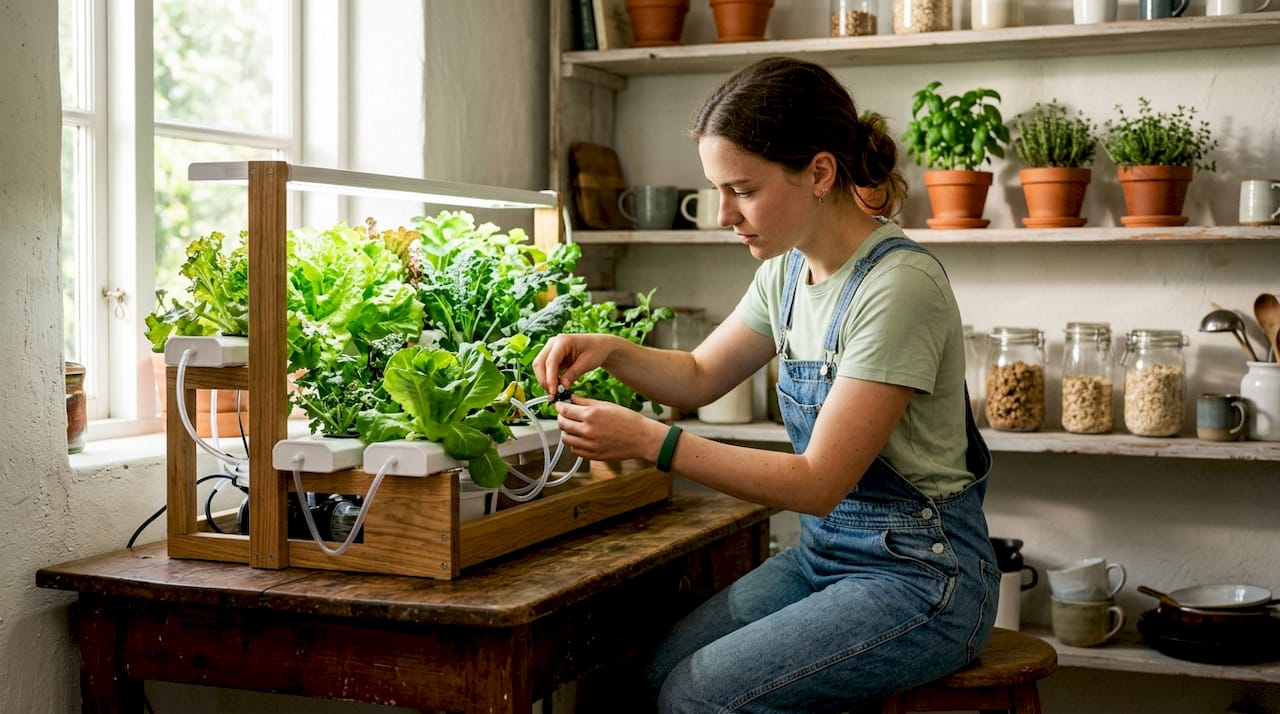
Hydroponics is defined as growing plants in nutrient-rich water without soil, and it outperforms traditional soil gardening indoors by a measurable margin. Plants grown hydroponically reach maturity 30–50% faster and yield 20–50% more food per square foot than soil-grown plants under similar conditions. That speed advantage matters enormously when you are working with a small apartment window or a single grow shelf. Hydroponic systems also use 90–95% less water than soil gardening by recirculating water through closed loops instead of losing it to evaporation and runoff. For urban growers with limited space, limited water, and zero outdoor access, understanding why hydroponics beats soil indoors is the first step toward growing real food at home.
The core reason hydroponics outperforms soil indoors comes down to root access. In soil, plant roots spend energy searching through dense material to find water and nutrients. In a hydroponic system, those nutrients arrive directly at the root zone in a dissolved solution, so the plant redirects that energy into leaf and fruit production instead.
The results are concrete. Hydroponic plants grow 30–50% faster than their soil-grown counterparts and produce significantly more food per square foot. That means you can run multiple harvests per year from the same system, which is a major advantage when you are growing lettuce or herbs in a studio apartment.
Controlled indoor environments amplify this effect further. You set the light schedule, the temperature, and the humidity. The plant never experiences a cold snap, a dry spell, or a cloudy week. Every variable that would slow growth outdoors gets removed.
Pro Tip: Set your grow light timer on day one and never adjust it mid-cycle. Consistent light schedules are one of the biggest drivers of fast, even growth in indoor hydroponic systems.
Soil loses water in three ways: evaporation from the surface, runoff past the root zone, and absorption into the growing medium itself. Only a fraction of what you pour into a soil pot actually reaches the plant. Hydroponic systems eliminate all three loss points.
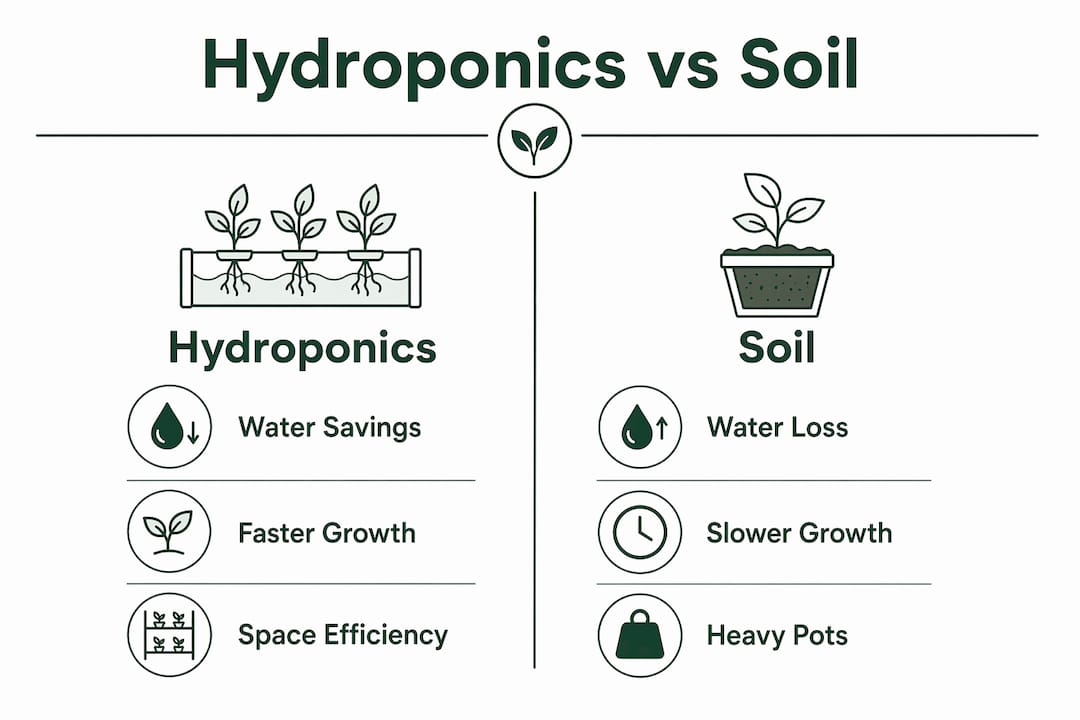
A closed-loop recirculating system collects unused nutrient solution and pumps it back through the system repeatedly. The only water the system loses is what the plant transpires through its leaves. That efficiency adds up to 90–95% less water used compared to soil growing. For an urban grower in a water-metered apartment, that difference is significant.
The practical steps to maximize water efficiency in a home hydroponic setup are straightforward:
The grow-your-own movement in dense urban areas has accelerated partly because of this water efficiency. Growing food indoors with a hydroponic system uses a fraction of the resources that outdoor soil gardening demands, making it a practical choice even in regulated or water-scarce environments.
Hydroponics rewards precision, but it punishes neglect faster than soil does. Soil provides a natural buffer for watering mistakes and nutrient fluctuations, which makes it more forgiving for complete beginners. Hydroponics has no such buffer. When something goes wrong, it goes wrong quickly.
The most common challenge is pH management. Hydroponic plants absorb nutrients only within a narrow pH window, typically 5.5–6.5. Outside that range, nutrients become chemically unavailable even if they are present in the solution. Learning to manage pH in hydroponics is not optional. It is the single most important daily task in any hydroponic system.
Power dependency is the other major risk. Indoor hydroponics requires electricity for pumps, lighting, and automation. A power outage that lasts more than a day can kill plants in active systems because roots dry out within 24–48 hours without recirculating solution.
Pro Tip: Set a phone alarm for the same time each morning to check pH and EC. Five minutes of daily monitoring prevents the kind of crash that wipes out weeks of growth.
Automated pH and EC monitoring with alarms and backup power systems are now considered best practice for home growers who want to avoid catastrophic crop loss. Automation tools have dropped in price significantly, making them accessible even for beginners.
Space is the defining constraint for most urban growers. A soil pot takes up floor space, weighs several pounds when wet, and grows one plant per container. A vertical hydroponic tower grows dozens of plants in the same footprint, stacked upward rather than spread outward.
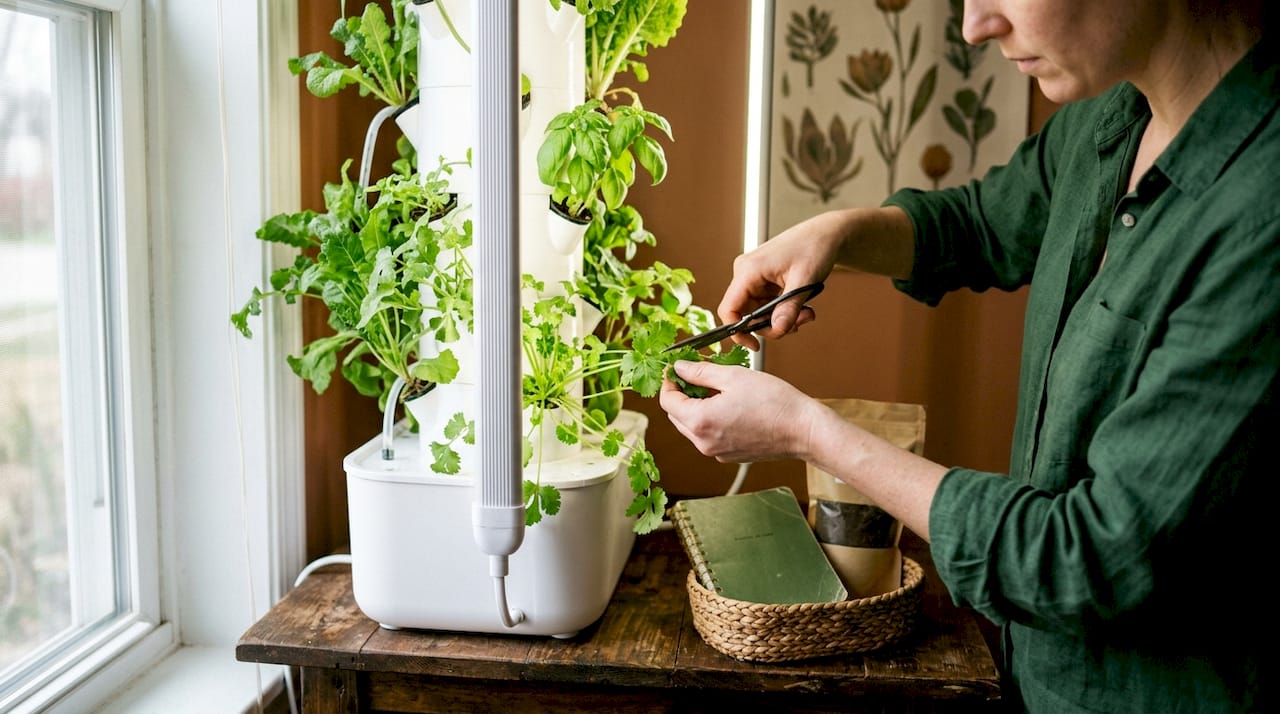
Vertical hydroponic systems and NFT channels generate significantly more food per square foot indoors by using vertical space that soil pots simply cannot access. Sprout-lab’s modular hydroponic setup, for example, allows growers to cultivate up to 56 plants in a compact area. That density is impossible with traditional soil containers.
| Setup type | Footprint | Plants per sq ft | Soil required |
|---|---|---|---|
| Standard soil pots | Large | 1–2 | Yes |
| Tabletop hydroponic unit | Small | 4–8 | No |
| Vertical hydroponic tower | Minimal | 10–20+ | No |
| Modular wall system | Wall-mounted | 15–30+ | No |
Weight is another practical advantage. Soil pots become extremely heavy when wet, which limits where you can place them in an apartment. Hydroponic systems use lightweight growing media like clay pebbles or rockwool, and the reservoir sits at the base rather than distributed across every container.
One planning detail that catches beginners off guard: vertical towers require vertical clearance for grow lights positioned 6–12 inches above the plant canopy. A tower that is four feet tall needs at least five to six feet of total ceiling clearance to work properly. Measure your space before you buy a system.
Not every plant thrives in hydroponics, and knowing the difference saves you time and money. Leafy greens, herbs, and small fruiting plants excel in hydroponic systems because they have shallow roots, fast growth cycles, and high demand for consistent moisture and nutrients.
Root vegetables are the exception. Carrots, beets, and potatoes need depth, texture, and the physical resistance of soil to develop properly. Trying to grow them hydroponically indoors produces poor results and frustration. Stick to what the method does best.
The best plants to start with in an indoor hydroponic system include:
For a detailed breakdown of which varieties perform best in specific system types, Sprout-lab’s guide to plants for your hydroponic system covers growth habits, spacing, and nutrient requirements by crop. Flavor and nutritional content in hydroponically grown produce can match or exceed soil-grown equivalents when the nutrient solution is properly balanced.
Hydroponics outperforms soil indoors because it delivers nutrients directly to roots, conserves up to 95% more water, and multiplies usable growing space through vertical systems, making it the most productive method for urban food growing.
| Point | Details |
|---|---|
| Faster growth and higher yields | Hydroponic plants grow 30–50% faster and yield 20–50% more food per square foot than soil-grown plants. |
| Dramatic water savings | Closed-loop systems use 90–95% less water than soil by eliminating evaporation and runoff losses. |
| Space multiplication | Vertical and modular systems grow far more plants per square foot than soil pots in the same indoor area. |
| Higher technical demands | Daily pH and EC monitoring are required; power outages can kill plants within 24–48 hours without a buffer. |
| Best crops to start with | Lettuce, herbs, and leafy greens thrive hydroponically indoors; root vegetables generally perform better in soil. |
Most beginners come to hydroponics expecting a shortcut. They see the yield numbers and the water savings and assume the system does the work for them. The ones who succeed quickly are the ones who treat it like a discipline, not a gadget.
Soil is genuinely better for certain growers. If you want to put a pot on a windowsill, water it twice a week, and not think about it, soil is the right choice. There is no shame in that. Soil’s forgiving nature is a real advantage for people who are not ready to check numbers every morning.
But if you are an urban grower who wants to produce meaningful quantities of food in a small space, hydroponics is the only method that actually scales indoors. The grow-your-own movement in cities is driven by people who want real harvests, not decorative plants. Hydroponics delivers that.
The technology has also gotten much easier. Automated systems handle pH dosing, nutrient delivery, and lighting schedules with minimal input. What used to require a hobbyist’s level of dedication now runs on a timer and a phone notification. The barrier is lower than it has ever been, and the results are better than soil can match indoors.
My honest advice: start with a simple reservoir system and grow lettuce for your first cycle. Get comfortable with pH and EC before you add complexity. Then scale up when the method feels natural, not before.
— Luna
Growing food indoors without soil is more accessible than most beginners expect, especially when the system is designed for small spaces and busy schedules.
Sprout-lab builds hydroponic systems specifically for urban growers who want real results without a steep learning curve. Their automated hydroponic setups handle the repetitive tasks like nutrient delivery and lighting cycles, so you spend less time managing and more time harvesting. For growers who prefer a simpler entry point, the reservoir hydroponic system guide walks through setup step by step with no prior experience required. Sprout-lab’s modular systems support up to 56 plants in a compact footprint, and their 4.9/5 star rating across more than 25,000 completed orders reflects what consistent, well-designed systems actually produce.
Hydroponics delivers nutrients directly to plant roots, enabling 30–50% faster growth and 20–50% higher yields per square foot compared to soil-grown plants under similar indoor conditions.
Hydroponic closed-loop systems use 90–95% less water than soil gardening by recirculating nutrient solution and eliminating losses from evaporation and runoff.
Hydroponics requires daily pH and EC monitoring, and system failures can harm plants within 24–48 hours. Soil is more forgiving, making it easier for complete beginners with no monitoring routine.
Lettuce, basil, spinach, kale, and culinary herbs perform best in indoor hydroponic systems. Root vegetables like carrots and potatoes generally need soil for proper development.
Vertical and modular hydroponic systems can grow dozens of plants in a very small footprint. Plan for 6–12 inches of clearance above the plant canopy for grow lights when using tower systems.