Free shipping for order over $50

Free shipping for order over $50
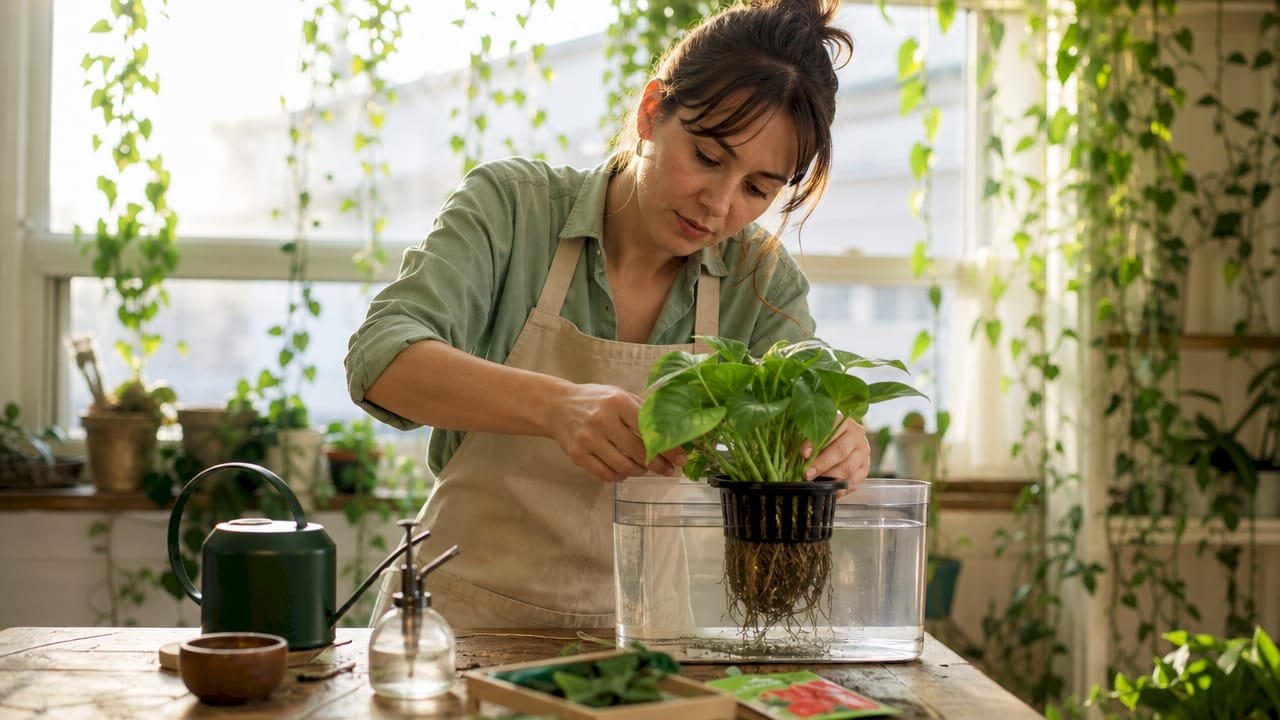
A reservoir hydroponic system is a soilless growing method where plant roots sit in or above a tank of nutrient-rich water, giving them direct access to food, oxygen, and moisture around the clock. The reservoir itself is the control center of the entire setup, managing water volume, dissolved oxygen, temperature, and nutrient concentration simultaneously. Deep Water Culture (DWC) is the most widely recognized reservoir-based method, suspending plant roots directly in aerated solution. Larger reservoirs buffer nutrient and temperature swings far better than small ones, making a 20-gallon tank a smarter starting point than a 5-gallon bucket for beginners. Getting this foundation right matters more than any other decision you will make as a new grower.
A reservoir hydroponic system replaces soil with a tank of water mixed with dissolved nutrients. Plants sit in net pots above or inside the tank, with their roots reaching down into the solution. An air pump pushes oxygen through an air stone submerged in the water, keeping roots from suffocating. The result is a closed loop where plants get everything they need without a single handful of dirt.
The industry term for the most common version of this setup is Deep Water Culture. DWC is defined by roots that hang directly in oxygenated nutrient solution rather than being misted or flooded on a timer. That constant contact with solution is what drives the speed advantage. Lettuce harvests in 30–45 days in a well-managed DWC reservoir, compared to 60–75 days in soil. That difference is not a small bonus. It is the reason urban gardeners with limited space and time choose reservoir systems over every other hydroponic system type.
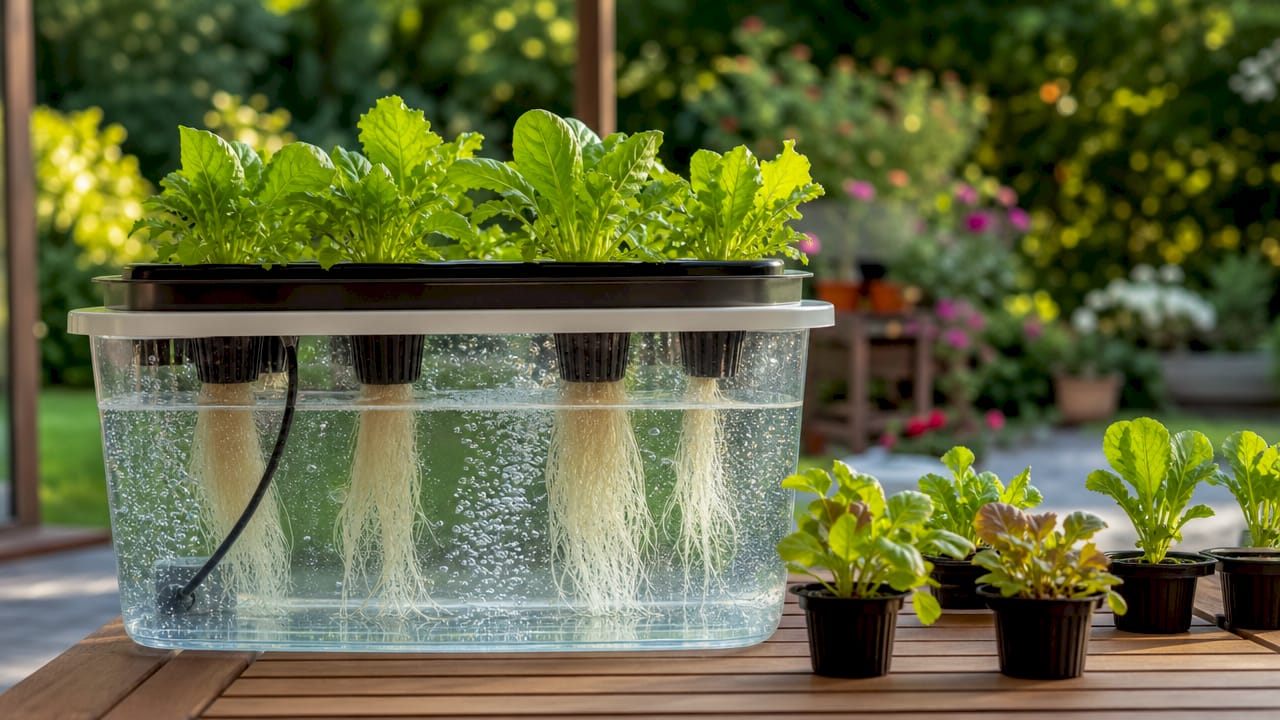
The reservoir also acts as a buffer. A larger water volume dilutes sudden pH spikes, nutrient imbalances, and temperature swings before they reach plant roots. That buffering effect is why experienced growers size up their tanks even when growing just a few plants.
Every reservoir system shares the same core parts, and each one has a specific job.
Pro Tip: Buy a pH and EC meter before you buy anything else. You cannot manage a reservoir system without knowing what is in the water.
These components work together as a system. Remove any one of them and plant health drops fast. A lid without a light-blocking tank still grows algae. An air stone without a check valve risks pump failure. The setup only works when all parts are in place.
Reservoir management matters more than fertilizer brand selection. That is not an opinion. Root rot, the most common cause of crop failure in reservoir systems, comes from poor aeration and warm water, not from using the wrong nutrient line.
The four variables you must monitor are pH, EC, temperature, and dissolved oxygen. Here is what each one does and what happens when it goes wrong.
Pro Tip: Wrap your reservoir in reflective insulation or a neoprene sleeve. It blocks heat from grow lights and keeps water temperature stable without a chiller.
Larger reservoirs reduce how often you need to intervene. A bigger water volume dilutes pH and nutrient fluctuations naturally, so you spend less time correcting and more time growing. Start with at least 10 gallons per plant for leafy greens, and go larger if you add fruiting crops.
The best plants for hydroponics beginners are crops with shallow roots and fast growth cycles. Reservoir systems reward these plants with speed and consistency that soil simply cannot match.
For plant spacing, use 6-inch net pots for leafy greens and herbs, and 8-inch or larger for tomatoes. Crowding plants reduces airflow and light penetration, which slows growth and increases disease risk. You can find a full breakdown of crops suited to reservoir setups to match your space and goals.
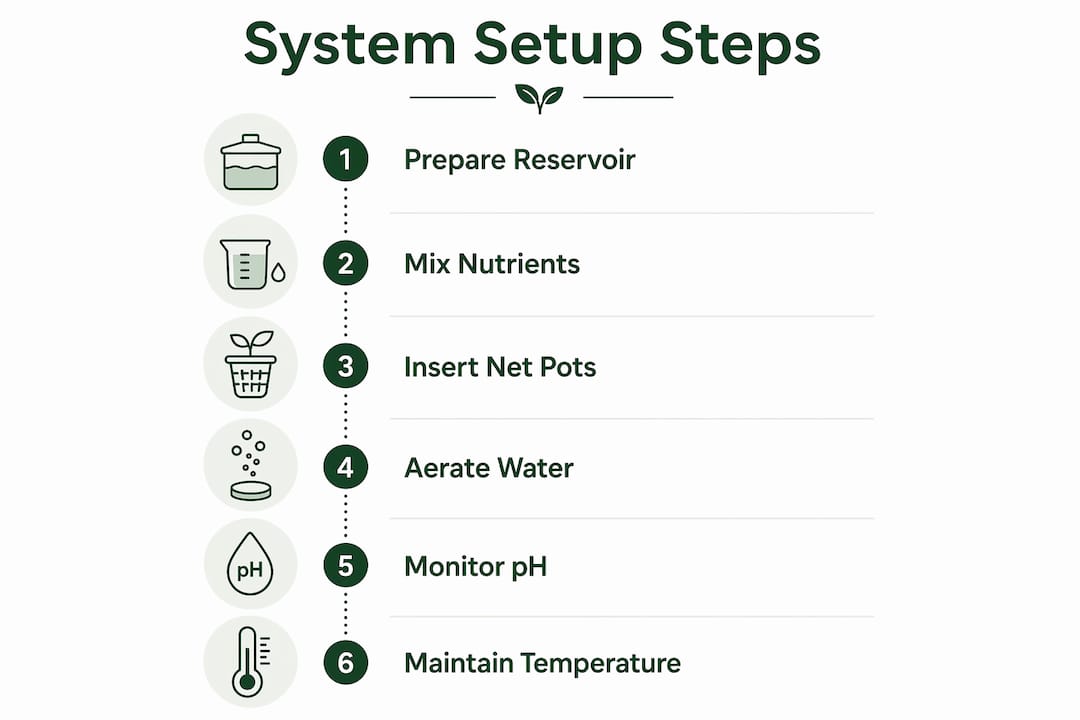
Building a basic reservoir system takes an afternoon. Maintaining it takes about 10 minutes a day once you have the routine down.
| Variable | Target range | Check frequency |
|---|---|---|
| pH | 5.8–6.2 | Daily |
| EC | 1.2–2.4 mS/cm | Every 2–3 days |
| Water temperature | 65°F–72°F | Daily |
| Solution change | Full refresh | Every 7–14 days |
Pro Tip: Always add nutrients to water, not water to nutrients. Mixing in the wrong order can cause nutrient compounds to bind together and fall out of solution.
For a full walkthrough on building your first setup, the DIY hydroponic systems guide covers every step with beginner-friendly detail.
A reservoir hydroponic system succeeds or fails based on how well you manage aeration, temperature, and pH, not on which nutrient brand you choose.
| Point | Details |
|---|---|
| Reservoir size matters | A 20-gallon tank buffers pH and temperature swings far better than a 5-gallon one. |
| Aeration runs 24/7 | Turning off the air pump at night is the fastest way to cause root rot. |
| Best beginner crops | Lettuce, basil, and cilantro grow fastest and require the least nutrient management. |
| Light exclusion is non-negotiable | Opaque containers and tight lids eliminate nearly all algae problems in reservoir systems. |
| Monitor before you adjust | Test pH and EC daily for the first two weeks before making any solution changes. |
When I started growing hydroponically, I spent a lot of time obsessing over nutrient brands. I read forums comparing formulas, watched videos debating two-part versus three-part solutions, and bought three different products before my first harvest. My plants still struggled.
The problem was never the nutrients. It was the water temperature. My reservoir sat near a south-facing window, and the solution crept above 75°F on warm afternoons. Warm water holds less dissolved oxygen, and my roots were slowly suffocating. Once I moved the reservoir to a cooler spot and added a small aquarium pump running continuously, the difference was visible within 48 hours.
That experience taught me something most beginner guides skip. The reservoir is a biological environment, not just a bucket of water. Treating it like one means blocking light, keeping solution well mixed, and holding temperature steady. Those three habits do more for your plants than any premium nutrient product.
My advice for anyone starting out: keep the first system small. A single 10-gallon bin with four net pots teaches you everything you need to know. Once you can hold pH stable for two weeks straight and your roots look white and healthy, you are ready to scale. Sprout-lab’s modular systems make that scaling step much less intimidating, because the core management principles stay the same regardless of how many plants you add.
— Luna
Sprout-lab designs hydroponic systems specifically for people growing food in small urban spaces, with no prior experience required. Their modular setup fits up to 56 plants in a compact footprint, and the garden systems for busy growers page shows exactly how each configuration works for different space sizes and crop goals.
Sprout-lab holds a 4.9/5 star rating across more than 25,000 completed orders, which reflects how consistently their systems perform for beginners. If you want to grow food indoors without building everything from scratch, their passive hydroponic setup guide is the clearest starting point available. You get the benefits of reservoir growing without the trial-and-error phase most beginners go through alone.
A reservoir hydroponic system is a soilless growing method where plants receive nutrients from a tank of water mixed with dissolved fertilizers. The reservoir manages water, nutrients, oxygen, and temperature to support plant growth without soil.
Deep Water Culture (DWC) is a specific reservoir system type where plant roots hang directly in oxygenated nutrient solution. It differs from other hydroponic system types because roots stay submerged continuously rather than being flooded or misted on a timer.
Change the full reservoir solution every 7–14 days. Between changes, top off with plain pH-adjusted water as the level drops from plant uptake and evaporation.
Lettuce, basil, and cilantro are the best plants for hydroponics beginners. Lettuce harvests in 30–45 days, cilantro in 21–28 days, and both require minimal nutrient management compared to fruiting crops.
Brown roots in a reservoir system almost always indicate root rot caused by warm water or insufficient aeration. Keep water temperature between 65°F and 72°F and run the air pump continuously to maintain dissolved oxygen levels.