Free shipping for order over $50

Free shipping for order over $50
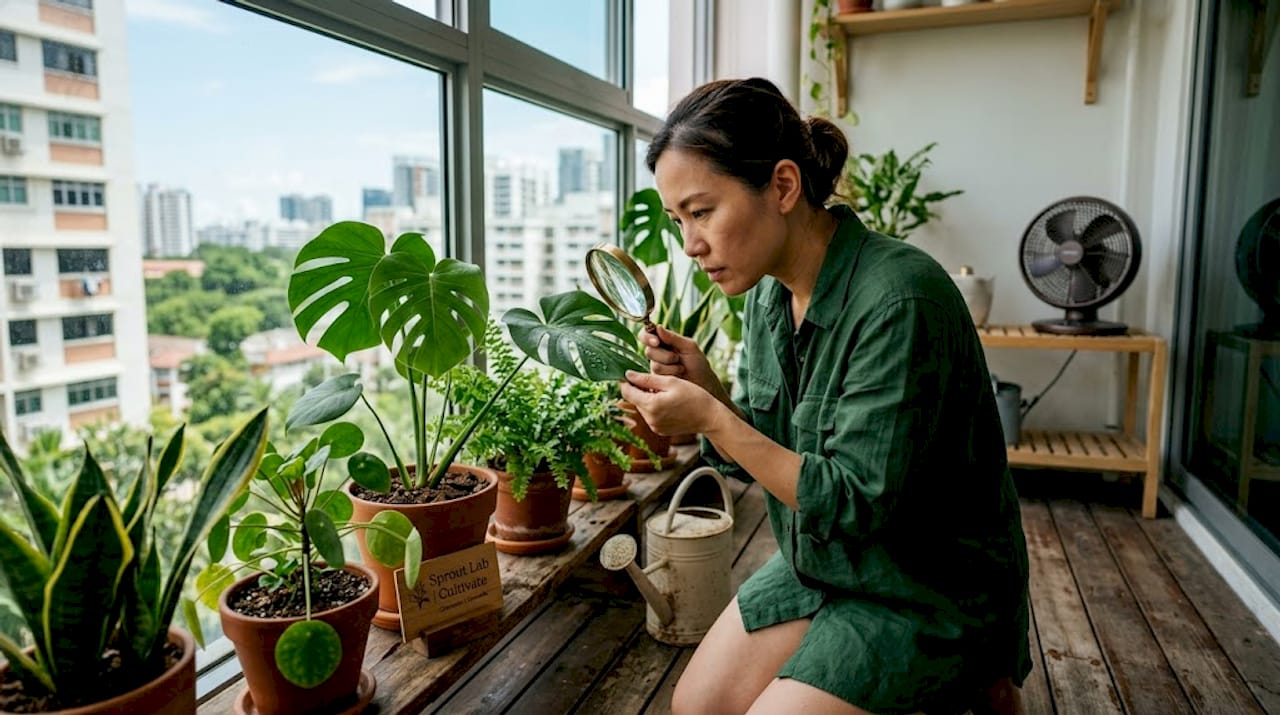
You’re growing mint on your windowsill or lettuce in a hydroponic tray, and then you spot it: tiny specks on the leaves, sticky residue on the stems, or soil that seems to move. Singapore indoor garden pest control is genuinely harder than it sounds. The tropical humidity outside and the air-conditioned chill inside create a microclimate that certain pests absolutely love. This guide gives you a clear, science-grounded path from identifying what’s attacking your plants to treating it effectively and keeping it gone, without guesswork or wasted money on the wrong products.
| Point | Details |
|---|---|
| Identify before treating | Use a magnifying tool to confirm pest type before applying any spray or chemical. |
| Quarantine new plants | Hold new plants 7 to 10 days (up to 30) before placing them near your collection. |
| Control your environment | Keep humidity at 50 to 60% to stop spider mite reproduction dead in its tracks. |
| Treat on a weekly cycle | Pests like thrips have 30-day life cycles that require weekly retreatment to fully break. |
| Soil is part of the battle | Replacing the top inch of soil or using BTi products is non-negotiable for fungus gnats and thrips. |
Before you buy a single spray bottle, you need to know what pest you’re dealing with. Misidentification is the fastest way to waste three weeks on the wrong treatment while the actual infestation gets worse.
Here are the six most common culprits you’ll encounter in Singapore homes:
A 10x jeweler’s loupe or even a phone macro lens is worth owning. Magnification tools help gardeners avoid unnecessary chemical use by confirming actual pest presence rather than reacting to cosmetic damage. What looks like mite damage can be sunburn, mineral buildup, or fungal spotting — each requiring a completely different response.
Environmental conditions in Singapore homes strongly influence which pests show up. Air conditioning keeps indoor humidity low, which makes spider mites far more likely than in naturally ventilated spaces. Poor airflow in compact HDB or condo gardens creates stagnant zones where fungus gnats and thrips thrive. Understanding this context is part of pest management for houseplants that actually holds up long term.
Pro Tip: Check the undersides of leaves first. Most pests colonize there because it’s protected from light and direct spray. If you’re only checking the tops of your leaves, you’re missing 80% of early infestations.
Good pest control starts before any spray touches a leaf. The preparation phase determines whether your treatment sticks or whether you’re back at square one in two weeks.
Follow these steps every time, especially when bringing in new plants:
Pro Tip: Skip the garden soil from outside. Introduce only sterilized potting mixes. Garden soil routinely carries pest eggs in soil that hatch once they’re warm and indoors. Use sterile mixes from a reliable source, and you remove one major entry point entirely.
Once you’ve confirmed the pest and prepped your space, here’s how to treat effectively. This is where most guides get vague. This one won’t.
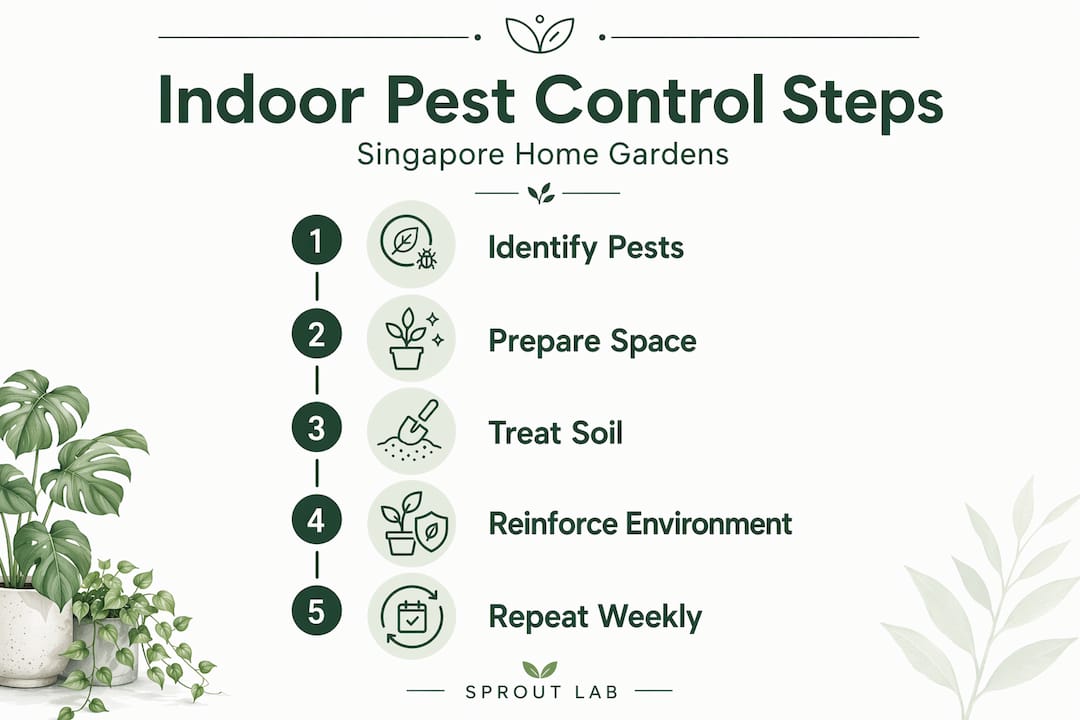
Step 1: Physical removal first. Wash plants in a gentle stream of water, paying close attention to leaf undersides. Swab mealybugs and scale with a cotton bud dipped in 70% isopropyl alcohol. Prune heavily infested leaves or branches and seal them in a bag before disposing.
Step 2: Apply organic sprays. These are your primary treatment tools and the best pest control for indoor gardens growing edibles:
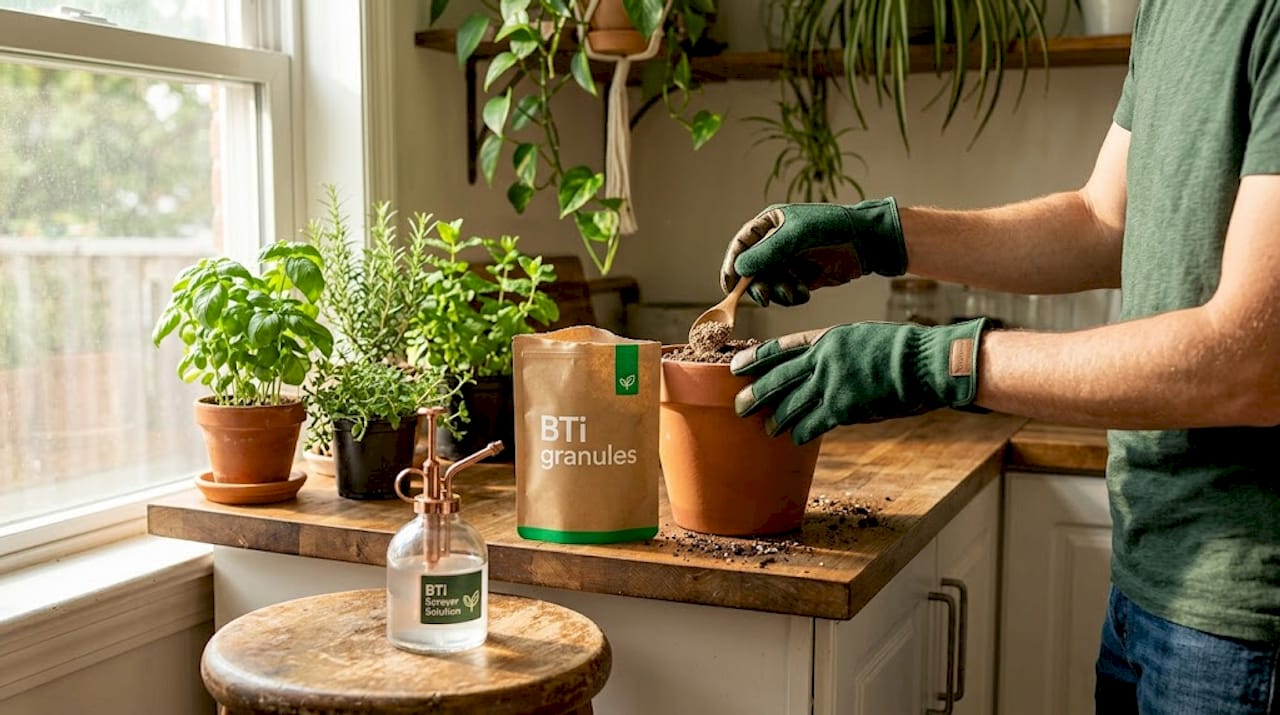
Step 3: Treat the soil. This step gets skipped constantly, and it’s why treatments fail. Ignoring the soil habitat for pests like thrips is the most common failure point. Remove and replace the top one to two inches of potting mix. For fungus gnats, apply a BTi (Bacillus thuringiensis israelensis) solution to the soil. BTi is a naturally occurring bacteria that kills gnat larvae without harming plants or people.
Step 4: Reinforce the environment. Consistent airflow disrupts pest colonization. Oscillating fans near plants prevent stagnation without drying out leaves excessively. Keep this running throughout your treatment period.
Step 5: Repeat weekly. Thrips have a lifecycle of up to 30 days. A single treatment only hits the adults present at that moment. Weekly retreatment breaks the cycle by targeting newly hatched larvae before they mature and reproduce again. Most indoor pest infestations require four to six consecutive weekly treatments.
Step 6: Escalate to chemical controls only when necessary. Systemic pesticides like imidacloprid work well for severe mealybug or scale infestations, but they move through plant tissue, which matters for edibles. Use only products labeled safe for food crops, follow dosage instructions precisely, and observe the pre-harvest interval listed on the label.
Pro Tip: Never apply any oil or soap spray to a plant that’s already under heat stress or water stress. Test your spray on a single leaf and wait 24 hours before treating the whole plant. This 24-hour test has saved many growers from compounding a pest problem with chemical burn.
Getting the treatment wrong costs you weeks of work and sometimes the plant itself. Here are the pitfalls you need to watch for:
When should you give up on a plant? When more than 60% of the foliage is damaged, when root systems are visibly rotting from gnat larvae, or when the plant has stopped producing new growth after two full treatment cycles, disposal protects your other plants. Removing severely infested plants protects the overall collection more effectively than repeated failed treatments. It’s not a defeat. It’s the right call.
Treating a pest infestation is only half the job. Keeping it from coming back is the other half. Use this routine to stay ahead of problems before they become emergencies:
I’ve seen the full spectrum of indoor plant disasters, and here’s what I’ve genuinely learned: the gardeners who struggle most with pests are the ones chasing treatments rather than conditions.
Most pest control advice is treatment-first thinking. Spray this, apply that. What actually works long-term is creating an indoor environment where pests cannot establish themselves easily. Consistent airflow, humidity in the right range, healthy soil, and plants that aren’t stressed from erratic watering or too much fertilizer. Integrated pest management combining environment modification, physical removal, and organic sprays will outlast any single spray solution every time.
What I find most gardeners overlook in Singapore specifically is the air conditioning variable. Most pest guides are written for temperate climates where humidity is seasonally reliable. Here, you can step outside into 80% humidity and come back to a living room sitting at 35%. That swing is brutal for plants and a red carpet for spider mites. Addressing that gap with a humidifier is the single highest-return move in your pest prevention toolkit.
I also want to say this plainly: don’t be afraid to throw out a plant. I know it stings. You’ve cared for it for months. But one badly infested plant can seed your entire collection with pests in a week. The experienced gardeners I know treat a lost plant as useful data, not a failure. You learn the pest, refine your response, and protect the other 20.
— Luna
If you’re serious about indoor gardening pest solutions that hold up over time, the foundation matters as much as the treatment. Sprout-lab’s passive hydroponic system setup creates a growing environment that naturally reduces the soil-borne pest risks that plague traditional container gardens. No overwatered soil, no fungus gnat habitat, and far less rooting stress that invites infestation. Their premium soil mixes are formulated for plant health from the ground up, which means your plants are stronger and less susceptible to pest pressure in the first place. With over 25,000 completed orders and a 4.9/5 rating, Sprout-lab is the go-to resource for Singapore urban growers who want results they can eat.
Spider mites, thrips, fungus gnats, mealybugs, scale insects, and aphids are the most common. Air-conditioned environments with low humidity particularly favor spider mite outbreaks.
Weekly treatment is required to break most pest life cycles. Thrips, for example, have a 30-day lifecycle that demands consistent weekly retreatment over four to six weeks.
Yes, when diluted correctly and applied in the evening to avoid phototoxicity. Always observe a short pre-harvest waiting period of one to two days after application before consuming produce.
Let the top inch of soil dry between waterings, apply BTi solution to the soil, replace the top layer of potting mix, and place yellow sticky traps near soil level to monitor adult populations.
Quarantine new plants for at least 7 to 10 days, ideally up to 30 days, in a separate room away from your existing plants to allow any hidden eggs to hatch and be identified before introduction.