Free shipping for order over $50

Free shipping for order over $50
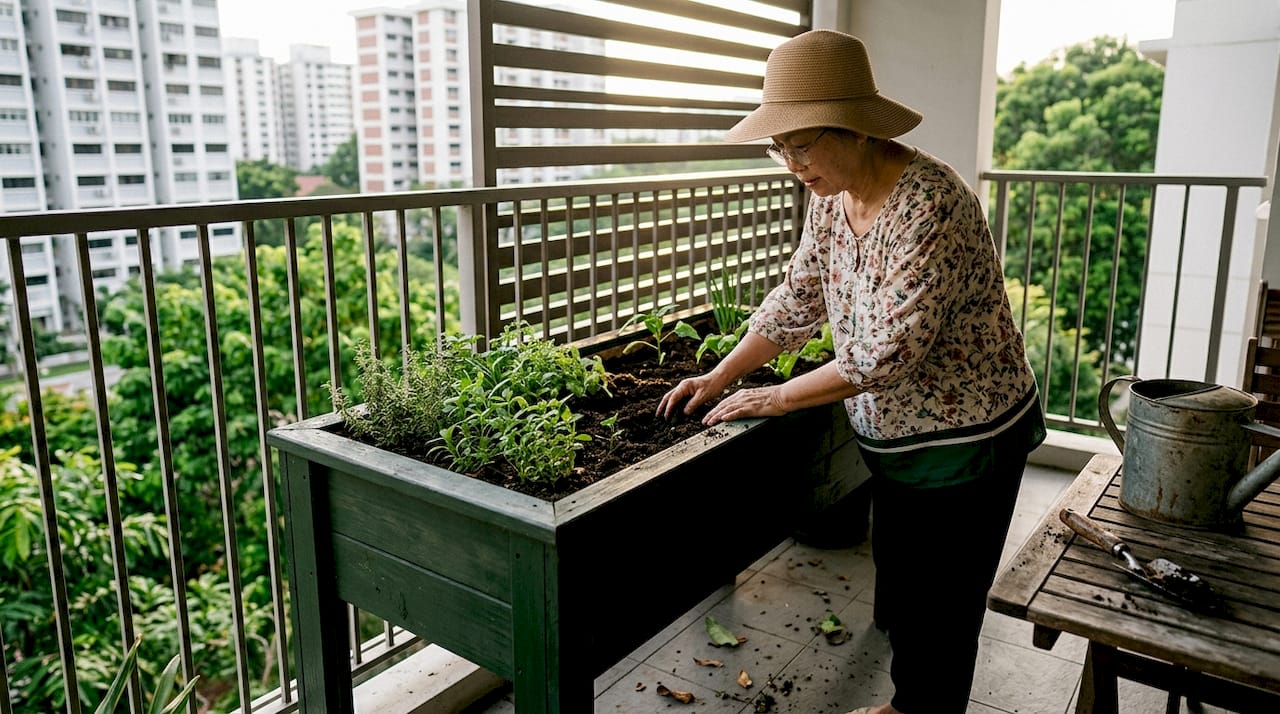
Many urban gardeners in Singapore start with a bag of soil from the nearest hardware store and assume they’re set. The truth is more complicated. Why soil quality matters in Singapore goes well beyond nutrition labels on a potting mix. Singapore’s tropical climate, dense urban environment, and heavy rainfall create conditions that make soil quality either your biggest asset or your most persistent obstacle. What works for a gardening project in a temperate country rarely translates here. This article breaks down what actually makes soil good or bad, what Singapore-specific challenges you’re up against, and how to fix them.
| Point | Details |
|---|---|
| Soil is a living system | Healthy soil contains microbes and fungi that convert organic matter into plant-available nutrients. |
| Singapore’s climate degrades soil fast | Heavy rainfall leaches nutrients quickly, making organic matter replenishment a regular task. |
| Organic matter is your best investment | Each 1% increase in soil organic matter significantly improves both nutrition and water retention. |
| Native plants reduce your workload | Plants suited to local soil biology need less fertilizer and show stronger resistance to pests. |
| Soil testing removes the guesswork | A basic pH and nutrient test tells you exactly what to fix before you plant anything. |
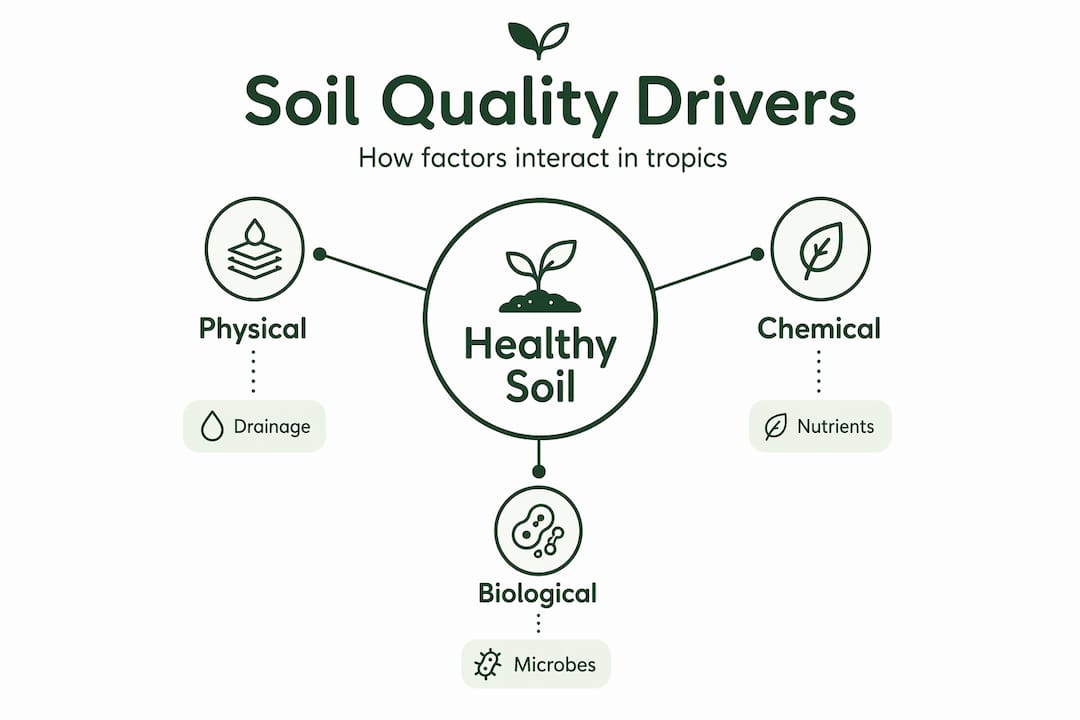
Soil quality is not just about whether something grows. It determines how fast, how healthy, and how consistently your plants produce food. Three dimensions define soil quality, and all three need to work together.
Physical properties cover texture, structure, drainage, and water retention. A soil that drains too fast starves roots of moisture between Singapore’s sudden downpours. A soil that holds water too long suffocates roots and invites fungal disease. The right structure gives roots space to grow and air to breathe.
Chemical properties cover pH, nutrient content, and organic matter. Most edible plants prefer a pH between 6.0 and 7.0. Outside that range, nutrients become chemically locked and unavailable even if they’re present. Organic matter acts as a slow-release nutrient bank. Each 1% increase in soil organic matter delivers the equivalent of 20 to 30 pounds of nitrogen per acre, improving both feeding and water retention simultaneously.
Biological properties are the most overlooked. Soil biodiversity drives nutrient cycling, plant productivity, climate regulation, and pathogen control. The microbes, fungi, and soil fauna in healthy soil convert raw organic matter into forms plants can absorb. Without them, you’re farming dirt, not soil.
In Singapore’s heat and humidity, all three dimensions interact constantly. The same conditions that make tropical plants grow fast also accelerate nutrient breakdown and soil degradation. That interaction is what makes soil fertility in Singapore a moving target rather than a one-time setup.
Pro Tip: Check your soil’s pH before buying any fertilizer. Many nutrient deficiencies in Singapore gardens are not actually caused by missing nutrients. They’re caused by pH levels that prevent existing nutrients from being absorbed.
Understanding local challenges is what separates gardeners who consistently produce food from those who fight the same problems season after season. Singapore’s soils present several obstacles that generic gardening advice simply doesn’t address.
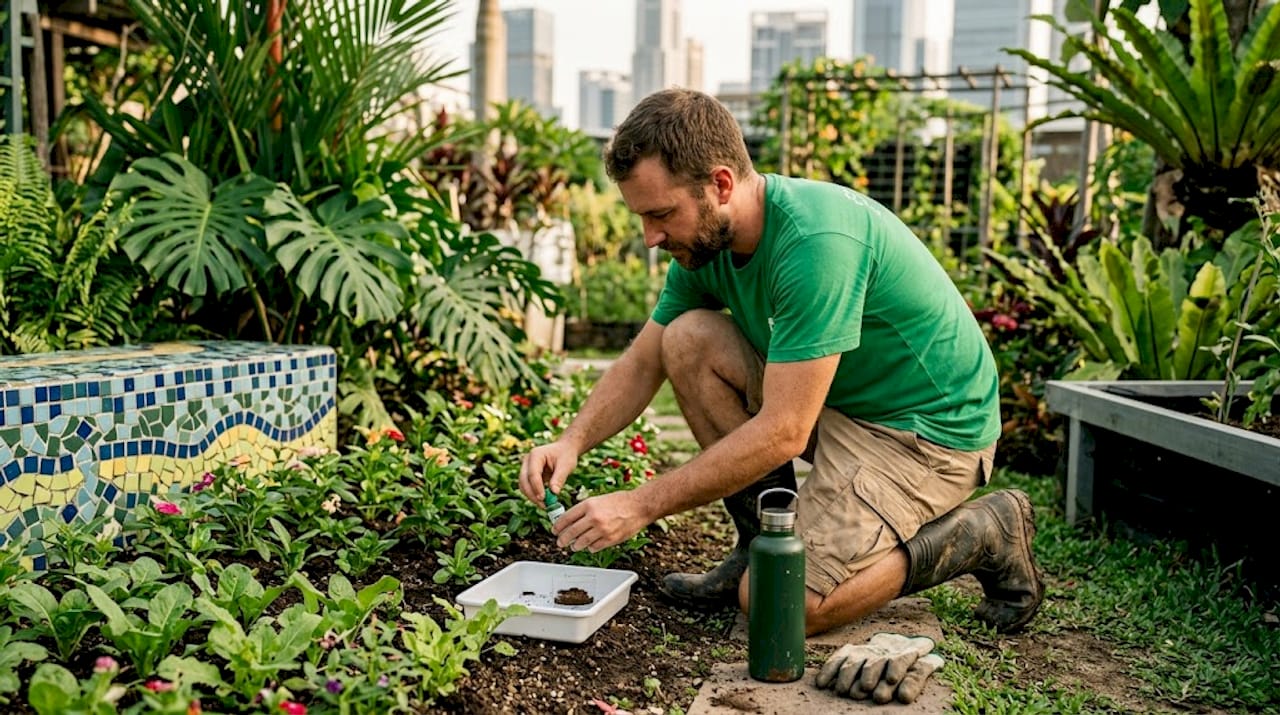
Most urban green spaces in Singapore sit on residual tropical soils formed from the weathering of granite and sedimentary rock over thousands of years. These soils tend to be acidic, low in nutrients, and dominated by clay minerals that compact easily under foot traffic and heavy pots.
Key challenges specific to Singapore urban gardens include:
“Singapore needs to ‘de-ornamentalise’ city greening to combat heat, infestations, says botanist.” — Prof. Veera Sekaran, as reported by Eco-Business
That insight applies directly to home gardeners. Singapore’s reliance on ornamental plants increases fertilizer demand and pest vulnerability compared to native species that work with local soil biology rather than against it. Growing native edibles and companion plants adapted to local conditions is one of the most underused strategies available to Singapore urban gardeners.
Investing time in your soil before the first seed goes in pays back in ways that show up in every harvest. Here is what improved soil quality directly delivers for small-scale food production in Singapore:
Faster, healthier plant growth. Better nutrient availability means plants spend less energy searching for food and more energy producing leaves, fruits, and roots. Leafy greens in well-amended soil can reach harvest size noticeably faster than those planted in depleted mixes.
Reduced irrigation needs. Good soil structure retains moisture between waterings. In a rooftop garden or balcony setup where you’re not always home to water, that buffer matters. It also reduces the wilting stress that weakens plants and makes them more susceptible to disease.
Natural pest and disease resistance. Soil biology enhances water holding capacity and supports plant immune responses. Plants grown in biologically active soil consistently show better resistance to common Singapore pests like fungus gnats, spider mites, and root rot pathogens.
Lower long-term costs. Healthy soil management reduces crop failure risk and decreases dependence on purchased fertilizers. When your soil cycles nutrients effectively, you spend less on inputs over time. That economic logic applies whether you’re farming acres or a balcony planter.
Urban environmental benefits. Biologically active soil supports the insects, worms, and microorganisms that make urban green spaces genuinely functional ecosystems. That matters for pollinators visiting your food garden and for Singapore’s broader push toward climate-resilient urban greenery.
Pro Tip: If you’re seeing yellowing leaves despite regular fertilizing, the problem is almost never more fertilizer. Test your soil first. Overfeeding in already-compacted soil drives imbalanced fertilization that degrades soil quality further over time.
You don’t need a lab or an agricultural degree to meaningfully improve your soil. These strategies work in Singapore’s conditions and fit the scale of balcony beds, community plots, and compact home gardens.
Start with a basic pH test kit, available at most garden centers for under $15. Test before you plant and again every three months. If your pH reads below 6.0, add agricultural lime to raise it gradually. If it reads above 7.5, sulfur-based amendments bring it down. Nutrient test strips give a rough picture of nitrogen, phosphorus, and potassium levels and tell you what to add rather than guessing.
This is the single highest-return activity for Singapore soil health. Add compost, worm castings, or aged organic matter with every planting cycle. You do not need large quantities. A 2 to 3 centimeter top dressing of compost worked into the top layer of your growing medium makes a measurable difference within one growing season.
| Soil type | Best use | Key limitation |
|---|---|---|
| Standard potting mix | Fast-growing herbs, seedlings | Low in biological activity |
| Approved soil mix (3:1:1) | Raised beds, larger vegetables | Needs organic matter added regularly |
| Coco coir blend | Water-sensitive crops, containers | Lacks nutrients, requires feeding |
| Native soil amended | Ground-level plots | Needs testing before use |
A balanced approved soil mix using a 3:1:1 ratio of topsoil, sand, and organic matter is the island-wide standard for a reason. It balances drainage and retention for Singapore’s rainfall patterns while giving roots room to breathe.
Check the Sprout-lab guide on water and soil quality for more on how the two interact in Singapore home gardens.
I’ve watched a lot of gardeners in Singapore pour money into seeds, grow lights, and gadgets while treating soil as an afterthought. That order of priorities is backwards, and I say that from experience.
The most counterintuitive thing I’ve learned is this: most struggling gardens are not under-fertilized. They’re biologically dead. When you treat soil as a sterile medium, you skip the microbes and fungi that actually make nutrients available. You end up in a cycle of buying more fertilizer to compensate for what a living soil would do for free.
What actually works is slowing down and building soil before the growing season. Adding compost, keeping the soil surface covered, and avoiding synthetic inputs that kill off microbial populations. I’ve seen balcony gardens in Singapore go from chronically struggling to genuinely productive within two growing cycles using nothing more than compost top-dressing and a pH adjustment.
The native plant angle is also dramatically underused. Most gardeners stick with ornamental mixes because that’s what the stores push. But integrating local species, even as companion plants, shifts the soil biology in ways that reduce pest pressure and fertilizer need over time. Soil is a living ecosystem worth more than the bag it came in.
— Luna
Starting with quality soil is the most effective single step any Singapore urban gardener can take. At Sprout-lab, we’ve seen it directly in customer results: faster germination, healthier plants, and fewer crop failures all trace back to what’s in the growing medium before the first seed goes in.
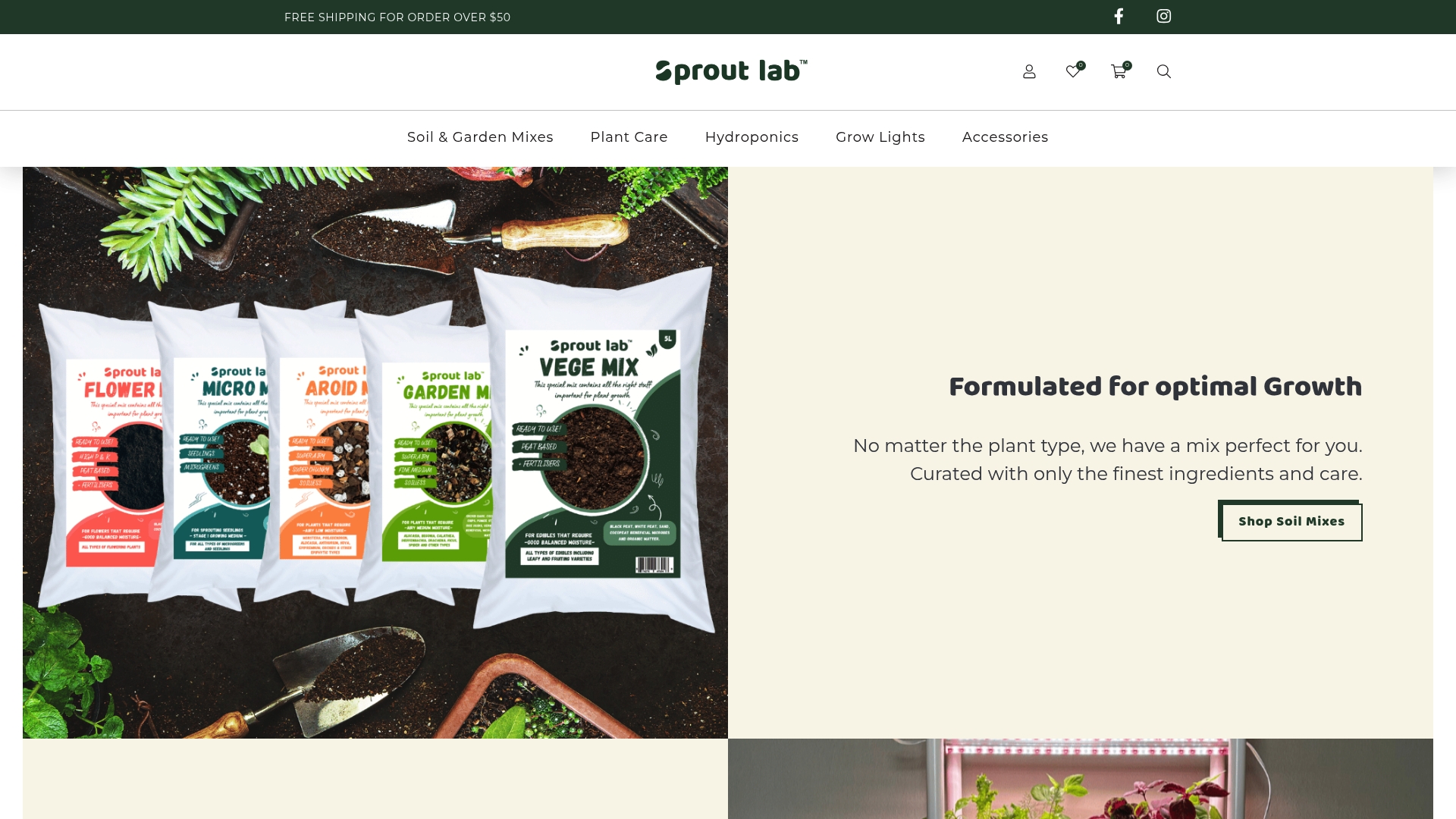
Sprout-lab’s soil mixes for Singapore gardens are formulated specifically for tropical urban growing conditions, addressing the drainage, nutrition, and biological activity needs that standard potting mixes miss. For gardeners interested in removing soil variables entirely, the passive hydroponic setup offers a space-efficient alternative proven across thousands of successful home grows. Whether you’re working with a balcony planter or a rooftop bed, the right growing medium changes everything.
Singapore’s high rainfall and tropical heat accelerate nutrient leaching and organic matter breakdown faster than temperate climates. This makes active soil management a regular practice rather than a one-time setup.
A 3:1:1 ratio of topsoil, sand, and organic matter is the island-wide standard for general planting and performs well for most edible crops when supplemented with regular compost additions.
Good soil quality improves nutrient availability, water retention, and root oxygenation. All three directly determine how fast and vigorously plants grow, as well as their resistance to disease and pests.
Yes. Regular additions of compost, a pH adjustment, and reducing synthetic fertilizer use can restore biological activity and improve soil structure within one to two growing seasons.
Over-relying on synthetic fertilizers without adding organic matter. This creates a cycle of nutrient imbalance that degrades soil biology over time and leads to diminishing returns despite increasing inputs.