Free shipping for order over $50

Free shipping for order over $50
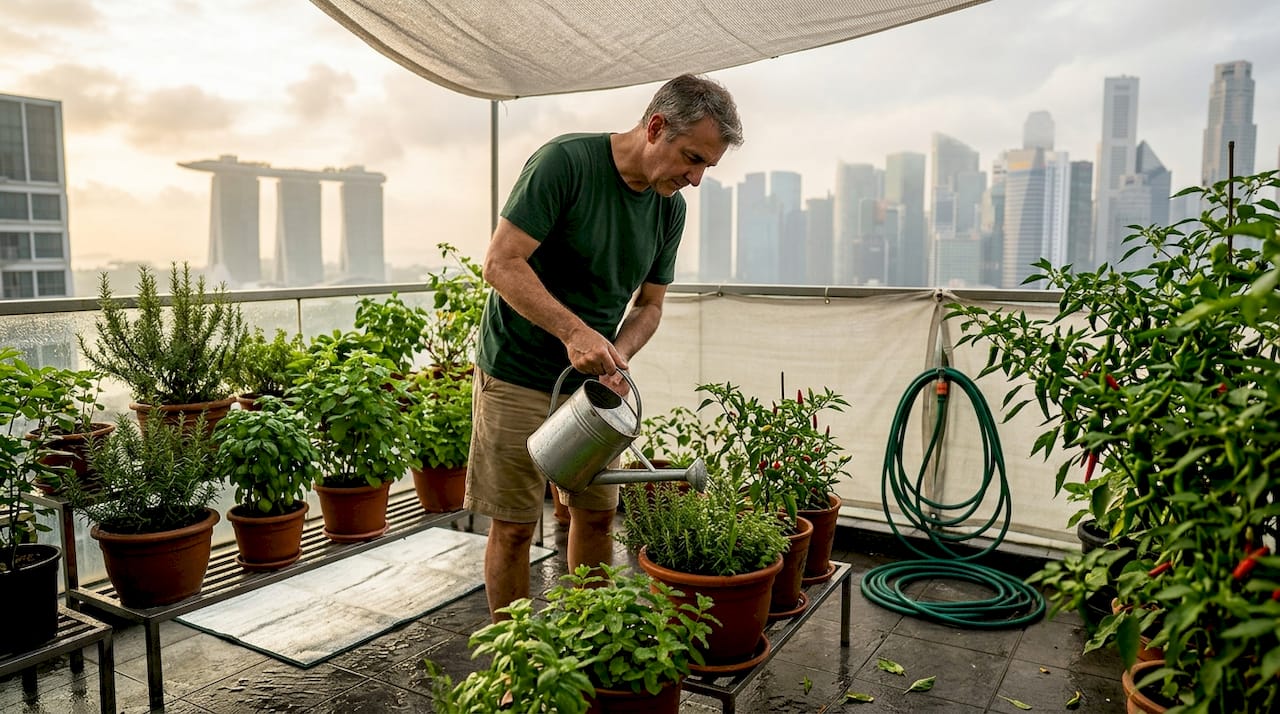
Singapore’s relentless heat and humidity create some of the toughest conditions for urban gardeners anywhere in the world. If you’ve watched your balcony herbs wilt by noon or seen your tomatoes drop flowers before setting fruit, you already know the problem. To manage plant heat stress in Singapore effectively, you need more than just extra watering. You need a system. This guide covers everything from container selection to stage-specific plant care, built specifically for small-space urban growers who want real results.
| Point | Details |
|---|---|
| Container choice matters | Light-colored or fabric containers significantly reduce root-zone temperatures under Singapore’s midday sun. |
| Water timing is everything | Morning watering prevents evaporation and hydrates roots before peak heat sets in. |
| Shade and moisture work together | Combining shade cloth with deep watering is more effective than increasing water frequency alone. |
| Flowering plants need extra protection | Heat stress during reproductive stages causes yield loss and requires more attentive care. |
| Check soil before watering | Fixed watering schedules lead to overwatering in humid conditions. Soil moisture checks prevent root rot. |
Singapore sits just one degree north of the equator. Daytime temperatures regularly hit 33°C to 35°C, and the urban heat island effect means balconies and rooftop gardens often run several degrees hotter than surrounding green spaces. For urban gardeners growing in small containers on HDB balconies or compact terraces, that thermal intensity compounds fast.
Plants deal with heat by pushing more water through their leaves to cool down. When temperatures spike, that demand exceeds what the roots can supply, even in moist soil. The result is a cascade of problems: reduced photosynthesis, slowed growth, wilting, and in severe cases, cell damage. The good news is that most of these outcomes are preventable when you understand what’s actually happening inside your plants and act at the right time.
The first signs of heat stress are easy to miss. A slight droop in the afternoon. Leaves that look dull rather than vibrant. Flowers dropping before they open. These aren’t random. They’re your plant telling you its systems are under strain.
At the cellular level, the effects are measurable. Research on tomato plants shows that heat reduces water content by more than 20% while electrolyte leakage increases by 25%, directly impairing growth. Electrolyte leakage means cell membranes are breaking down. That’s not reversible damage you can water your way out of.
Here’s what to watch for in your garden:
The flowering and fruiting stages are when heat damage hurts most. Stress memory increases sharply during reproductive phases, meaning plants carry the physiological burden of earlier heat exposure into their most yield-critical period. If you only ramp up your heat management practices at one point in the growing cycle, do it when your plants are flowering.
The biggest mistake urban gardeners make is treating heat stress as a reactive problem. You can prevent most of it by making smarter choices before you plant a single seed.
Container material and color directly affect how hot your roots get. Dark-colored plastic containers absorb and trap heat, raising root-zone temperatures to damaging levels during Singapore’s midday sun. Swap them for light-colored containers, glazed ceramic, or fabric grow bags. Fabric bags allow air pruning of roots and provide natural temperature regulation through evaporative cooling on the outer surface.
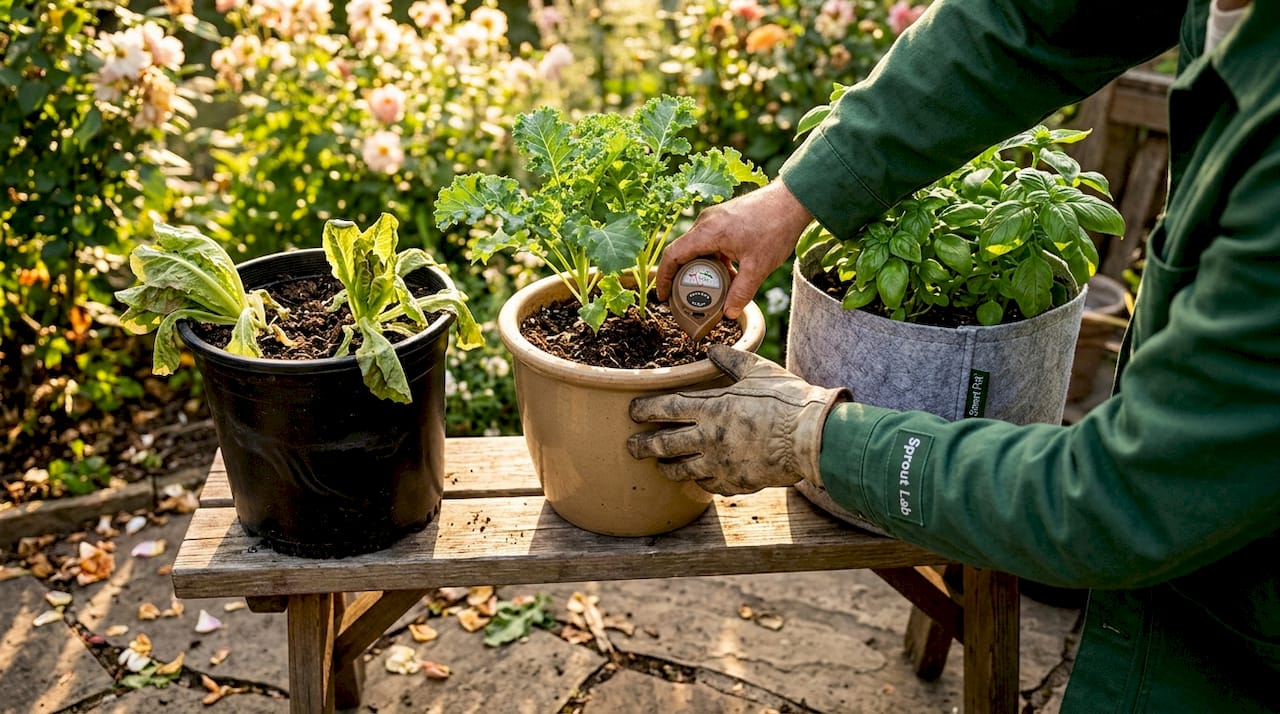
Larger containers retain more moisture and buffer temperature swings better than small pots. A plant growing in a 3-liter pot on a west-facing balcony can dry out completely within two to three hours in peak heat. That same plant in a 10-liter pot has significantly more thermal mass and water reserve to draw from.
| Container type | Heat performance | Moisture retention | Best use |
|---|---|---|---|
| Dark plastic | Poor | Low | Avoid in direct sun |
| Light plastic | Moderate | Low | Shaded spots only |
| Fabric grow bag | Good | Moderate | Balconies, full sun |
| Glazed ceramic | Good | High | Herbs, smaller plants |
| Insulated planter | Excellent | High | Fruiting vegetables |
Your growing medium is as important as your container. A peat-heavy mix that compacts easily drains too fast in heat and then becomes hydrophobic when dry. Look for soil amended with organic matter and topped with mulch. A 2 to 3 centimeter layer of organic mulch on the surface slows moisture evaporation noticeably and keeps roots cooler by insulating against radiant heat from the container walls.
For site selection, partial shading from 11am to 2pm is the sweet spot. Full morning sun is generally fine for most edible plants. It’s the intense west-facing afternoon exposure that causes the most stress. Growing plants near a taller wall or using hanging plants as a natural canopy for lower pots can create that protective window without much effort.
Pro Tip: Place a light-colored tile or reflective mat under your containers to reduce heat absorption from concrete balcony surfaces, which can reach 60°C or more in direct afternoon sun.
Getting your watering right in Singapore’s climate is less about how much water you give and more about when and how you deliver it.
For shading, black shade cloth at 30% to 50% density works well for most vegetables. Shading reduces water loss, sunburn, and wilting even though it slightly slows photosynthesis. That trade-off is worth it when temperatures are extreme. Reflective aluminum shade netting is a good alternative for plants that need higher light levels, since it deflects heat without significantly cutting light transmission.
Pro Tip: Combining shade and deep watering is more effective than just increasing watering frequency. Shade reduces evapotranspiration, so your water actually stays in the root zone longer.
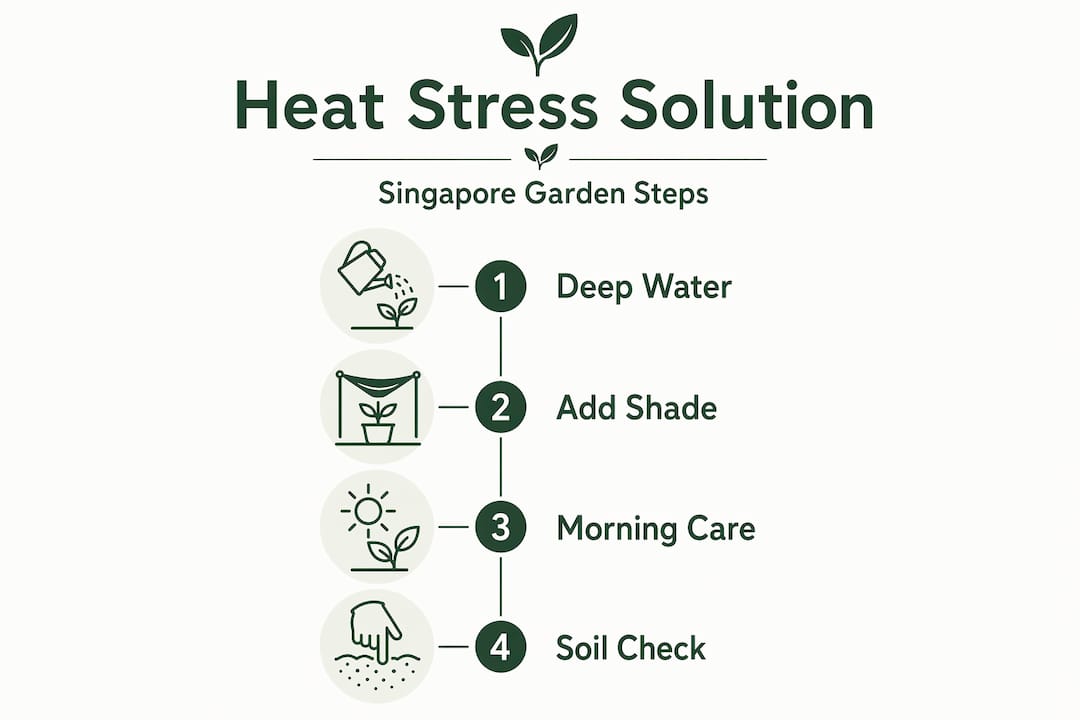
When your chili plant is flowering or your tomato has just set its first fruit cluster, your heat management practices need to step up. This is not the time to be casual about a skipped morning watering or leaving pots in full afternoon sun.
Here’s why this stage is different. Plants under heat stress during flowering experience disrupted pollen viability and flower abscission, which means flowers drop before pollination can happen. You can have perfectly healthy vegetative growth all season and still end up with zero harvest because of one heat event during flowering.
Practical steps to protect your plants during this stage:
“Stage-aware interventions yield significantly better results. Protecting plants specifically during reproductive phases improves yield stability more than any single general care practice.”
Even with good practices in place, heat stress management requires regular observation. Plants give clear signals when something is off. The problem is that many of the symptoms overlap, so knowing the context helps you respond correctly.
Common mistakes that undermine your efforts:
Pro Tip: Buy an inexpensive soil moisture meter. It takes the guesswork out of watering and prevents both overwatering and drought stress, especially during Singapore’s unpredictable weather transitions.
For seasonal adjustments, track when your plants show the most stress and map that against the time of year. Singapore’s Inter-Monsoon periods in April to May and October to November tend to bring the most volatile heat spikes. Those are the windows to be most proactive.
I’ve seen urban gardeners in Singapore spend a lot of time chasing fixes for heat-stressed plants when most of the damage was already done by poor setup choices. In my experience, the two highest-leverage tactics are shading and moisture retention combined. Not one or the other. Both.
What surprises most beginners is how much the container matters. Switching from a dark plastic nursery pot to a fabric grow bag can drop root-zone temperatures by 5 to 8 degrees without changing anything else. That’s not a small difference. That’s the difference between a plant that sets fruit and one that drops its flowers every time the temperature spikes past 33°C.
I also think the fixed watering schedule is the most common and most costly mistake. I’ve watched gardeners underwater their plants during Singapore’s dry spells and drown them during the monsoon, all because they were following a “water every two days” rule. The soil doesn’t care what day it is. Check it. Respond to what you find.
The other thing I’d emphasize is stage awareness. Most gardeners treat their plants the same from seedling to harvest. But a tomato plant needs very different protection when it’s setting fruit than when it’s just growing leaves. Knowing that and acting on it is what separates a gardener who gets consistent harvests from one who gets frustrated and gives up.
For anyone growing on a balcony, also pay attention to your specific microclimate. A south-facing HDB flat at the 10th floor gets a completely different wind and shade profile than a ground-floor terrace. You can read every guide, including this one, and still need to adapt what you learn to your actual conditions. That adaptation, and the observation habit behind it, is the real skill.
— Luna
If you’re building or upgrading your urban garden setup, the right equipment removes a lot of the guesswork from growing in Singapore’s heat.
Sprout-lab’s hydroponic systems are designed specifically for space-constrained urban growers. Because hydroponics delivers water and nutrients directly to the root zone, there’s less thermal stress at the soil surface and far less water waste from evaporation. You can grow up to 56 plants in a compact area while keeping root-zone conditions far more stable than conventional pot growing allows. Sprout-lab also offers high-quality moisture-retentive soil mixes formulated with organic matter and aeration in mind, exactly what Singapore’s heat demands from a growing medium. With a 4.9 out of 5 star rating across more than 25,000 completed orders, Sprout-lab’s products are trusted by urban gardeners across the island. Browse their full range of indoor gardening setups to find solutions built for Singapore’s specific conditions.
Wilting during midday, leaf curling, flower drop, and pale or bleached patches on leaves are the most common early signs. These often appear even when soil moisture is adequate.
Check the top centimeter of soil before every watering rather than following a fixed schedule. In hot dry periods, daily morning watering may be needed. During the monsoon, every two to three days is often sufficient.
Yes. Dark-colored plastic containers can raise root-zone temperatures significantly at midday. Switching to light-colored or fabric containers is one of the most effective steps you can take.
Cherry tomatoes, sweet potato leaves, okra, Thai basil, and tropical leafy greens like kangkong and bayam are well-suited to Singapore’s heat. For fruiting crops, choose varieties specifically labeled as heat-tolerant or heat-set.
Shading does reduce photosynthesis slightly, but it reduces wilting and water loss enough to produce healthier overall growth during peak heat. A 30% to 50% shade cloth during the hottest hours is a net positive for most edible plants in Singapore.