Free shipping for order over $50

Free shipping for order over $50
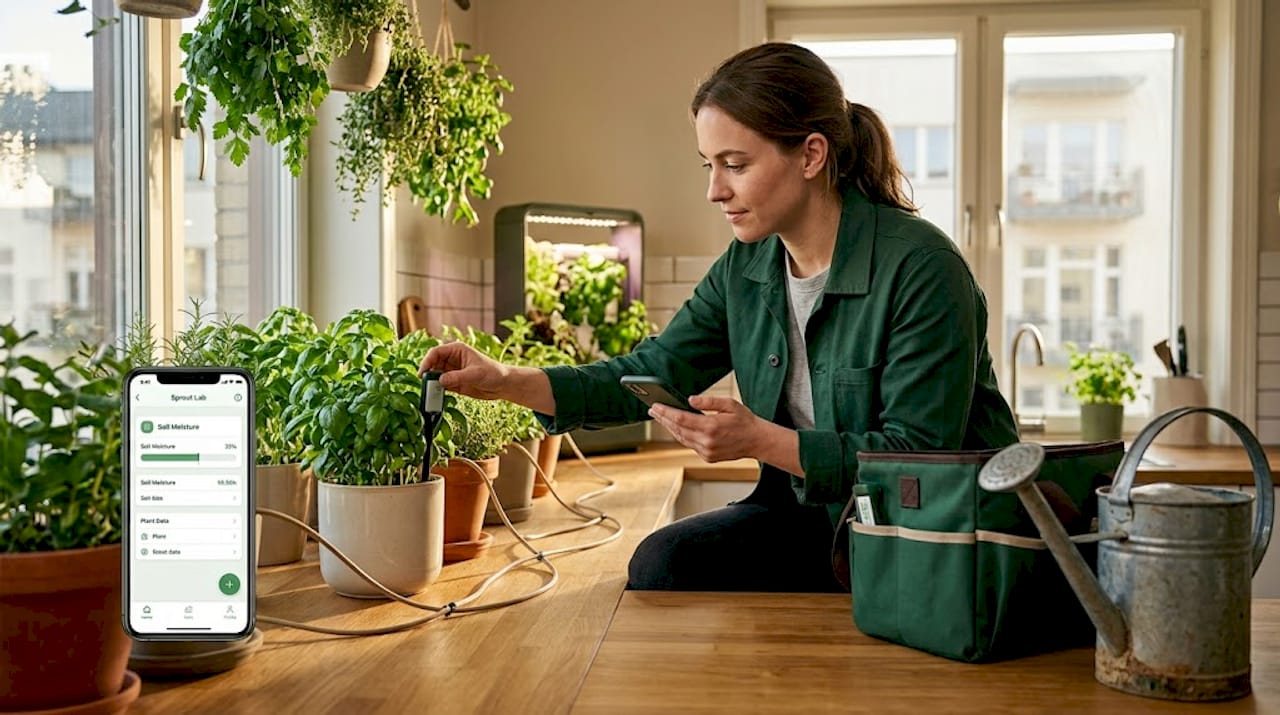
Growing your own food in a small apartment or townhouse sounds rewarding until the reality of daily watering, light schedules, and pest checks sets in. Home garden automation options exist precisely to close that gap between ambition and follow-through. Whether you have a balcony, a windowsill, or a spare corner of your living room, the right automated gardening solutions can keep plants thriving while you focus on everything else demanding your attention. This guide breaks down what to look for, what actually works, and how to build a setup that fits your life.
| Point | Details |
|---|---|
| Match automation to your space | Evaluate footprint, connectivity, and maintenance needs before buying any system. |
| Smart irrigation saves real money | Automated watering can cut outdoor water use by 20 to 40%, saving thousands of gallons per season. |
| Vertical hydroponics maximize yield | Pre-seeded pod systems reduce soil management and compress food cultivation into minimal square footage. |
| Sensors are the backbone | Soil moisture, light, and temperature sensors make every other automation layer more precise and reliable. |
| Start simple, then scale | One automated system done well beats three half-configured tools fighting for your Wi-Fi bandwidth. |
Before you spend a dollar on smart garden systems, get clear on your constraints. The best garden automation tools for someone with a 200-square-foot studio are completely different from what works in a rooftop terrace setup.
Here is the framework worth using:
Pro Tip: Before purchasing, map your apartment’s Wi-Fi signal strength at the spot where you plan to install the system. Dead zones kill smart garden setups faster than any plant disease.
Water is the single variable that kills the most houseplants and home food gardens. Too much or too little, and weeks of effort disappear. Smart irrigation fixes this with precision that no manual schedule can match.
Modern smart irrigation controllers now integrate weather data, soil type, and sun exposure to optimize every watering cycle. Systems automatically skip watering during rain, adjust duration during heat waves, and allow per-zone customization so your basil gets different treatment than your tomatoes.
The water savings are substantial. Smart sprinkler systems can reduce outdoor water use by 20 to 40%, with some users saving roughly 7,500 gallons per season. Many EPA WaterSense labeled products also qualify for utility rebates, which offsets the upfront cost meaningfully.
For urban food gardens specifically, drip irrigation setups paired with moisture sensors are the most practical choice. They deliver water directly to the root zone, reduce evaporation, and work well in containers and raised beds. Most smart irrigation controllers retrofit onto existing systems, support multiple zones, and integrate with voice assistants like Alexa for hands-free control. You can also override schedules manually or monitor everything remotely through an app, which matters when you travel for work.
For indoor setups with no outdoor tap access, self-watering planters with built-in reservoirs and wicking systems offer a lower-tech but highly reliable alternative. They are not “smart” in the connected sense, but they handle the most common failure mode: forgetting to water.
If you want to grow food indoors year-round without a dedicated grow room, vertical hydroponics are the most space-efficient path available. The core value proposition is simple: vertical hydroponic systems maximize small spaces while dramatically reducing the traditional garden work involved in soil-based growing.
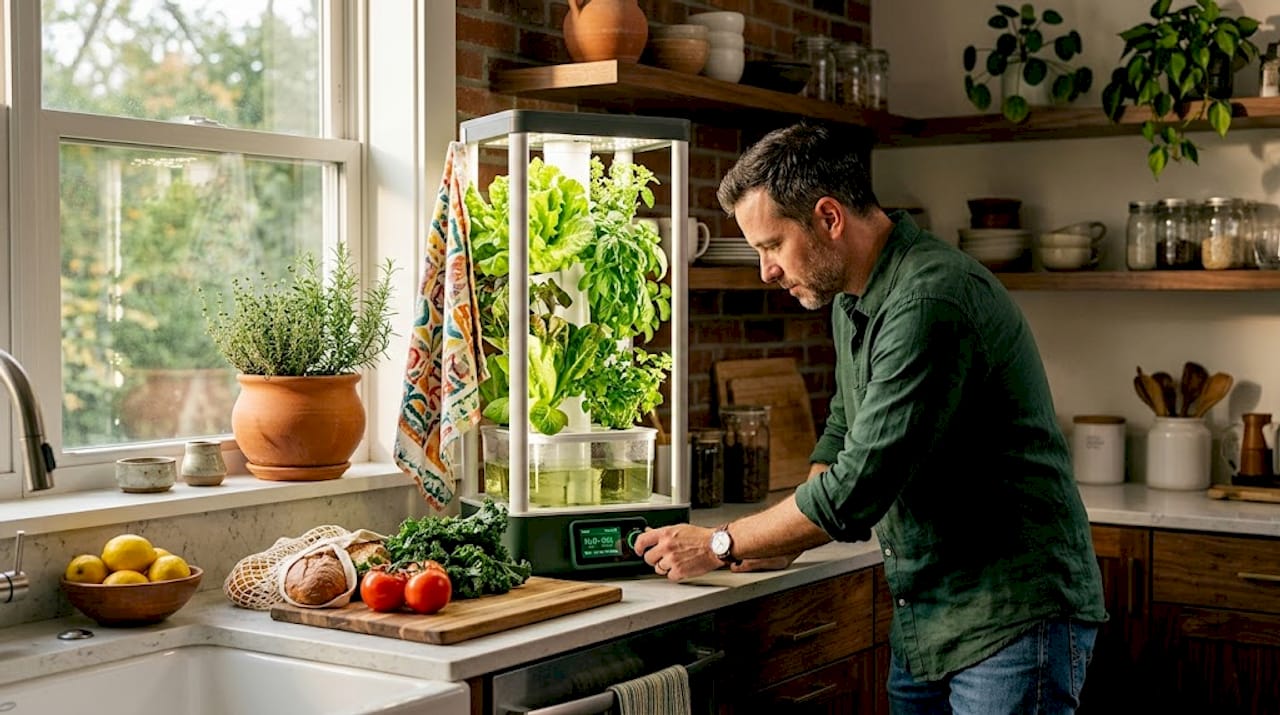
These systems stack growing sites vertically, meaning you can cultivate leafy greens, herbs, and even small fruiting plants in a footprint the size of a bookshelf. Pre-seeded nutrient pods simplify the process further by eliminating the need to source soil, fertilizer, or seeds separately. You drop a pod in, add water, and the system handles the rest.
A few features worth prioritizing:
Pro Tip: When choosing plants for your hydroponic setup, stick to fast-growing, compact varieties first. Herbs like basil, cilantro, and mint deliver harvests in weeks and build your confidence before you attempt anything more demanding. Check out plants for hydroponic systems for a curated starting list.
Sprout-lab’s modular hydroponic systems are designed around exactly this use case, allowing urban growers to cultivate up to 56 plants in a compact area without prior gardening experience.
Hydroponics gets most of the attention in home planting automation, but soil-based automated systems deserve serious consideration, especially for growers who want lower ongoing maintenance.
The key difference comes down to cleaning. Unlike many hydroponic setups that require frequent reservoir cleaning to prevent algae buildup, soil-based automated systems reduce maintenance substantially. You are not managing a nutrient solution. You are managing soil, which is far more forgiving.
Systems like automated microgreens gardens handle watering on a timer and often include grow lights, making them genuinely hands-off for the first few weeks of a grow cycle. The trade-off is that soil-based systems typically support a narrower range of crops than full hydroponic towers. Microgreens, herbs, and small lettuces thrive. Larger vegetables are harder to manage.
For busy professionals who want fresh greens without weekly system maintenance, a soil-based automated setup often wins on simplicity. For those who want volume and variety, hydroponics scales better.
Automation without feedback is just a timer. Garden monitoring technology turns your setup into something that actually responds to conditions rather than following a fixed schedule regardless of what is happening to your plants.
The core sensors worth knowing:
Smart hubs tie these sensors together and connect them to your irrigation and lighting systems. The result is a garden that waters itself when soil is dry, adjusts light when natural sunlight increases, and texts you when something is wrong. Real-time alerts are particularly valuable for urban growers who are away from home during the day.
The main consideration is placement. Sensors need to be close enough to your plants to get accurate readings but also within range of your Wi-Fi network. In small apartments with limited outlets, this can require some creative cable management or battery-powered sensor options.
The most advanced end of home garden automation options involves systems that do not just follow schedules but actually learn and adapt. Agentic AI represents a shift from fixed scheduling toward autonomous, adaptive garden care that improves over time.
Robotic lawn care solutions, for example, now use vision-based AI navigation that eliminates the need for perimeter wires. The Volta PRO covers up to 8,000 square feet, handles slopes up to 40%, and generates monthly lawn health reports. It starts at around $1,176, which positions it as a serious tool rather than a novelty.
For urban dwellers without lawns, the more relevant application of AI is in smart growing hubs that learn your plants’ patterns over time and adjust care accordingly. This technology is still maturing for indoor food gardens, but the trajectory is clear. Within a few years, a smart growing system will know your basil’s preferred moisture level better than you do.
Here is a side-by-side look at the main categories to help you decide where to start:
| System type | Best for | Space needed | Maintenance level | Approx. cost |
|---|---|---|---|---|
| Smart irrigation controller | Balcony or outdoor container gardens | Minimal (mounts to wall or tap) | Low | $80 to $250 |
| Vertical hydroponic tower | Indoor herbs, greens, and compact vegetables | 2 to 4 sq ft floor space | Medium (reservoir cleaning) | $150 to $600 |
| Soil-based automated garden | Microgreens and herbs with minimal setup | 1 to 3 sq ft counter space | Low | $80 to $300 |
| Environmental sensor hub | Any setup needing precision monitoring | Negligible | Very low | $50 to $200 |
| Robotic AI lawn system | Small to medium outdoor yards | Outdoor space required | Low (self-operating) | $1,176 and up |
The most effective urban setups pair two or three of these categories. A vertical hydroponic tower with an integrated moisture sensor and automated LED lighting covers most of what a busy professional needs for consistent food production indoors. Adding a smart irrigation controller handles any outdoor container garden on a balcony.
I have seen a lot of people buy the most technically impressive smart garden system they can find and then abandon it within two months. The technology was not the problem. The mismatch between the system’s complexity and the user’s available time was.
What I have learned is that the best home garden automation setup is the one you will actually maintain. A single, well-chosen vertical hydroponic system with automated watering and lighting will outperform three half-configured tools every single time. Start with the one variable that causes you the most failures. For most urban growers, that is watering. Fix that first.
I am genuinely excited about where agentic AI in gardening is heading. The idea of a system that learns your specific growing environment and adapts without your input is not science fiction anymore. But for 2026, the practical advice is still to prioritize reliability over novelty. A system that works every day beats one that impresses you on day one and confuses you by day ten.
My recommendation for first-timers: start with a soil-based automated setup or a compact hydroponic tower, add a moisture sensor, and get one successful harvest under your belt before scaling up. That first harvest changes everything about how you approach the next one.
— Luna
If this guide has you ready to move from planning to planting, Sprout-lab makes the entry point genuinely approachable. Their hydroponic systems and supplies are built specifically for urban spaces, with modular designs that grow with your ambition. Whether you are starting with a compact countertop setup or scaling to a full vertical tower, Sprout-lab’s products are backed by a 4.9 out of 5 star rating across more than 25,000 completed orders. For growers who prefer soil, their premium soil mixes pair well with automated watering systems and support healthy root development from day one. New to the whole thing? Their beginner DIY hydroponic kits walk you through setup without assuming any prior experience.
Vertical hydroponic towers, smart irrigation controllers, and soil-based automated growing systems are the most practical choices for small urban spaces. Pairing a hydroponic tower with a moisture sensor and automated LED lighting covers most food cultivation needs in under four square feet.
Basic automation like a smart watering controller starts around $80. Full vertical hydroponic systems with integrated lighting and app connectivity range from $150 to $600. AI-powered robotic tools for outdoor use start at approximately $1,176.
Yes. Most smart garden systems depend on a stable Wi-Fi connection for app control, remote monitoring, and weather data integration. Check your signal strength at the intended installation spot before purchasing any connected device.
It depends on the type. Vertical hydroponic systems require periodic reservoir cleaning to prevent algae buildup. Soil-based automated systems have a lower maintenance burden overall, making them a better fit for growers with very limited time.
Absolutely. A smart irrigation controller with drip lines handles container watering on a balcony with minimal setup. Many controllers retrofit onto existing outdoor taps and integrate with weather data to skip watering on rainy days automatically.