Free shipping for order over $50

Free shipping for order over $50
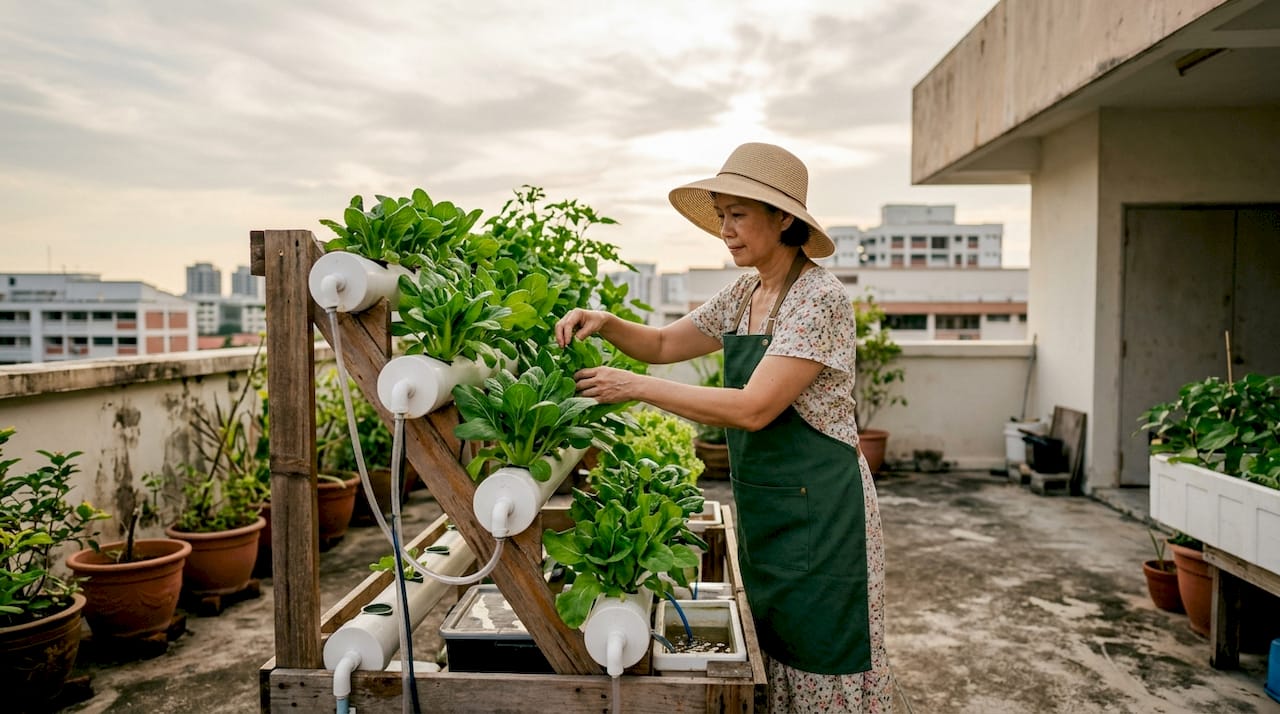
Hydroponics is defined as a soil-free cultivation method that delivers nutrients directly to plant roots through water, and it suits Singapore’s climate better than almost any other growing approach available to urban residents today. Singapore sits near the equator with year-round temperatures between 25°C and 34°C, humidity levels of 70–90%, and frequent heavy rainfall that makes outdoor soil gardening unreliable. Hydroponic systems sidestep the worst of those conditions entirely. They use up to 90% less water than traditional soil farming and eliminate soil-borne diseases that thrive in Singapore’s warm, wet ground. For urban residents growing food in HDB flats, condos, or small landed homes, that combination makes hydroponics the most practical path to sustainable farming in Singapore.
Singapore’s tropical climate creates a specific set of problems for any growing system. High ambient temperatures accelerate plant metabolism, which sounds like a benefit until you realize roots and beneficial microbes in the nutrient solution suffer above 28°C. Warm water holds less dissolved oxygen, and oxygen-starved roots stop absorbing nutrients efficiently.
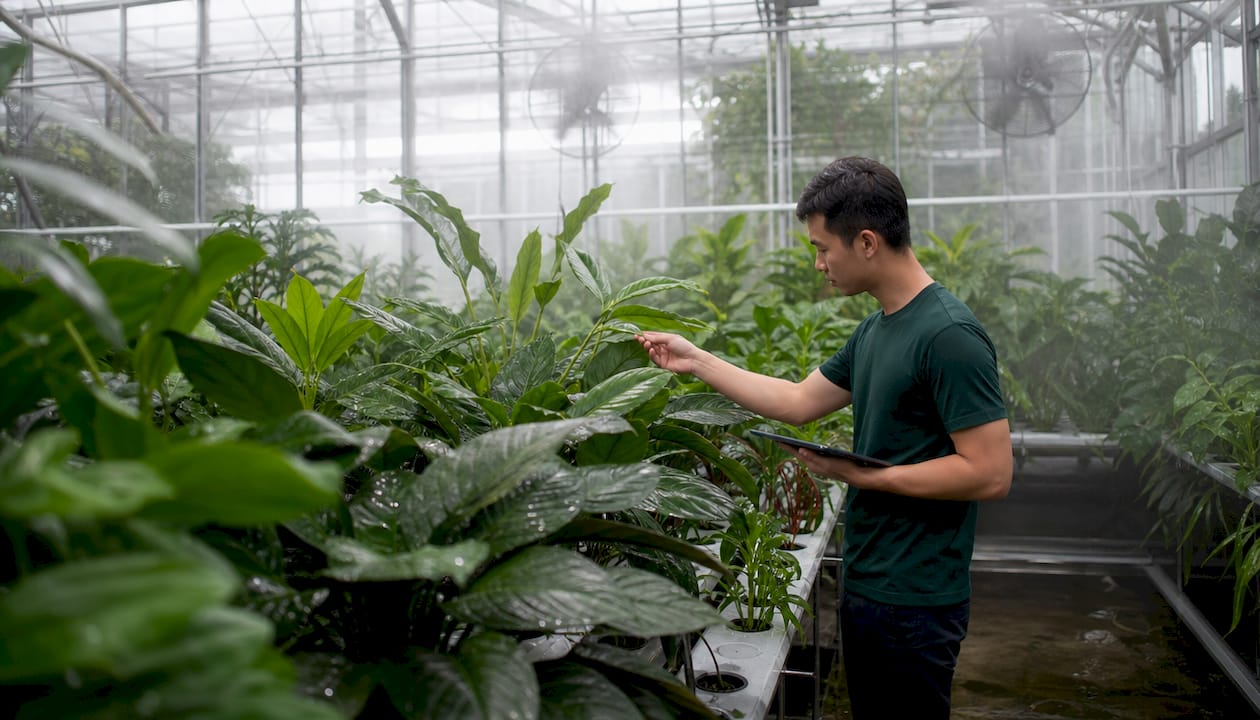
Humidity compounds the problem. At 70–90% relative humidity, plants struggle to transpire, which is the process by which they pull water and nutrients up from the roots. When transpiration slows, nutrient uptake slows with it. The result is slower growth and weaker plants, even when the nutrient solution is perfectly balanced.
Outdoor soil gardening in Singapore also faces frequent storms and standing water, which spread fungal diseases and root rot. Hydroponics removes soil from the equation entirely, which is why it sidesteps the most common soil-borne disease risks that plague conventional tropical gardens. You control the root environment directly, which is a significant structural advantage.
The key variable that most beginners overlook is vapor pressure deficit, or VPD. VPD measures the difference between the moisture the air holds and the maximum moisture it could hold. In Singapore’s humid air, VPD is chronically low, which limits how hard plants can “pull” water upward. Managing airflow to raise VPD is one of the most effective adjustments you can make in a local hydroponic setup.
Pro Tip: Place an oscillating fan at canopy level, not at the base of your plants. Moving air across leaves raises local VPD and improves nutrient uptake without lowering room humidity.
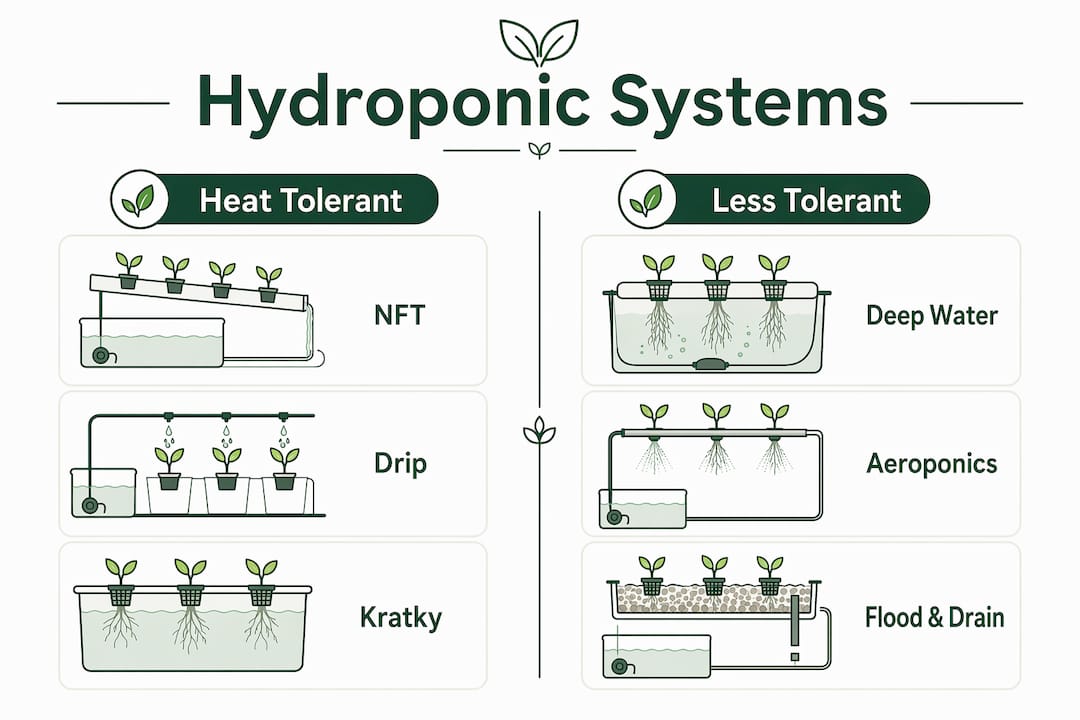
Not every hydroponic system handles tropical heat equally. The right choice depends on your space, crop type, and how much daily attention you can give the setup.
| System | Heat tolerance | Maintenance level | Best for |
|---|---|---|---|
| Deep Water Culture (DWC) | Low without chiller | High | Leafy greens with temperature control |
| Nutrient Film Technique (NFT) | Moderate | Medium | Herbs, lettuce, fast-cycling crops |
| Drip system | Moderate to high | Medium | Fruiting crops, tomatoes, peppers |
| Kratky method | Moderate with shading | Low | Herbs, small-scale indoor setups |
DWC systems require strong aeration and temperature control in rooms above 28°C to maintain oxygen levels and avoid plant stress. Without a water chiller or insulated reservoir, root zone temperatures in a DWC system can climb high enough to kill beneficial microbes within days.
NFT and drip systems shed heat faster because they use thin water films and low reservoir volumes. Less water means less thermal mass to heat up, which makes temperature swings easier to manage. For most Singapore home growers, NFT is the most forgiving starting point.
The Kratky method, a passive approach where plant roots hang in a static nutrient solution with an air gap above, works well for herbs and leafy greens when you shade the reservoir. Shading the reservoir with white lids or reflective insulation reduces root zone heating significantly in Singapore’s indoor conditions. It is the lowest-effort entry point for beginners who want to test hydroponics before committing to a more complex setup.
Pro Tip: Paint or wrap your nutrient reservoir in white or silver reflective material. Dark containers absorb heat from ambient light and can raise solution temperatures by several degrees, which directly stresses roots.
Running a healthy hydroponic system in Singapore requires daily attention. Hydroponics in Singapore requires active daily management because the humid climate accelerates biological cycles, including the growth of pathogens and biofilm. This is not a set-and-forget system.
A practical daily and weekly routine makes the difference between a thriving setup and a failed one:
Pro Tip: Schedule your harvest and cleaning cycle on the same day every three to four weeks. Consistency prevents the slow buildup of algae and mineral deposits that are easy to miss when you clean reactively.
For growers who want less manual involvement, home garden automation options like timer-controlled pumps and humidity controllers can handle most of the routine work.
Singapore’s stable tropical heat is actually a growth accelerator for the right crops. The key is matching crop type to your system and your available space.
The strongest performers for local hydroponic growing are:
Crop rotation matters even in hydroponics. Growing the same species in the same system repeatedly depletes specific nutrients and encourages species-specific pests. Alternating between leafy greens and herbs every few cycles keeps your system balanced and productive. For detailed guidance on crop selection, the guide to growing hydroponic vegetables at home covers local-specific variety choices and timing.
Climate-controlled hydroponic systems produce consistent yields regardless of external monsoon or dry spells. That reliability is a genuine advantage for Singapore residents who want a dependable food supply from a small home setup.
Hydroponics suits Singapore’s tropical climate because it removes soil from the equation, controls the root environment directly, and uses water far more efficiently than any outdoor growing method.
| Point | Details |
|---|---|
| Water efficiency | Hydroponics uses up to 90% less water than soil farming, critical in a dense urban environment. |
| System choice matters | NFT and Kratky systems handle Singapore’s heat better than DWC without a chiller. |
| Airflow is non-negotiable | Oscillating fans at canopy level raise VPD and improve nutrient uptake in humid conditions. |
| Daily management required | Tropical heat accelerates biological cycles; check roots and solution temperature every day. |
| Best crops for local growing | Leafy greens and herbs thrive fastest; fruiting crops need drip systems and more space. |
Most guides about hydroponics in Singapore focus on the benefits and gloss over the daily reality. The climate does give you faster growth rates and year-round production. Those advantages are real. But the same warmth and humidity that accelerates plant growth also accelerates everything else, including root pathogens, algae, and biofilm.
I have seen beginners set up a Kratky system, get excited by the first flush of growth, and then lose the entire batch to root rot two weeks later because they did not shade the reservoir or check the solution temperature. The system did not fail. The management did.
The growers who succeed long-term in Singapore treat their hydroponic setup the way a chef treats a kitchen. Clean, consistent, and attentive. They check their roots the way a baker checks dough. They know what healthy looks like, so they catch problems early.
Starting small is genuinely the right advice here, not because hydroponics is difficult, but because the feedback loop in a tropical climate is compressed. Problems develop faster, and so does your learning. A passive hydroponic setup with two or three Kratky jars of basil teaches you more in a month than reading three guides. Once you understand how your specific indoor microclimate behaves, scaling up becomes straightforward.
Singapore’s urban farming community is also genuinely collaborative. Online groups, community gardens, and local suppliers share knowledge freely. Tap into that network early. The person who grew lettuce in a Toa Payoh HDB for two years has solved problems you have not encountered yet.
— Luna
Singapore’s climate rewards growers who start with the right equipment from day one. Sprout-lab designs hydroponic systems specifically for urban home growers who need compact, reliable setups that work in small spaces without requiring a greenhouse or advanced technical knowledge.
The reservoir hydroponic system range from Sprout-lab is a practical starting point for anyone new to soil-free growing. Sprout-lab’s modular designs let you grow up to 56 plants in a compact footprint, with a 4.9/5 star rating from over 25,000 completed orders backing the results. For growers who want less daily involvement, the garden systems for busy people range includes timer-controlled and passive options suited to Singapore’s conditions. Sprout-lab also carries plant care products formulated for tropical hydroponic growing, available through the hydroponics product range.
Hydroponics eliminates soil-borne diseases, uses up to 90% less water, and gives you direct control over root conditions. Those advantages are especially significant in Singapore’s hot, humid climate where soil pathogens thrive year-round.
The Kratky method is the most beginner-friendly option. It requires no pumps or electricity, and shading the reservoir keeps root zone temperatures manageable in Singapore’s indoor conditions.
Run oscillating fans at canopy level continuously during the day. Airflow raises vapor pressure deficit and improves nutrient uptake more effectively than adjusting nutrients alone in high-humidity environments.
Leafy greens like lettuce and kai lan complete a full cycle in three to four weeks. Herbs like basil and mint produce continuously and are ideal for small indoor setups with limited light.
A chiller is necessary for Deep Water Culture systems in rooms above 28°C. NFT, drip, and Kratky systems can manage without one if you insulate and shade the reservoir properly.