Free shipping for order over $50

Free shipping for order over $50
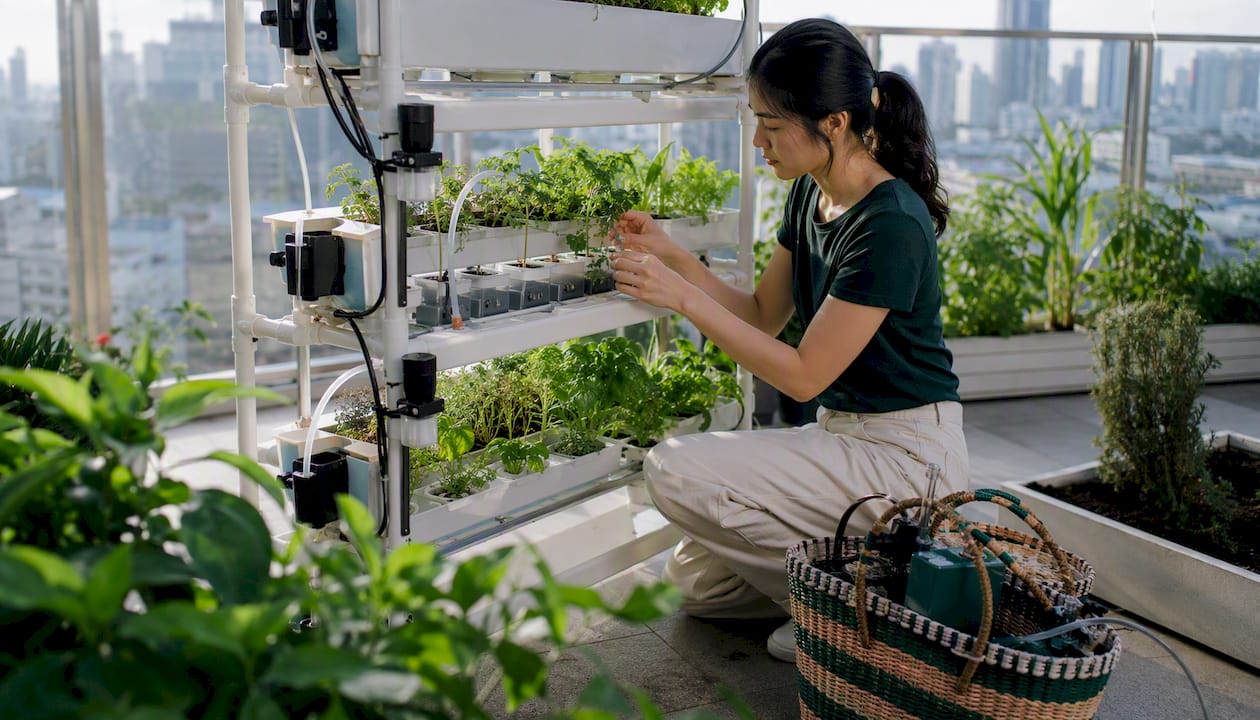
Sprout-lab’s modular hydroponic system is highly suitable for most urban growers: it fits many plants in a compact footprint, and its closed-loop sensor control keeps plants healthy even when you’re away for days. If you live in a studio apartment or a shared flat and want real food production without daily babysitting, this is where to start. The one exception: if you only want to grow two or three herbs on a countertop, a smaller self-contained unit works fine. If you’re scaling toward a full wall rack, you’ll want to plan for vertical expansion from day one.
The honest answer is sensors and control logic, not the app or the aesthetic. A system that reads real-time data from pH, EC, and temperature sensors and then actuates pumps and lights in response is a closed-loop system. That feedback loop is what separates a system that grows food reliably from one that looks good in a product photo.
“Real-time data from environmental sensors allows actuators (pumps, lights) to execute adjustments instantly, minimizing human error and preventing plant stress. Think of automation as a closed-loop operational model: sensors must feed timely, accurate data to actuators to keep plants in target ranges without constant human tuning.” — WiccaGrow, What Is Automated Cultivation?
The features that actually move the needle on plant outcomes are pH and EC monitoring with auto-correction, flow verification (so you know water is actually moving), programmable light recipes with dimming, and remote alerts when something drifts. Flashy touchscreens and branded seed pods are secondary.
Rank these criteria in this order when comparing systems:
| Feature | Why it matters | What to ask the seller |
|---|---|---|
| pH/EC sensors | Nutrient uptake depends on both staying in range | “What sensor model? How often does it need calibration?” |
| Flow verification | Silent pump failure destroys a crop | “Does the system alert me if flow stops?” |
| Light scheduling | Different crops need different photoperiods | “Can I set custom schedules per zone?” |
| Remote alerts | Catches drift before it becomes crop loss | “What triggers an alert? How is it delivered?” |
| Firmware updates | Fixes bugs and adds features over time | “How often are updates released? Are they automatic?” |
Pro Tip: Ask the manufacturer for the sensor model numbers before purchasing. Then search that model independently to check its rated accuracy and typical drift interval. A seller who can’t name the sensor is a red flag.
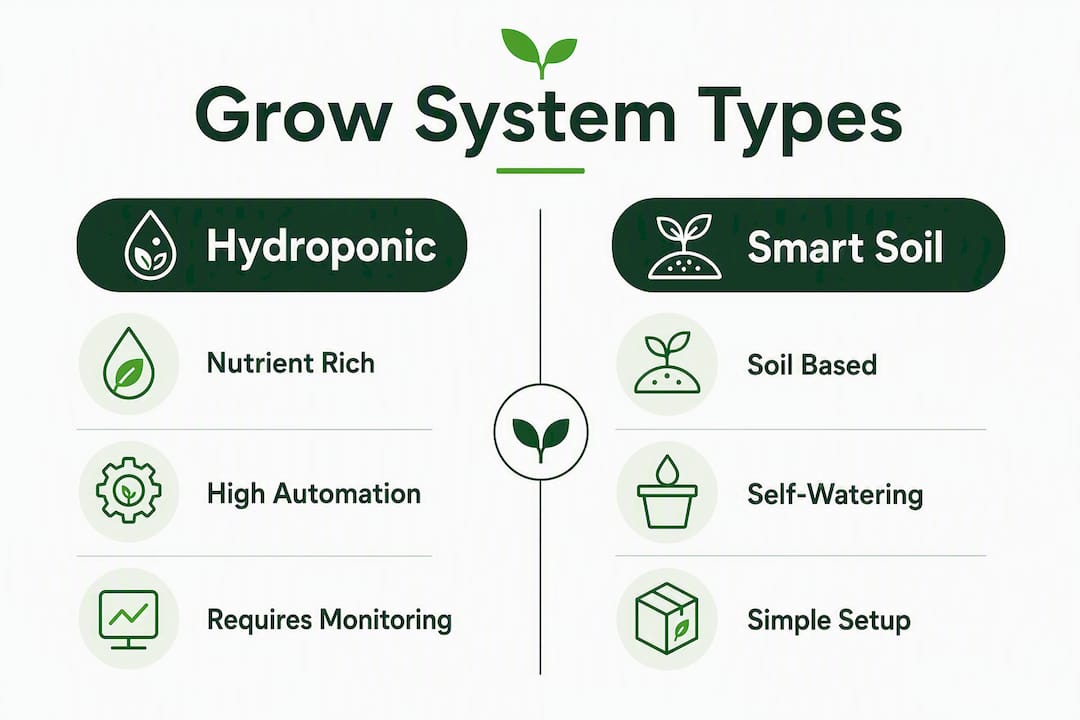
Roots sit in or are bathed by nutrient solution. Automation potential is high: pumps, dosers, and sensors integrate cleanly. Best for leafy greens, herbs, and anyone who wants a scalable setup. Hydroponics can grow plants up to 5x faster than soil and uses significantly less water per pound of food produced.
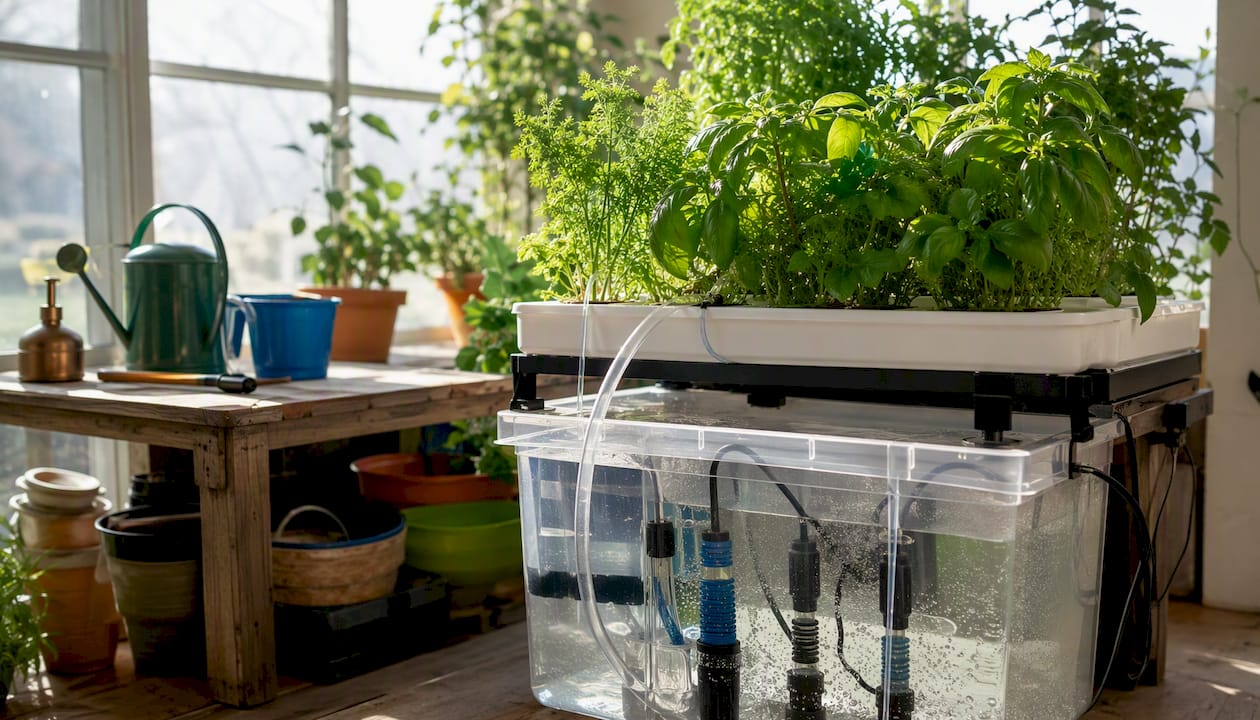
Roots hang in air and are misted with nutrient solution on a tight cycle. Faster growth than most hydroponic methods, but the misting nozzles clog easily and the system punishes neglect. Better for experienced growers who want maximum yield density.
Soil-based systems with automated irrigation and moisture sensors. Lower upfront complexity, forgiving for beginners, but slower growth and lower plant density than hydroponics. Good for herbs and small fruiting plants if you prefer soil.
Stackable or wall-mounted panels that multiply your plant count without expanding your floor footprint. The best fit for urban apartments. Automation level varies by brand, so confirm the sensor and control features before assuming “modular” means “automated.”
Starter band ($50–$200): Basic self-watering kits with timers but no sensors. You get irrigation scheduling; pH and EC are manual. Fine for herbs on a windowsill.
Mid-tier ($200–$600): Countertop hydroponic units with built-in LED lighting and basic app connectivity. Sensor coverage is partial. Good for one to eight plants.
Modular and expandable ($600 and up): Full closed-loop systems with multi-sensor monitoring, auto-dosing, and expansion capacity. This is where Sprout-lab’s system sits.
Sprout-lab’s modular hydroponic setups are built specifically for the constraints urban growers face: limited floor space, irregular schedules, and no outdoor access.
| Feature | Sprout-lab modular system |
|---|---|
| Automation level | Closed-loop sensor control (pH, EC, moisture) |
| Plant capacity | Up to 56 plants |
| Footprint | Compact modular configuration |
| Price band | Modular/expandable tier |
| Maintenance frequency | Weekly visual checks; monthly reservoir clean |
| Warranty and support | Available for US customers |
Sprout-lab has completed a large number of orders with an excellent customer rating, which reflects consistent product quality and reliable delivery rather than a single viral moment. Customers report rapid seed germination and measurably improved plant health compared to their previous soil setups.
For home garden automation options that scale as your confidence grows, Sprout-lab’s modular approach is the most practical starting point.
Weekly: Check water level, inspect roots for color (white is healthy, brown signals a problem), and confirm sensor readings look stable.
Monthly: Drain and clean the reservoir, recalibrate pH and EC probes, and prune any dead or yellowing leaves.
Pro Tip: Before a vacation, top off the reservoir, set a remote alert threshold tighter than usual, and leave a neighbor a one-page cheat sheet: “If the app sends an alert, add X ml of pH-down and check the pump.” That single sheet prevents 90% of vacation crop losses.
Avoid large root vegetables (carrots, beets), full-size tomato varieties, and vining crops like cucumbers unless you have dedicated vertical space and a system designed for heavier root masses. Indoor smart gardens work best for herbs and greens grown year-round in limited spaces.
| Problem | Quick diagnostic | Fix | Typical cost |
|---|---|---|---|
| Yellowing leaves | Check EC (too low = deficiency) | Adjust nutrient concentration | $15–$40 (nutrients) |
| Algae in reservoir | Green slime on walls or roots | Block light from reservoir; clean with diluted hydrogen peroxide | $5–$10 |
| pH drift | Sensor reading outside 5.5–6.5 | Add pH-up or pH-down; recalibrate probe | $10–$20 |
| Pump failure | No flow, wilting plants | Replace pump; check for clog first | $15–$40 |
| Light failure | Plants stretching toward a dim area | Replace LED driver or full fixture | $20–$80 |
| Nutrient lockout | Stunted growth despite correct EC | Full reservoir flush with clean water | — |
Contact support or a technician for persistent EC instability that doesn’t resolve after a full flush, any electrical fault, or a warranty-covered component failure. Don’t attempt to repair electrical components yourself.
Across verified reviews for modular hydroponic systems, the consistent praise lands on three things: faster germination than expected, the relief of not watering manually, and the satisfaction of harvesting food in an apartment. The recurring complaints are about initial calibration confusion and the learning curve for nutrient mixing.
Sprout-lab’s 4.9/5 rating across more than 25,000 completed orders suggests the calibration and setup experience is well-supported. Users specifically note improved plant health as a direct result of the system’s nutrient delivery, which aligns with what closed-loop automation is designed to do.
The broader pattern in user reviews for automated indoor gardening: buyers who read the setup instructions carefully and calibrate sensors before adding plants report far fewer problems in the first two weeks than those who skip that step.
Response time is the first test. Send a pre-purchase question by email and by chat. A brand with real support answers within one business day and gives a specific answer, not a link to an FAQ page.
Check whether the warranty covers sensors and electronics separately from structural components. Many warranties cover the frame but exclude the sensors that actually make the system work. Ask directly: “If my pH sensor fails in month three, is that covered?”
Look for a published firmware update history. A brand that updates its software regularly is one that’s actively fixing problems its customers report.
LED grow lights have made indoor growing far more energy-efficient than it was a decade ago. Modern full-spectrum LEDs deliver the photon output plants need using significantly less power than older HID lights. For a compact modular system, electricity cost is typically a minor line item compared to the value of the food produced.
Water efficiency is where hydroponics genuinely outperforms soil. A closed reservoir system recirculates nutrient solution rather than letting it drain away, which cuts water use substantially compared to container gardening. That matters in cities where water costs are rising.
From a waste perspective, automated systems reduce overwatering (a leading cause of plant death and wasted inputs) and allow precise nutrient dosing that minimizes runoff.
The payback math on an automated home grow system depends on what you grow and how consistently you use it. Leafy greens and herbs bought at a grocery store are expensive per ounce relative to what they cost to grow hydroponically. A well-maintained modular system producing continuous harvests of basil, lettuce, and spinach can offset a meaningful portion of a household’s fresh herb and salad budget within a few months.
Microgreens offer the fastest return: seed to harvest in 7–14 days, and specialty microgreens retail for $4–$8 per ounce at farmers markets. Growing them at home collapses that cost to cents per ounce.
The honest caveat: the first growing cycle is the learning cycle. Expect to spend more time on setup and calibration than on any subsequent cycle. By the third harvest, most growers have the system dialed in and maintenance down to under 30 minutes per week.
Most mid-tier and modular systems offer Wi-Fi connectivity and a companion app. True smart home integration, meaning control via Amazon Alexa, Google Home, or Apple HomeKit, is less common and varies by brand.
What matters more than voice control is reliable remote monitoring. A system that sends you a push notification when pH drifts is more useful than one you can ask Alexa to water. For growers who want deeper integration, some systems expose an API or support IFTTT-style automation, letting you trigger actions based on sensor readings.
Before buying, confirm the app works on your phone’s operating system and check recent app store reviews for connectivity complaints. A beautiful hardware system with a buggy app is a frustrating combination.
Closed-loop sensor control, not app features or aesthetics, is what separates a reliable automated home grow system from an expensive decoration.
| Point | Details |
|---|---|
| Prioritize closed-loop sensors | pH, EC, and flow sensors with auto-correction matter more than any app feature. |
| Match capacity to your space | Measure your available footprint before comparing plant counts; modular systems scale up without replacing the controller. |
| Budget for running costs | Expect a moderate monthly cost for electricity, nutrients, and calibration supplies in a mid-to-modular system. |
| Sprout-lab modular system | Grows up to 56 plants in a compact footprint with a 4.9/5 rating across 25,000+ orders; best fit for urban apartments and busy professionals. |
Most “automated” grow systems on the market automate one thing: the watering timer. That’s useful, but it’s not what keeps plants alive when you’re traveling or when your nutrient solution drifts out of range at 2 AM. The systems worth buying are the ones where the controller reads a sensor, decides something is wrong, and fixes it without waking you up.
What I find underappreciated in most buying guides is the maintenance reality. Automation reduces daily effort dramatically, but it doesn’t eliminate the need for a monthly reservoir clean or a quarterly sensor recalibration. Buyers who understand that going in set realistic expectations and get far better long-term results. The growers who abandon their systems usually do so because they expected zero maintenance, not low maintenance.
For urban growers specifically, the modular format solves a problem that countertop units can’t: you can start with a small configuration and expand as your confidence and appetite for fresh food grows, without buying a new system. That flexibility, combined with genuine closed-loop control, is what makes Sprout-lab’s approach the most practical recommendation for most people reading this.
If you’ve been putting off setting up an indoor garden because it sounds complicated, Sprout-lab’s modular system for urban growers is the most direct path from “thinking about it” to harvesting your own food. The system handles pH correction, nutrient delivery, and lighting automatically, so your job is topping off the reservoir and harvesting.
Sprout-lab ships to US customers and backs its products with customer support that answers specific questions, not just FAQ links. With a 4.9/5 rating across more than 25,000 orders, the track record is there. Browse the full range of automated hydroponic setups to find the configuration that fits your space and your crop goals, and check the warranty terms before checkout.
A closed-loop system uses sensors to read conditions like pH, EC, and temperature, then automatically triggers pumps or dosers to correct any drift, without requiring manual intervention.
Modular systems like Sprout-lab’s can support up to 56 plants in a compact configuration, making them practical for studio apartments and small urban spaces.
Leafy greens, culinary herbs, and microgreens are the most reliable choices: fast to harvest, tolerant of minor fluctuations, and well-suited to the light levels most compact systems provide.
Automation reduces daily tasks to near zero, but a weekly visual check and a monthly reservoir clean and sensor recalibration are still necessary to prevent nutrient lockout and biofilm buildup.
Yes. Sprout-lab ships to US customers and offers customer support for its hydroponic systems, soil mixes, and grow accessories.