Free shipping for order over $50

Free shipping for order over $50
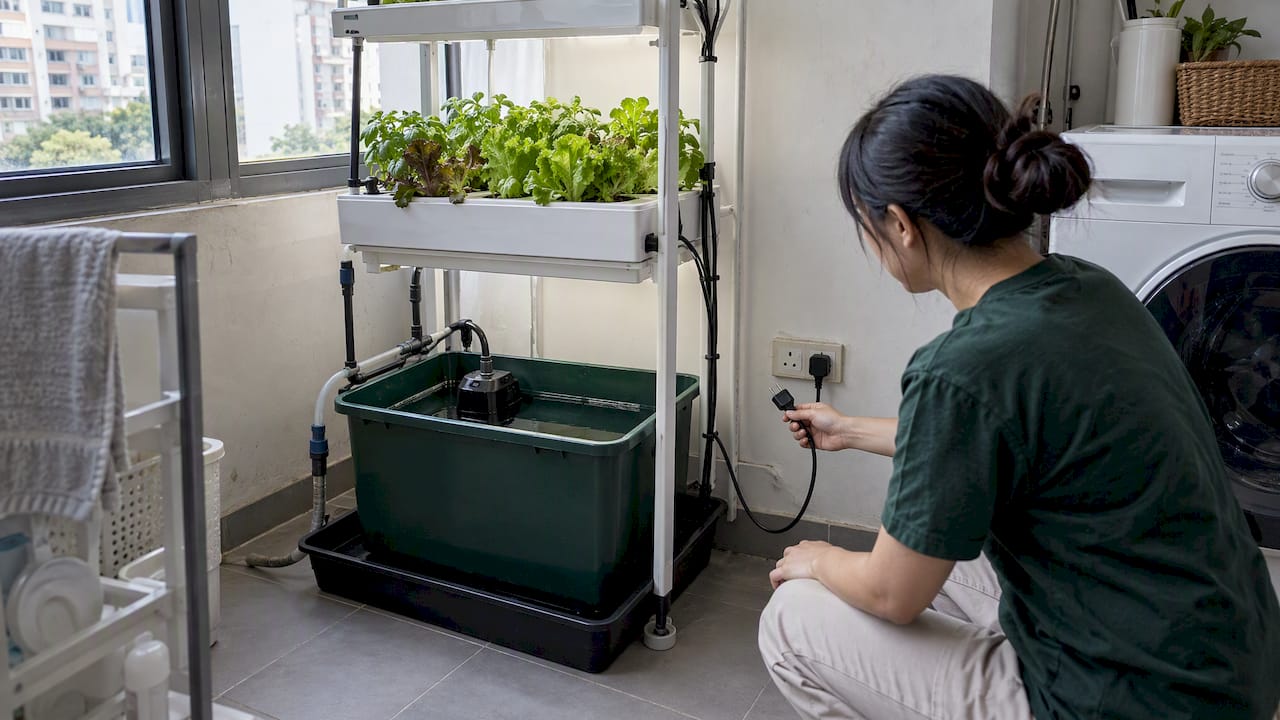
Yes, indoor hydroponic food production is generally safe when you manage a few specific controls: water hygiene, scheduled cleaning of food-contact surfaces, and clear separation between water and electrical components. Pathogens and contamination risks in home systems come from predictable sources, which means they’re also predictable to prevent. The sections below walk through exactly how.
TL;DR:
- Monitoring water temperature and dissolved oxygen levels is crucial, especially above 29 degrees Celsius when oxygen availability drops significantly.
- Regular UV-C treatment and proper nutrient chemistry management can considerably reduce pathogen presence, with specific dosing and timing strategies being essential.
- Daily visual checks and quarterly deep cleans targeting biofilms and algae buildup help prevent the proliferation of harmful bacteria and maintenance issues.
- Electrical safety requires GFCI outlets, proper cable routing, and drip trays to prevent shocks or fires in systems with water contact.
- Keeping edible plants in a separate, well-maintained system from toxic ornamentals minimizes household safety risks such as pet ingestion of poisonous species.
A hydroponic system is really one connected body of water touching every plant in it. That’s the trade-off behind the fast growth: when nutrient solution recirculates through pumps, tubing, and trays, anything that enters the reservoir, whether it’s a pathogen on a seedling root or residue from an unwashed hand, has a direct path to every other plant sharing that loop. A soilless growing system can produce more food per square foot than soil, but that same efficiency means a single contamination event spreads faster than it would in separated garden beds.
Recirculating nutrient solution functions like production water in a commercial kitchen. It connects many surfaces, and human interaction with the system, topping up, pruning, harvesting, moves contamination risk around just as easily as the water does, which is why produce-safety guidance for hydroponic growers treats worker hygiene and standard operating procedures as core controls, not extras, according to introductory produce safety guidance.
The hazards worth tracking fall into a few categories:
None of these require industrial-scale equipment to manage. They require a routine, which is what the rest of this guide gives you.
Nutrient solution is the single highest-leverage thing to monitor in an indoor system, because pH, electrical conductivity (EC), and dissolved oxygen (DO) all shape whether pathogens thrive or struggle. Check pH and EC daily in an active system, more often during hot weather or heavy feeding, and check DO whenever water temperature climbs, since warm water holds less oxygen and stressed roots are more vulnerable to disease.
Water temperature matters more than most home growers expect. Dissolved oxygen levels near 6 to 8 milligrams per liter support healthy roots for many crops, but once solution temperature rises above roughly 29 to 32 degrees Celsius, oxygen availability can drop to 2 to 3 milligrams per liter, according to SFA’s best-practice guidance on hydroculture systems. That drop stresses roots and creates conditions where pathogens gain ground.
UV-C light treatment at 1.32 mW/cm² significantly reduced Listeria monocytogenes in lettuce, tomato, and strawberry nutrient solutions, with greater reductions at longer exposure times, according to a peer-reviewed study on pH, nutrient composition, and UV-C treatment. The same research found that nutrient solution chemistry influences how well pathogens survive, meaning the composition of your feed isn’t just a plant-growth variable, it’s a safety variable too.
Practical options for home systems include:
Top up a reservoir with fresh, pH-balanced water between changes, but do a full drain and refill on a fixed schedule rather than waiting for visible problems. Our guide to hydroponic water change frequency covers how to log top-ups versus full changes so you’re not guessing at reservoir age.
Biofilms form wherever water moves slowly or sits in a shadowed corner, inside pump housings, at tubing joints, along the underside of net pots, and in sump corners that never see direct light. Once a biofilm establishes, it acts as a protective layer for bacteria, making surface wiping alone ineffective. Algae growth compounds the problem, since it feeds on light and nutrients and creates an organic matrix that biofilm bacteria can colonize more easily.
Early signs include a slightly slimy feel on tubing interiors, a faint sour or earthy smell near the reservoir, reduced pump flow, or a green tint on surfaces exposed to light. None of these require lab equipment to notice if you’re checking the system daily.
A targeted clean of pumps, tubing, and sumps:
Pro Tip: Keep a spare set of tubing on hand so you can swap in clean sections immediately and soak the dirty set separately, instead of running the whole system dry during a deep clean.
Design choices reduce how often this work is needed. Systems with a visible water level window and modular, easy-dismantle joints let you catch early buildup without full teardown, which is part of why reservoir-based system design matters as much as the cleaning routine itself.
Commercial produce operations organize cleaning around zones, and the same logic scales down neatly to a home system. Zone 1 is any surface that directly touches edible plant parts: net pots, grow trays, harvesting scissors. Zone 2 is surfaces near food contact but not touching it directly, like reservoir lids and tubing exteriors. Zone 3 covers the room environment: shelving, grow light housings, the floor beneath the unit. Zone 4 is everything else in the space, doorknobs, storage bins, anything indirectly connected. Mapping zones this way helps prioritize cleaning effort where contamination risk is highest, an approach drawn from produce-safety cleaning and sanitizing guidance for hydroponic operations.
A workable home schedule:
Clean in a fixed sequence to avoid moving contamination from dirtier zones into Zone 1: start with the room (Zone 3), then reservoir exterior and lids (Zone 2), and finish with trays, net pots, and tools that touch plants directly (Zone 1). Rinse and air-dry each component before it goes back into use, since trapped moisture undoes the sanitizing step.
Keep a simple log: date, what was cleaned, sanitizer used, and any observations like slow pump flow or unusual smell. A sample line might read: “March 14, 2026: quarterly deep clean, tubing soaked 10 minutes in food-safe sanitizer, no slime observed, pump flow normal.” Our practical food-safety routine for tropical indoor setups breaks this down further for warm, humid climates where biofilm and algae grow faster.
Every indoor hydroponic system puts water near powered components, pumps, timers, grow light ballasts, which makes electrical safety a non-negotiable layer, not an afterthought.
Pro Tip: Place a shallow drip tray under every pump and connection point, even ones you consider low-risk; it turns a slow leak into a visible, contained puddle instead of a silent path to a live outlet.
If you notice a leak near any electrical component, cut power at the breaker or unplug from a dry, safe distance before touching anything. After any short circuit or leak event, inspect cords for scorching or melted insulation, test the GFCI’s trip function, and replace any component that shows heat damage rather than reusing it.
Most common hydroponic crops are low-risk by nature: leafy greens, herbs, and fruiting plants like tomatoes and strawberries have been grown hydroponically at scale and respond predictably to the water-quality controls already covered.
Ornamental plants are where risk shifts from food safety to household safety. Many popular houseplants in the Araceae family, including philodendrons and pothos, contain calcium oxalate crystals that are toxic if chewed or ingested, a real concern if curious pets or small children have access to the growing area, according to Clemson’s guidance on poisonous houseplants. Keep ornamentals in a physically separate system or container from anything you intend to eat, and never share tools, reservoirs, or trimming scissors between the two. Before adding any new ornamental species to a home system, cross-reference it against a poison-control or animal-safety database rather than assuming it’s safe because it’s sold for indoor growing. If you want ornamentals purely for display, a dedicated decorative vase setup keeps them visibly and physically apart from your food crops.
A short daily check catches most problems before they become system-wide. Look for visible slime on tubing or trays, any sour or musty smell near the reservoir, unusual pump noise suggesting a clog or wear, and water level dropping faster or slower than expected.
For crop-specific monitoring, our guide to avoiding EC blind spots in indoor tomato hydroponics walks through how one crop’s nutrient demands can mask early warning signs if you’re only checking generic ranges.
Standing nutrient solution is exactly the kind of still water mosquitoes look for, and an uncovered reservoir or open-top tray gives them easy access. Signs of breeding include small larvae wriggling near the water surface and adult mosquitoes lingering unusually close to the grow area rather than near windows or doors.
Pro Tip: Check under net pots and around tray edges weekly. These shaded, slightly damp spots are where early-stage breeding is easiest to miss during a quick daily glance.
The Singapore Food Agency recommends daily checks and at least quarterly deep cleaning of home hydroponic kits, noting that design features like water windows and removable reservoir covers reduce both maintenance effort and mosquito-breeding potential. If pets or young children have access to the grow space, keep tools, sanitizer bottles, and nutrient concentrate stored in a latched cabinet rather than on an open shelf nearby.

New plants, especially store-bought starters, are one of the most common ways contamination enters an otherwise clean system. Soil-grown nursery stock can carry organisms that a hydroponic reservoir has no resistance to, since the system has no native microbial balance the way soil does.
Keep separate tools for quarantine handling until a new plant has cleared its isolation period and joins the main system.
A routine only works if it’s simple enough to actually follow. Daily checks take under five minutes: look for slime, smell, and water level. Weekly tasks, rinsing trays and checking tubing joints, run about fifteen minutes. The quarterly deep clean takes closer to an hour but is the task most responsible for preventing biofilm buildup and pathogen accumulation.
| Task | Frequency | Approximate time |
|---|---|---|
| Visual check (slime, smell, water level) | Daily | Under 5 minutes |
| pH and EC test | Daily to every few days | 5 minutes |
| Tray and net pot rinse | Weekly | 15 minutes |
| Full drain, sanitize, and refill | Quarterly | 45 to 60 minutes |
A compact system is easier to keep safe when its design does some of the work for you. A visible water window lets you check reservoir levels and spot early discoloration without opening the unit, and modular, easy-dismantle joints mean a quarterly deep clean doesn’t turn into a half-day project.
For a compact setup, the same schedule above applies directly: daily visual checks, weekly tray rinses, and a quarterly full clean, scaled only by the number of net pots you’re wiping down each time. Sensor-compatible ports let you add a pH or EC monitor without rebuilding the system around it.
These features map directly onto the hazards covered above: easier access means less temptation to skip a cleaning step, and visibility means problems get caught while they’re still small.
The gap between commercial produce-safety protocols and what a home grower actually needs isn’t about lowering standards, it’s about focusing effort. Most home hydroponic problems trace back to two things: a skipped daily glance and a cleaning schedule that existed only in someone’s head. You don’t need zone-mapped documentation binders to grow food safely indoors. You need a five-minute daily habit and a quarterly deep clean you actually do.
Document the small stuff anyway. A one-line log entry after each clean turns guesswork into a pattern you can actually see. If something looks off, a strange smell, a slower pump, don’t wait for it to get worse before investigating.
— Irwin Lee
We build our hydroponic systems around the same safety principles covered in this guide, because a system that’s easy to inspect and clean gets inspected and cleaned more often. Our designs include a water level window for daily checks without disassembly, and easy-dismantle joints that turn a quarterly deep clean into a manageable task instead of a dreaded one.
If you’re setting up a new system or replacing an aging one, hydroponic systems and plant care products built for the kind of routine maintenance this guide walks through, with pumps and joints that come apart cleanly, and trays that rinse without pooling water in hard-to-reach corners, are available. For readers comparing growing methods altogether, our breakdown of why hydroponics beats soil for indoor growing covers the practical differences in more depth.
Visit the Sprout Lab homepage to browse systems, soil mixes, and accessories built around these same safety principles.
This article is general information, not a substitute for advice from a qualified doctor. Consult a qualified healthcare professional about your own circumstances before acting on anything here.
Indoor hydroponic gardens are generally safe for growing food when you monitor water quality, clean food-contact surfaces on a set schedule, and keep electrical components isolated from water. The main risks come from skipped monitoring and infrequent cleaning rather than the method itself.
Common drawbacks include the need for regular water-quality monitoring, dependence on electrical pumps and lighting that must be managed safely around water, upfront cost for equipment, a learning curve around nutrient dosing, and the risk that a single contamination event spreads through the whole recirculating system faster than it would in separated soil beds.
Beyond the disadvantages above, hydroponic systems require consistent attention since plants rely entirely on the nutrient solution you provide, with no soil buffer to fall back on if feeding is inconsistent. This makes routine checks more important than they typically are for soil gardening.
Toxic ornamentals like philodendrons and pothos, both in the Araceae family, are not recommended in systems also growing edible crops, since they contain calcium oxalate crystals that pose a risk if ingested by children or pets, according to Clemson’s guidance on poisonous houseplants. Keep ornamentals in a fully separate system rather than sharing a reservoir with anything you plan to eat.