Free shipping for order over $50

Free shipping for order over $50
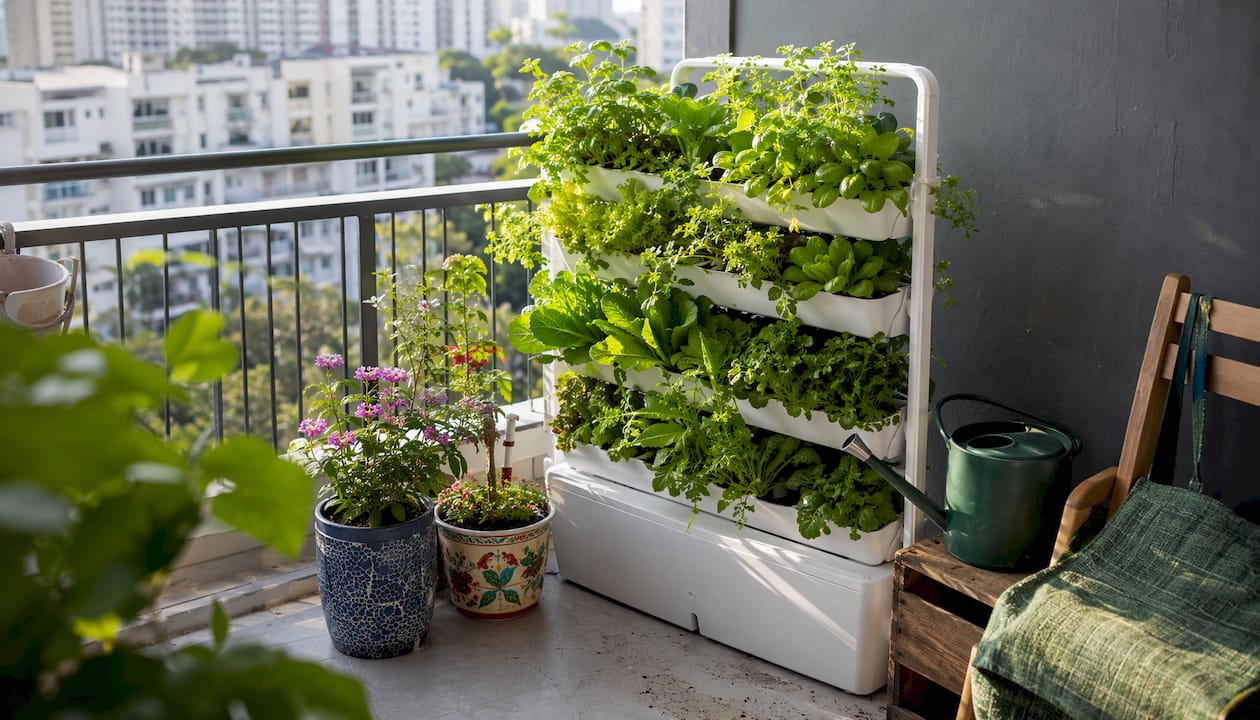
For most Singapore apartment kitchens and balconies, a modular vertical tower or countertop automated unit delivers the best yield per square foot with the least weekly effort. Sprout-lab’s modular hydroponic system stands out as the recommended pick for busy urban growers: it fits many plants in a compact footprint, runs with minimal hands-on time, and comes backed by a very high star rating across numerous completed orders.
Two reasons this matters for apartment living:
Hydroponics removes soil-borne disease risk and fits naturally into the vertical, compact footprints that define HDB and condo living. If you only need a handful of herbs, a countertop unit or a passive Kratky jar is the faster, cheaper starting point.
The five system types below cover every realistic apartment scenario, from a kitchen windowsill to a full balcony wall.
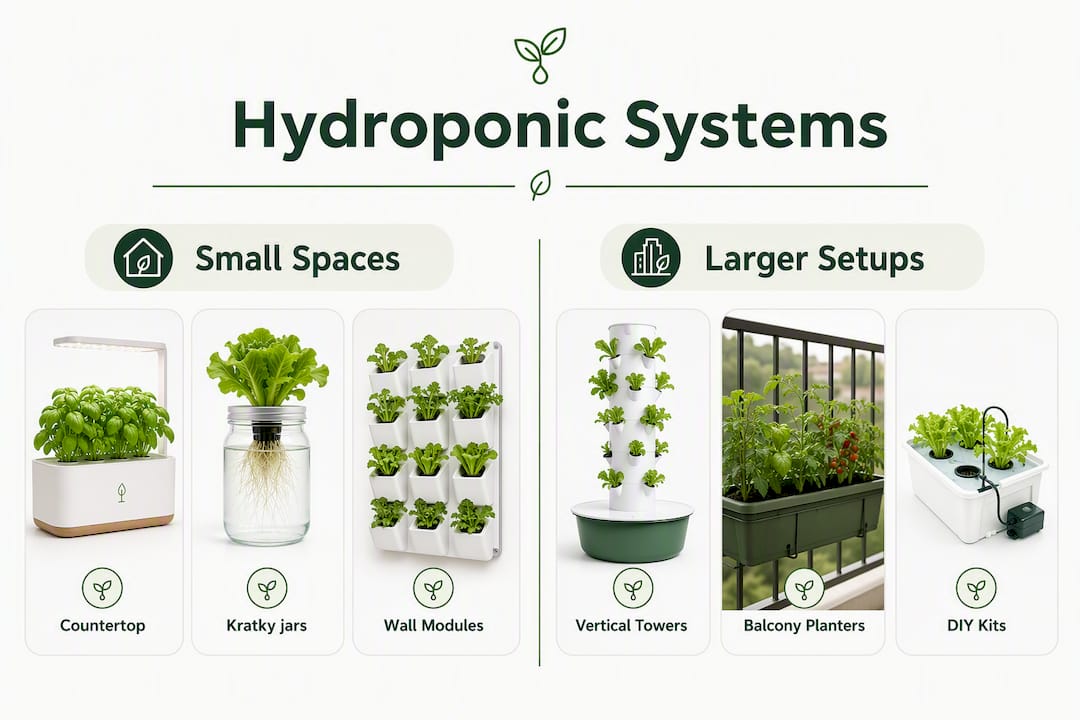
These plug-and-play units sit on a kitchen counter or shelf, with built-in LED lighting and automated water circulation. Most hold 6–20 plants and require nothing more than topping up the reservoir and adding nutrients. Countertop automated units are the lowest-risk entry point for busy households growing fresh herbs year-round.
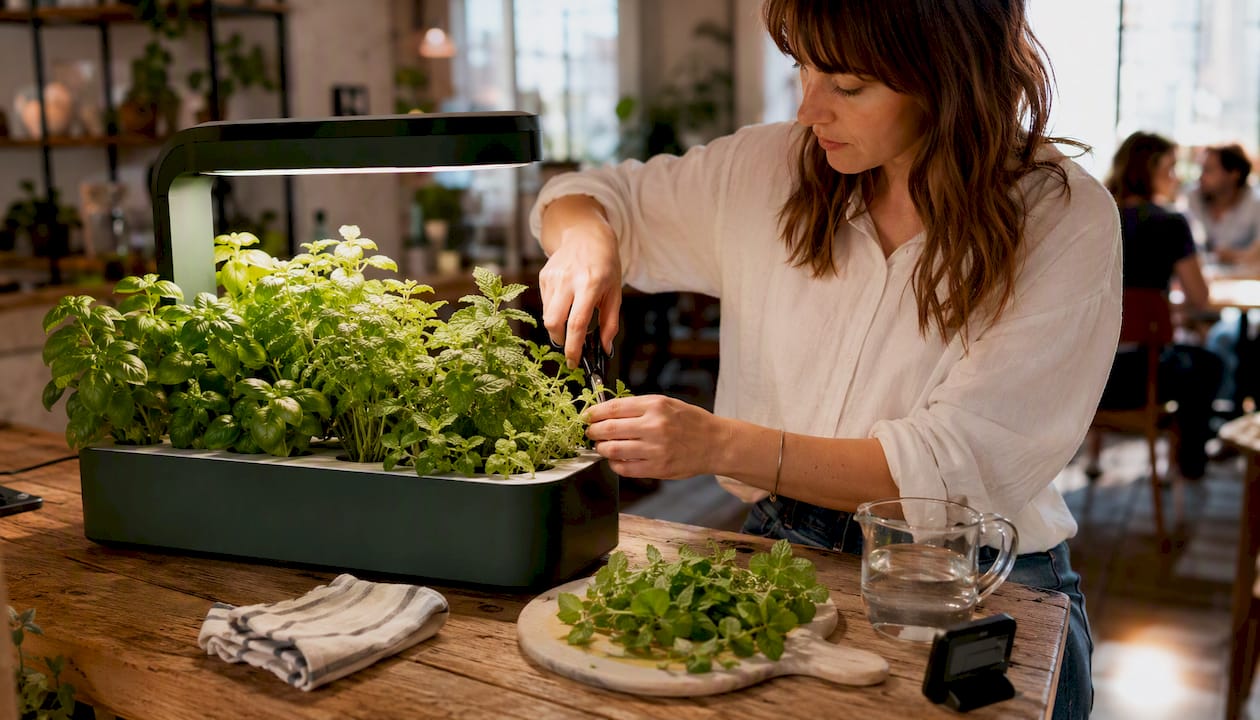
Best for: Small kitchens, beginners, daily-use herbs (basil, mint, chives).
Pros: Plug-and-play, no natural light needed, quiet.
Cons: Limited plant count, not suited to fruiting crops.
Towers stack plants upward and circulate nutrient solution from base to top. A typical unit holds several dozen plants in roughly the same floor space as a single pot. Modular vertical systems maximize yield per square foot, making them the practical choice for HDB living where unused vertical space is the real asset. Sprout-lab’s modular setup is the recommended option here.
Best for: Balconies, open kitchen corners, growers who want volume.
Pros: High plant density, scalable, suits leafy greens and herbs.
Cons: Requires a pump, slightly more setup time.
These attach directly to a wall and grow plants in rows or panels. Beyond the food they produce, a living green wall in a kitchen or dining area genuinely changes the feel of a room.
Best for: Renters who want a decorative and functional setup.
Pros: Space-saving, visually striking.
Cons: Wall fixings may need landlord approval; drainage planning required.
Rail-mounted planters clip onto HDB balcony railings and use natural sunlight, making them ideal for a Self-Watering Planter Box Durable Wood Set for Window Garden – PriceLows™ approach. They work well for cherry tomatoes, chili peppers, lettuce, spring onions, and pak choy. Check your town council’s guidelines before installing anything that extends beyond the railing line.
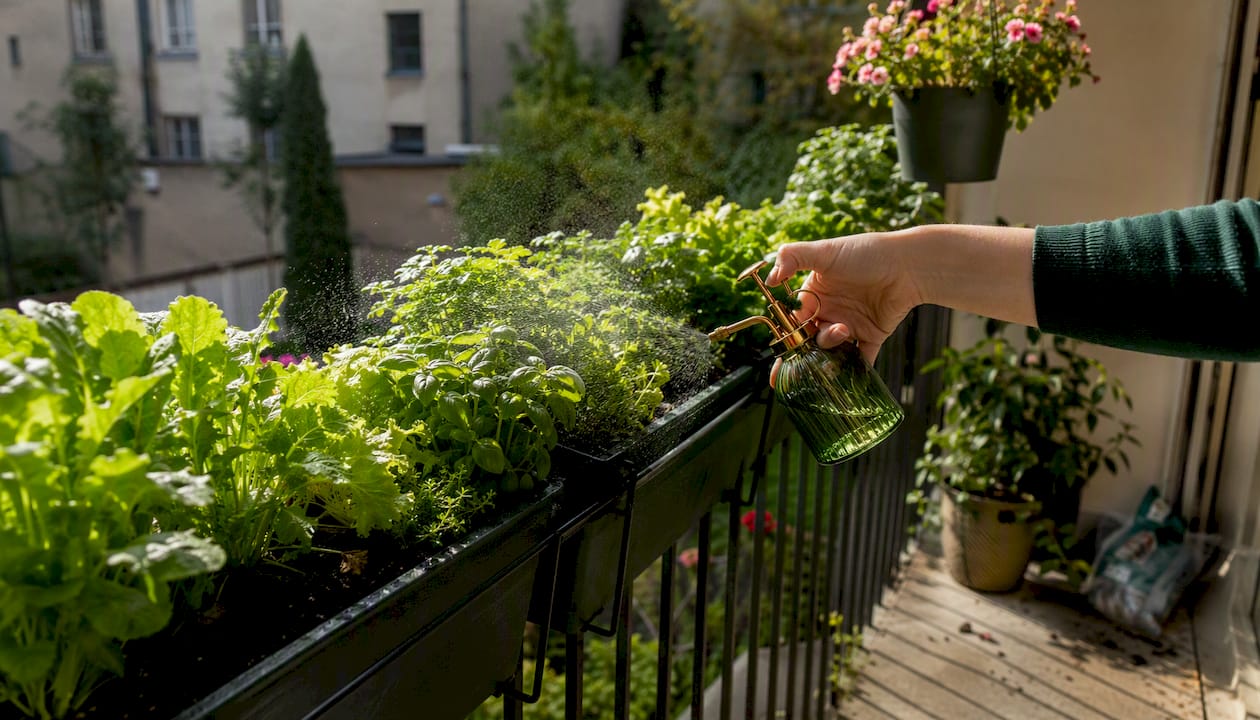
Best for: Balcony growers with direct sun exposure.
Pros: Free natural light, good airflow, no electricity needed.
Cons: Weather-dependent, limited to balcony-tolerant crops.
A Kratky mason-jar setup is the smallest functional hydroponic system available: a jar, a net pot, grow media, and nutrient solution. No pump, no electricity, no complexity. It works on a windowsill and costs almost nothing to start.
Best for: Curious beginners, single-herb growers, tight budgets.
Pros: Minimal cost, zero electricity, dead simple.
Cons: One plant per jar; not suitable for fruiting crops that need structural support.
Pro Tip: If you have a sunny windowsill, start with a Kratky jar of lettuce before spending anything on a larger system. Two weeks of watching roots grow tells you more about hydroponic care than any guide.
| System type | Best for | Plants supported | Typical footprint | Ease of use | Typical price range |
|---|---|---|---|---|---|
| Countertop smart garden | Small kitchens, beginners | Herbs, leafy greens | Counter space only | High (automated) | $80–$200 |
| Vertical tower (modular) | Balconies, open corners | Leafy greens, herbs | 1–2 sq ft floor | Medium | $150–$300 |
| Wall-mounted module | Decorative indoor walls | Herbs, small greens | Wall space only | Medium | $100–$300 |
| Balcony rail planter | Sunny balconies | Mixed vegetables, herbs | Railing only | Low (manual) | $40–$100 |
| DIY / Kratky | Windowsills, beginners | Single herbs, lettuce | Minimal | Very high (passive) | Under $20 |
Run through this checklist before you buy anything.
| Setup type | Typical cost (SGD) | Seed-to-harvest (leafy greens) |
|---|---|---|
| DIY / Kratky | Under $30 | 3–5 weeks |
| Countertop smart garden | $80–$200 | 3–5 weeks |
| Vertical tower (modular) | $150–$300 | 4–6 weeks |
| Wall-mounted module | $100–$300 | 3–5 weeks |
Lettuce and fast herbs like basil typically reach harvest in 3–5 weeks under good LED lighting. Fruiting crops such as cherry tomatoes take 8–12 weeks and need more structural support than most compact systems provide.
For purchasing guidance and a local supplier list, the beginner’s buying guide covers what to look for and where to find it in Singapore.
Start with an automated countertop unit or a passive Kratky jar. Both systems have the lowest failure rate for beginners because they remove the two most common mistakes: overwatering and inconsistent nutrient delivery.
Setup checklist for your first system:
Best beginner crops: Lettuce and non-woody herbs are the top recommendation from extension research because they are compact, fast, and do not need structural support. Spinach, kale, basil, and mint all perform well. For Singapore-specific timing and variety picks, the fast-growing greens guide are worth bookmarking.
Pro Tip: Drain and replace your reservoir every 3–4 weeks and check pH weekly with a calibrated meter. Skipping this is the single most common reason plants stall or develop algae. A basic pH meter and adjustment kit costs under $20 and pays for itself in the first harvest.
Weekly maintenance routine:
Sprout-lab’s modular hydroponic system is the recommended choice for busy Singapore apartment growers who want real volume without dedicating significant floor space.
If you only need 6–10 herbs for daily cooking, a countertop unit or a Kratky setup is the smarter, cheaper starting point. Scale up to a modular tower once you know which crops you actually use. For a full breakdown of automation options, home garden automation covers timers, smart integrations, and what level of automation actually makes a difference.
Modular vertical systems like Sprout-lab’s give Singapore apartment growers the highest plant density per square foot with the least weekly effort, making them the practical default for most HDB and condo setups.
| Point | Details |
|---|---|
| Best system for most apartments | Modular vertical tower (up to 56 plants) or countertop smart garden for smaller herb needs. |
| Top selection criteria | Footprint, LED lighting, automation level, local warranty, and HDB compliance. |
| Fastest crops to harvest | Lettuce and herbs reach harvest in 3–5 weeks under good LED lighting. |
| Maintenance cadence | Full reservoir drain-and-change every 3–4 weeks; pH check at each change. |
| Sprout-lab recommendation | Sprout-lab’s modular system supports up to 56 plants with local support and a 4.9/5 star rating. |
Most hydroponic guides treat system selection as a feature checklist. That misses the real question: what actually gets used consistently by someone with a full-time job and a 90 sq meter flat?
Countertop units are genuinely great for herbs. But the growers who stick with hydroponics long-term tend to be the ones who scaled up to a vertical or modular system early enough to feel the difference in yield. Harvesting a full salad from your own balcony, rather than a sprig of basil, changes how you think about the whole practice.
The Kratky method deserves more credit than it gets. For a single person testing the waters, a mason jar of lettuce on a windowsill is a better first step than any $200 countertop unit. It teaches you pH management and root health without any financial pressure.
Where most beginners go wrong is skipping the reservoir change schedule. Automated systems create a false sense of security. The pump runs, the plants look fine, and then week five arrives with algae and yellowing leaves. The fix is simple and takes 20 minutes. The problem is that nobody told them it was coming.
Singapore’s tropical climate adds one more variable: heat. Reservoir temperatures above 24°C accelerate bacterial growth. Keeping systems indoors with air conditioning, or using a small aquarium chiller for balcony setups, makes a measurable difference in root health.
Growing 56 plants in a Singapore apartment sounds ambitious until you see a modular vertical system in action. Sprout-lab’s hydroponic systems are built specifically for urban growers who want real harvests, not just a decorative pot of basil.
The modular design stacks vertically, so your floor stays clear. Automated nutrient circulation handles the heavy lifting. Clear setup instructions and local customer support mean you are not left guessing when something looks off. Sprout-lab carries a 4.9/5 star rating from over 25,000 completed orders, and the warranty and spare parts are accessible without waiting weeks for international shipping.
Whether you are starting with a countertop kit or jumping straight to a full modular tower, the next step is the same: browse Sprout-lab’s automated hydroponic setups and find the configuration that fits your space and your schedule.
For most apartment growers, a modular vertical tower gives the best plant density per square foot. Sprout-lab’s modular system supports up to 56 plants in a compact footprint and includes local support and warranty.
Yes. Singapore’s urban farming sector uses hydroponics widely because more than 90% of food is imported and less than 1% of land is dedicated to farming, making soil-free indoor growing a practical necessity for food security.
A countertop automated unit or a passive Kratky jar setup carries the lowest failure risk for beginners. Both remove the most common mistakes, overwatering and inconsistent nutrients, and lettuce can reach harvest in 3–5 weeks.
Active systems need a full reservoir drain-and-change every 3–4 weeks and a pH check at each change. Weekly, plan for about 5 minutes to top up water and inspect roots.
Sprout-lab ships modular systems, grow lights, nutrients, and accessories directly to Singapore addresses. The beginner’s buying guide also lists what to look for when comparing local and online options.