Free shipping for order over $50

Free shipping for order over $50
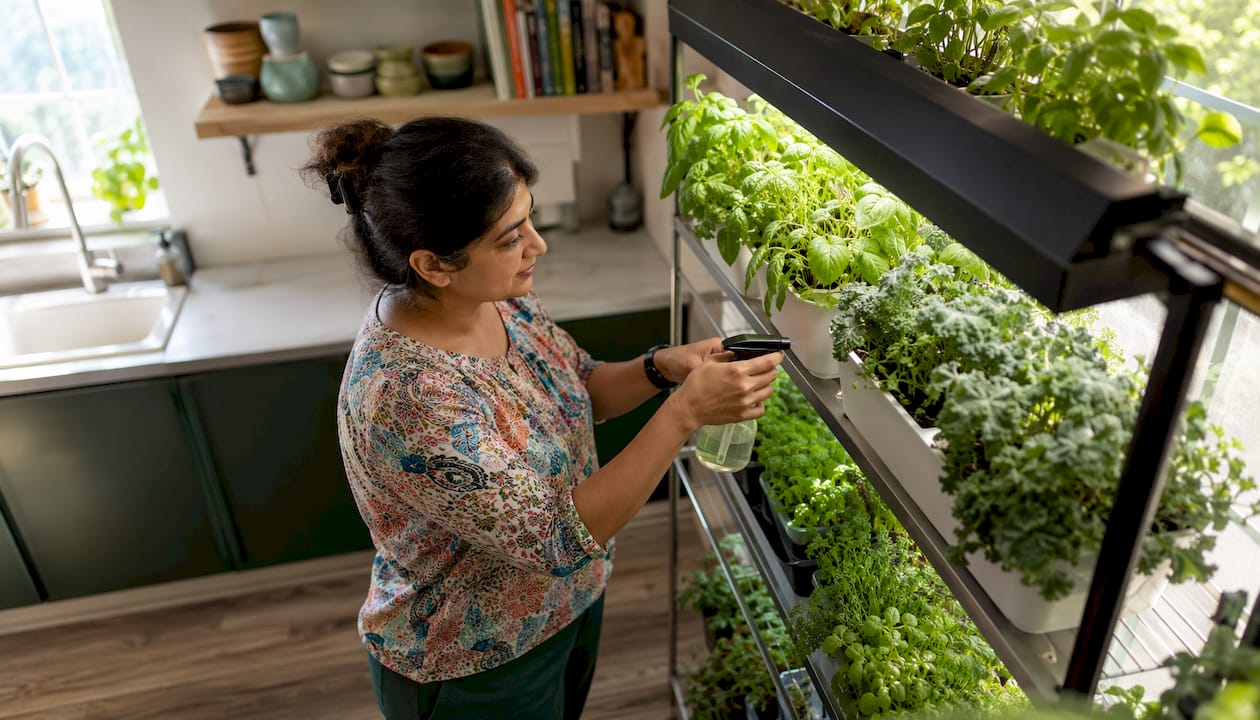
Compact hydroponic gardens are an ideal fit for busy urban professionals because they save time, space, and ongoing cost while delivering real wellness and food benefits. Three reasons stand out immediately:
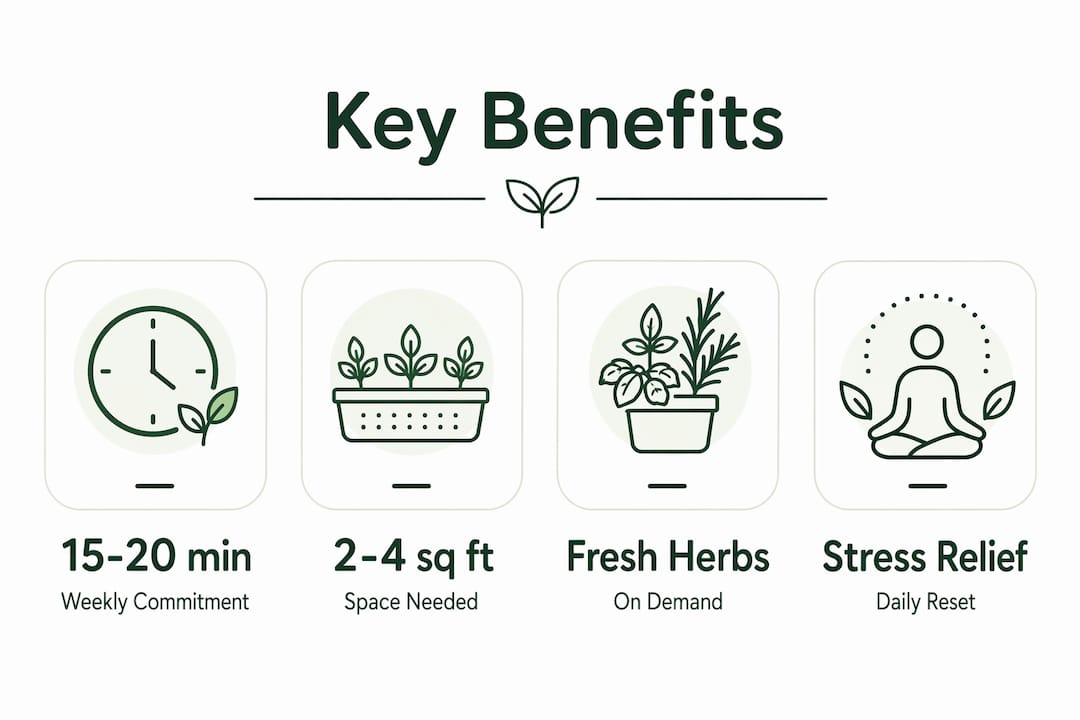
The payoff is concrete: fresh herbs and greens on demand, a daily mental reset that takes about 20 minutes, and zero weekend landscaping marathons.
The case for a compact garden isn’t just aesthetic. It’s practical in ways that map directly onto a professional’s daily constraints.
Time and renovation speed. Smaller gardens are faster and cheaper to renovate and can be fully reconfigured in a fraction of the time a large plot requires. Seasonal layout changes that would take a weekend in a big yard take an afternoon indoors.
Wellness. Research indicates that 20 minutes spent with greenery produces a measurable positive effect on stress and mood. That’s one lunch break, not a lifestyle overhaul. Young professionals increasingly treat balcony and compact gardens as low-effort mental-health tools that fit rented apartments.

Food access. Compact micro-gardens reliably supply herbs and salad greens year-round. Basil, mint, arugula, and spinach are ready in weeks, not months.
Pro Tip: Schedule one five-minute “garden check” between your morning calls. Water, pinch a leaf, breathe. It functions as a midday mental reset that costs nothing and compounds over time.
Not every system suits every schedule. Here’s a quick map of the main types and their trade-offs.
| System Type | Footprint | Automation Level | Capacity | Best For |
|---|---|---|---|---|
| Passive wick | Very small (1–2 sq ft) | None | 1–6 plants | Windowsill herbs, beginners |
| Kratky reservoir | Small (2–4 sq ft) | None (set-and-forget) | 4 plants | Travelers, minimal power |
| Recirculating reservoir | Medium (3–6 sq ft) | Low (weekly refill) | up to 56 plants | Apartment dwellers |
| Automated tower/stackable | Small–medium (2–4 sq ft) | High (app/timer) | Up to 56 plants | Remote workers, frequent travelers |
Passive wick systems require zero electricity and almost no attention, but they cap out at a handful of plants. Kratky-style reservoirs are genuinely set-and-forget for weeks at a time, which makes them a strong pick for anyone who travels frequently. Recirculating systems scale up capacity without demanding much more time. Automated towers handle the most plants in the smallest floor space and are the right call if your schedule is genuinely unpredictable.
For garden systems built around busy schedules, the automation level is the single most important variable to get right before you buy.
Pro Tip: If you’re away more than two nights a week, skip passive systems entirely. A reservoir or automated tower with a programmable pump will outlast your travel schedule without a babysitter.
Good compact garden design isn’t about cramming in more plants. It’s about making every element earn its place.
Verticality and layered planting. Trellises, wall planters, and hanging pots force the eye upward and create perceived depth. Put smaller plants at the front, taller specimens behind. The Chicago Botanic Garden’s horticulture director Tim Johnson recommends narrow, columnar varieties for tight spaces, noting that pyramidalis arborvitae outperforms the popular but wider Techny variety in small footprints. The same logic applies indoors: columnar herbs and compact leafy greens stack without crowding.
Lighting. Assess your natural light first. South-facing windows work for most herbs; north-facing spots need a directional grow light. Keep lights and pumps away from sleeping areas since even low-level hum disrupts sleep. Subtle garden mood lighting tucked into borders extends usable hours without glare.
Ergonomics and mobility. Containers on heavy-duty castor wheels let you reconfigure and access every side of a planter without permanent alterations. Raise systems to counter height to eliminate bending. For modular planter setups, mobility is what separates a system you’ll actually maintain from one you’ll ignore.
Quick design checklist:
Pro Tip: Treat every object as a design decision. A cluttered compact garden is more stressful than no garden at all. One well-placed grow light and three species beats ten mismatched pots.
Initial setup checklist:
Weekly tasks (15–20 minutes total):
Monthly tasks (30–45 minutes):
Timeline to first harvest: Most leafy greens and herbs reach harvest size in 3–5 weeks in a hydroponic system. With the right choices, compact setups can yield herbs and salad greens consistently once established.
For apartment-specific harvest timing, Sprout-lab’s guide on harvesting vegetables in a studio apartment covers the specifics by plant type.
Cost snapshot:
| System Type | Typical Initial Cost | Estimated Monthly Running Cost |
|---|---|---|
| Passive wick | $20 | Under $5 |
| Kratky reservoir | $40 | $5 |
| Recirculating reservoir | $80 | $10 |
| Automated tower (up to 56 plants) | — | $15 |
Before you buy, run through these criteria:
Vendor questions worth asking:
Quick profile match:
Sprout-lab’s hydroponic systems are built around the constraints that matter most to urban professionals: limited floor space, unpredictable schedules, and zero tolerance for complicated setups.
Pro Tip: Start with Sprout-lab’s herbs and greens starter configuration before scaling to 56 plants. A smaller first run teaches you the rhythm of the system with lower stakes.
Compact hydroponic gardens suit busy professionals because they require minimal weekly time, fit any apartment footprint, and deliver fresh food and measurable stress relief on a schedule that works around a career.
| Point | Details |
|---|---|
| Minimal weekly commitment | Most compact hydroponic systems need just 15–20 minutes of weekly maintenance. |
| Match automation to your schedule | Frequent travelers should choose Kratky or automated tower systems over passive wick setups. |
| Start with herbs and greens | Basil, lettuce, and spinach reach harvest in 3–5 weeks, giving the fastest return on a new setup. |
| Design for calm, not volume | Vertical layering and a limited plant palette make a small space feel larger and easier to maintain. |
| Sprout-lab as a starting point | Sprout-lab’s systems support up to 56 plants with a 4.9/5 rating from over 25,000 orders and full setup support. |
Most articles about compact gardens for professionals focus on what you gain: fresh herbs, a calmer desk view, a talking point for video calls. That’s all real. But the more interesting argument is what you stop losing.
A large garden, or even a medium-sized one, creates a background obligation. It sits in your peripheral awareness on Sunday mornings, during vacations, and on late-work weeks. That low-grade guilt is a cognitive tax. A compact hydroponic system, sized correctly and automated appropriately, eliminates that tax almost entirely. The system runs; you check in when you want to, not because you have to.
There’s also a subtler point about design. Professionals who treat compact gardens as a design problem, not a gardening problem, get dramatically better results. Every element chosen with purpose, every plant earning its square inch, every surface easy to clean. That discipline produces a space that genuinely restores rather than adds to the mental load.
The professionals who get the most from a compact indoor garden aren’t the ones who love gardening most. They’re the ones who treat it like any other system in their life: set it up right, automate what can be automated, and let it run.
Fresh herbs in three weeks, up to 56 plants in a footprint smaller than a side table, and a setup process that doesn’t require a gardening background. That’s the core of what Sprout-lab offers professionals who want the benefits of urban gardening without the time overhead.
Sprout-lab’s automated hydroponic systems are designed specifically for urban growers with limited space and limited time. The product range covers everything from entry-level passive setups to fully automated towers, backed by a 4.9/5 rating from over 25,000 orders and clear setup documentation. Replacement parts, nutrient solutions, and grow lights are all available in one place, so you’re not sourcing components from three different suppliers.
Browse Sprout-lab’s indoor gardening setups to find the system that fits your footprint and schedule.
Compact indoor hydroponic gardens require just 15–20 minutes of weekly maintenance, fit in 2–4 sq ft of floor space, and can be automated to run without daily attention, making them practical for professionals with demanding schedules.
Most herbs and leafy greens reach harvest size in 3–5 weeks in a hydroponic setup, rather than soil-based growing.
Kratky-style reservoirs or automated tower systems are the strongest options for frequent travelers, since both handle extended periods without manual intervention.
Modular systems like those from Sprout-lab can support up to 56 plants in a small footprint, though most professionals start with a smaller configuration and scale up.
Research indicates that 20 minutes spent with greenery produces a measurable positive effect on stress and mood, making a compact garden a practical tool for work-life balance.