Free shipping for order over $50

Free shipping for order over $50
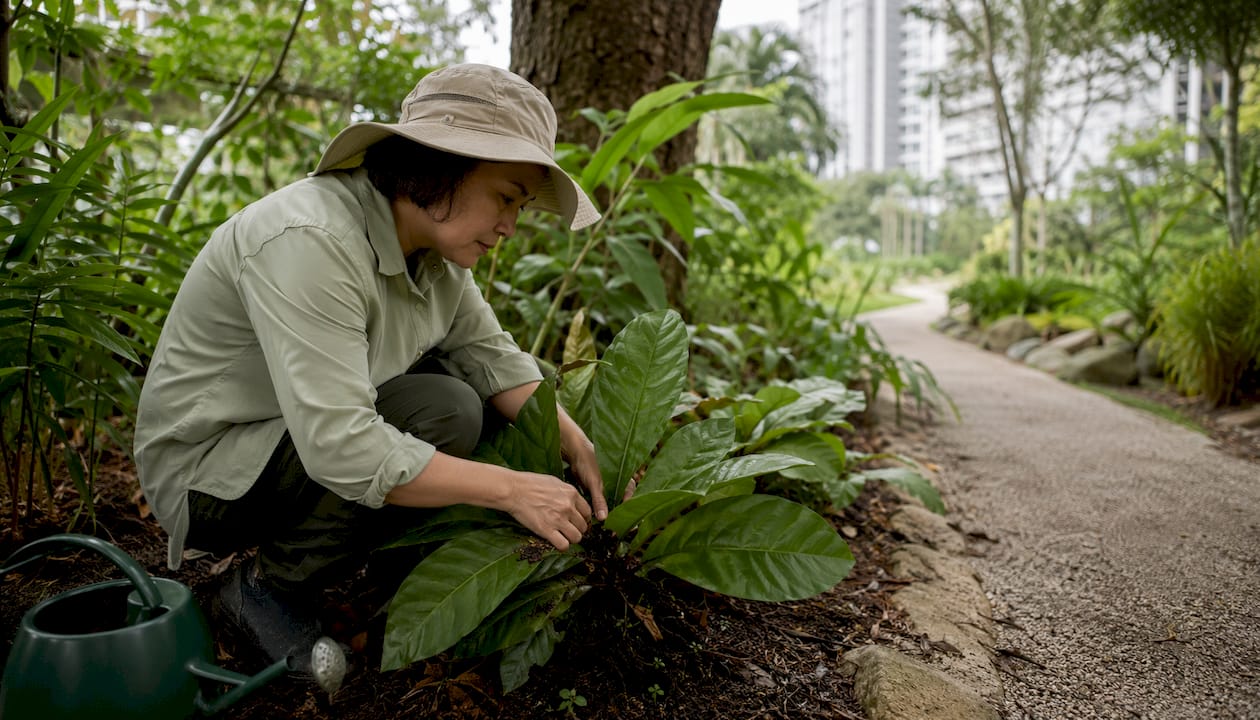
Shade is not a luxury in Singapore’s gardens. It is the single most important environmental tool the city-state has for keeping outdoor spaces livable, ecologically productive, and resilient against a warming climate. Shaded residential areas can run 1–2°C cooler at night than nearby commercial zones, a gap that compounds into real heat illness risk over weeks of tropical summer. Singapore achieves this through two distinct systems working in parallel: “grey” shade from built structures like arcades and building overhangs, and “green” shade from trees, vertical gardens, and ground-level plantings.
The role of shade in Singapore gardens goes well beyond comfort. It drives carbon sequestration, manages stormwater, supports urban biodiversity, and underpins the government’s City in Nature vision. Here is how it all works.
Key benefits of shade in Singapore’s gardens at a glance:
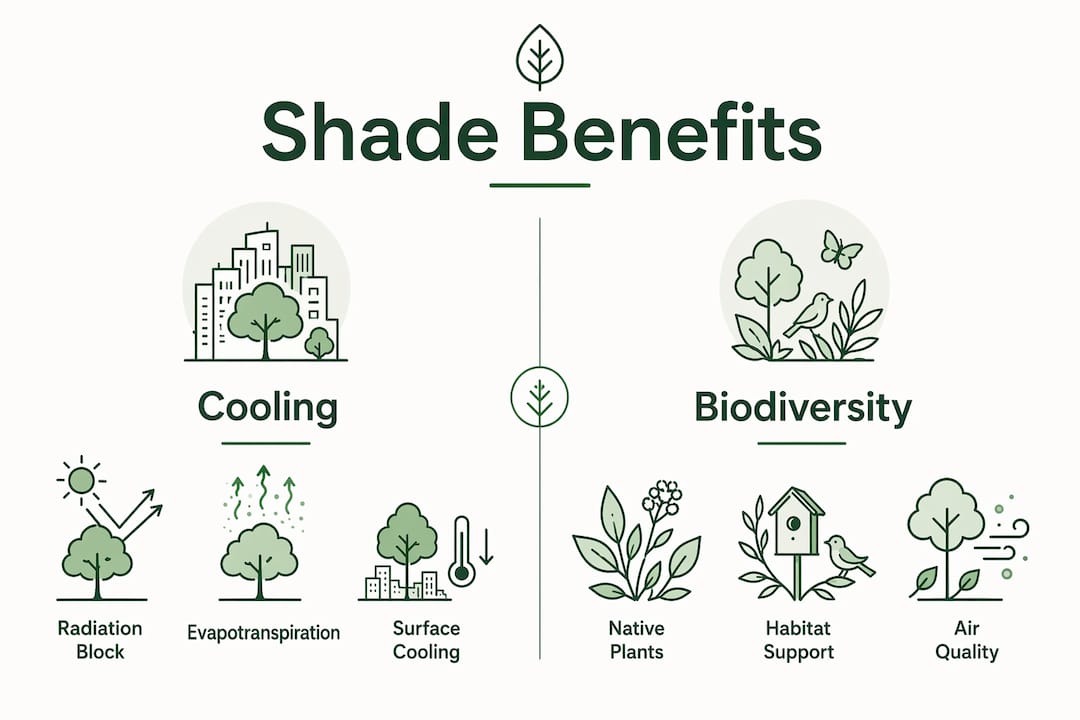
Tree canopies cool cities through two mechanisms working together: physical solar radiation blockage and evapotranspiration. The first is straightforward. A dense canopy intercepts direct sunlight before it hits pavement, walls, or human skin. The second is subtler. Plants actively release water vapor through their leaves, and that phase change pulls heat from the surrounding air. According to the U.S. Department of Energy, evapotranspiration from trees can reduce surrounding air temperatures by as much as 6°F, with air directly under a tree canopy running up to 25°F cooler than air above nearby blacktop.
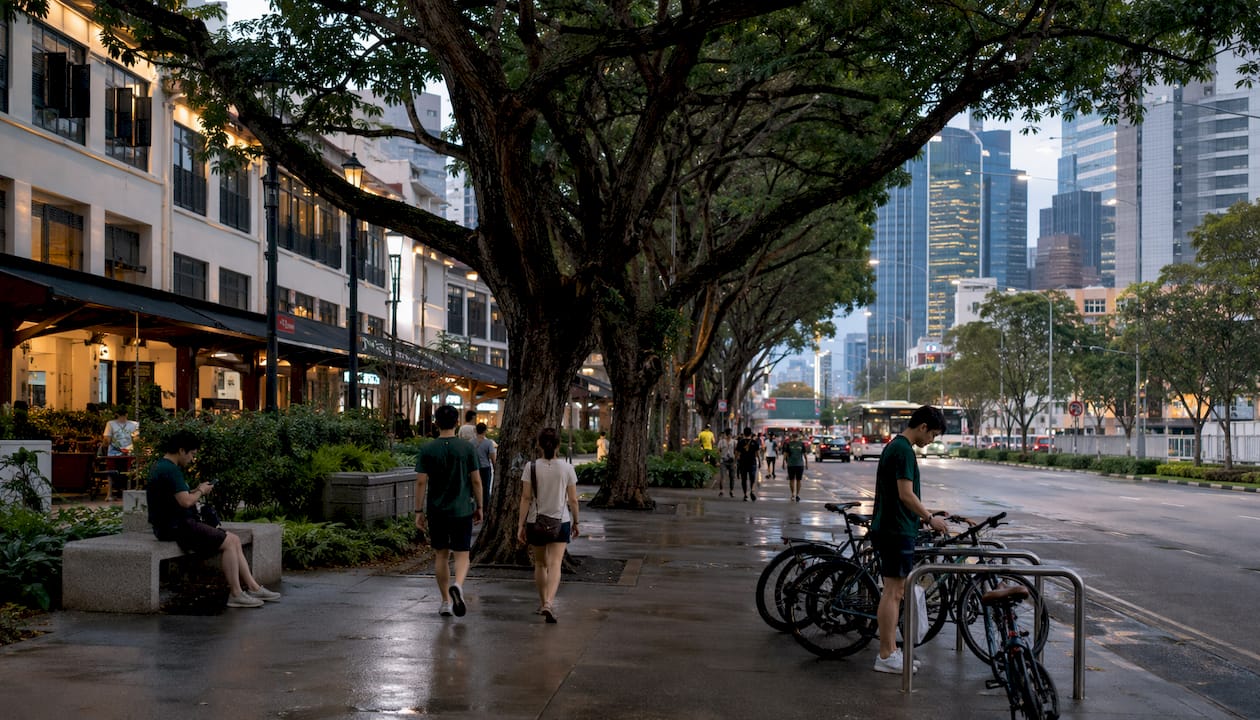
Google Street View canopy analysis in Singapore has mapped how street trees block both direct and diffuse solar radiation across urban neighborhoods, confirming that tree cover provides the majority of annual solar radiation shade in dense residential zones. Building shade, by contrast, reduces photosynthetically active radiation by nearly half in high-density areas, creating a fundamentally different light environment that shapes which plants can survive at ground level.
| Shade type | Primary cooling mechanism | Timing | Secondary benefit |
|---|---|---|---|
| Mature street trees | Evapotranspiration + canopy blockage | Day and night | Biodiversity, carbon capture |
| Building overhangs / arcades | Solar radiation blockage | Daytime only | Rain protection |
| Vertical gardens | Evapotranspiration + insulation | Day and night | Building energy savings |
| Ground-level shrubs | Surface temperature reduction | Daytime | Stormwater absorption |
Pro Tip: To maximize evapotranspiration cooling in a home garden, prioritize large-leafed species with high water demand, such as Alocasia longiloba, in spots that receive morning sun. Their leaf surface area drives more vapor release than small-leafed alternatives, making them genuinely functional as well as ornamental.
Singapore’s relationship with shade infrastructure predates independence by well over a century. The colonial-era “five-foot way,” a covered arcade running along the front of shophouses, was one of the earliest built shade systems in the city, designed specifically to protect pedestrians from tropical sun and monsoon rain. That logic, shelter as civic infrastructure, became embedded in how Singapore thinks about public space.
After independence, the approach scaled dramatically. Lee Kuan Yew’s government treated urban tree planting not as beautification but as policy, mandating greenery requirements that developers had to meet before receiving building occupancy permits. The result was a city where shade is legally required, not optional. Government mandates now prevent building occupancy until greenery and shade requirements are satisfied, a regulatory lever with no real equivalent in most other cities.
Key phases in Singapore’s shade infrastructure development:
Void decks, the open ground floors of public housing blocks, represent another layer of this thinking. They are shaded communal spaces by design, offering residents a place to gather, hold events, and move between buildings without stepping into direct sun. That social function is inseparable from the thermal one.
Choosing the right plant for a shaded spot is where most Singapore gardeners go wrong. The NParks native plant database identifies several species that have evolved specifically for the semi-shade and full-shade conditions created by Singapore’s dense urban canopy, and they outperform exotic alternatives in both resilience and ecological value.
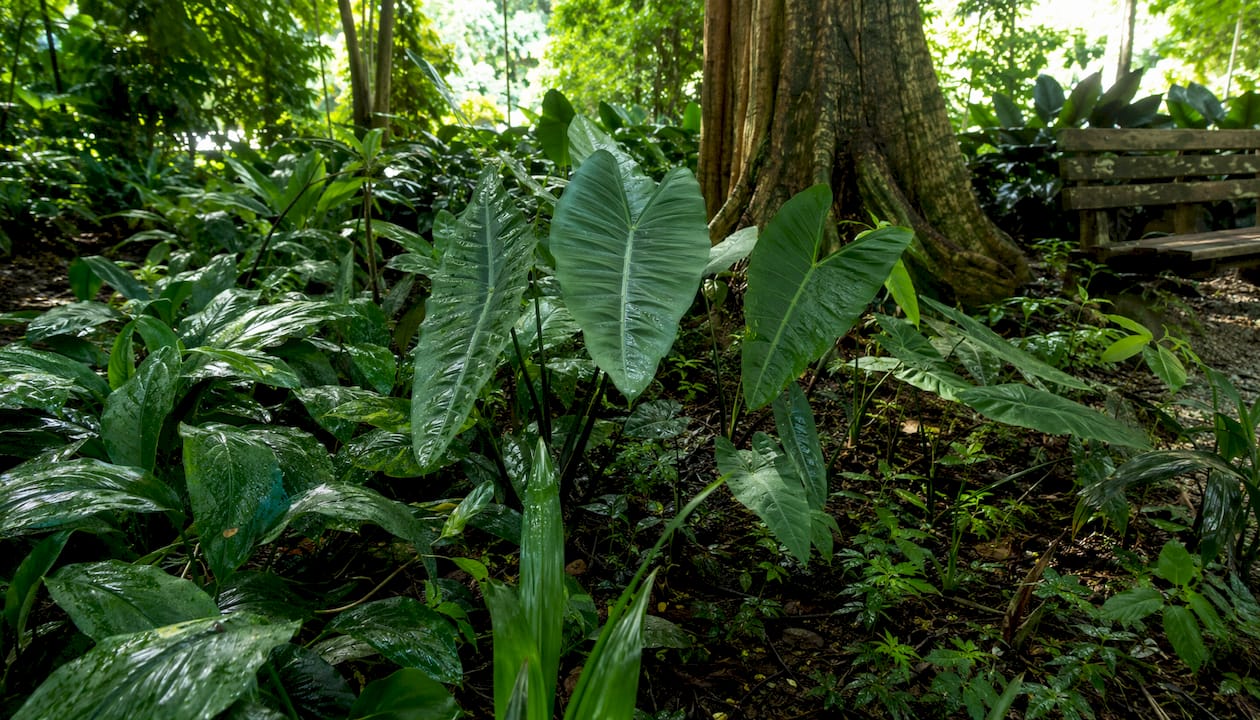
Alocasia longiloba grows to 1.5 meters tall, with large arrow-shaped leaves on mottled brown stalks. NParks recommends it as a native substitute for the commonly planted exotic Alocasia macrorrhizos, and it performs equally well as a backdrop or border plant in partial to full shade, including indoors. Its fast growth rate makes it one of the most practical choices for filling shaded corners quickly.
Aglaonema nitidum suits moist, shaded areas and works particularly well around water bodies kept under canopy cover. It tolerates semi-shade to full shade and carries moderate growth, making it a reliable choice for parks, small gardens, and indoor settings alike.
Scindapsus hederaceus is a native climbing aroid with deep green foliage that thrives in semi-shade to full shade on moderate water. It works as a ground cover, hanging basket plant, or terrarium specimen, and requires minimal sunlight, which makes it one of the most versatile options for shaded urban gardens.
| Species | Light preference | Growth rate | Best use |
|---|---|---|---|
| Alocasia longiloba | Semi-shade to full shade | Fast | Borders, backdrops, indoor |
| Aglaonema nitidum | Semi-shade to full shade | Moderate | Water-adjacent, parks, indoor |
| Scindapsus hederaceus | Semi-shade to full shade | Moderate | Ground cover, hanging baskets |
Building shade cuts photosynthetically active radiation by nearly half in dense residential zones, so plants that evolved under forest canopy in Singapore’s native ecosystems are pre-adapted to exactly these conditions. Selecting them is not just an ecological preference. It is the practical path to a garden that actually thrives.
Pro Tip: If you are working with a spot that gets almost no direct sun, check whether the shade is “dry shade” (under a building overhang) or “moist shade” (under a tree canopy). Aglaonema nitidum handles moist shade well, but dry shade demands species with lower water needs. Getting this distinction right saves a lot of failed plantings.
For guidance on plant placement and sunlight in small urban gardens, Sprout-lab’s 2026 guide covers the practical angles in detail.
Shade does more than cool the air. Singapore’s urban greenery policies classify it as a regulatory ecosystem service, meaning it performs measurable environmental functions that built infrastructure cannot replicate. Trees remove carbon dioxide, hold water that would otherwise cause flash flooding, and create the layered habitat structure that urban wildlife needs to persist in a dense city.
Urban vegetation also traps fine particles, reduces surface runoff, and mitigates haze impacts, extending the benefits of urban greenery well beyond temperature regulation. Shaded parks and green corridors function as ecological networks, connecting fragmented habitats and allowing species to move through the city. That connectivity matters for pollinators, birds, and the broader food web that keeps urban gardens productive.
The social dimension is equally concrete. Shaded neighborhoods show lower rates of heat-related illness, and epidemiological studies link cooler temperatures in shaded areas directly to decreased heat stress risk. Shaded parks and community gardens also show measurably higher use rates, which feeds back into community cohesion and mental health outcomes. NParks’ own guidelines note that visual exposure to trees and greenery reduces stress levels and supports better social relationships.
Singapore’s Green Plan 2030 ties these threads together, setting explicit targets for canopy cover expansion, nature park growth, and the integration of greenery into new developments. Shade is not incidental to those targets. It is the mechanism through which most of them are achieved.
Effective shade design in Singapore requires combining grey and green elements, because each covers the gaps the other leaves. Buildings and arcades deliver reliable daytime shade in fixed locations, but they do nothing at night and provide no evaporative cooling. Vegetation cools continuously, including after dark, but young trees take years to reach useful canopy coverage. The two systems are genuinely complementary, not interchangeable.
Singapore’s planning framework reflects this. Developers must shade a significant portion of outdoor seating areas during peak daylight hours, using a combination of building placement and vegetation. Plazas are frequently oriented to maximize afternoon shade from adjacent buildings, since afternoon sun in Singapore’s equatorial position is the most intense and hardest to block with young trees alone.
Gardens by the Bay’s supertrees are the most visible example of this integration. Each structure supports over 150,000 plants across its vertical surface, providing daytime shade at ground level while functioning as a living wall for biodiversity. The supertrees also harvest solar energy and collect rainwater, demonstrating that shade infrastructure can carry multiple environmental functions simultaneously.
Pro Tip: When planning a shaded plaza or garden terrace, orient the longest axis east-west. This maximizes the shadow cast by any structure or tall planting during the high-sun midday and afternoon hours, which is when thermal stress peaks in Singapore’s climate.
| Design element | Shade timing | Cooling type | Maintenance demand |
|---|---|---|---|
| Building arcade | Daytime, fixed | Radiation blockage | Low |
| Mature rain tree | Day and night | Evapotranspiration + blockage | Moderate |
| Supertree structure | Daytime | Radiation blockage + plant cooling | High |
| Vertical garden wall | Day and night | Evapotranspiration + insulation | High |
| Pergola with climbing plants | Daytime, seasonal | Radiation blockage | Moderate |
The rain tree (Samanea saman) deserves specific mention here. Its wide, spreading crown makes it one of the most effective single-species shade providers in Singapore’s urban parks and streetscapes, and it appears throughout NParks’ roadside planting programs precisely because of that canopy spread. Shade trees in coffee farm ecosystems demonstrate the same dual-function logic: canopy coverage that benefits both the plants below and the broader microclimate.
The most common mistake Singapore gardeners make with shade is treating it as a single condition. Shade varies enormously, from dappled light filtering through a sparse canopy to near-total darkness under a dense building overhang. Getting the plant-to-shade match right is the difference between a thriving garden and a collection of struggling, etiolated specimens.
Expert guidance from NParks draws a clear line between “shade tolerators” and “shade avoiders.” Shade avoiders respond to low light by elongating their stems rapidly, producing weak, leggy growth that collapses under its own weight. Shade tolerators, by contrast, have evolved to use diffuse light efficiently, maintaining compact, healthy growth even under dense canopy. The three native species profiled above, Alocasia longiloba, Aglaonema nitidum, and Scindapsus hederaceus, are all genuine tolerators. Planting a shade avoider in a full-shade spot is not a recoverable situation. The plant will not adapt.
Common challenges and practical solutions for shaded tropical gardens:
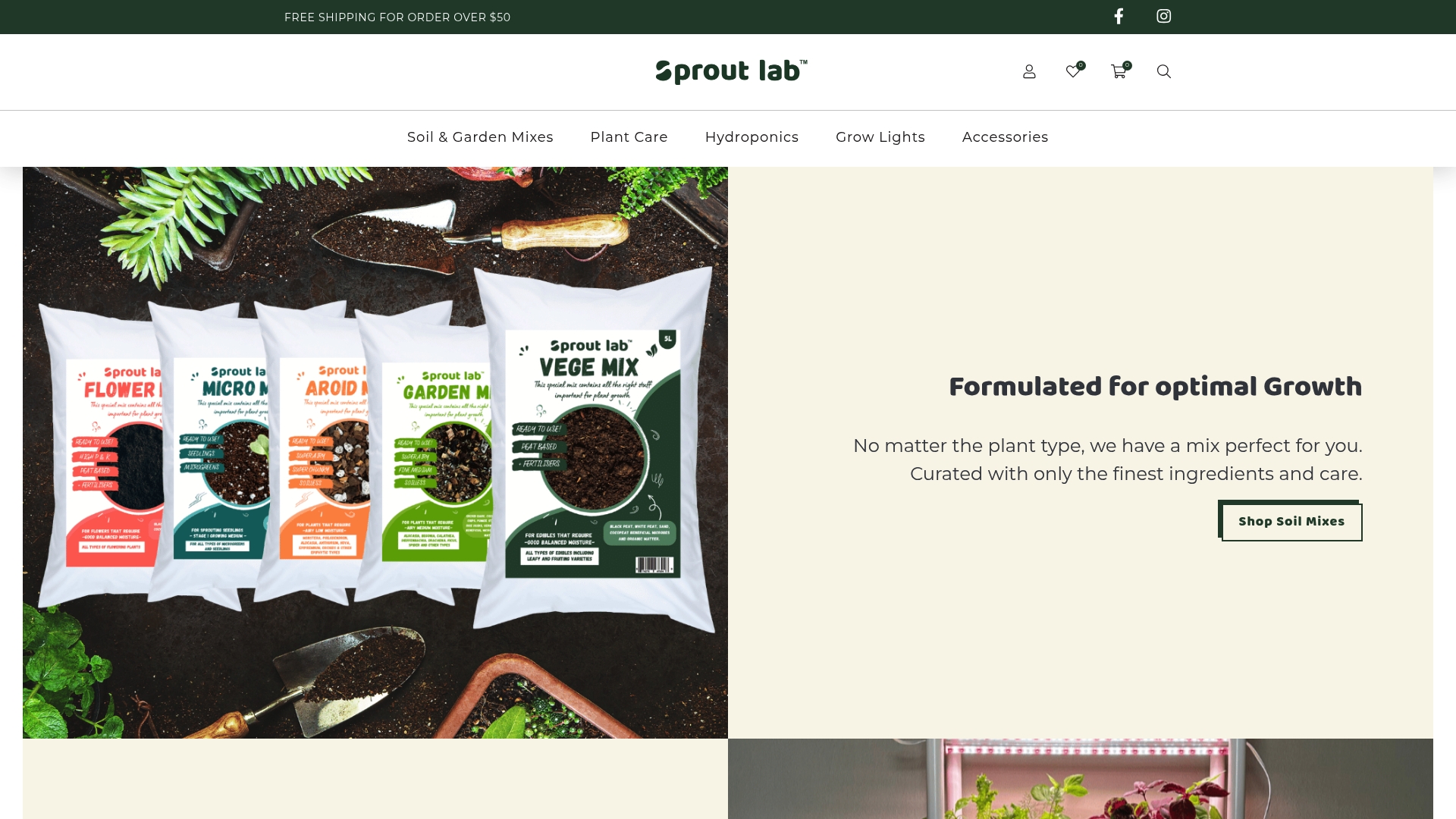
For gardeners dealing with plant heat stress in Singapore’s climate, shade management and species selection work together. Getting the shade right reduces the thermal load on plants, but the species still needs to be matched to the residual light level. Sprout-lab’s soil mixes are formulated for Singapore’s tropical conditions, supporting the moisture retention that shade-tolerant species need without waterlogging roots in the city’s high-humidity environment. If you are setting up a shaded urban garden and want a growing medium that handles the moisture dynamics correctly, premium soil mixes designed for Singapore’s climate are a practical starting point.
Sprout-lab’s automated hydroponic setups are also worth considering for shaded balconies and indoor spaces where soil-based growing is impractical. The modular systems allow up to 56 plants in a compact footprint, and the controlled nutrient delivery removes the soil fertility challenge that consistently trips up shade gardeners working in low-light, root-competitive environments.
Shade in Singapore’s gardens functions as a measurable environmental system, not a design preference, delivering cooling, biodiversity, and public health benefits that built infrastructure alone cannot replicate.
| Point | Details |
|---|---|
| Temperature reduction | Shaded residential areas run cooler at night than commercial zones, reducing heat illness risk. |
| Grey and green shade | Built structures cover daytime gaps; vegetation cools continuously including at night through evapotranspiration. |
| Native species selection | Alocasia longiloba, Aglaonema nitidum, and Scindapsus hederaceus are proven shade tolerators for Singapore’s conditions. |
| Regulatory framework | Developers must shade a significant portion of outdoor seating areas during peak daylight hours under Singapore planning rules. |
| Biodiversity and sustainability | Urban shade supports carbon sequestration, stormwater management, and ecological corridors across the city. |
Shade cools urban temperatures, supports shade-adapted native plants, reduces heat illness risk, and contributes to carbon sequestration and stormwater management. Singapore uses both built structures and vegetation to deliver these benefits across public and private green spaces.
The Singapore Green Plan 2030 covers city in nature, energy reset, green economy, sustainable living, and resilient future. Urban shade and canopy expansion mainly fall under the “city in nature” pillar, which targets increased green cover and biodiversity across the island.
Gardens by the Bay is best known for its supertree structures, each supporting over 150,000 plants on vertical surfaces that provide ground-level shade while functioning as living walls for biodiversity. The combination of engineering and ecology at that scale has no direct equivalent elsewhere.
Shade lowers air and surface temperatures through evapotranspiration and radiation blockage, retains soil moisture, reduces plant heat stress, and creates habitat for wildlife. In Singapore’s equatorial climate, these effects are amplified because solar intensity and ambient temperatures remain high year-round.
Alocasia longiloba, Aglaonema nitidum, and Scindapsus hederaceus are all native shade tolerators recommended by NParks for semi-shade to full-shade conditions. They outperform exotic alternatives in resilience and require less intervention once established in Singapore’s humid tropical environment.