Free shipping for order over $50

Free shipping for order over $50
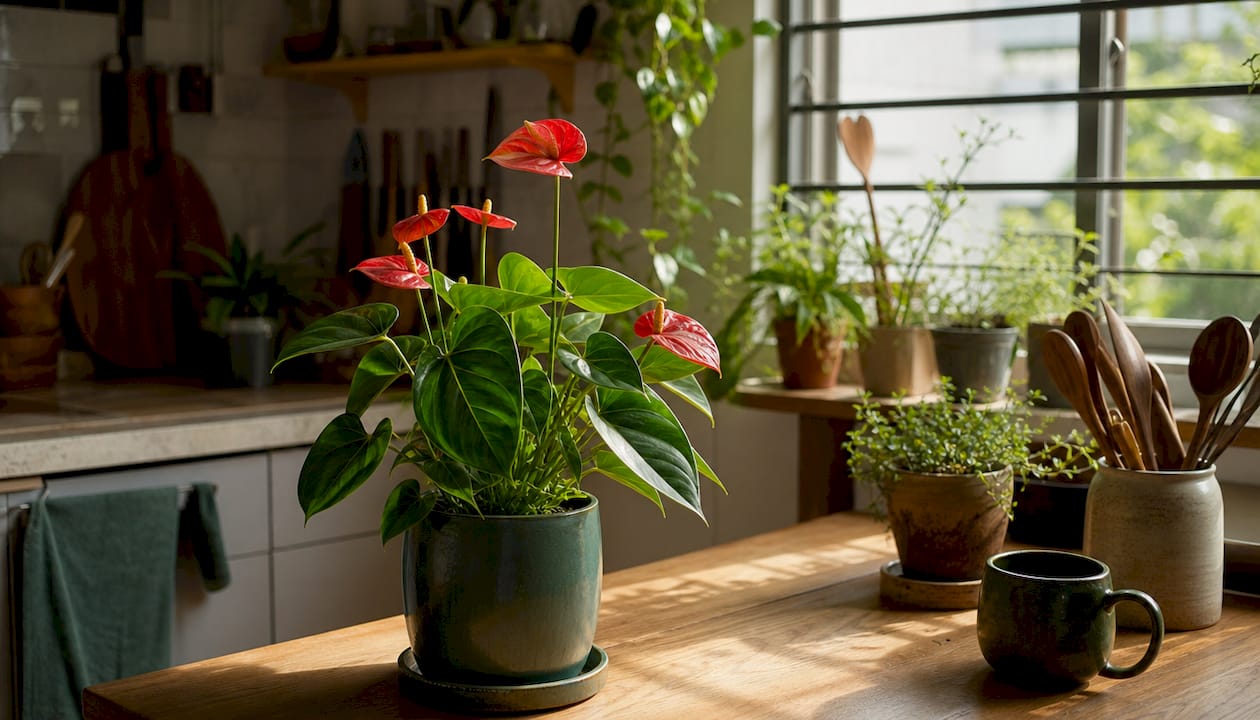
Anthuriums are defined as tropical epiphytic flowering plants that thrive indoors in Singapore’s climate with minimal fuss. To grow anthuriums indoors in your Singapore home, you need bright indirect light, humidity between 60–80%, well-draining acidic soil, and consistent warmth. Singapore’s year-round tropical conditions are nearly perfect for anthuriums, which means your biggest job is protecting them from air conditioning and overwatering. Get those two things right, and you can expect spathes that last 6–8 weeks and continuous blooms throughout the year. This guide covers everything you need, adapted specifically for Singapore homes and limited indoor spaces.
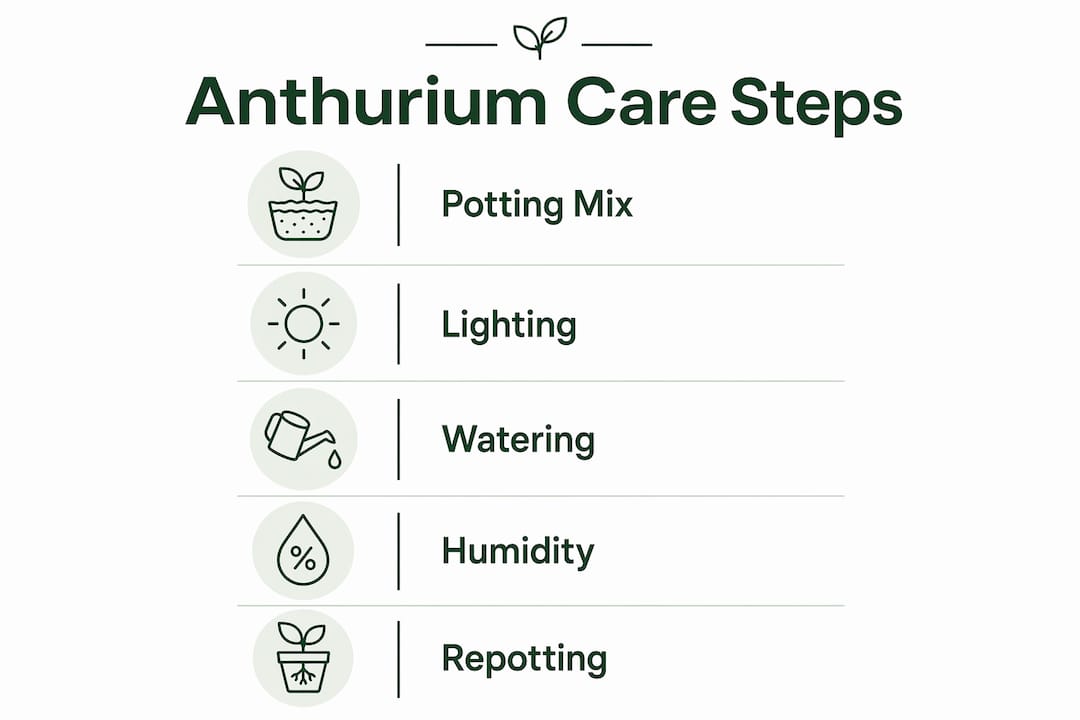
Singapore’s climate gives you a head start. Consistent warmth and humidity between 26–32°C and 60–80% humidity support year-round blooming without any special equipment. That is the good news. The challenge is that most Singapore homes run air conditioning for large parts of the day, and that changes everything.
Air conditioning reduces indoor humidity to 40–55% from the natural outdoor range of 70–90%. That drop causes leaf tip browning and slows flowering. Placing your anthurium near an AC vent makes the problem worse. Move plants at least 1–2 meters away from vents, and keep them in rooms where the AC runs for shorter periods.
For light, anthuriums need bright, indirect light to bloom. Direct sunlight burns the leaves and causes bleaching. The best spots in a Singapore home are:
Avoid placing anthuriums on shelves deep inside a room. Even in Singapore’s bright climate, a spot more than 2 meters from a window often lacks the light intensity needed for blooms. Check out this indoor plant lighting guide for more detail on choosing the right position.
Anthuriums are epiphytes by nature. In the wild, they grow on tree trunks and branches, not in dense soil. Their roots need air as much as moisture. A heavy, compact potting mix causes root rot fast, especially in Singapore’s humid conditions.
The best anthurium potting mix combines four components:
This mix stays airy, drains fast, and holds a slightly acidic pH, which anthuriums prefer. You can find specialized soil mixes at Sprout-lab that are formulated for tropical houseplants and take the guesswork out of blending your own.
Pot choice matters as much as the mix. Terracotta pots allow air exchange through their sides, which helps soil dry evenly and reduces root rot risk. Plastic pots trap moisture and can cause waterlogging in Singapore’s already humid environment. For small spaces, a terracotta pot in the 15–20 cm range suits most anthuriums well and fits easily on a windowsill or shelf.
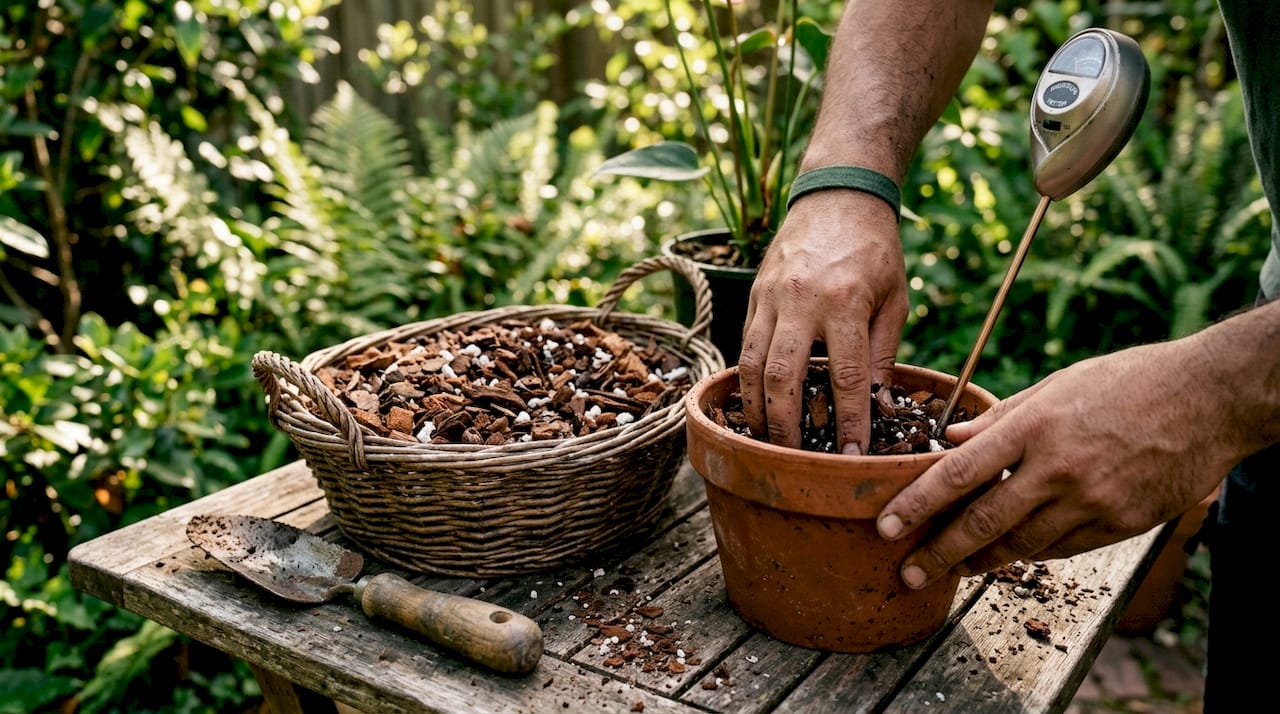
Repot every 1–2 years or when you see roots circling the bottom of the pot or pushing out of drainage holes. Moving up one pot size at a time prevents the roots from sitting in excess wet soil.
Pro Tip: Add a layer of orchid bark at the bottom of the pot before filling with your mix. This extra drainage layer prevents the roots from ever sitting in standing water, which is the most common cause of anthurium death indoors.
Overwatering kills more anthuriums in Singapore than any other mistake. The reason is counterintuitive. Singapore’s high ambient humidity means soil stays moist longer than it would in a temperate climate. Standard weekly watering advice from temperate zones often leads to overwatering here.
The correct approach is to water every 7–10 days and always use the finger test first. Push your finger 5 cm into the soil. If it feels moist, wait. If it feels dry, water thoroughly until it drains from the bottom. Never water on a fixed schedule without checking the soil first.
Watch for these signs to know when something is off:
Singapore’s tap water is alkaline, and anthuriums are acid-loving plants. Alkaline tap water causes leaf tip browning and nutrient stress over time. Use filtered water or collected rainwater at room temperature for the best results. This one change makes a visible difference within a few weeks.
For humidity management, skip daily misting. Excessive misting in Singapore’s humid climate raises the risk of fungal leaf spots without meaningfully raising humidity around the roots. Better options include placing a pebble tray filled with water under the pot, grouping plants together to create a humid microclimate, or using a small humidifier near your plants in heavily air-conditioned rooms.
Pro Tip: Collect rainwater in a clean container during Singapore’s frequent rain showers. Store it at room temperature and use it for your anthuriums. It is naturally soft, slightly acidic, and free. Your plants will show the difference within a month.
Light is the single biggest factor in whether your anthurium flowers. Inadequate lighting causes most blooming failures in indoor anthuriums. A plant with perfect soil and watering will still refuse to flower if it sits in a dim corner.
Bright, indirect light is the target. That means a spot where you can comfortably read a book without turning on a lamp during the day. For most Singapore HDB flats and condos, this means positioning your anthurium within 1 meter of a window. These plants that thrive in HDB apartments all share one trait: they get enough natural light from windows without direct sun exposure.
If your home has limited natural light, grow lights are a practical fix. Full-spectrum LED grow lights placed 30–45 cm above the plant for 12–14 hours a day replicate the light intensity anthuriums need. They run cool, use little power, and fit easily on a shelf or windowsill in a small apartment.
Rotate your plant a quarter turn every two weeks. This prevents one side from growing toward the light while the other stays in shade. Uneven light exposure causes lopsided growth and reduces flowering. A simple rotation habit keeps the plant full and balanced.
Even with good care, problems appear. Knowing what to look for saves your plant before damage becomes permanent.
“Adapting your care routine to Singapore’s tropical indoor climate, rather than following generic advice written for temperate zones, is the single most effective change you can make for your anthuriums. Most problems trace back to one source: applying the wrong rules to the right plant.”
Water quality deserves a separate mention. Singapore’s tap water is treated and slightly alkaline. Over months, this raises the soil pH and locks out nutrients that anthuriums need. Switching to filtered or rainwater is the simplest fix for persistent leaf tip browning that does not respond to humidity adjustments.
Growing anthuriums indoors in Singapore succeeds when you match their care to the local tropical climate, not to generic temperate-zone advice.
| Point | Details |
|---|---|
| Light drives flowering | Place anthuriums within 1 meter of a bright window; inadequate light causes most blooming failures. |
| Use terracotta pots | Terracotta allows air exchange and reduces root rot risk in Singapore’s humid indoor environment. |
| Water by feel, not schedule | Check 5 cm deep before watering; Singapore’s humidity keeps soil moist longer than expected. |
| Skip misting, improve airflow | Misting raises fungal risk; use pebble trays or a humidifier instead for humidity management. |
| Switch to filtered water | Alkaline tap water causes leaf tip browning; rainwater or filtered water preserves plant health. |
Most people who struggle with anthuriums in Singapore are following advice written for gardeners in London or New York. That advice is not wrong for those places. It is just wrong here.
The biggest misconception I see is the misting habit. Gardeners mist their anthuriums daily because they read that anthuriums love humidity. That is true. But Singapore’s outdoor air is already at 70–90% humidity. Misting adds surface moisture to leaves that are already in a humid environment, and that moisture sits there and invites fungal problems. The plant does not need more humidity on its leaves. It needs good airflow and roots that are not sitting in wet soil.
The second thing I would tell every Singapore home gardener is to stop being afraid of letting the soil dry out a little. The instinct is to water frequently because you want the plant to thrive. But anthuriums in Singapore are not struggling from drought. They are far more likely to die from root rot than from thirst. Trust the finger test. Let the top 5 cm dry before you water again.
For small-space growers, the best move is vertical. A single east-facing windowsill can support two or three anthuriums if you use a tiered plant stand. You get more plants in less floor space, and each plant gets consistent light. Pair that with a small-space growing guide and you will be surprised how much you can grow in a Singapore apartment.
Pay attention to what your plant tells you. Yellow leaves, brown tips, and no flowers are all messages. Learn to read them, and your anthurium will reward you with blooms that last almost two months at a stretch.
— Luna
Getting the soil mix right is the foundation of healthy anthuriums indoors. Sprout-lab’s tropical soil mixes are formulated for Singapore’s humid conditions, with the right balance of drainage and moisture retention that epiphytic plants like anthuriums need.
Sprout-lab also carries planting mediums including orchid bark, perlite, and coco coir for gardeners who prefer to blend their own mix. For home gardeners working with limited space, Sprout-lab’s modular garden systems let you grow more plants in less room without sacrificing plant health. With a 4.9/5 rating across more than 25,000 completed orders, Sprout-lab’s products are trusted by Singapore home gardeners who want results, not guesswork.
Water every 7–10 days, but always check the soil first by pushing your finger 5 cm deep. If the soil still feels moist, wait another two to three days before watering.
Inadequate lighting causes most anthurium blooming failures indoors. Move the plant within 1 meter of a bright, indirect light source such as an east or west-facing window.
Singapore’s tap water is slightly alkaline, which stresses acid-loving anthuriums over time. Filtered water or collected rainwater at room temperature is the better choice and prevents leaf tip browning.
Misting is unnecessary and can cause fungal leaf spots in Singapore’s already humid environment. Use a pebble tray or small humidifier instead, and prioritize good air circulation around the plant.
Repot when roots begin circling the inside of the pot or pushing out of drainage holes, typically every 1–2 years. Move up one pot size at a time and use a fresh, well-draining acidic mix.