Free shipping for order over $50

Free shipping for order over $50
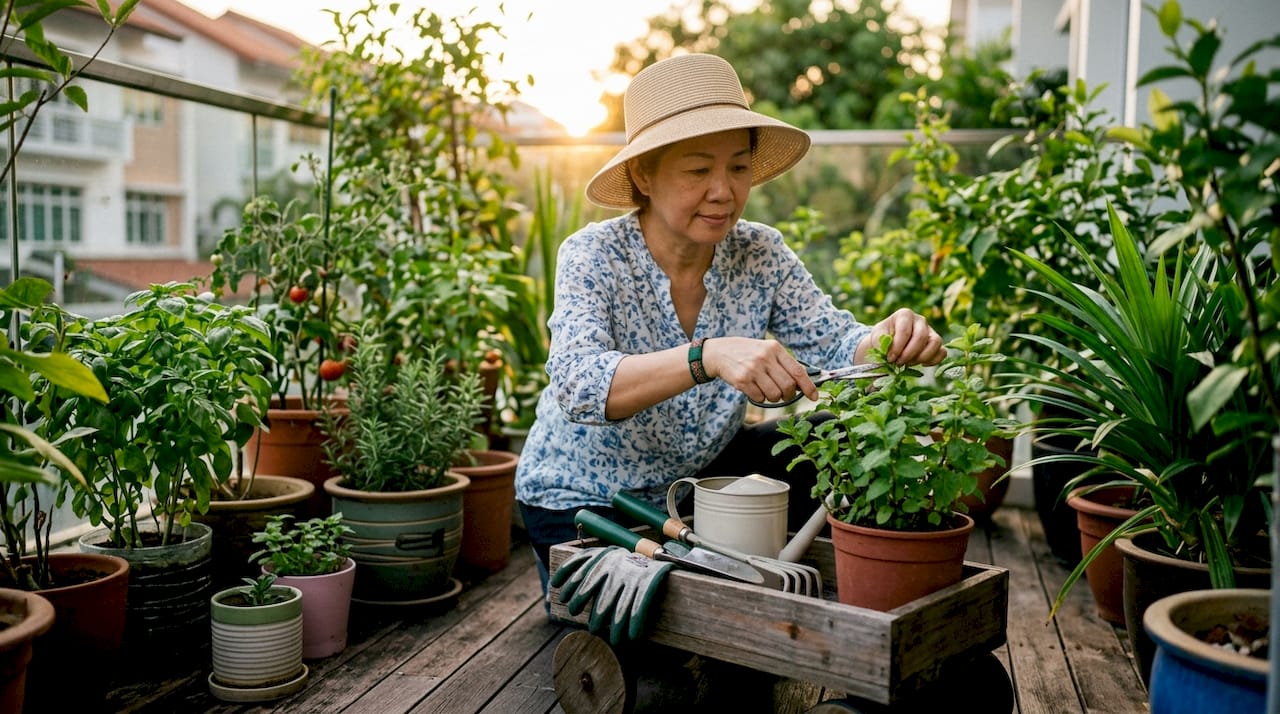
The grow-your-own movement is defined as urban residents cultivating food at home, on balconies, in corridors, and in shared community spaces. Singapore’s version of this movement is accelerating fast, driven by national food security targets, rising health awareness, and a growing desire to understand where food actually comes from. With over 90% of food imported, Singapore has a clear strategic reason to encourage every resident who grows even a single pot of herbs. The result is a local food movement that is reshaping how urban Singaporeans think about eating, community, and sustainability.
Singapore’s food vulnerability is real and well-documented. The country imports over 90% of its food, making supply chains a national risk. Any disruption, whether from climate events, geopolitical tension, or logistics failures, hits Singapore harder than most countries.
The government’s response is the “30 by 30” goal, which targets producing 30% of the nation’s nutritional needs locally. Updated targets now aim for 20% of fiber needs and 30% of protein needs by 2035. These are ambitious numbers for a city-state with limited land, and they require every available growing surface.
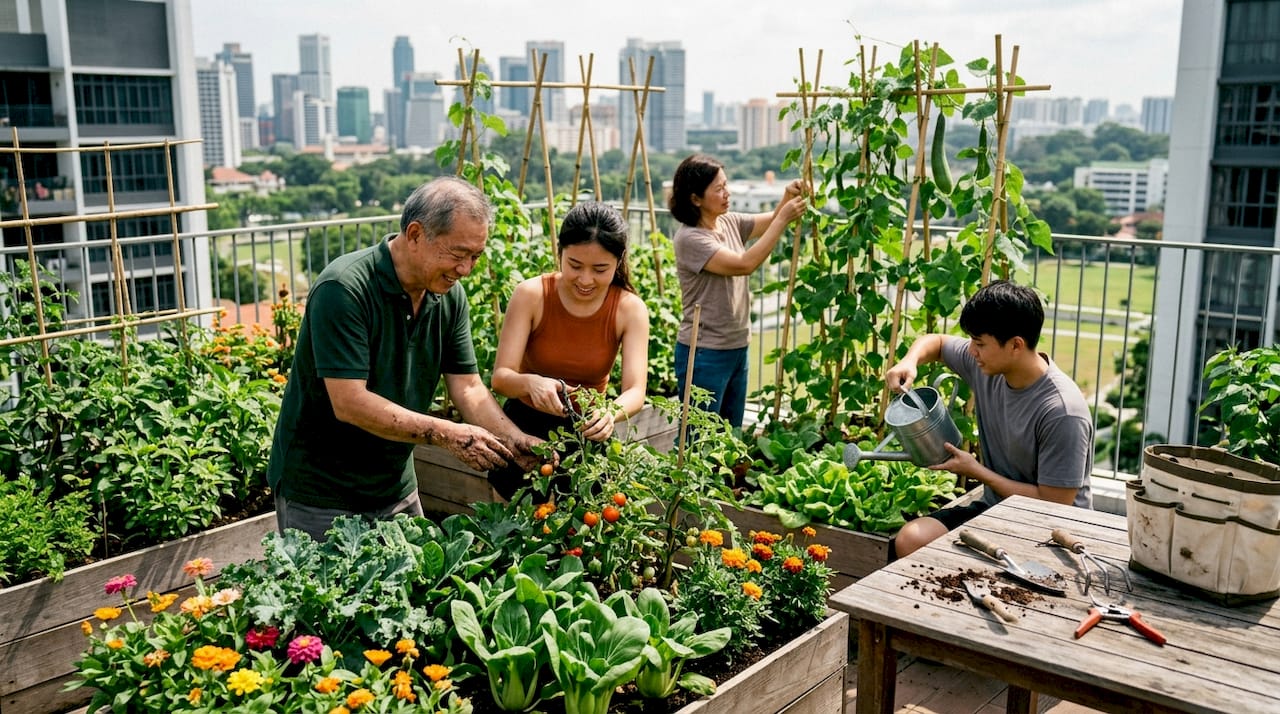
That is exactly where urban residents come in. Micro-gardens in schools, rooftop plots on HDB blocks, and corridor container gardens all contribute to the national footprint. Demand for urban farming solutions in Singapore increased by up to 30% in Q1 2026, driven by community initiatives and schools adopting micro-gardening programs. That growth rate signals a genuine shift, not a passing trend.
Key drivers behind this surge include:
The grow-your-own movement is not a hobby niche. It is a distributed food production network built one balcony at a time.
Growing food at home does more than fill a salad bowl. The benefits stack up across health, mental well-being, and social connection in ways that make urban gardening one of the most practical lifestyle upgrades available to Singapore residents.
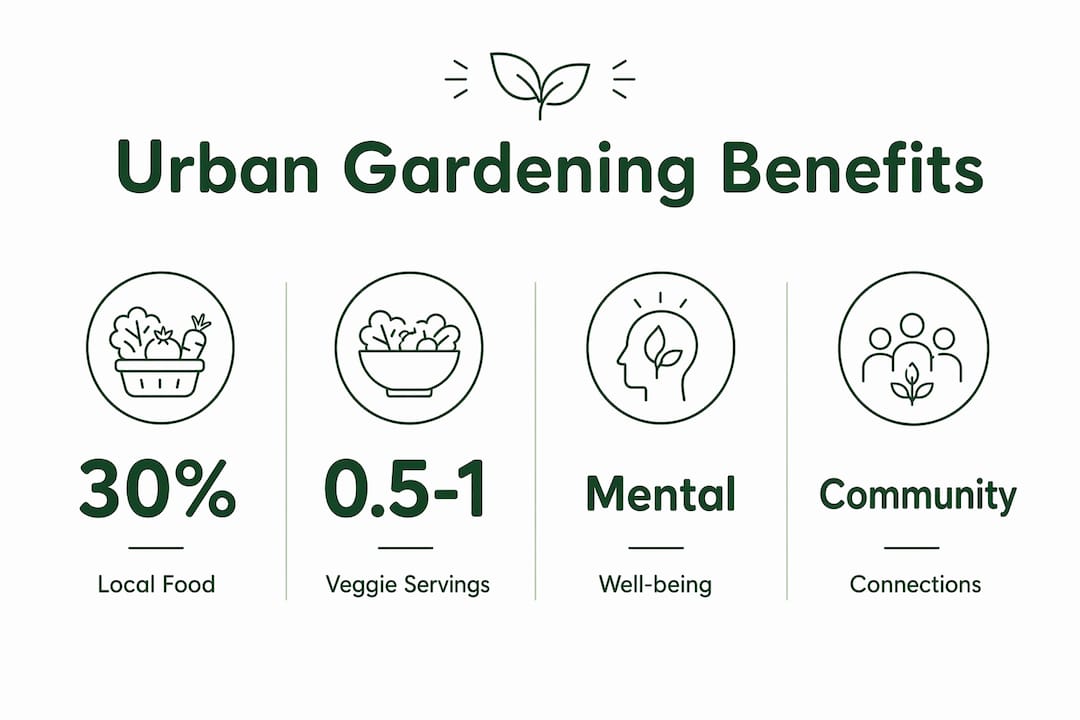
On the nutrition side, the evidence is clear. Community gardening participation is linked with higher vegetable intake, adding 0.5 to 1 serving daily, and increasing the likelihood of meeting dietary recommendations by 2 to 3 times. More than 60% of reviewed studies show positive food consumption improvements among gardeners. When you grow spinach or sweet potato leaves yourself, you eat more of them. The connection between effort and outcome changes eating behavior in a way that grocery shopping simply does not.
Mental well-being is the second major benefit. Gardening reduces stress, provides a sense of routine, and gives urban residents a tangible point of focus outside screens and work. Urban farms also create green community spaces that improve mental well-being and social cohesion, turning unused rooftops and corridors into calming, productive environments.
“Community gardens act as social infrastructure, combating urban isolation by fostering cross-generational social connections and shared learning.” — Neighbourhood Life
The social dimension is often underestimated. Shared gardens bring together residents across age groups, creating natural opportunities for conversation, skill sharing, and neighborhood trust. The Community in Bloom program has established over 1,900 gardens across Singapore since 2005. That scale represents thousands of ongoing community relationships built around growing food together.
Finally, urban gardening builds food literacy. Residents who grow their own food develop a deeper understanding of the labor behind every meal, which reduces passive supermarket dependency and creates more informed, conscious consumers.
Small space is not a barrier. Urban gardening is feasible in corridors, balconies, and windowsills using the right plant choices. The biggest mistake beginners make is picking plants that need full sun when their HDB flat faces north or sits in permanent shade.
Start by matching plants to your actual light conditions. Shade-tolerant crops that thrive in Singapore’s environment include:
For sustained harvesting with minimal effort, perennial herbs like basil, laksa leaves, and pandan are the best starting point. These “cut-and-come-again” plants regrow after each harvest, meaning one pot delivers weeks or months of yield. Pandan in particular suits Singapore’s humidity and requires almost no intervention once established.
Choosing the right growing medium matters as much as plant selection. A quality potting mix with good drainage prevents root rot, which is the most common reason container plants fail in Singapore’s wet climate. For fast-growing greens suited to local conditions, pairing the right soil with the right plant makes a measurable difference in how quickly you see results.
Pro Tip: Start with microgreens or sprouts before moving to larger plants. They germinate fast, require minimal space, and give you a harvest in under two weeks. That early win builds the confidence to keep going.
Modular garden setups work especially well for HDB residents. A vertical planter on a balcony railing can hold six to eight pots in the footprint of a single floor pot. For residents with no outdoor space at all, a windowsill tray of microgreens or a small hydroponic unit on a kitchen counter is a fully functional starting point. Read more about growing in limited spaces for layout ideas that work in real Singapore apartments.
Singapore’s urban farming scene is not just individual residents with pots on balconies. A network of social enterprises, government programs, and technology-assisted solutions is actively lowering the barrier to participation.
Micro-gardens are now appearing in schools, public buildings, and community centers. These installations serve a dual purpose: they produce food and they educate. Students who tend a school garden learn about plant biology, nutrition, and food systems in a way no textbook replicates.
Social enterprises like Grow Lah! provide households with microgreen kits and hands-on training, making it possible for residents with no gardening background to start producing food within days. Community farms and social enterprises provide education, foster community, and act as urban food resilience hubs despite space limitations and economic challenges. Edible Garden City is another well-known example, having built productive urban farms across Singapore while training residents and food businesses.
Pro Tip: Check whether your HDB estate has a Community in Bloom plot or a rooftop garden program. Joining an existing group is faster than starting from scratch and connects you with experienced growers who know your specific building’s conditions.
Technology is also changing what is possible for busy urban gardeners. Automated watering systems, self-watering planters, and hydroponic units with built-in nutrient delivery remove the two biggest obstacles for working adults: time and inconsistency. Home garden automation options now cover everything from simple drip timers to full reservoir hydroponic systems that maintain themselves between weekly check-ins.
The combination of community infrastructure and accessible technology means the grow-your-own movement in Singapore is no longer dependent on gardening expertise. It is increasingly designed for people who have never grown anything before.
The grow-your-own movement in Singapore grows because it solves three problems at once: national food security, personal health, and community connection, all within the constraints of urban apartment living.
| Point | Details |
|---|---|
| Food security drives policy | Singapore imports over 90% of its food; the “30 by 30” goal makes local growing a national priority. |
| Health benefits are measurable | Community gardeners add 0.5 to 1 vegetable serving daily and are 2 to 3 times more likely to meet dietary guidelines. |
| Small spaces are enough | Shade-tolerant crops like sweet potato leaves and perennial herbs like pandan thrive in HDB corridors and balconies. |
| Community programs accelerate adoption | Over 1,900 Community in Bloom gardens and social enterprises like Grow Lah! give beginners a supported entry point. |
| Technology removes the expertise barrier | Hydroponic systems and automated watering make consistent food growing accessible to busy urban residents. |
Most conversations about sustainability in Singapore focus on recycling, energy use, or electric vehicles. Growing your own food rarely gets the same attention, and that is a mistake.
What I have observed is that urban gardening changes people’s relationship with food in a way that no awareness campaign can replicate. When you have spent three weeks growing a pot of basil, you do not throw half of it away. You understand, viscerally, what it took to produce it. That behavioral shift is more durable than any app notification reminding you to reduce food waste.
The space objection is the one I hear most often, and it is the weakest argument against starting. A windowsill holds microgreens. A balcony railing holds a vertical planter. A kitchen counter holds a hydroponic unit. The constraint is almost never space. It is the belief that you need more space than you actually do.
What excites me most about Singapore’s urban farming scene is the intergenerational dimension. Older residents who grew up with kampung gardens are sharing knowledge with younger residents who have never seen a plant grow from seed. That exchange is happening in community gardens across the island, and it is building something more valuable than food. It is building neighborhood trust.
The challenge ahead is sustaining momentum beyond the novelty phase. Micro-gardens need maintenance. Community farms need funding. Social enterprises need customers. The residents who stick with growing food past the first harvest are the ones who will make the “30 by 30” goal meaningful at the ground level.
— Luna
Getting started with home gardening does not require a large outdoor space or years of experience. Sprout-lab designs hydroponic systems and soil mixes specifically for urban residents who want real results in compact spaces.
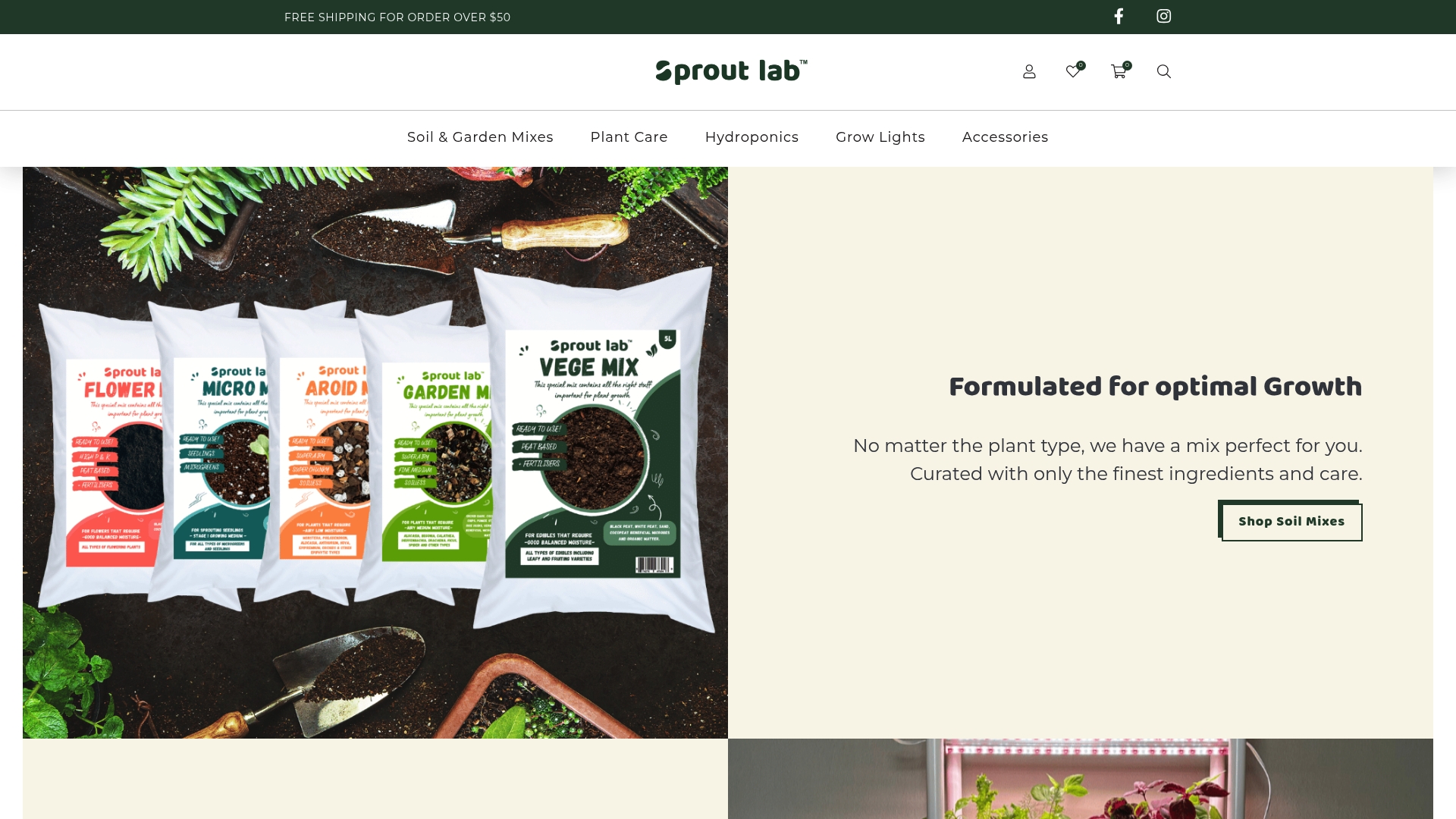
Sprout-lab’s modular hydroponic setup lets you grow up to 56 plants in a small footprint, with a reservoir hydroponic system built for beginners who want a low-maintenance entry point. The product range also includes premium soil mixes formulated for Singapore’s climate, covering everything from potting mixes for container herbs to specialized planting mediums for leafy greens. With a 4.9/5 star rating from over 25,000 completed orders, Sprout-lab is the practical next step for anyone ready to move from reading about urban farming to actually doing it.
The grow-your-own movement refers to urban residents cultivating food at home, in community gardens, or in shared spaces. It aligns with Singapore’s national “30 by 30” food resilience goal and has seen demand for urban farming solutions grow by up to 30% in Q1 2026.
Shade-tolerant crops like sweet potato leaves and kangkong perform well in low-light HDB corridors and balconies. Perennial herbs like basil and pandan are also reliable choices that regrow continuously after harvesting.
Microgreens can be harvested within 1 to 2 weeks, making them the fastest way for beginners to see results and build confidence. They require minimal space and no outdoor access, fitting easily on a kitchen counter or windowsill.
Community gardens have been shown to increase vegetable intake by 0.5 to 1 serving daily and reduce social isolation by creating shared spaces for cross-generational connection. Singapore’s Community in Bloom program has established over 1,900 gardens since 2005.
A basic container, quality potting mix, and a suitable plant are enough to start. For residents who want a more consistent setup, hydroponic systems with built-in nutrient delivery remove the guesswork from watering and feeding, making them well-suited for busy urban schedules.