Free shipping for order over $50

Free shipping for order over $50
The most effective garden systems for busy people are those built around automation, passive nutrient delivery, and plants that thrive on neglect. If you work full time and want fresh food at home, the right setup does most of the work for you. Systems like drip irrigation, passive hydroponics, and gravel gardens have moved low-maintenance gardening from a weekend hobby to a realistic daily practice. Sprout-lab’s modular hydroponic systems, for example, let urban professionals grow up to 56 plants in a compact area with minimal daily attention.
Passive hydroponic setups provide a consistent growing environment unlike soil, reducing manual labor significantly. That consistency means you check nutrients weekly instead of watering daily. Sprout-lab’s systems are built on this principle, with a modular design that fits apartments, balconies, and kitchen counters without requiring gardening experience.
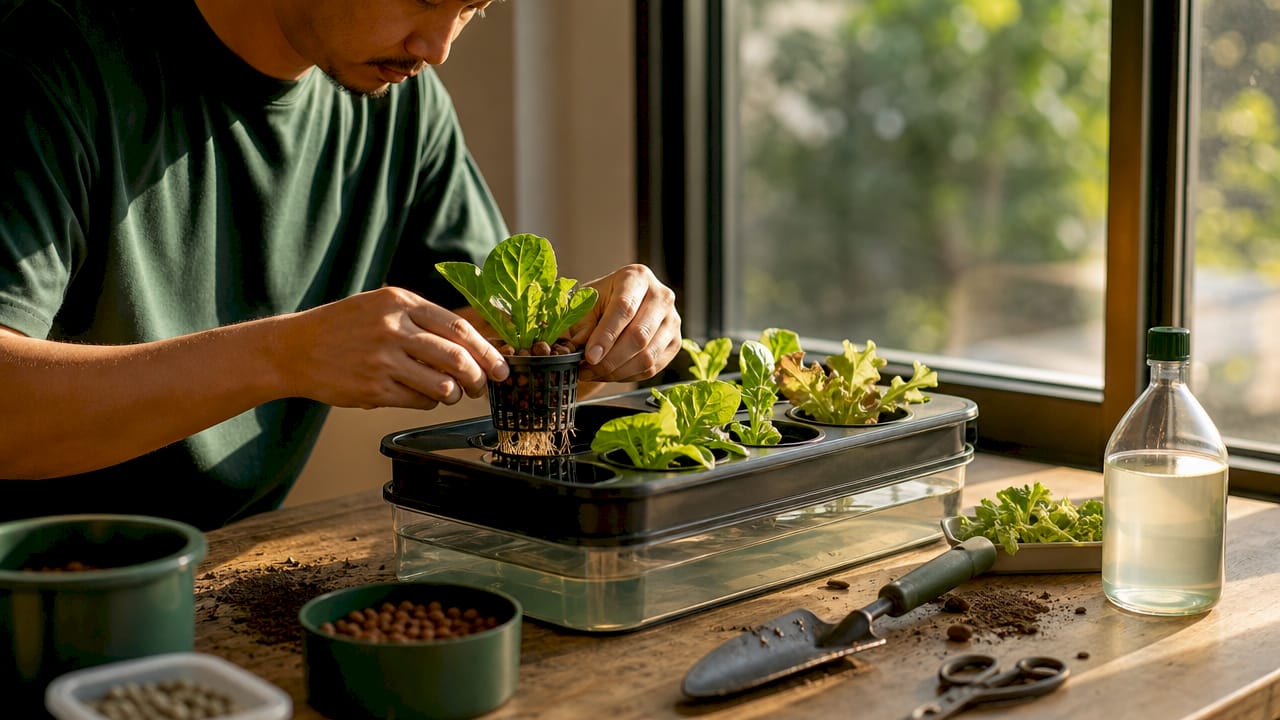
The core advantage is automation by design. Nutrient solution circulates or wicks to plant roots without pumps or constant monitoring. You spend roughly 10–15 minutes per week on top-offs and light adjustments rather than daily watering rounds.
Pros:
Cons:
Pro Tip: Start with leafy greens like lettuce, basil, and spinach in your hydroponic system. They grow fast, tolerate beginner mistakes, and give you visible results within two weeks.
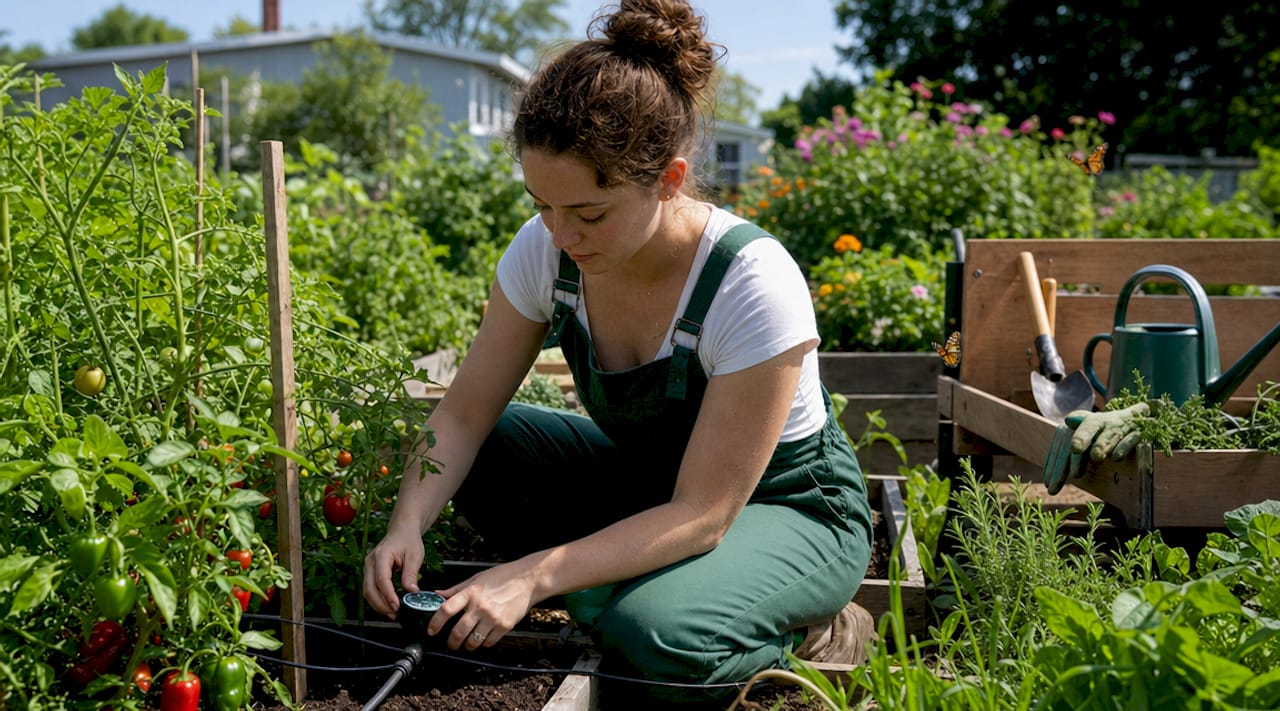
Drip irrigation with timers reduces watering time drastically and supports full-time workers maintaining good garden yields. The system delivers water directly to the root zone, cutting evaporation and eliminating the need to remember watering schedules. Pair it with a Rachio or Orbit B-hyve smart timer and you can control the whole setup from your phone.
Drip systems work equally well in raised beds, container gardens, and balcony planters. Setup takes a few hours on a Saturday, and after that, the system runs itself. You only adjust it seasonally when temperatures shift.
Automated watering systems that deliver water directly to roots also reduce evaporation, prevent overwatering, and minimize weed growth in pathways. Fewer weeds means less time on your knees pulling them out.
Gravel gardens are one of the most underrated low maintenance garden options for urban professionals with outdoor space. The key detail most people miss: angular crushed stone in the 1/2 to 3/4 inch range interlocks and stays stable underfoot, while rounded pea gravel shifts and tracks indoors. That single choice separates a functional gravel garden from a frustrating one.
Plant selection matters just as much as gravel type. Native and drought-tolerant plants evolved in nutrient-poor soils, so adding rich compost before planting can stunt deep root growth and undermine plant resilience. Skip the compost amendment and plant directly into lean mineral soil for the best long-term results.
Once established, a gravel garden needs almost no irrigation, no mowing, and no fertilizing. It is genuinely one of the most time-saving garden systems available for people with outdoor space but limited hours.
Pocket forests are densely planted native tree and shrub communities that become largely self-sustaining after establishment, requiring almost no watering or fertilizing. They grow in as little as 200 square feet. That is a standard urban backyard corner or a narrow side yard.
The trade-off is patience. The first two years require some watering and weeding while plants establish. After that, the canopy closes, shading out weeds and creating a self-regulating microclimate. After 20–30 years, a pocket forest needs virtually no maintenance and actively improves local ecosystem health.
For busy professionals who own a home with outdoor space, a pocket forest is the ultimate set-it-and-forget-it garden investment. It also adds measurable property value and supports pollinators without any ongoing effort.
Tabletop garden systems are purpose-built for people with zero outdoor space and minimal time. These compact units sit on a kitchen counter or desk, grow herbs and greens under built-in LED lights, and require nothing more than topping off a water reservoir every few days.
Sprout-lab’s counter-friendly setups fall into this category. The appeal is immediate: fresh basil, mint, or cherry tomatoes within arm’s reach of your cutting board, grown without soil, without mess, and without a dedicated grow room.
The limitation is yield. Counter systems produce enough for garnishes and small harvests, not full meals. They work best as a complement to a larger system rather than a standalone food source.
Replacing lawn areas with permeable paving, decks, or ground-cover plants reduces maintenance workload by up to 50%. That number reflects real labor savings: no mowing, no aeration, no seasonal reseeding. Ground cover species like creeping thyme handle foot traffic, smell great when brushed, and need almost no water once established.
This approach works especially well for urban professionals who inherited a lawn they never wanted. Swap the grass for a mix of creeping thyme, sedum, or clover, and your outdoor maintenance drops to a few hours per year. Clover also fixes nitrogen in the soil, which feeds neighboring plants without any fertilizer input from you.
Pro Tip: Creeping thyme doubles as a culinary herb. Plant it between stepping stones and you get a low-maintenance ground cover plus a fresh herb harvest every time you walk through your garden.
Mulching is the simplest time-saving technique in easy care gardening, and most busy gardeners underuse it. A 3-inch layer of wood chip mulch around plants suppresses weed germination, retains soil moisture, and moderates soil temperature. The result is fewer weeding sessions and less frequent watering.
Lazy gardening methods like mulching work with nature to save time and money while promoting plant health. The logic is simple: mulch mimics the leaf litter layer in a natural forest, which means the soil stays biologically active and weed seeds never get the light they need to sprout.
Arborist wood chips are often free through services like Chip Drop, which connects homeowners with tree companies looking to offload material. A single delivery can mulch an entire urban garden for a full season.
Use this table to match a system to your specific situation. The right choice depends on your available space, budget, and how many minutes per week you can realistically commit.
| System | Space Needed | Upfront Cost | Weekly Time | Typical Yield |
|---|---|---|---|---|
| Passive hydroponics | 2–10 sq ft | $$$ | 10–15 min | High (year-round) |
| Drip irrigation garden | 20+ sq ft | $$ | 5–10 min | High (seasonal) |
| Gravel garden | 50+ sq ft | $$ | Near zero | Low (ornamental) |
| Pocket forest | 200+ sq ft | $ | Near zero (after yr 2) | None (ecosystem) |
| Tabletop counter system | 1–3 sq ft | $$ | 5 min | Low (herbs/greens) |
| Ground cover replacement | 50+ sq ft | $ | Near zero | None (ornamental) |
The upfront cost versus long-run savings trade-off is real. Passive hydroponics costs more to set up than a drip-irrigated raised bed, but it produces food year-round and eliminates soil replacement costs. Gravel gardens and pocket forests cost less upfront and approach zero maintenance after establishment, but they do not produce food. Your priority, food production or time savings, determines the right column to optimize.
Automation is what separates a garden that survives your busy schedule from one that dies during a work trip. The tools below address the three biggest time drains: watering, monitoring, and fertilizing.
For a deeper look at how these tools work together, Sprout-lab’s guide on home garden automation covers setup options specifically for urban growers with limited time.
Pro Tip: Set your watering timer to run at 5 a.m. Water pressure is higher, evaporation is lower, and you never have to think about it again.
Picking the wrong system is the most common mistake in gardening for busy lifestyles. A system that fits your neighbor’s weekend schedule may not fit your 60-hour work week. Work through these four questions before buying anything.
For practical guidance on growing in small spaces, Sprout-lab’s resource covers balcony and indoor setups with specific plant and system recommendations.
The most productive garden systems for busy people combine automation with low-touch design, delivering fresh food without requiring daily attention.
| Point | Details |
|---|---|
| Automation is non-negotiable | Drip timers and smart sensors remove the daily labor that causes most busy gardeners to quit. |
| Match system to space and time | Passive hydroponics fits under 15 min/week; drip irrigation suits those with 30 min and outdoor space. |
| Gravel and ground cover cut outdoor labor by up to 50% | Replace lawn with angular crushed stone or creeping thyme to eliminate mowing and aeration entirely. |
| Mulching is the highest-ROI technique | A 3-inch wood chip layer suppresses weeds and retains moisture with zero ongoing effort. |
| Upfront cost pays off over time | Systems with higher setup costs typically deliver lower ongoing labor and year-round yields. |
I spent two years trying to maintain a traditional raised bed garden while working full time. The beds looked great in April and were completely overgrown by July. The problem was not motivation. The problem was that the system required more time than I had.
Switching to a passive hydroponic setup changed the math entirely. I stopped fighting the schedule and started designing around it. The biggest lesson: the best plant for a busy person is not the most productive plant. It is the most forgiving one. Lettuce, basil, and cherry tomatoes tolerate a missed week far better than peppers or cucumbers.
The second lesson is harder to accept. Most people overbuild their first garden. They buy too many containers, too many plant varieties, and too much equipment. Start with one system, one crop type, and one automation tool. Get that working reliably before adding complexity. A single well-automated hydroponic unit producing fresh greens every week beats five neglected raised beds every time.
The mental benefit is real too. Even a small, functional garden reduces stress in a way that a neglected one amplifies it. A system that works with your schedule gives you that benefit consistently, not just on weekends when you have time to catch up.
— Luna
If you have been putting off starting a home garden because you do not have the time, the right system changes that calculation completely. Sprout-lab designs hydroponic systems specifically for urban professionals who want fresh food without a significant time investment.
Their passive hydroponic setup is built for exactly this situation: compact enough for an apartment, productive enough to supply weekly greens, and low-touch enough to run on 10–15 minutes per week. With a 4.9/5 rating across more than 25,000 completed orders, the results speak for themselves. Explore Sprout-lab’s full range of hydroponic systems and soil mixes to find the setup that fits your space and schedule.
Passive hydroponic systems are the easiest option for busy people because they eliminate daily watering and soil maintenance. A well-designed setup requires only 10–15 minutes per week for nutrient top-offs and light checks.
Drip irrigation with a smart timer delivers water directly to plant roots on a set schedule, removing the need for manual watering entirely. Paired with a weather-connected timer like Rachio 3, the system also skips cycles when rain is forecast.
Yes. Tabletop hydroponic systems and counter garden units grow herbs and leafy greens under built-in LED lights with no outdoor space required. Sprout-lab’s modular systems fit on a kitchen counter and produce consistent harvests year-round.
Lettuce, basil, spinach, and cherry tomatoes are the best plants for busy people because they grow fast, tolerate inconsistent attention, and produce harvests within weeks. Avoid crops like peppers and cucumbers that require frequent monitoring and consistent watering.
Setup costs range from under $50 for a basic drip irrigation kit to $200–$500 for a quality passive hydroponic system. The higher upfront cost of hydroponics typically pays off within one growing season through year-round yields and eliminated soil replacement costs.