Free shipping for order over $50

Free shipping for order over $50
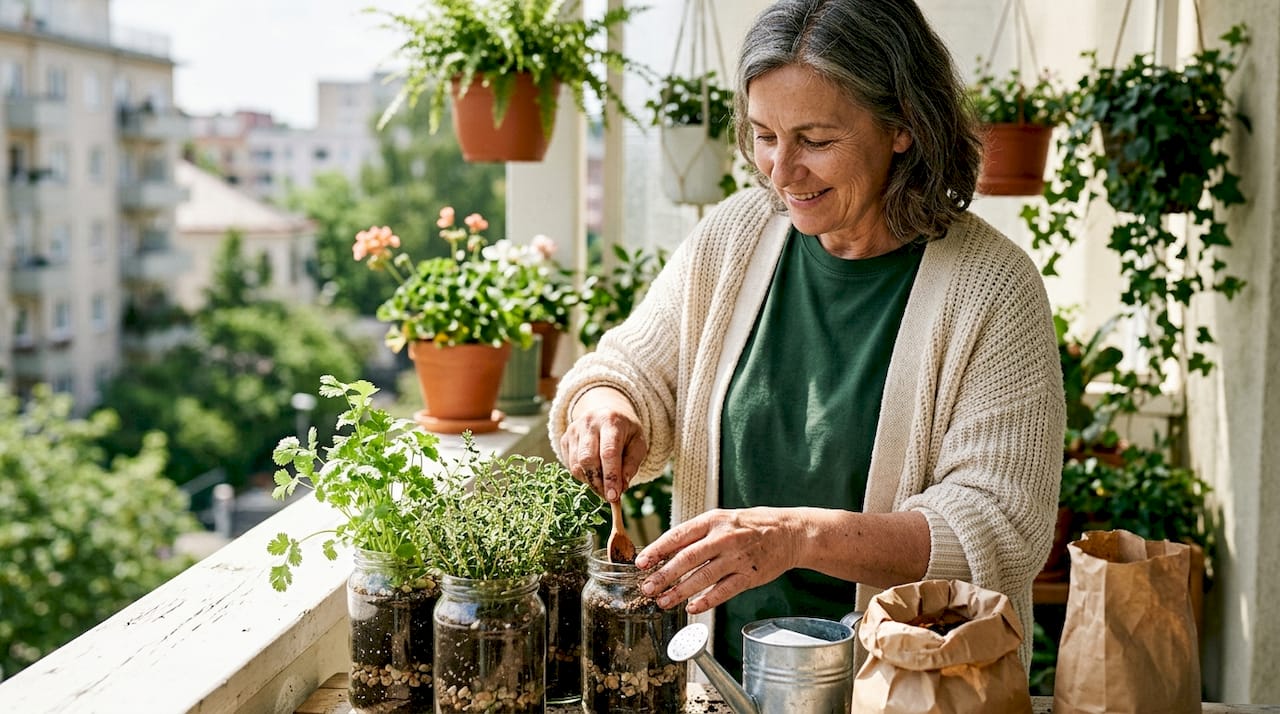
A jar garden is a self-contained growing system where edible plants like herbs and vegetables are cultivated in glass jars using soil or hydroponic media, making it one of the most practical small garden ideas for urban dwellers with no outdoor space. Mason jars, wide-mouth quart jars, and repurposed glass containers all work as planters when set up with the right drainage layers and growing media. The core appeal is simplicity: no raised beds, no yard, no complicated equipment. You can grow basil, mint, green onions, and even cherry tomatoes on a windowsill with nothing more than a jar, some pebbles, quality potting mix, and a light source.
The single most important decision in a jar garden setup is the jar size. A pint jar (16 oz) suits compact herbs like cilantro or chives. A quart jar (32 oz) gives basil and mint enough root room to thrive for several months. For vegetables like cherry tomatoes, a single plant needs at least a 20-inch-wide pot, which means jars are best reserved for herbs and leafy greens unless you use a very large glass vessel.
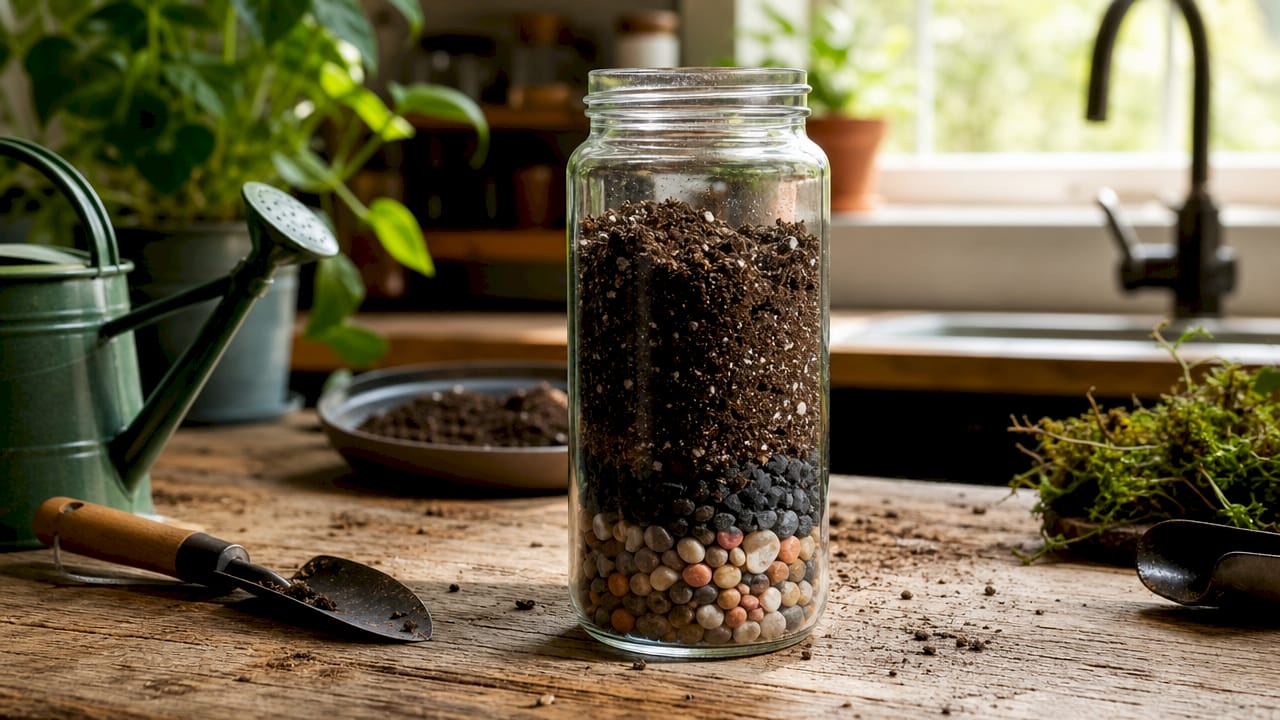
Glass jars have no drainage holes, which is the defining challenge of this growing method. The standard fix, borrowed directly from terrarium design, is an internal drainage layer. 1 to 2 inches of small rocks at the bottom of the jar creates a reservoir where excess water collects below the root zone. A thin layer of horticultural charcoal on top of the rocks prevents bacterial buildup and odor. Organic potting soil or a soilless mix goes on top of that.
Pro Tip: Add a half-inch layer of horticultural charcoal between your rock layer and potting mix. It keeps the substrate fresh for months and reduces the chance of mold forming at the base of the jar.
Here is a quick comparison of the three main jar configurations you will encounter:
| Jar type | Watering frequency | Best for |
|---|---|---|
| Sealed (closed lid) | Every 3 to 6 months | Mosses, ferns, slow-growing plants |
| Narrow-neck open jar | Every 5 to 10 days | Herbs like mint, chives |
| Wide-mouth open jar | Every 3 to 7 days | Basil, lettuce, green onions |
For growing edible plants, wide-mouth open jars are the practical choice. They allow airflow, make watering easier, and let you harvest without damaging the plant. Narrow-neck jars work for decorative herb jar garden setups but make maintenance awkward over time.
When selecting your potting mix, avoid standard garden soil. It compacts in jars and suffocates roots. A soilless potting mix with perlite or vermiculite keeps the substrate airy and drains excess moisture into the rock layer below. Sprout-lab’s indoor potting mixes are formulated specifically for this kind of container use, with the right texture and nutrient balance for small-volume growing.
Plant selection determines whether your jar garden succeeds or stagnates. The best candidates share three traits: shallow root systems, compact growth habits, and tolerance for the slightly humid microclimate inside a jar.
The strongest performers for a beginner herb jar garden include:
The distinction between water-based and soil-based jar setups matters here. Green onions and some herbs like basil cuttings root easily in plain water jars, making them a zero-cost entry point for beginners. Soil-based jars support a wider range of plants and longer growing cycles. For seed starting in jars, sow two or three seeds per jar and thin to the strongest seedling once it reaches an inch tall. Transplanting into jars works best when the rootball is compact and the jar is only slightly larger than the roots. Overpotting leads to soggy compost and root rot, a mistake that catches many beginners off guard.
Pro Tip: Try growing herbs at home starting with mint and green onions. Both are nearly impossible to kill in a jar and give you quick wins that build confidence for more demanding plants.
Nutrition matters more in jars than most beginners expect. Container vegetables need slow-release fertilizer plus soluble feeding every two to four weeks because the limited soil volume depletes nutrients quickly. A half-strength liquid fertilizer applied every two weeks keeps jar herbs producing through the growing season.
Watering is where most jar gardens fail. Open jars dry out faster than traditional containers because the soil volume is small. A general rule: check the top inch of soil every two to three days and water when it feels dry. For sealed jar setups, condensation on the jar walls tells you everything. Light condensation means moisture levels are healthy. No condensation means the jar needs water. Heavy condensation pooling at the base means you should remove the lid briefly to let excess moisture escape.
Follow this maintenance routine to keep your jar garden healthy:
For indoor jar plants in rooms without strong natural light, LED grow lights placed 6 to 12 inches above the jars provide the spectrum herbs need without generating the heat of older bulb types. A timer set to 14 to 16 hours of light per day mimics long summer days and keeps basil and lettuce producing through winter.
Pro Tip: Wipe the inside of sealed jars with a clean cloth when condensation becomes heavy. This prevents mold from forming on the glass and gives you a clear view of root health.
Jar gardens occupy a specific niche in the small urban spaces growing spectrum. They are not the highest-yield option, but they are the lowest-barrier entry point for anyone starting from zero.
| Growing method | Setup cost | Space needed | Yield potential | Best for |
|---|---|---|---|---|
| Jar garden | Very low | Windowsill | Low to moderate | Herbs, leafy greens |
| Traditional container garden | Low to moderate | Balcony or patio | Moderate to high | Tomatoes, peppers, larger herbs |
| Passive hydroponic system | Moderate | Countertop or shelf | High | Lettuce, herbs, fast-growing greens |
| Window box planter | Low | Window ledge | Moderate | Mixed herbs, shallow-root vegetables |
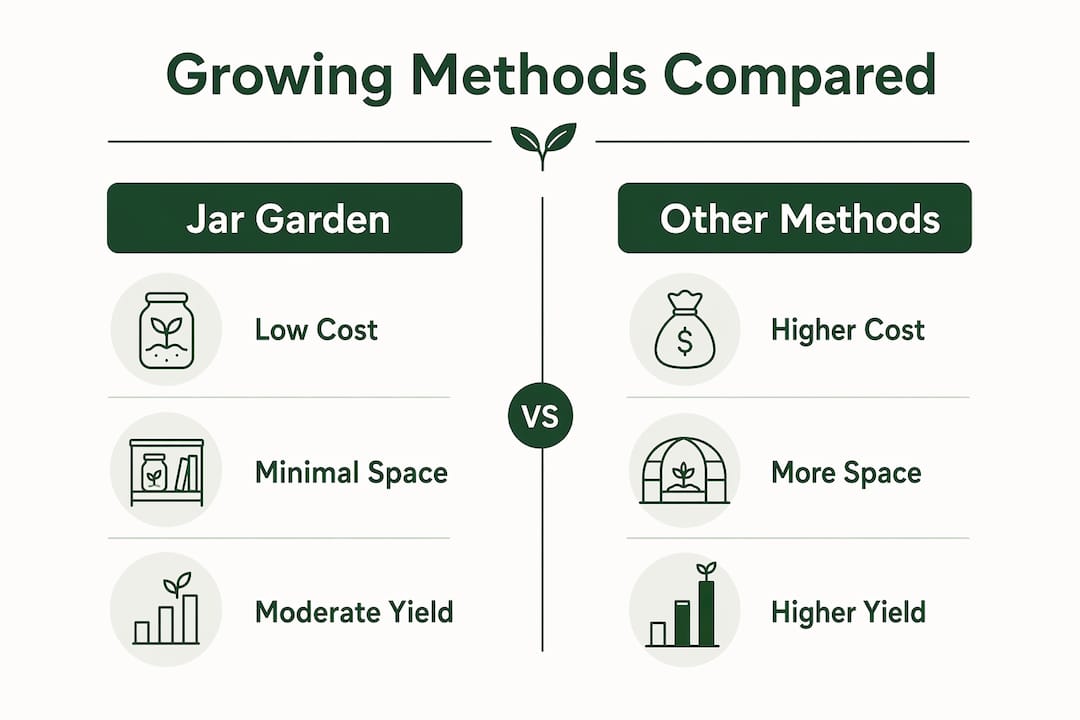
Traditional container gardening scales up yield significantly. Container plants need more frequent watering and feeding than in-ground plants, but larger pots buffer against mistakes by extending the time between watering cycles. A 5-gallon fabric pot on a balcony will always outperform a quart jar for tomatoes or peppers. The jar wins on aesthetics, portability, and zero-cost setup using containers you already own.
Passive hydroponic systems, like those offered by Sprout-lab, represent the next step up for urban growers who want more output from the same footprint. A modular hydroponic setup can support up to 56 plants in a compact area, which no jar arrangement can match. Jar gardens and hydroponic systems are not competing choices. Many urban growers use jars for fresh-cut herbs on the counter and a hydroponic unit for lettuce and greens nearby.
The honest limitation of a jar garden is root space. Herbs stay productive for two to four months before roots circle the base and growth slows. Knowing this upfront means you plan for succession planting rather than expecting a single jar to produce indefinitely.
A jar garden succeeds when you match jar size to plant root depth, build a proper drainage layer, and read condensation or soil moisture before watering rather than on a fixed schedule.
| Point | Details |
|---|---|
| Drainage layer is non-negotiable | Use 1 to 2 inches of small rocks at the base of every jar to prevent root rot. |
| Match jar size to plant type | Pint jars suit cilantro and chives; quart jars support basil and mint for longer cycles. |
| Sealed jars need minimal watering | Condensation on the glass is your watering guide. No condensation means water; heavy pooling means air the jar out. |
| Fertilize every two weeks | Limited soil volume depletes nutrients fast. Use diluted liquid fertilizer to sustain productive growth. |
| Know when to upgrade | When roots circle the base, move up one jar size or transition to a larger container or hydroponic system. |
The biggest mistake I see beginners make is not overwatering. It is watering on a schedule instead of reading the jar. A sealed jar sitting in indirect light in January needs water maybe twice the entire month. An open quart jar of basil in a sunny kitchen in July might need water every other day. The jar tells you what it needs. You just have to look.
The second thing I have noticed is that jar size matters more than plant choice. A mint plant in a pint jar will struggle and bolt within six weeks. The same plant in a quart jar with a proper rock layer and fresh potting mix will produce for four months. Larger jars are more forgiving for beginners because they extend the time between watering and feeding cycles, which reduces the chance of error.
What I genuinely appreciate about jar gardening is how it fits urban life without demanding anything dramatic from you. A row of glass jar planters on a kitchen windowsill with basil, chives, and green onions costs almost nothing to set up and delivers real, usable food every week. It is not a replacement for a full garden. It is a starting point that builds the habits and confidence you need to scale up when you are ready.
If you want to go further, a passive hydroponic setup from Sprout-lab is the natural next step. But the jar is where most good urban gardeners begin.
— Luna
Jar gardens are a great starting point, and Sprout-lab makes it easy to build on that foundation. Their passive hydroponic systems are designed for exactly the kind of compact indoor growing that jar gardeners graduate to, supporting up to 56 plants in a small footprint with no prior experience needed. For soil-based jars, Sprout-lab’s indoor soil mixes are formulated for container use, with the drainage and nutrient balance that small-volume growing requires. With a 4.9/5 rating across more than 25,000 orders, their products are trusted by urban growers at every level. Start with a jar, then let Sprout-lab help you scale.
A jar garden is a small-scale growing system where herbs or vegetables are planted in glass jars using layered soil and drainage materials. It is a form of container gardening suited for indoor windowsills and small urban spaces.
Basil, mint, chives, cilantro, green onions, and cut-and-come-again lettuce are the strongest performers. These plants have shallow roots and compact growth habits that suit the limited volume of a glass jar.
Open jar gardens need watering every two to five days depending on light and temperature. Sealed jar setups need watering only a few times per year, guided by condensation patterns on the glass.
No, but they require an internal drainage layer. 1 to 2 inches of small rocks at the base of the jar creates a reservoir below the root zone that prevents waterlogging without drilling holes in the glass.
A terrarium is typically a sealed decorative setup using non-edible plants like mosses and ferns. A jar garden is an open or semi-open system designed for edible plants, with regular harvesting and feeding as part of the routine. The layering principles overlap, but the plant choices and maintenance schedules differ significantly.