Free shipping for order over $50

Free shipping for order over $50
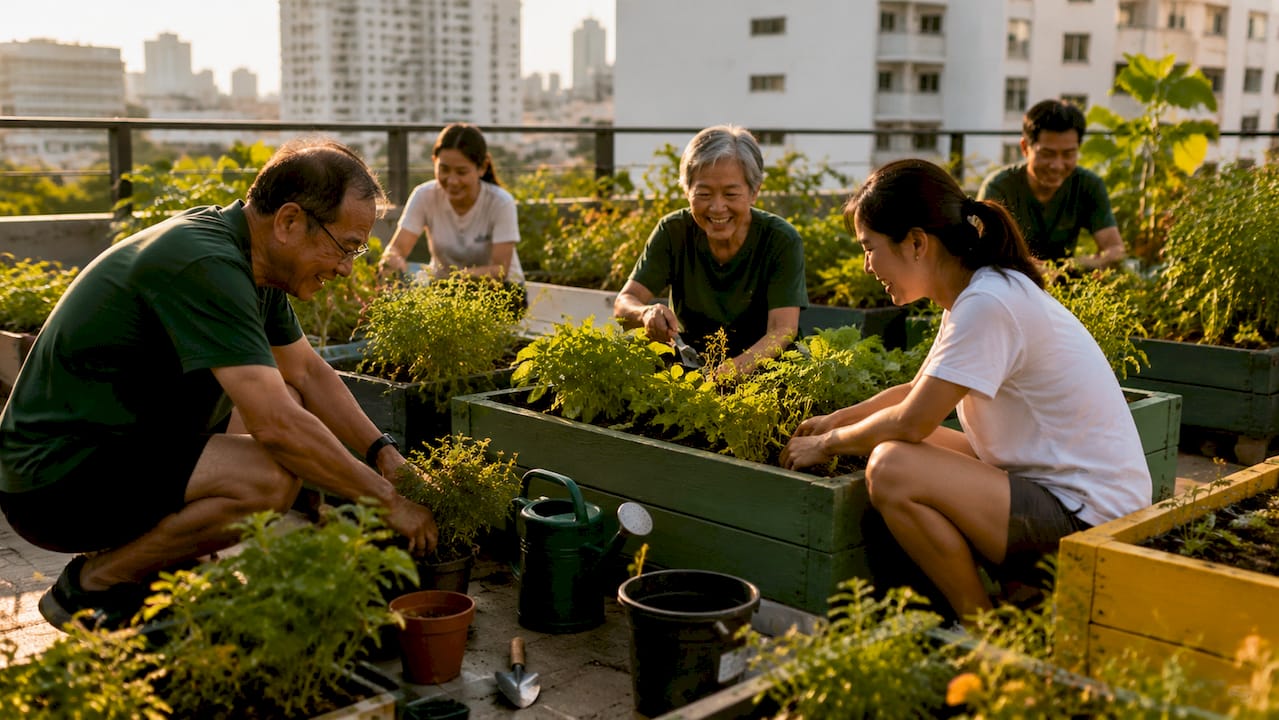
A Singapore community garden is a shared neighborhood green space where residents collectively or individually cultivate edible and ornamental plants within an organized setup, supported primarily by the National Parks Board’s Community in Bloom programme. As of 2025, this network spans over 2,000 gardens with 48,000 active participants across public housing estates, schools, and private developments. That scale makes Singapore’s community gardening model one of the most organized urban greening programs in Southeast Asia. Whether you want to grow your own vegetables, meet your neighbors, or simply spend more time outdoors, these gardens offer a structured entry point into urban agriculture in Singapore.
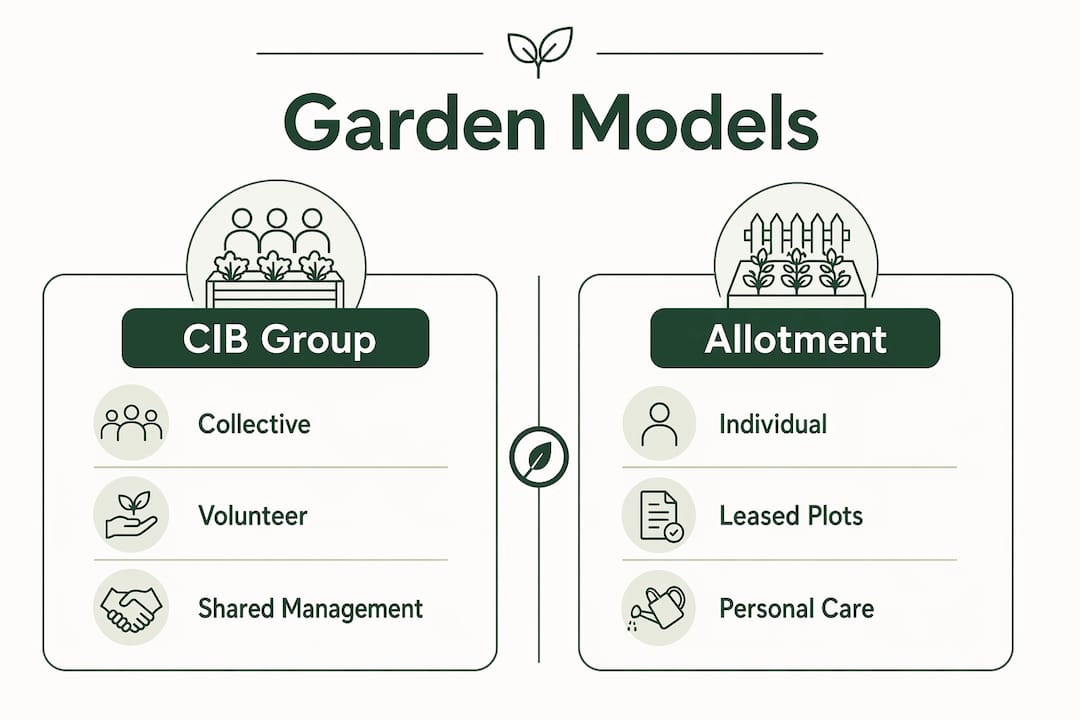
A Singapore community garden is defined as a communal plot where residents garden together or in designated individual sections, organized under NParks’ Community in Bloom (CIB) programme as the primary governing framework. The CIB programme launched in 2005 and has since scaled to over 2,000 groups with more than 100 trained volunteer Ambassadors. That growth reflects genuine public demand, not just government initiative. Gardens typically feature fenced areas with raised planter beds, separate zones for edible crops and ornamental plants, and clear pathways for public visibility.
Two distinct participation models exist within this system. CIB group gardens operate on a collective volunteer model, while the Allotment Gardening Scheme offers individually leased plots. Understanding which model fits your lifestyle is the first practical decision any new participant faces.
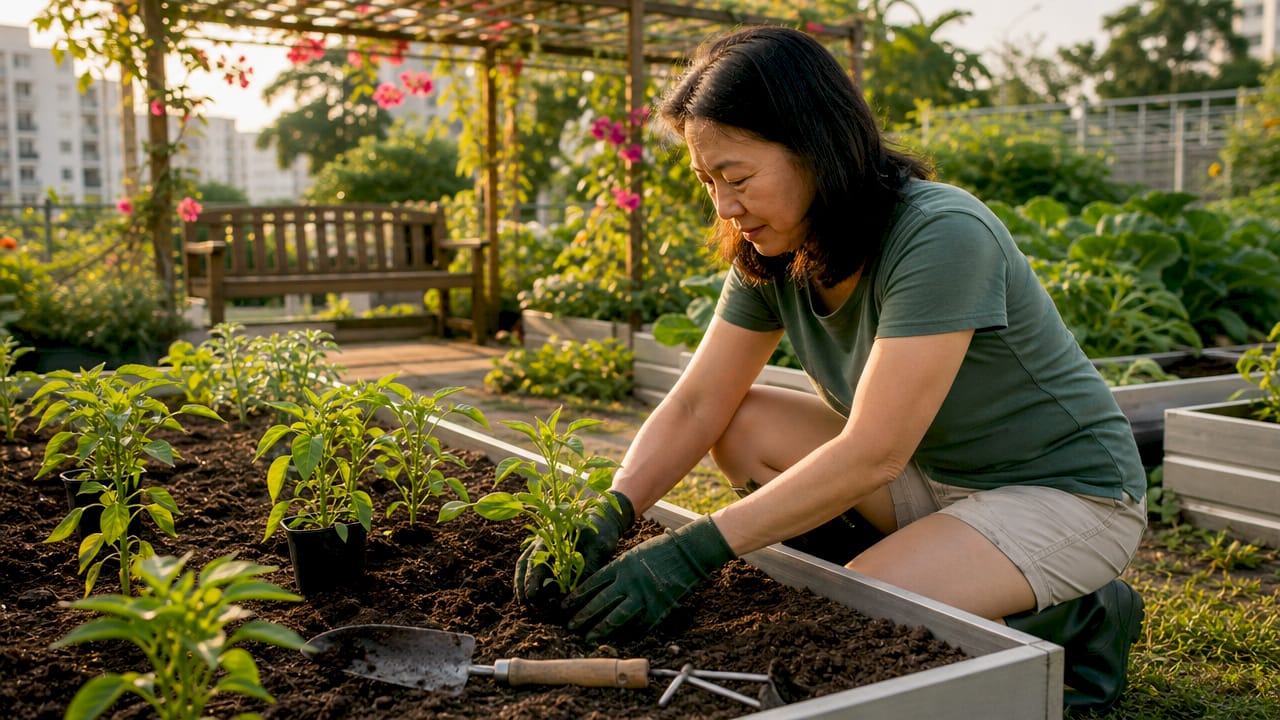
The two models differ significantly in structure, commitment level, and the kind of gardening experience they deliver.
CIB group gardens are community-led, volunteer-driven spaces where members garden collectively under a shared management structure. A chief gardener typically oversees operations, often working alongside Residents’ Committees in public housing estates. Members share responsibilities for planting, watering, weeding, and maintaining the overall garden. The social dimension is central. Members attend scheduled events, coordinate planting cycles, and contribute to group decisions on what to grow.
Allotment gardens operate differently. The Allotment Gardening Scheme offers individually leased raised planter beds, each measuring 2.5 meters by 1 meter, available across 28 parks. Plots are leased for three years at a fee, giving gardeners full autonomy over what they plant and how they manage their space. Over 2,400 allotment plots are available as of 2025. This model suits urban residents who want personal growing space without the coordination demands of a group garden.
| Feature | CIB group garden | Allotment garden |
|---|---|---|
| Participation style | Collective, volunteer-driven | Individual, self-managed |
| Plot ownership | Shared communal space | Personally leased raised bed |
| Management | Chief gardener and committee | Individual leaseholder |
| Commitment | Scheduled group activities | Flexible, self-directed |
| Location | HDB estates, schools, private developments | NParks-managed parks |
| Best for | Social engagement and community bonding | Personal growing autonomy |
Both models fall under NParks oversight, but the day-to-day experience is entirely different. If you want community connection, CIB group gardens deliver it. If you want your own patch of soil without group coordination, an allotment plot is the cleaner choice.
Community gardens in Singapore occupy a wide range of urban spaces, many of which residents walk past daily without recognizing them as organized growing sites. Gardens appear on multi-storey carpark rooftops, HDB void deck perimeters, school grounds, and estate green corridors. This spatial diversity is deliberate. NParks and the People’s Association designed the program to bring gardens within walking distance of most residents.
Typical garden layouts include:
School-based gardens, managed by student gardening clubs or eco-committees, serve a dual function. They provide growing space and act as outdoor classrooms for environmental education. Private estate gardens, managed by Management Corporation Strata Title (MCST) bodies, follow similar CIB structures but operate within condominium or landed housing contexts.
Garden aesthetics receive deliberate attention in Singapore’s community garden culture. Competition judging criteria reward neatness, plant variety, and visual coherence, which pushes gardens toward a higher standard of design than most casual growing spaces achieve elsewhere.
Community gardens in Singapore deliver benefits that extend well beyond fresh produce. A 2025 review in npj Urban Sustainability confirms that urban community gardens generate co-benefits including stormwater runoff mitigation, biodiversity habitat creation, social capital growth, and measurable mental health improvements. These are not incidental outcomes. They are built into the program’s design logic.
The social benefits are particularly well-documented. Gardening alongside neighbors builds trust and reduces social isolation, especially among elderly residents in HDB estates. NParks’ own program data shows that community gardens function as recurring social anchors, with members returning weekly for maintenance and events. That regularity creates relationships that casual community programs rarely sustain.
On the environmental side, gardens in Singapore contribute to urban biodiversity by providing habitat for pollinators and birds in otherwise hard-surfaced environments. Raised beds with organic planting mediums improve local soil health and reduce surface runoff during heavy rain. These functions matter in a city where impervious surfaces dominate.
The wellness dimension is also significant. Therapeutic horticulture sessions, offered through NParks-affiliated programs, use gardening as a structured mental health intervention for seniors and individuals managing stress or anxiety. NParks’ 2025 Grow and Share initiative recorded over 170 activities with close to 20,000 public participants. That participation volume confirms that community gardening in Singapore functions as a public health resource, not just a hobby.
One finding consistently surprises newcomers: an NUS survey found that 50% of Singapore community gardeners participate primarily for leisure, while only 8% join to supplement their food supply. The garden is a social and recreational space first. Food production is a welcome byproduct.
Joining or starting a community garden in Singapore follows a clear process, and NParks provides structured support at every stage.
For what to grow, fast-growing tropical crops like kangkong, bayam, chili, and butterfly pea thrive in Singapore’s climate and suit the raised-bed format of most community gardens. You can find a detailed list of fast-growing greens suited to Singapore’s conditions to plan your first planting cycle.
Pro Tip: New members who attend community garden workshops before starting their own plot report faster skill development and fewer early crop failures. NParks runs free and low-cost workshops through the CIB program throughout the year.
Garden etiquette matters in shared spaces. Water your plot at scheduled times, remove diseased plants promptly to protect neighboring beds, and contribute to communal maintenance tasks even if you hold an individual allotment. Respecting shared infrastructure keeps the garden functional and the community intact. Understanding why soil quality matters will also help you get better results from your plot from the first growing cycle.
Singapore community gardens are shared urban growing spaces organized under NParks’ Community in Bloom programme, offering two distinct participation models that serve different needs and commitment levels.
| Point | Details |
|---|---|
| Two distinct models exist | CIB group gardens focus on collective volunteering; allotment plots offer individual leased growing space. |
| Scale is significant | Over 2,000 gardens and 48,000 participants make this one of Asia’s largest organized urban gardening programs. |
| Benefits go beyond food | Research confirms mental health, biodiversity, and social cohesion benefits; only 8% of participants join primarily for food. |
| Entry is structured | NParks provides clear application processes for both joining existing gardens and forming new CIB groups. |
| Aesthetics are intentional | Garden design and visual presentation are built into CIB competition criteria, raising the standard of Singapore’s community spaces. |
I went into my first visit to a Singapore community garden expecting a utilitarian vegetable patch. What I found was closer to a neighborhood living room with soil. The social infrastructure around these gardens is genuinely impressive. Scheduled harvests, shared meals, and regular workshops create a rhythm of community engagement that most urban programs fail to sustain past the first year.
What strikes me most is how Singapore’s dual model solves a real tension in community gardening. Collective gardens build social bonds but can frustrate people who want control over their own growing decisions. Individual allotment plots give autonomy but can feel isolating. Singapore offers both, and that design choice reflects a sophisticated understanding of what urban residents actually want from green spaces.
The finding that only 8% of participants join for food supply is the most revealing data point in this entire topic. It reframes what community gardening in Singapore actually is. It is not urban agriculture in any serious food-security sense. It is a mental health and social cohesion program that happens to produce vegetables. That distinction matters for how you approach participation. Go for the people and the routine. The harvest is a bonus.
For anyone considering getting involved, I would say: start with a workshop, not a plot. The community garden workshops run through the CIB program give you a low-commitment way to meet the community and assess whether the group’s rhythm suits your schedule. You can always lease a plot later. You cannot easily rebuild a first impression with a community you have already committed to.
— Luna
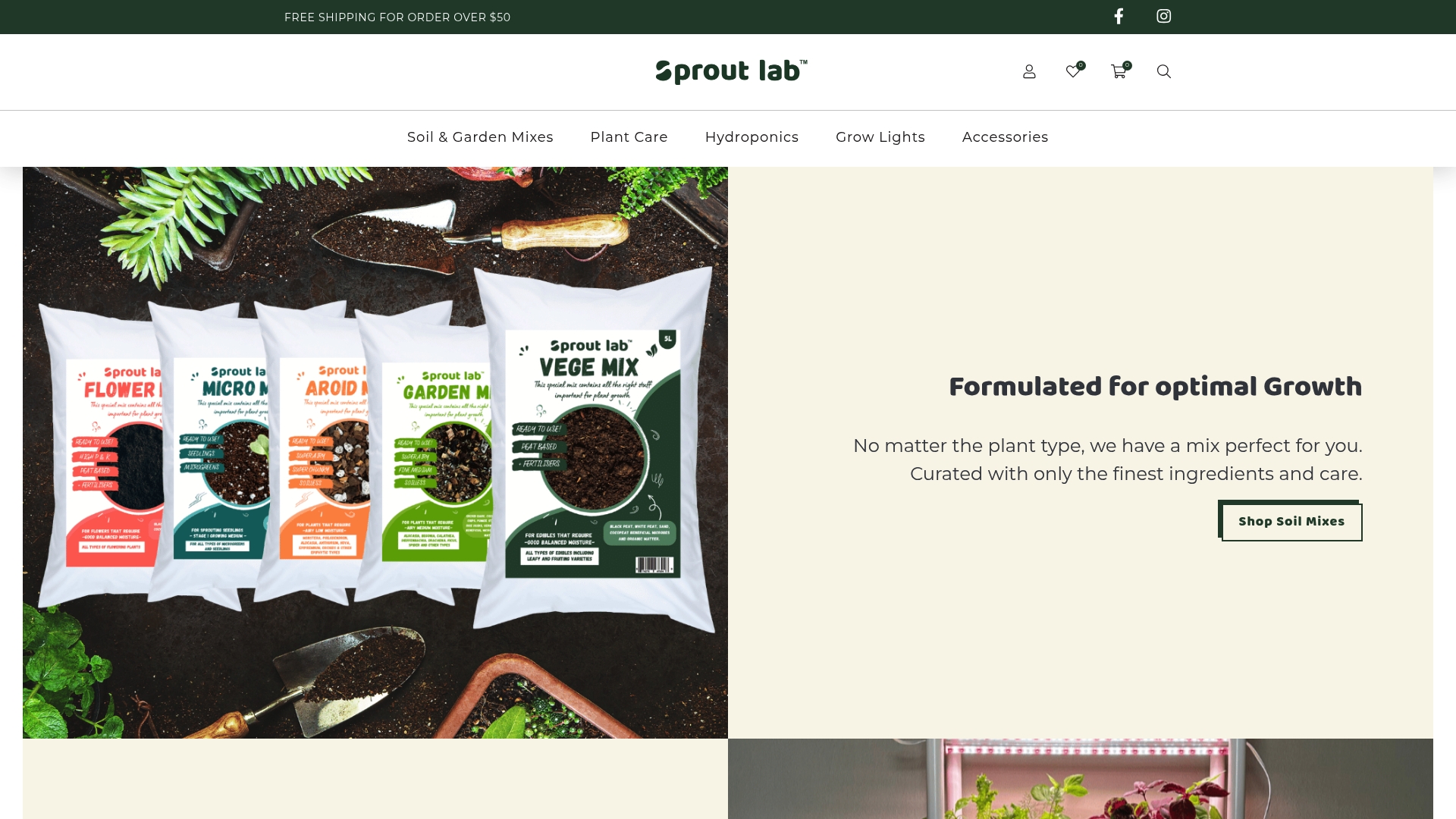
Community garden plots are a great starting point, but your growing does not have to stop at the garden gate. Sprout-lab’s passive hydroponic system lets you extend your harvest at home with a compact setup that fits HDB balconies and void deck corners alike. You can cultivate up to 56 plants in a single modular unit, with no prior experience required. For soil-based growers, Sprout-lab’s premium soil mixes are formulated specifically for Singapore’s tropical conditions, supporting the same edible crops that thrive in community garden raised beds. With a 4.9/5 rating across over 25,000 orders, Sprout-lab is the go-to resource for urban gardeners ready to grow beyond the shared plot.
The Community in Bloom (CIB) programme is NParks’ national initiative that supports and organizes community gardens across Singapore. It provides resources, training, and a volunteer Ambassador network to help residents establish and maintain shared growing spaces.
Applications for allotment plots are submitted through NParks’ online portal. Plots are 2.5m by 1m, leased for three years at a fee, and allocated by ballot when demand is high. Over 2,400 plots are available across 28 parks as of 2025.
Fast-growing tropical crops like kangkong, chili, bayam, sweet potato leaves, and butterfly pea are the most common choices. Ornamental plants including flowering shrubs and creepers are also grown in dedicated aesthetic zones within most gardens.
CIB group gardens are generally free to join as a volunteer member, though some groups may ask for small contributions toward shared supplies. Allotment plots require a leasing fee for the three-year term.
CIB group gardens are managed by a chief gardener and supported by Residents’ Committees in public housing estates. NParks provides oversight, training through the CIB Ambassador program, and periodic assessments through garden competitions and reviews.