Free shipping for order over $50

Free shipping for order over $50
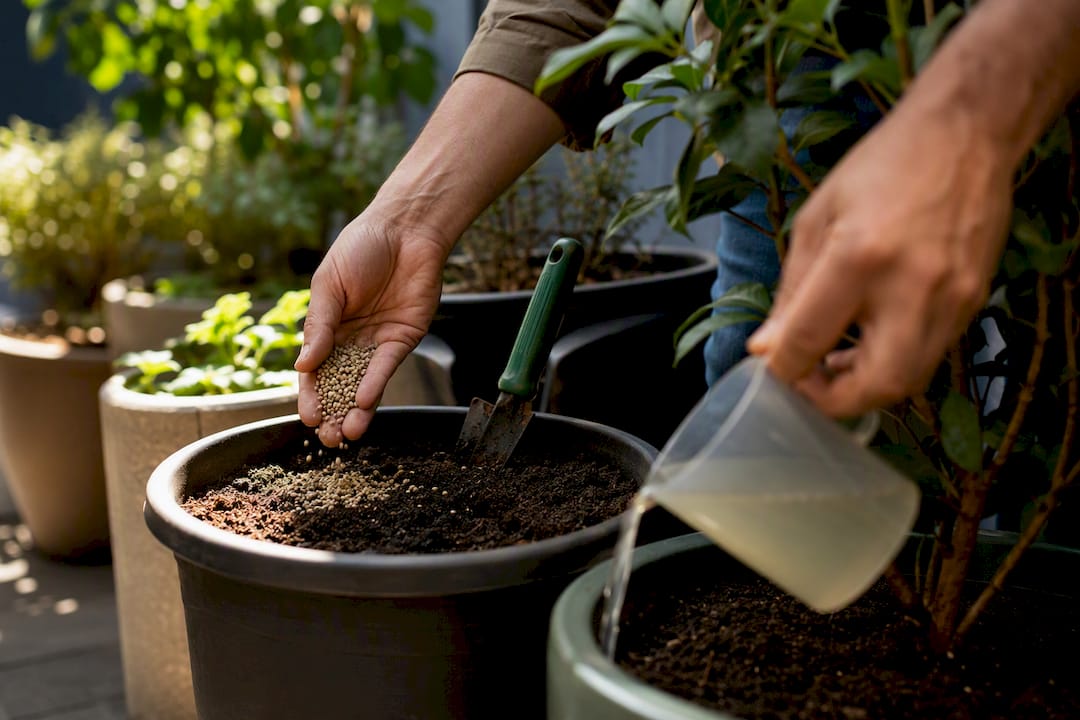
For most home and container growers, a dry base feed plus targeted liquid supplements beats picking just one. Hydroponic systems are the exception. There, liquid is doing almost all the work because dissolved nutrients reach roots within 48 to 72 hours, while dry granules need moisture and soil biology to break them down first. Sprout-lab’s own growers tend to land on a combined approach once they’ve tested both.
TL;DR:
- Liquid fertilizers deliver nutrients immediately, making them ideal for hydroponic systems and quick correction of deficiencies.
- Dry nutrients are more cost-effective, have a longer shelf life, and build long-term soil health, suitable for soil-based growing.
- In hydroponics, use liquid concentrates exclusively, while dry fertilizers are better for initial soil or base feeding.
- Proper mixing, dosing, and storage are essential to prevent problems such as root burn, clogging, or uneven feeding.
- Combining dry base feeds at planting with frequent liquid supplements during active growth offers an effective, system-appropriate strategy.
Neither form wins outright. Each solves a different problem, and knowing which problem you actually have saved you money and dead seedlings.
Liquid nutrients earn their reputation for speed. Because the nutrients are already dissolved, plants can show visible responses within 48 to 72 hours of feeding. That immediacy makes liquids the default choice for hydroponics and fertigation, where every drop needs the same nutrient ratio to avoid uneven feeding across a reservoir of plants.
Where liquid nutrients pull ahead:
Where dry nutrients pull ahead:
The downsides mirror the strengths. Liquids cost more per unit of actual nutrient, ship heavy, and if you overdose them the plant absorbs the excess almost as fast as it would have absorbed the right dose. Dry fertilizers carry their own risk: granules dumped too close to a stem or seedling can create a “hot spot” that burns roots before the material ever fully dissolves.
Think about two growers. One is running a three-tier hydroponic tower in a studio apartment. Liquid concentrate is basically mandatory there. The other has a raised bed and a few large containers on a patio. A dry base mixed into the soil at planting, topped off with liquid only when something looks off, covers that grower for months at a fraction of the cost.
The core difference comes down to whether nutrients are already dissolved or waiting to be dissolved. Liquid fertilizer arrives at the root zone in a plant-available state from the moment you pour it, which is why growers typically see a response within 48 to 72 hours. Dry fertilizer has to go through dissolution or mineralization first, a process driven by soil moisture, microbial activity, and temperature. Cold, dry, or biologically inactive soil slows that release considerably, which is exactly why dry feeds behave inconsistently in an unheated greenhouse in February but work fine in warm summer beds.
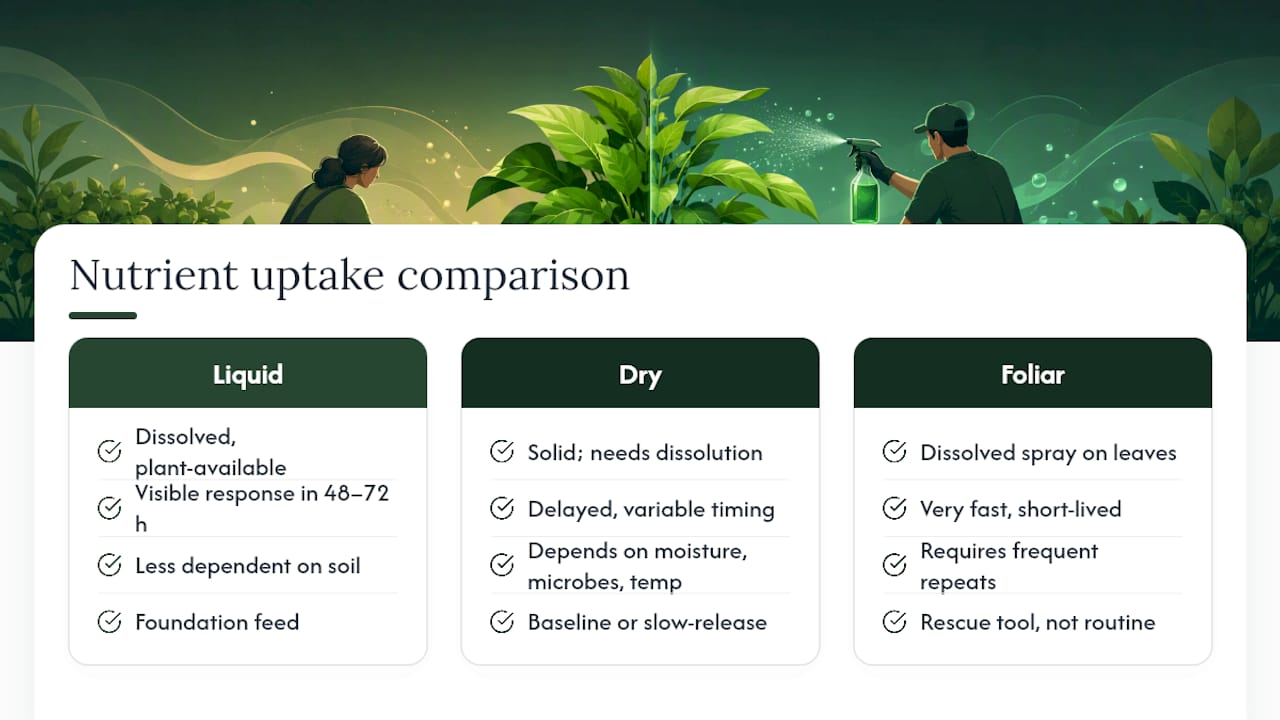
Foliar feeding sits in an odd middle ground. Spraying diluted liquid nutrients directly on leaves gets nutrients into the plant fast, but it’s less practical for regular use because of how often you’d need to repeat it, and it raises the risk of leaf burn. It’s a rescue tool, not a feeding strategy.
Storage stability matters too, especially for anyone mixing their own solutions. Organic liquid concentrates can precipitate over time, forming sediment at the bottom of a jug or reservoir, while dry powders that aren’t fully dissolved leave residue that clogs drip lines. Liquid organic fertilizers in particular vary widely in nutrient concentration between batches, which is worth knowing if you’re trying to dial in exact ratios for a hydroponic crop.
The system you’re growing in decides more than any general preference for one form over the other.
A workable combined program looks like this: dry base feed at planting or repotting, then a liquid concentrate applied every one to two weeks once the plant enters active growth or fruiting, adjusted based on what the leaves tell you. Balanced liquid formulations matter more here than most people assume, since an unbalanced mix can undo the benefit of getting the timing right.
Most nutrient problems trace back to how the feed was mixed, not which form was chosen.
Storage habits differ by form. Dry fertilizer stored in a sealed, dry container holds its potency for years. Liquid concentrate has a shorter shelf life and can separate or precipitate if it sits too long, so shake it well and check for sediment before each use.
Pro Tip: Mix your liquid concentrate in small batches you’ll use within a few weeks rather than diluting a whole season’s worth at once. Diluted solutions degrade faster than concentrates.
Most apartment and small-space growers don’t need to pick a side. A dry, nutrient-rich soil mix gives container plants a steady foundation, and a liquid concentrate handles the fast corrections that inevitably come up when you’re growing in a limited footprint with limited margin for error.
For hydroponic setups specifically, that means leaning on a liquid concentrate as the primary feed rather than trying to dissolve granular fertilizer yourself. Sprout-lab’s Hydroponic Plant Food Nutrient Concentrate Solution was built for exactly this, paired with the mixing walkthrough that shows the right order and ratios. It’s the same logic university extensions describe: precision and automation favor liquid, bulk and foundational feeding favor dry, and the two aren’t in competition so much as they’re built for different jobs.
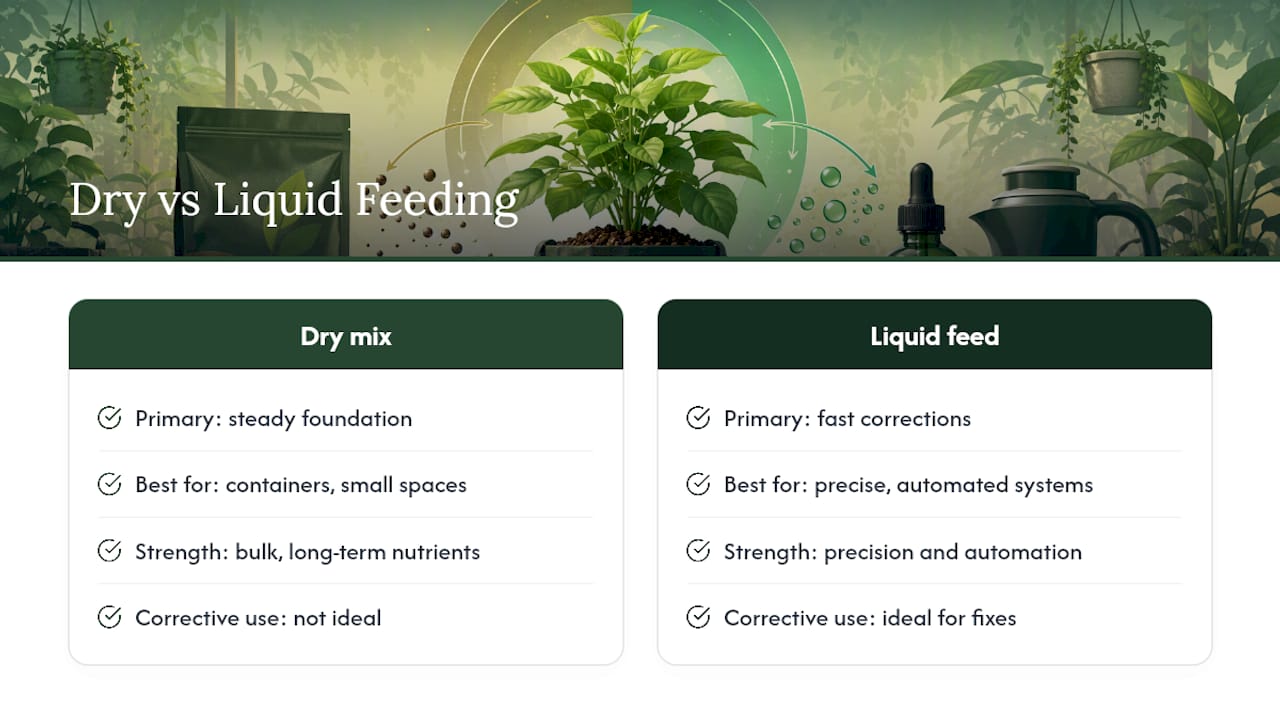
My rule of thumb: dry goes in at planting, liquid comes out when something needs fixing fast. A typical schedule looks like a dry base mixed into soil at transplant, then a liquid boost every one to two weeks once flowering or fruiting starts, dialed up only if leaves show a specific problem.
The mistake I see most is growers treating this as a brand loyalty question instead of a systems question. Match the tool to the job, not the other way around.
— Luna
If you’re running a hydroponic tower or planning one, liquid concentrate isn’t optional. It’s the only practical way to feed a system where roots sit in water instead of soil.
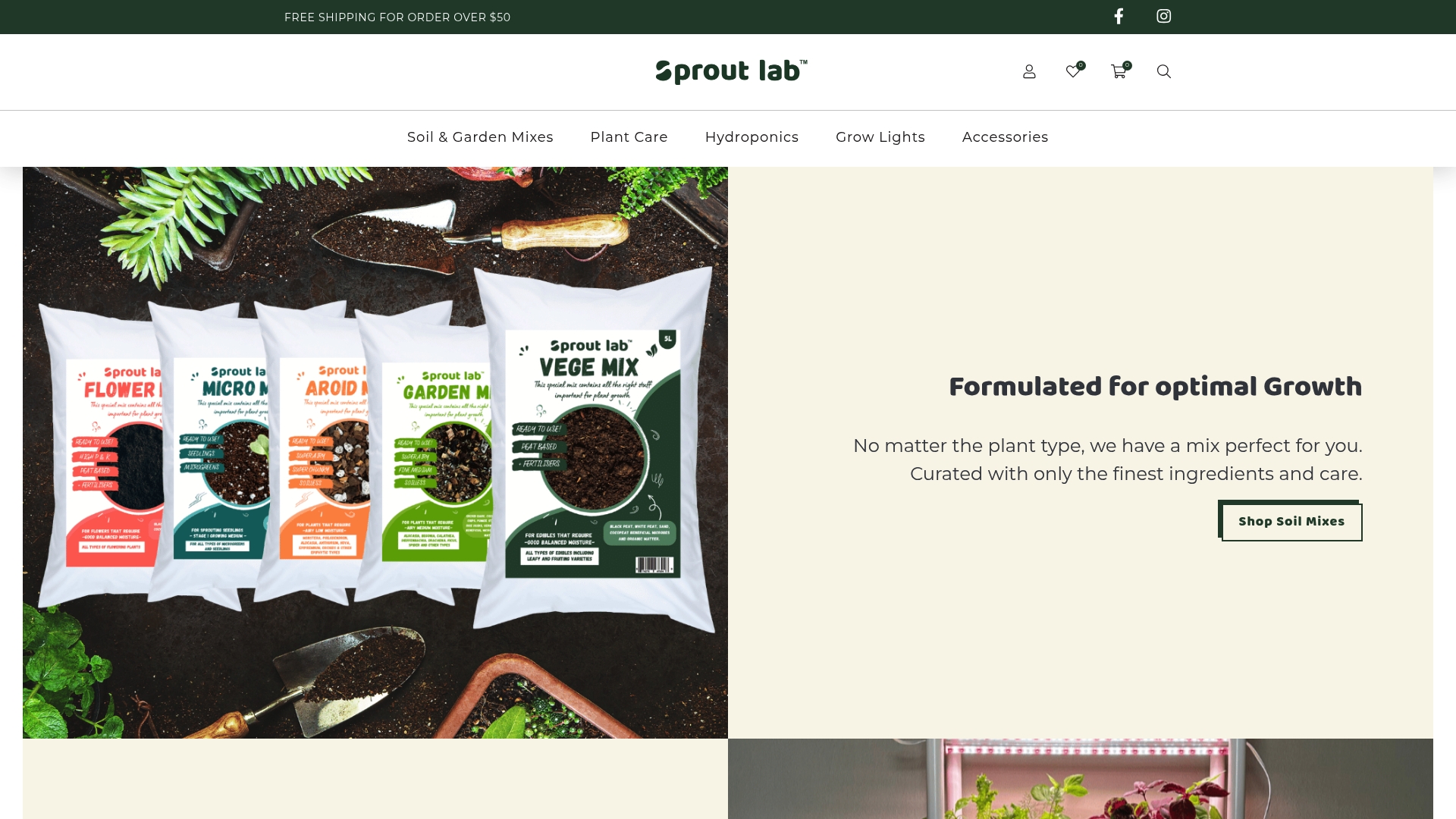
Sprout-lab’s Hydroponic Plant Food Nutrient Concentrate Solution is formulated for exactly the fast, precise dosing this article covers, and it pairs directly with a compact system if you haven’t set one up yet. Before you buy anything, run through this quick checklist: pick your system (soil container or hydroponic tower), choose a dry base or quality soil mix if you’re growing in a container, add liquid concentrate on a one to two week schedule once plants hit active growth, and check EC and pH each time you refill a reservoir. If you’re working with limited square footage, Sprout-lab’s automated hydroponic systems are built to handle the dosing side automatically, so you spend less time mixing and more time harvesting. Check availability and get your system set up this week.
Neither wins outright: liquid nutrients act faster and suit hydroponics, while dry nutrients cost less per kilogram and last longer in storage, which is why many home growers use both.
Liquid fertilizer costs more per unit of nutrient, has a shorter shelf life, and its fast uptake raises the risk of root burn if you overdose the solution.
Yes, many dry fertilizers can be dissolved in water to create a liquid feed, but they must be fully dissolved and screened for residue before use in drip lines or hydroponic reservoirs to avoid clogging.
Yes. Because the nutrients are pre-dissolved, plants typically show visible growth responses within 48 to 72 hours of proper application, faster than most dry fertilizers can manage.