Free shipping for order over $50

Free shipping for order over $50

Insecticidal soap, horticultural oils, botanical essential-oil sprays, diatomaceous earth, and biologicals like Bt and spinosad all outperform neem oil in at least one category, whether that’s speed, odor, or targeting a specific pest. If you can see live bugs right now, reach for insecticidal soap first. If you’re trying to prevent an infestation before it starts, a vegetable oil or botanical blend does the job with far less of that lingering sulfur smell.
TL;DR:
- Insecticidal soap is ideal for quickly killing active aphids, mites, and thrips with no residue and minimal odor, but it requires frequent reapplication.
- Horticultural oils effectively smother eggs and soft-bodied pests and carry a longer residual effect, yet they pose a higher risk of leaf burn if not tested and applied properly.
- Botanical essential oils offer a light deterrence for pests and smell pleasant but are less effective against heavy infestations and need standardized blends for consistency.
- Biological controls like Bt and spinosad target caterpillars and larvae with low toxicity, but they are pest-specific and require careful timing.
- Rotating different methods, testing sprays before full application, and matching treatments to pest stage significantly improve control while minimizing plant damage.
Not every pest problem calls for the same fix, and matching the tool to the situation saves you a wasted spray session.
Test any new spray on one leaf first, and skip application during peak afternoon heat regardless of which option you pick.
Insecticidal soap works through potassium salts of fatty acids that dissolve the protective coating on soft-bodied insects, killing them on contact within minutes. It has almost no smell, and unlike neem, it leaves no residue behind once it dries, which is exactly why it’s the go-to choice when you can see live pests crawling on your plant right now. Extension guidance from Clemson HGIC lists it among the standard less-toxic options for home growers, alongside horticultural oil and Bt.
Soap shines against aphids, spider mites, and thrips, but it does nothing to eggs already laid or pests hiding under bark and in soil. Because insecticidal soap has no residual protection, it washes away and needs repeat applications to catch newly hatched insects.
Pro Tip: Combine soap for the first week’s knockdown with a preventive oil application afterward. Soap alone won’t stop the next generation from hatching.
Horticultural oils kill by coating eggs and soft-bodied insects in a film that blocks their airways, the same basic mechanism neem oil relies on when it isn’t the azadirachtin-rich version. Trials on soybean oil at a 2% concentration reduced spider mite populations by 97 to 99 percent and suppressed powdery mildew, with corn oil producing similar results in cucumber trials.
Mix at roughly 1 to 2 percent oil in water with a mild emulsifier, and spray on cool, cloudy days rather than under bright afternoon light.
Rosemary, peppermint, thyme, and clove oils disrupt pests’ sense receptors rather than smothering them outright, and they’re the closest thing to a genuinely pleasant-smelling spray on this list. Potency varies a lot between brands, and standardized commercial blends tend to perform more consistently than homemade dilutions.
Some pest problems don’t need a spray at all. Diatomaceous earth cuts into the exoskeletons of crawling insects like ants and fungus gnat larvae, while sticky traps catch flying adults such as whiteflies and fungus gnats before they lay more eggs.
Spraying anything, natural or not, works better as a backup to good habits than as your first line of defense. The UF/IFAS integrated pest management framework treats prevention and monitoring as the foundation, with targeted sprays as the follow-up, not the whole plan.
Spraying oil on a dehydrated or heat-stressed plant is one of the fastest ways to burn leaves you were trying to save, since high heat and low plant hydration compound phytotoxicity risk. A quick squeeze test on the stem or soil tells you if the plant can handle a spray session at all.
Pro Tip: Rotating your control methods doesn’t just protect your plants. It also slows down pests building resistance to any single treatment.
Start by identifying what you’re actually looking at, because the right product depends entirely on the pest and the stage it’s in.
A rotation protocol that alternates soap for the first week with an oil or preventive treatment on day 14 produces higher eradication rates than sticking with one product for the full cycle. That two-week rhythm, soap through days 1 to 7, then oil or an essential-oil blend on day 14, covers both the adults you can see and the eggs you can’t.
Sprout-lab designs its indoor garden line around the same problem this article addresses: pests without the smell. That focus on accessible home gardening solutions, backed by a 4.9 out of 5 rating across more than 25,000 completed orders, shaped Plant SHIELD, a natural, low-odor spray formulated to skip the harsh neem scent while still targeting common houseplant pests. Test it on one leaf first, same as any new spray, before treating the whole plant.
Most advice on this topic treats neem oil like a single, interchangeable product, when it’s really two different things: a smothering oil and, in azadirachtin-rich versions, a growth regulator that works on an entirely different timeline. That distinction gets lost constantly, and it’s why so many gardeners feel like neem “isn’t working” when they’ve actually just picked the wrong version for their pest.
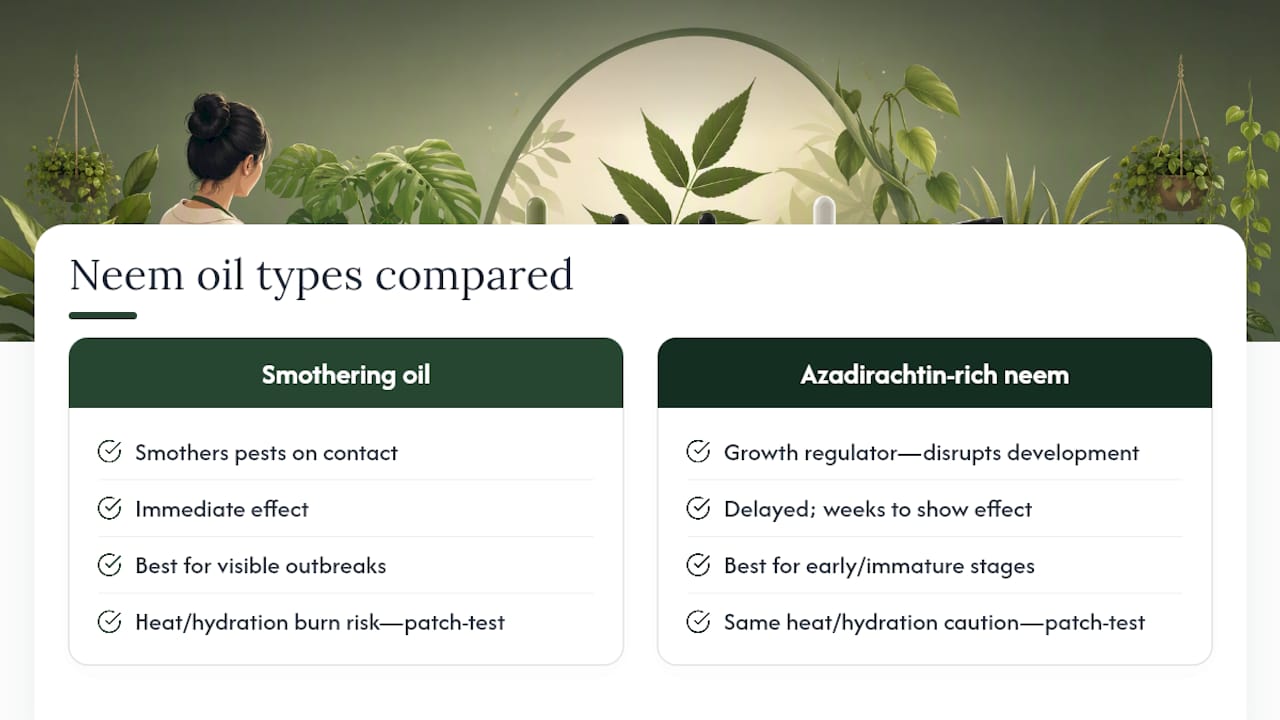
The bigger issue with conventional advice is that it treats alternatives as one-for-one swaps. Soap isn’t a neem replacement, it’s a different tool for a different moment: the outbreak you can see right now. Oils are closer substitutes for neem’s smothering action, but they need the same heat and hydration caution neem requires, no more, no less. Skipping that test-patch step is where most leaf-burn complaints come from, not from the product itself.
If you take one thing from this, prioritize matching the method to the pest stage before you worry about odor or brand loyalty. Odor is a real, legitimate reason to switch away from neem. It just shouldn’t be the only variable driving the decision.
— Luna
Insecticidal soap, oil blends, and DIY essential-oil mixes all work, but each one means measuring, mixing, and hoping your emulsifier ratio holds up. Sprout-lab built Plant SHIELD as the pre-mixed alternative: a natural, low-odor insecticide spray you take off the shelf and use the same day, no dilution math required.
It fits the same houseplants and edible crops covered throughout this guide, from aphid-prone herbs to mite-stressed succulents, and it pairs naturally with the soil mixes and grow setups Sprout-lab sells for indoor growers. Test it on a single leaf first, then treat the full plant. Pick up Plant SHIELD and get ahead of the next outbreak before it spreads.
Insecticidal soap is the fastest substitute for active infestations, while soybean or corn oil sprays work well for prevention and egg-stage pests.
Nothing beats neem across every category, but insecticidal soap wins on speed and odor, and horticultural oils often match or exceed neem’s smothering effect without the smell.
Neem deters aphids, mites, thrips, and whiteflies, and insecticidal soap plus horticultural oil target the same insects through contact kill and smothering instead of repellence.
Mix 1 to 2 percent horticultural or vegetable oil with water and a mild emulsifier like castile soap, or dilute rosemary, peppermint, or clove essential oil at 0.5 to 1 percent for a lighter, pleasant-smelling spray.