Free shipping for order over $50

Free shipping for order over $50

Neem oil works well for most home gardeners dealing with aphids, spider mites, whiteflies, or powdery mildew, but it is not a universal fix. Mix 1 to 2 teaspoons of neem oil with 1 to 2 teaspoons of mild soap per quart of warm water, patch-test any sensitive plant first, and spray at dusk when pollinators aren’t active. Do that, follow the product label, and you’ve covered the basics that matter most.
TL;DR:
- Neem oil works best when applied at dusk and only on healthy, unstressed plants, with a mix of 1 to 2 teaspoons per quart of water and gentle emulsifier.
- It is effective primarily against soft-bodied pests like aphids, whiteflies, spider mites, and certain fungi, but is less reliable on mature, armored insects or established infestations.
- Repeated weekly treatments over 2 to 3 weeks are necessary during active pest outbreaks, with a maintenance schedule of every 2 to 4 weeks once pests are controlled.
- Keep neem oil away from seedlings, fuzzy or thin-leaved plants, and open flowers to prevent damage and avoid pollinator contact.
- The most successful long-term pest prevention involves good growing conditions, stress reduction, proper watering, and well-draining soil, rather than relying solely on neem applications.
Neem oil comes from the seeds of the neem tree, Azadirachta indica, and it isn’t one single substance. It’s actually two different products sold under the same name, and knowing which one you’re holding changes how you use it.
Cold-pressed neem oil retains azadirachtin, the compound that acts as an insect growth regulator. It doesn’t kill on contact. Instead, it disrupts molting and reproduction in insects that ingest it, which is why it takes days rather than minutes to show results. Clarified hydrophobic extract, sometimes labeled as “neem oil” without the whole-extract complexity, has had the azadirachtin mostly removed. It works through smothering, coating soft-bodied pests and blocking their ability to breathe.
That distinction changes your shopping list:
The NPIC ingredient summary notes neem oil is used against many insect species, mostly the soft-bodied kind that can’t tolerate having their spiracles coated.
Getting the ratio right matters more than people expect. Too concentrated, and you risk burning leaves. Too weak, and you’re just watering your plants with a faint garlic smell.

A dependable indoor mix is 1 to 2 teaspoons of cold-pressed neem oil plus 1 to 2 teaspoons of mild liquid soap per quart of warm water, with the water at a warm temperature. Start at the lower end, 1 teaspoon of each, for anything you haven’t sprayed before or any plant with delicate foliage. Skip dish detergent as your emulsifier. It’s formulated to strip grease, and it can strip plant cuticle wax right along with it.
Here’s the sequence that actually keeps the oil suspended instead of pooling on top of your water:
For soil-dwelling pest stages, some labels permit a soil drench instead of a foliar spray. Check the specific application method your product allows, since not every neem product is labeled for drenching, and make sure the pot drains well so the mix doesn’t sit and sour the root zone.
Pro Tip: Mix only what you need for that session. Diluted neem oil starts losing potency within hours, so a batch made Tuesday for a “just in case” Thursday spray is mostly just soapy water by the time you use it.
Neem earns its reputation on a specific list of pests, and it disappoints people who expect it to handle everything with wings or a shell.
It performs reliably against:
It is far less reliable against beetles, borers, larger true bugs, and any pest population that’s already well established with hardened adults. Established infestations often need a different tool entirely, since neem’s growth-regulating action works best on immature stages, not armored survivors.
Expect a week or so before you see a real dip in numbers, not an overnight collapse. Neem’s strongest impact is on immature insect stages, and fungal spores get suppressed before they germinate rather than cured after infection takes hold. That’s why a single spray rarely finishes the job. You’re catching each new generation as it hatches, which means repeat treatments aren’t a sign neem failed. They’re how it’s supposed to work.
Not every plant tolerates neem oil, and not every moment is a good moment to spray, even on a plant that normally handles it fine.
Seedlings, recent transplants, and anything already stressed from underwatering or transplant shock are the most common casualties. Thin or fuzzy-leaved plants, including many ferns and some calatheas, can also react poorly since their leaf surface doesn’t handle the oil coating the same way a thick, waxy leaf does. Extension guidance is consistent on this point: test a small area and wait 24 to 48 hours before treating the whole plant, especially on anything you’ve never sprayed before.
A few other precautions worth building into your routine:
Pro Tip: If you’re treating a whole shelf of plants, spray the healthiest, toughest one first and check it the next day before working through anything more delicate. It costs you a day, but it saves you from finding six scorched plants at once.
Consistency beats intensity with neem. One heavy application won’t out-schedule a light, repeated one.
A few mistakes account for most of the disappointing results people report. Mixing a big batch to save time backfires, since the oil and water separate and the azadirachtin degrades well before you get to spray number four. Spraying in direct sun accelerates leaf burn and wastes the treatment through faster breakdown. And combining neem with sulfur-based fungicides or other oils in the same session can cause a chemical reaction that damages foliage far worse than either product alone.
We treat neem oil as a maintenance habit, not an emergency room visit. The best results come from spraying during regular leaf-cleaning sessions, catching a few aphids before they become a colony, rather than reaching for the bottle only after a plant looks visibly sick.
Plants under real stress attract more pests to begin with. A rootbound plant in exhausted soil, or one sitting in a corner too dark for its needs, is simply more vulnerable. Good potting mix and steady growing conditions do more preventive work than any spray schedule, and neem performs best as one layer in that broader care routine rather than the whole strategy.
— Luna
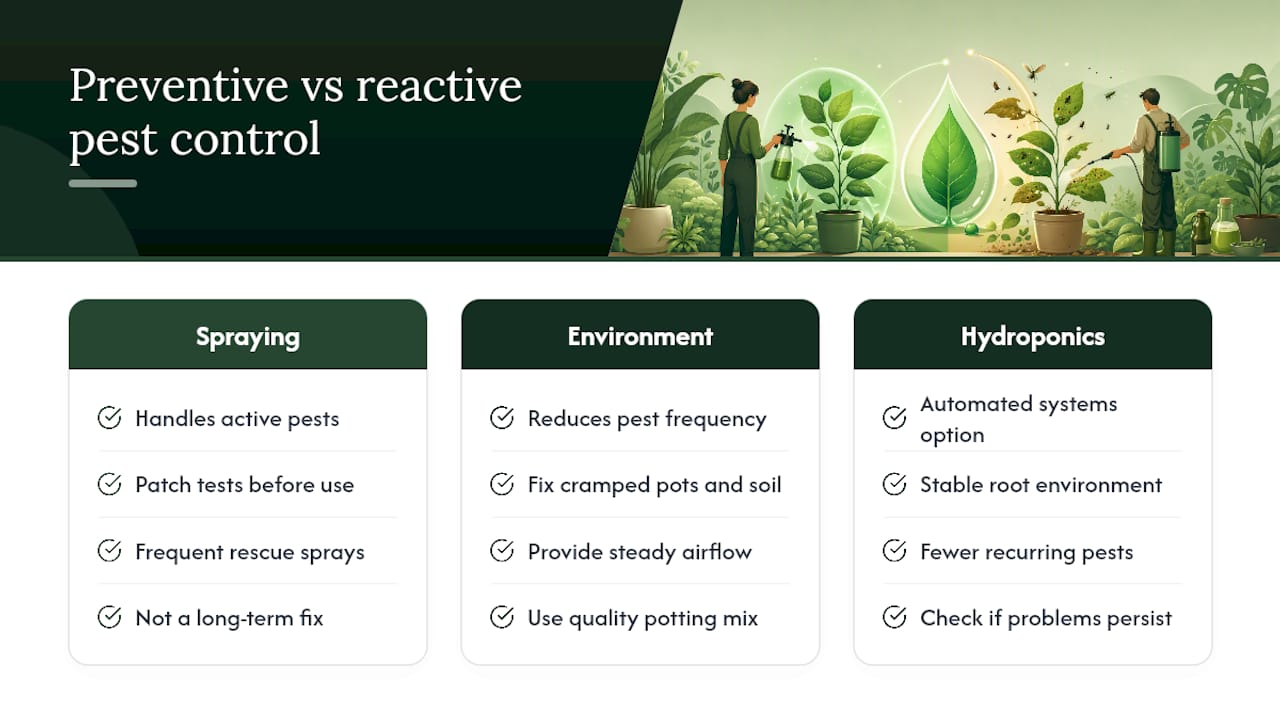
Spraying schedules and patch tests handle the pests you already have. If you’d rather reduce how often they show up in the first place, the answer usually comes down to the growing environment itself, not the spray bottle.

Cramped pots, stagnant air, and worn-out soil create exactly the stressed conditions where aphids and mites take hold fastest. Sprout-lab’s compact growing systems give roots controlled space and steady airflow, which is a big part of why plants grown in a stable setup tend to need fewer rescue sprays overall. Pairing that with a quality potting mix built for the plant you’re growing removes another common stress point, since poor drainage and depleted soil weaken plants long before you ever spot the first pest.
This isn’t a swap for neem when you’re already dealing with an active infestation. It’s a way to make that spray bottle something you reach for occasionally instead of every other week. If your pest problems keep coming back no matter how carefully you mix and apply, take a look at your automated hydroponic setup options and see whether the environment, not the bug, is the real recurring issue.
Always read your product’s own label before mixing anything, since formulations vary by manufacturer. For deeper background, the NPIC fact sheet covers environmental fate, HGTV’s guide breaks down application methods, and your local extension office can flag crop-specific restrictions neem labels don’t always spell out.
Seedlings, recently transplanted specimens, drought-stressed plants, and thin or fuzzy-leaved varieties like ferns and some calatheas are the most likely to burn. Always patch-test for one or two days before a full application.
Mix 1 to 2 teaspoons of neem oil with 1 to 2 teaspoons of mild soap per quart of warm water, spray leaf tops and undersides at dusk, and repeat every 7 days for 2 to 3 treatments during an active infestation.
Yes, as a soil drench for certain pest stages, but only when the product label specifically permits that method. Foliar spray and soil drench serve different purposes, so check your label before switching from one to the other.
Neem oil is most effective against aphids, whiteflies, spider mites, mealybugs, scale crawlers, and thrips, along with powdery mildew and some leaf spot fungi. It’s far less reliable against beetles, borers, and established adult populations.